The diagram outlines the metabolic pathway by which excess amino acids are processed in human hepatocytes to produce a less toxic nitrogenous excretory product.
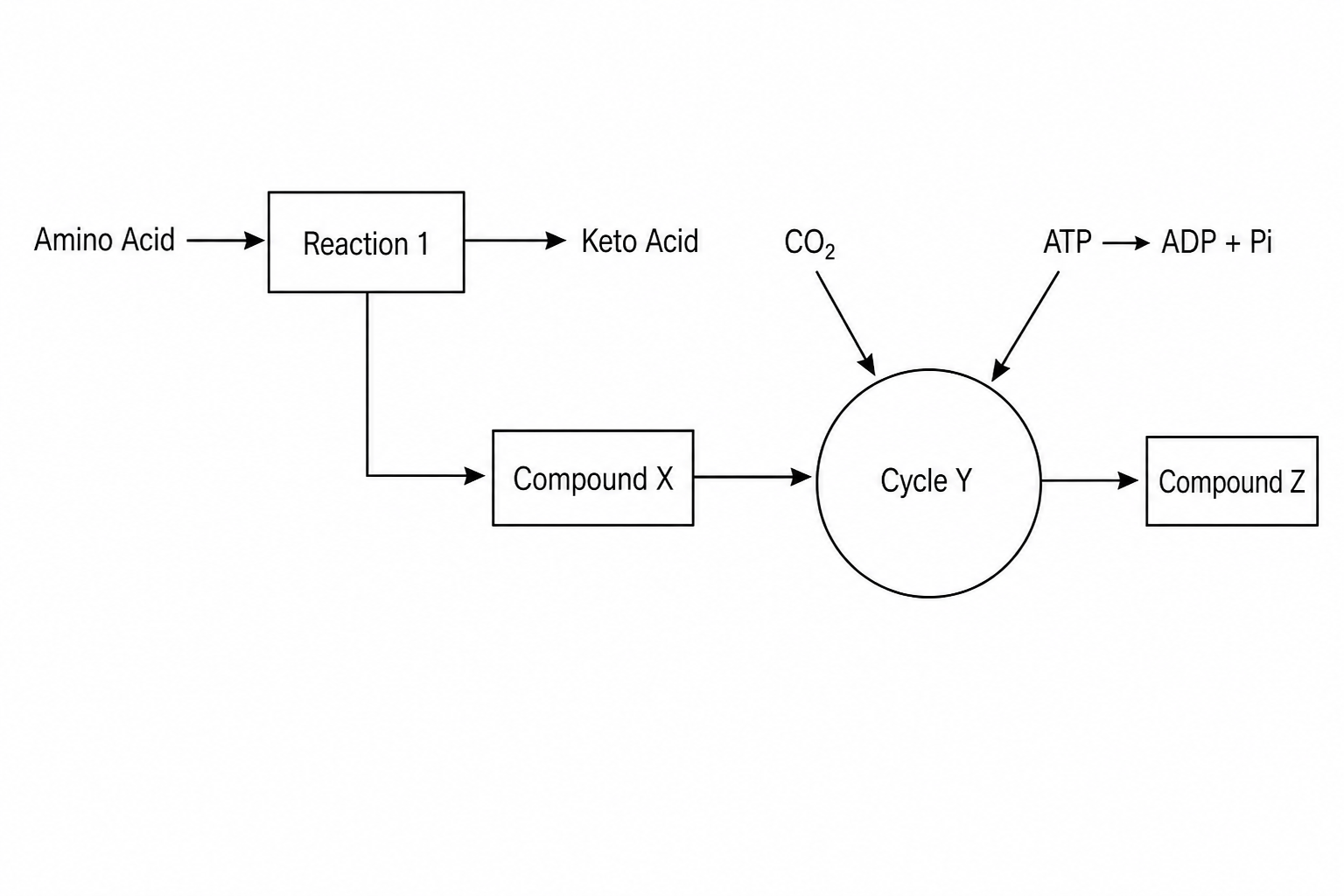
Which row in the table correctly identifies Reaction 1, Compound X, Cycle Y, and the relative toxicity of Compound X compared to Compound Z?
Reaction 1: Transamination | Compound X: Ammonia | Cycle Y: Ornithine cycle | Relative toxicity: Compound X is less toxic than Compound Z
Reaction 1: Deamination | Compound X: Ammonium ions | Cycle Y: Krebs cycle | Relative toxicity: Compound X is more toxic than Compound Z
Reaction 1: Deamination | Compound X: Ammonia | Cycle Y: Ornithine cycle | Relative toxicity: Compound X is more toxic than Compound Z
Reaction 1: Transamination | Compound X: Urea | Cycle Y: Ornithine cycle | Relative toxicity: Compound X is less toxic than Compound Z