A newly developed drug is administered to a patient, and its excretion is monitored. The rate of excretion of the unchanged drug via different physiological routes is shown in the graph below.
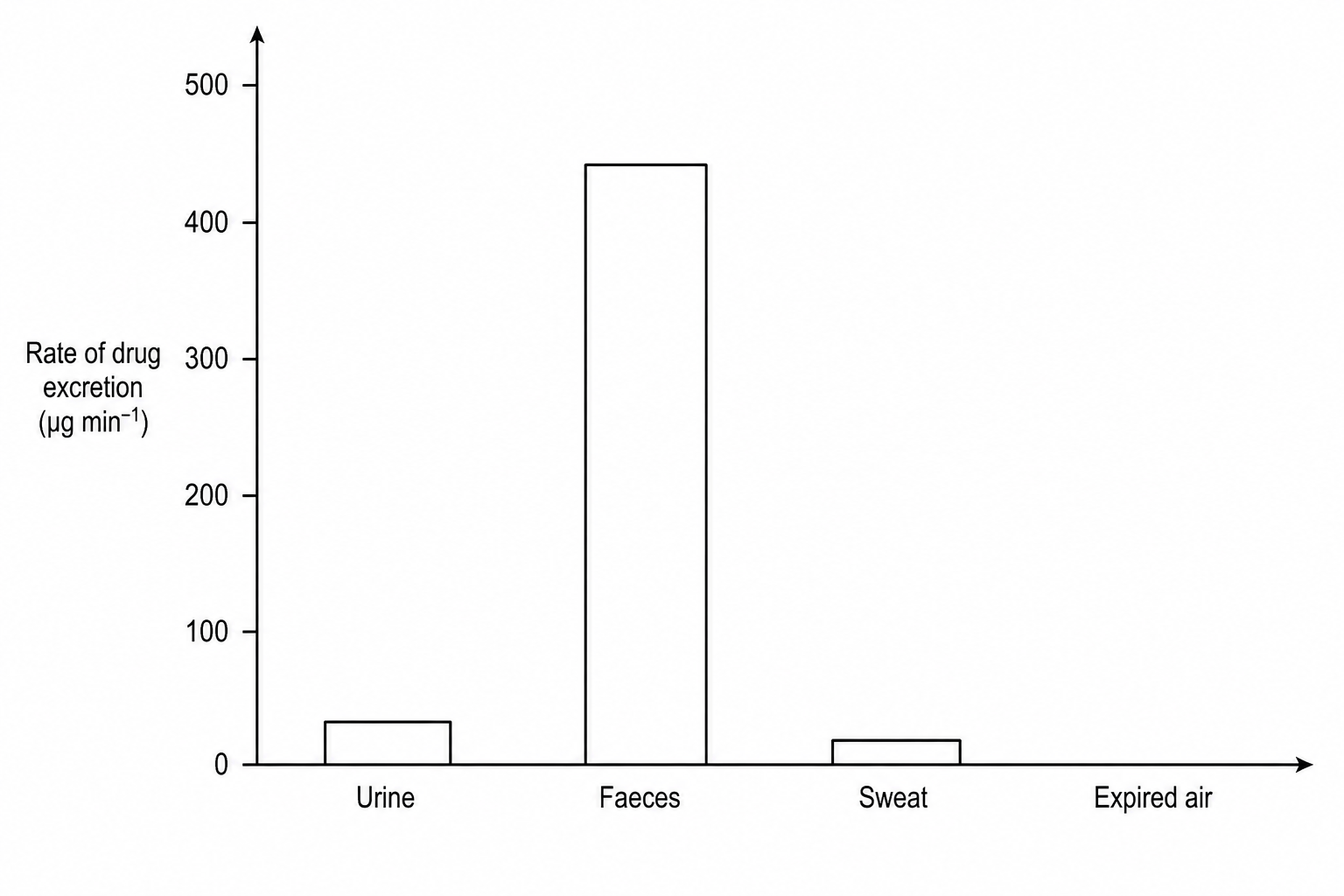
Which of the following, A to D, correctly explains the observed rates of excretion for this drug?
The drug is highly water-soluble, preventing its filtration through the basement membrane of the glomerular capillaries.
The cells of the proximal convoluted tubule actively transport lipid-soluble molecules back into the blood.
The liver selectively excretes water-soluble compounds into the bile, which are then eliminated in the faeces.
The drug is highly lipid-soluble, allowing it to easily diffuse down its concentration gradient from the renal tubule filtrate back into the blood.