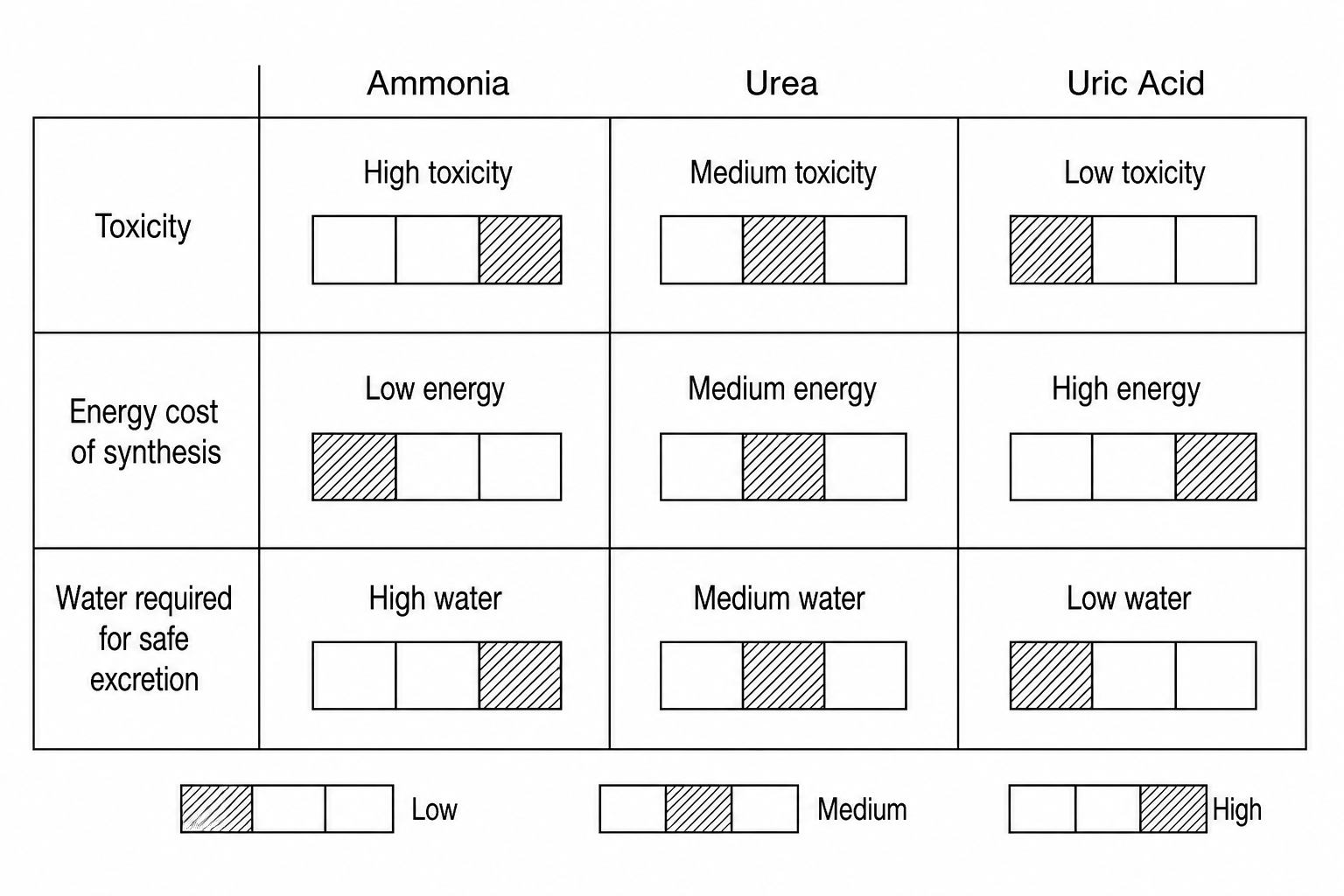
The diagram below summarizes the physiological trade-offs associated with different nitrogenous waste products in animals.
An evolutionary biologist is studying the homeostatic excretion profiles of three species:
- Species X: A desert-dwelling lizard (Phrynosoma) that produces a dry, semi-solid waste.
- Species Y: An adult terrestrial toad (Bufo) that returns to water only to breed.
- Species Z: A freshwater teleost (bony fish) that is continuously exposed to a hypotonic environment.
Based on the diagram and homeostatic principles, which of the following statements is correct?
Species X primarily excretes uric acid because its low toxicity allows safe storage within a shelled egg during embryonic development, and its low water requirement minimizes water loss in arid environments.
Species Y primarily excretes ammonia as an adult to avoid the high metabolic energy cost of synthesis, since terrestrial amphibians can easily tolerate high cellular ammonia concentrations.
Species Z primarily excretes urea because, although it requires medium energy to synthesize, it prevents osmotic water influx in a hypotonic freshwater environment.
Both Species X and Species Z primarily excrete uric acid because they both experience extreme water stress and must maintain high water reabsorption rates.