An optical device uses a convex lens to project an image of an object onto a screen.
The diagram shows one light ray as it passes from the top of the object through the thin convex lens on a grid:
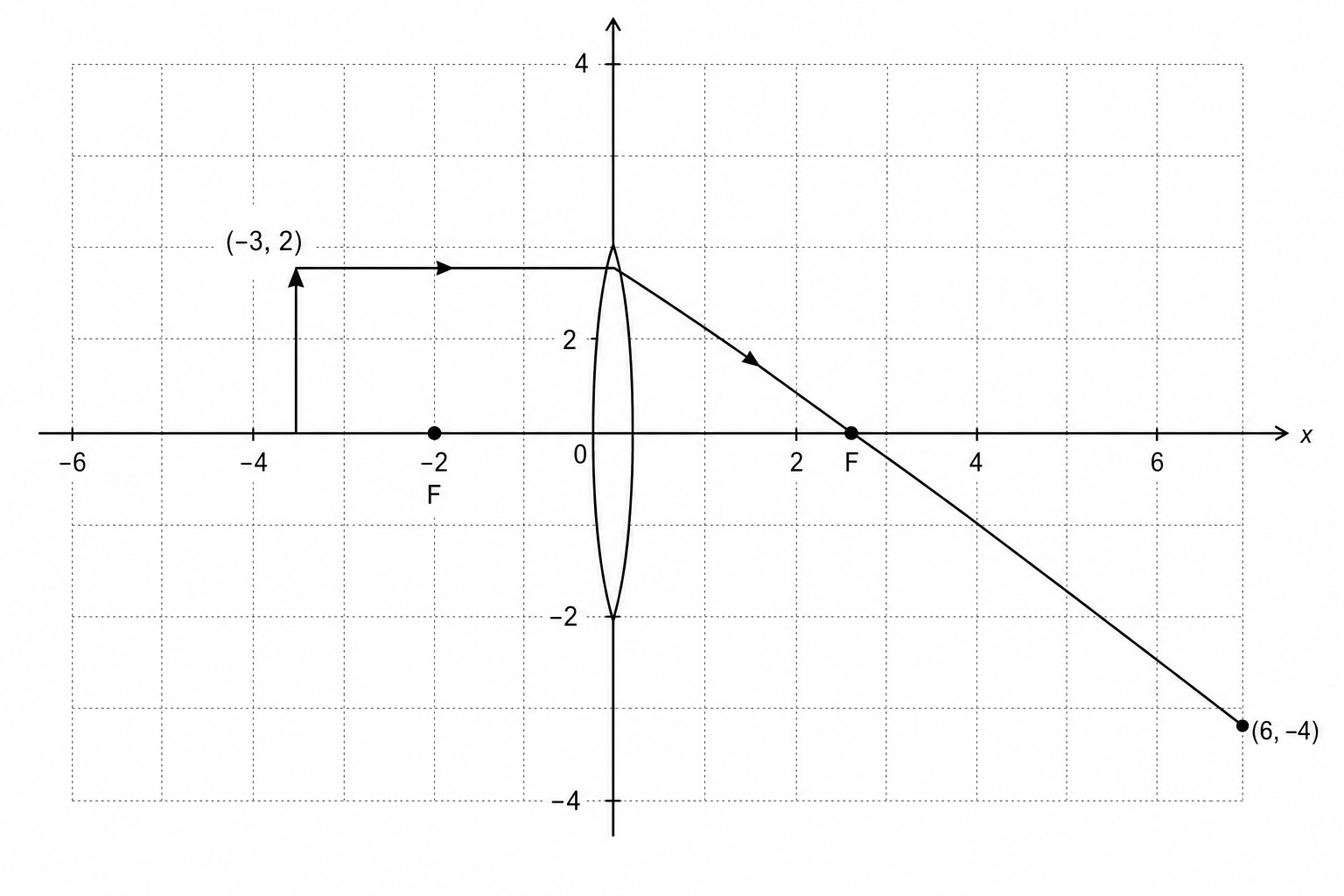
Describe how to draw one more standard ray from the top of the object to locate where the image is formed, and state the position (horizontal and vertical coordinates) where the image's top is formed if the optical center of the lens is at (0,0)(0,0)(0,0).
State two characteristics of the image formed.
The light source inside the device produces white light. Explain how this source can be used to obtain blue light.
The device is connected to the standard UK mains power supply. State the potential difference between the live wire and the earth wire in normal use.
An appliance with a metal outer casing needs an earth wire. An appliance with a plastic outer casing does not. Explain why.