An investigator simulated the physiological efficiency of sweating under different environmental conditions by using artificial "sweating skin" units.
Each unit consisted of a hollow cylindrical copper container filled with hot water, covered with a water-saturated semi-permeable nylon membrane to model wet skin.
Both chambers were kept at a constant ambient temperature of 30∘C30^\circ\text{C}30∘C with no airflow. The water temperature of each unit was recorded every minute for 30 minutes.
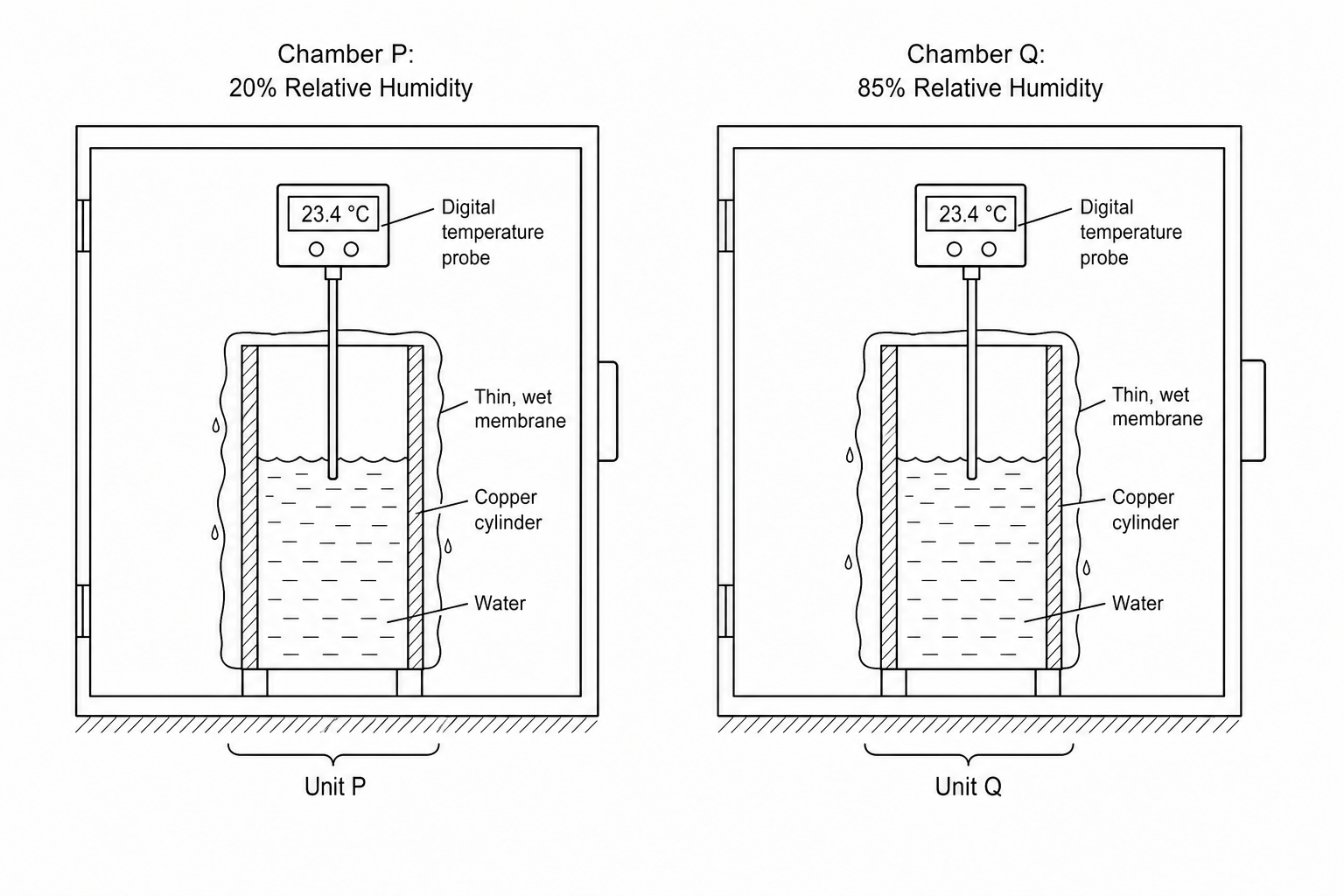
State two variables, other than ambient temperature and airflow, that the investigator must control in this simulation to ensure a fair test.

