A researcher measured the metabolic rate and rate of evaporative water loss of a small mammal over a range of ambient temperatures. The results are shown in the graph below:
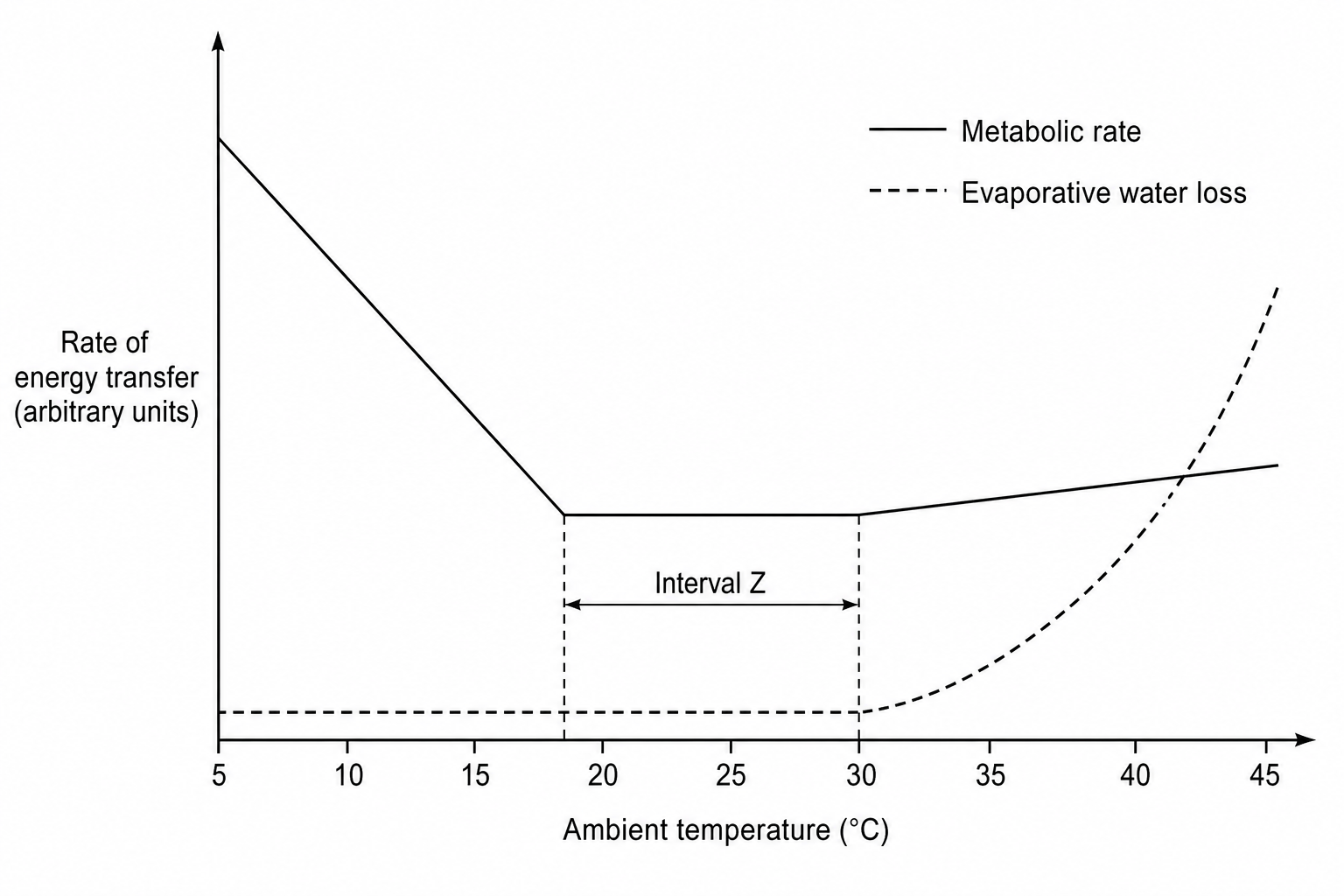
Which of the following describes the primary physiological mechanism by which this mammal maintains a stable core body temperature within Interval Z (18∘C18^\circ\text{C}18∘C to 30∘C30^\circ\text{C}30∘C)?
Increasing shivering and non-shivering thermogenesis to dynamically balance the rate of heat loss.
Vasomotor control, such as vasoconstriction and vasodilation of arterioles supplying skin capillary loops, to regulate heat loss.
Engaging active evaporative cooling, such as sweating and panting, to dissipate excess heat.
Altering the metabolic rate of liver cells and brown adipose tissue to match external temperature fluctuations.

