What to Eat Before a GCSE Bengali Exam
What to eat before GCSE Bengali exam: choose familiar carbohydrates, protein and water for steady energy, sharper focus and a calmer start.
The last hour before an exam can make ordinary choices feel strangely important. Is porridge better than toast? Will sugar help you concentrate? Should you drink coffee if you barely slept?
If you are wondering what to eat before GCSE Bengali exam, the practical answer is simple: choose a familiar meal combining slow-release carbohydrates with protein, drink water gradually, and avoid experimenting with energy drinks or unusually heavy food. You are not searching for a magical brain food. You are trying to arrive with steady energy, no distracting hunger and a comfortable stomach.
That matters in Bengali because listening, reading and writing demand sustained attention. Speaking brings its own challenge: you want to feel alert and comfortable, without a dry mouth or the jittery feeling that can follow too much caffeine.
Your quick pre-exam food checklist
Before leaving home, aim for:
- a familiar breakfast or meal you already digest comfortably
- a source of carbohydrate, preferably wholegrain or higher-fibre
- some protein to help the meal feel satisfying
- water consumed steadily rather than all at once
- enough time to eat without rushing
- a small portable snack if there will be a long wait
- no new supplements, energy drinks or dramatic changes to your routine
A useful meal might be porridge with milk and banana, wholegrain toast with egg, yoghurt with oats and fruit, or ruti with an egg and a modest portion of vegetables. These are options, not rules. The best choice is one that suits your dietary needs, culture, appetite and normal routine.
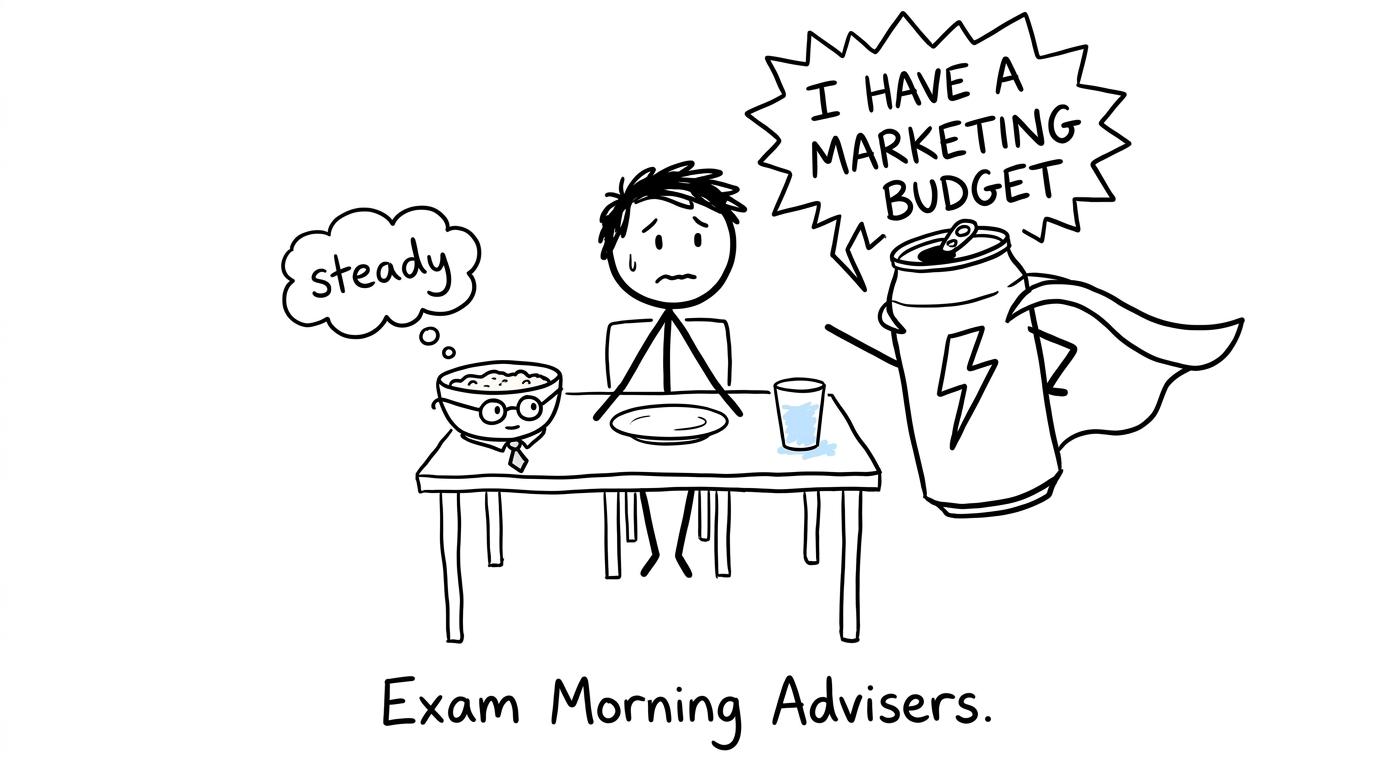 A bowl of porridge debates an overconfident energy drink before an exam
What actually supports focus and steady energy?
Food cannot insert forgotten vocabulary into your memory. What it can do is remove avoidable distractions. Hunger, thirst, stomach discomfort and caffeine jitters all compete for attention that would be better spent following a listening passage or planning a written answer.
Combine carbohydrates with protein
Carbohydrate-containing foods provide energy. Wholegrain bread, oats, rice, potatoes, fruit and lower-sugar cereals are practical choices. Pairing them with protein can make the meal more satisfying and help prevent hunger becoming the loudest thought in the room.
Suitable protein sources include:
- eggs
- milk or yoghurt
- beans, chickpeas or lentils
- tofu
- fish or chicken
- nut or seed butter, where allergies and school rules allow it
The British Dietetic Association recommends a balanced breakfast built around foods such as wholegrains, fruit, healthy fats and protein, while limiting sugary drinks and heavily processed choices. This is sensible exam preparation because it is ordinary, repeatable and unlikely to surprise your stomach.
Choose familiar food over fashionable “brain food”
Exam season attracts confident claims about dark chocolate, supplements and foods that supposedly transform memory. No single breakfast guarantees better marks. Your overall eating pattern, hydration, sleep and preparation matter more than one special ingredient.
Familiarity has practical value. If you normally eat rice, dal and vegetables before an afternoon session, there is no need to replace them with a fashionable breakfast bowl. If toast and yoghurt are your usual morning choices, exam day is not the moment to test an unfamiliar high-fibre meal.
The calmest plan is often the least exciting one.
Breakfast ideas before a morning Bengali exam
Choose one balanced combination rather than trying to eat everything on the list:
- porridge made with milk or a fortified alternative, topped with banana
- wholegrain toast with egg and a piece of fruit
- lower-sugar cereal with milk and berries or banana
- natural yoghurt with oats and fruit
- ruti with egg, dhal or a small portion of vegetables
- chira with yoghurt or milk and fruit, if this is familiar to you
- beans on wholemeal toast
If nerves reduce your appetite, a smaller breakfast is usually more manageable than forcing down a large plate. Yoghurt and banana, toast with nut butter, or a small bowl of porridge may be enough to prevent hunger without making you feel overfull.
If you regularly struggle to eat, have a medical condition or follow a prescribed dietary plan, use advice from your parent or carer and healthcare professional rather than changing your diet for an exam article.
What to eat before an afternoon exam
An afternoon Bengali paper requires a slightly different plan. Eat a normal breakfast, then have a balanced lunch early enough that you do not enter the exam feeling either hungry or uncomfortably full.
A suitable lunch could include:
- rice with dal and vegetables
- a wholemeal wrap with chicken, tofu, beans or hummus
- a jacket potato with beans or tuna
- a modest portion of khichuri with vegetables and a protein source
- a wholegrain sandwich, fruit and yoghurt
Keep portions comfortable. A very large, rich or unusually spicy meal can be distracting if it causes indigestion, particularly when nerves have already made your stomach sensitive.
Bring a simple snack if your school timetable creates a long gap. Fruit, yoghurt, wholegrain crackers or a small sandwich are more useful than relying on sweets for a brief burst of energy.
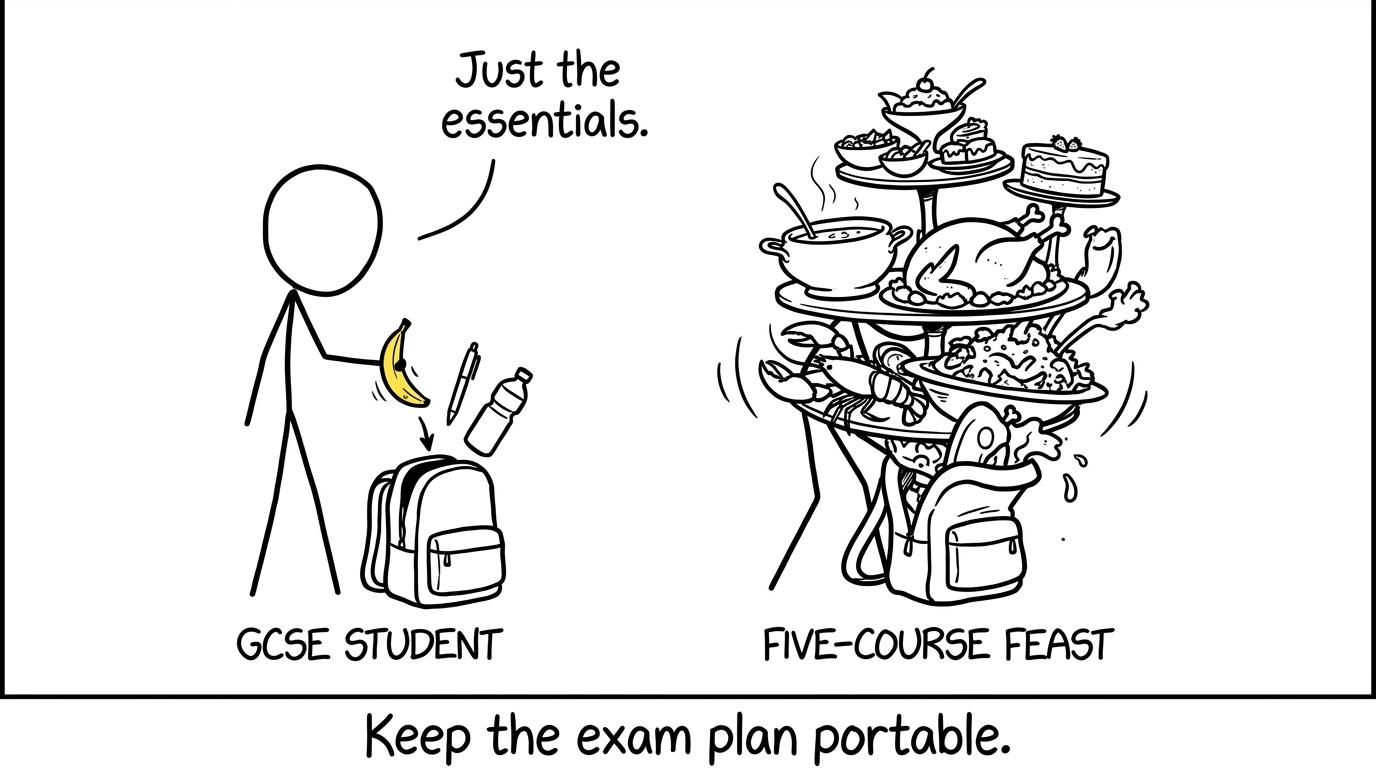 A sensible banana fits into an exam bag while a five-course feast does not
Hydration without the last-minute panic
The NHS advises most people to aim for around 666 to 888 cups or glasses of fluid across the day, although individual needs vary with weather, activity and health. The useful phrase is across the day.
Do not ignore water all morning and then drink a large bottle immediately before the exam. That replaces thirst with another distraction. Drink regularly after waking, have water with your meal and take an approved clear bottle into the exam if your school permits it.
Pale yellow urine is a useful everyday sign that you are probably drinking enough. Water is the simplest option. Milk and sugar-free drinks can also contribute to fluid intake, while fruit juice and smoothies should generally be limited to a small serving because they contain free sugars.
For a Bengali speaking assessment, regular sips of water beforehand may also help if anxiety leaves your mouth feeling dry. Follow your centre's instructions about what can enter the preparation or assessment room.
Why energy drinks are a poor exam strategy
An energy drink can feel like an emergency solution to poor sleep. It is often a noisy solution to the wrong problem.
Energy drinks may contain substantial caffeine and sugar. Teenagers can be particularly sensitive to caffeine, which may contribute to shakiness, a racing heartbeat, stomach upset, anxiety and disturbed sleep. Those effects are not helpful when you need to distinguish details in a listening recording or speak naturally.
Do not suddenly increase caffeine on exam day. If you normally have tea or coffee, keep your routine moderate and familiar. If you do not usually consume caffeine, the morning of GCSE Bengali is not the time to begin.
Most importantly, caffeine does not replace sleep. Protecting the previous night's rest is likely to be more valuable than squeezing in late revision and trying to repair the consequences with a highly caffeinated drink.
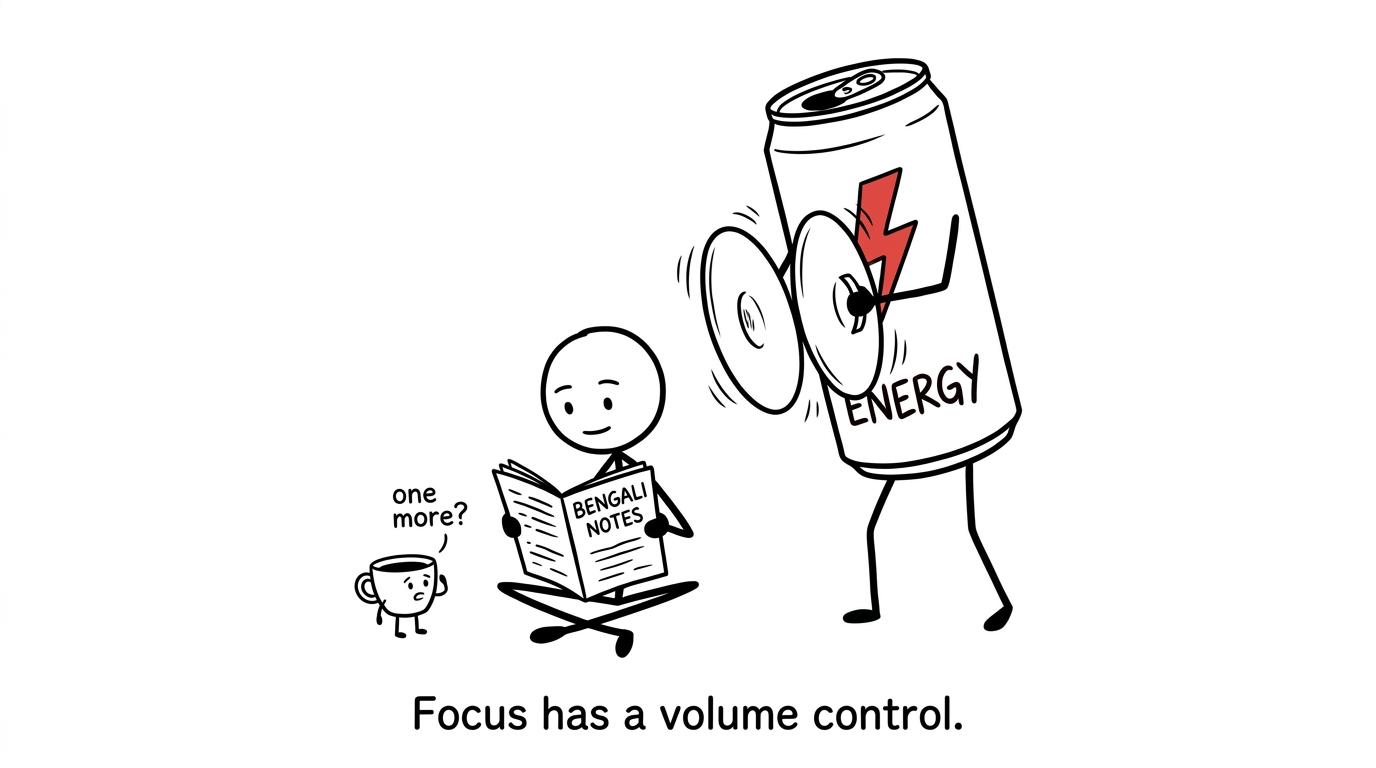 A quiet coffee cup and a cymbal-carrying energy drink compete for a student's attention
Match the plan to the Bengali assessment
AQA GCSE Bengali assesses listening, speaking, reading and writing. Each skill contributes an equal share of the qualification, but the demands on exam day differ.
Before listening or reading
You need sustained concentration and careful attention to detail. Eat a balanced meal, hydrate gradually and avoid arriving hungry. Do not consume so much fluid immediately beforehand that discomfort interrupts your focus.
Before writing
Writing requires concentration over a longer period, so steady energy matters more than a short sugar rush. A normal meal containing carbohydrate and protein is a better foundation than sweets alone.
Before speaking
Choose something comfortable and avoid foods that you know cause reflux, bloating or excessive thirst. Bring water if permitted and avoid overusing caffeine, which can make an already nervous student feel more agitated.
Food supports the conditions for performance; preparation creates the performance. The same principle applies to maths. A calm routine and active practice are more reliable than last-minute heroics. Maths students can build that routine through the free GCSE Maths revision hub, which brings together revision lessons, questions and exam-board resources.
Build food into your wider exam routine
The strongest exam morning begins before breakfast. Pack your equipment, check your timetable and decide what you will eat the night before. Removing small decisions protects attention when nerves are highest.
Your revision should become lighter near departure time. Instead of attempting a new topic, review a short vocabulary list or a few familiar prompts, then stop. Maths students can use the same approach after following a structured GCSE maths night-before plan.
Across exam season, build consistency rather than treating each paper as an emergency. Use MathsGenie's guide to revision that sticks to organise retrieval and spaced practice. When preparing for maths papers, choose resources matched to your board, such as Edexcel GCSE Maths past papers, AQA GCSE Maths past papers or the OCR GCSE Maths revision hub.
This makes food part of a system rather than a superstition: revise effectively, eat normally, hydrate, sleep and arrive prepared.
Common mistakes before a GCSE Bengali exam
Skipping food because of nerves
Anxiety can reduce appetite, but arriving hungry may make concentration harder. Choose a smaller familiar option rather than nothing at all.
Eating an unusually large meal
More food does not mean more focus. An oversized breakfast may leave you uncomfortable or sleepy. Aim for comfortably satisfied, not completely full.
Relying on sweets for “instant energy”
Sweets can provide carbohydrate, but they do not make a balanced meal. If you want something sweet, fruit alongside yoghurt, toast or porridge offers a more complete start.
Trying a new supplement or breakfast
Exam day is not an experiment. Supplements can interact with medicines or cause unwanted effects, while unfamiliar foods may upset your stomach. Seek professional advice where needed.
Drinking too much immediately before the paper
Hydration works best as a steady habit. Drinking a large volume at the last moment can create an obvious distraction during the exam.
Revising through breakfast
Eating while frantically scrolling through notes can make the morning feel faster and more chaotic. Sit down, eat, then do one brief and deliberate review.
A calm final plan
Deciding what to eat before a GCSE Bengali exam does not need to become another test. Choose familiar carbohydrates, add protein, drink water gradually and keep the portion comfortable. Avoid dramatic amounts of sugar or caffeine, and prepare a portable snack when the timetable demands one.
Then return your attention to what genuinely earns marks: careful listening, accurate reading, clear writing and confident speaking.
For your maths exams, let MathsGenie make that preparation easier. Start with free revision lessons and practice questions, test yourself with mini tests, then build exam confidence using past papers, mark schemes, video solutions and predicted papers. If time is short, the one-week GCSE maths revision plan gives you a focused route from weak topics to timed practice.
A good exam routine is rarely dramatic. That is precisely why it works.