

What to Bring on A-Level Results Day: Checklist
What to bring A-Level results day: pack photo ID, UCAS details, a charged phone and key documents with this practical Year 13 checklist for 2026.

Results day can feel strangely heavy for a morning involving one envelope or online login. The useful answer is simple: this A-Level results day checklist should include photo ID, your UCAS details, a charged phone, a pen, paper and information about your university choices. Pack everything the night before so that the morning is about decisions, not searching through drawers.
In England, Wales and Northern Ireland, A-Level results day in 2026 is Thursday 13 August. Your school or college decides how and when you receive your results, so check its instructions before travelling.
What to bring to A-Level results day
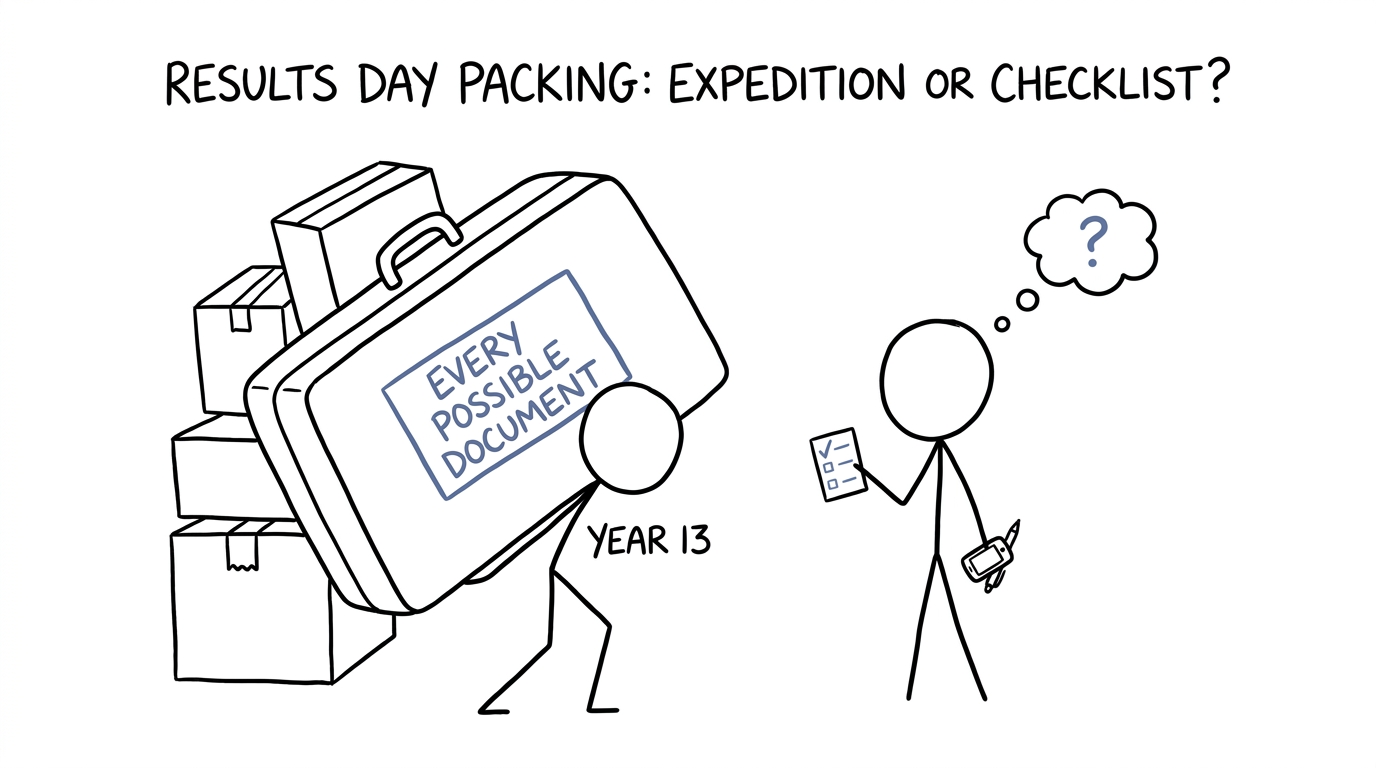 A student choosing between an enormous results day suitcase and a small practical checklist
Use this practical checklist rather than packing every document you own:
- Photo or student ID: Bring the form of identification requested by your school or college. Requirements vary, so do not assume a passport or driving licence is compulsory unless your centre says so.
- Collection instructions: Save the collection time, location and any email from your exams officer. Results are issued by your school or college, not through UCAS.
- Candidate and centre details: These may not be needed for collection, but having your candidate number available can help if staff need to check your record.
- UCAS sign-in details: Test your login before results day. Keep your UCAS Personal ID somewhere secure and accessible.
- Firm and insurance choice details: Note each university, course title and course code. Save the relevant admissions telephone numbers too.
- Clearing number: If you are eligible for Clearing, this appears in your UCAS application. UCAS advises applicants to contact a university before adding a Clearing choice and to add it only with the university's permission.
- Your qualification details: Have your A-Level results slip available once collected, alongside your GCSE grades, particularly English and maths. Universities may ask for these during a Clearing conversation.
- A short course-interest note: Write a few honest bullet points explaining why each possible course interests you and what makes you suitable. This is easier to use than improvising while nervous.
- Pen and notebook: Record the name of each person you speak to, what was offered, any reference number and the deadline for responding.
- Charged phone and charger: Make sure you have signal, mobile data and enough battery for calls. Universities generally need to speak to the applicant, although UCAS allows nominated access in defined circumstances.
- Water and a small snack: A decision-heavy morning becomes harder when you are hungry or dehydrated.
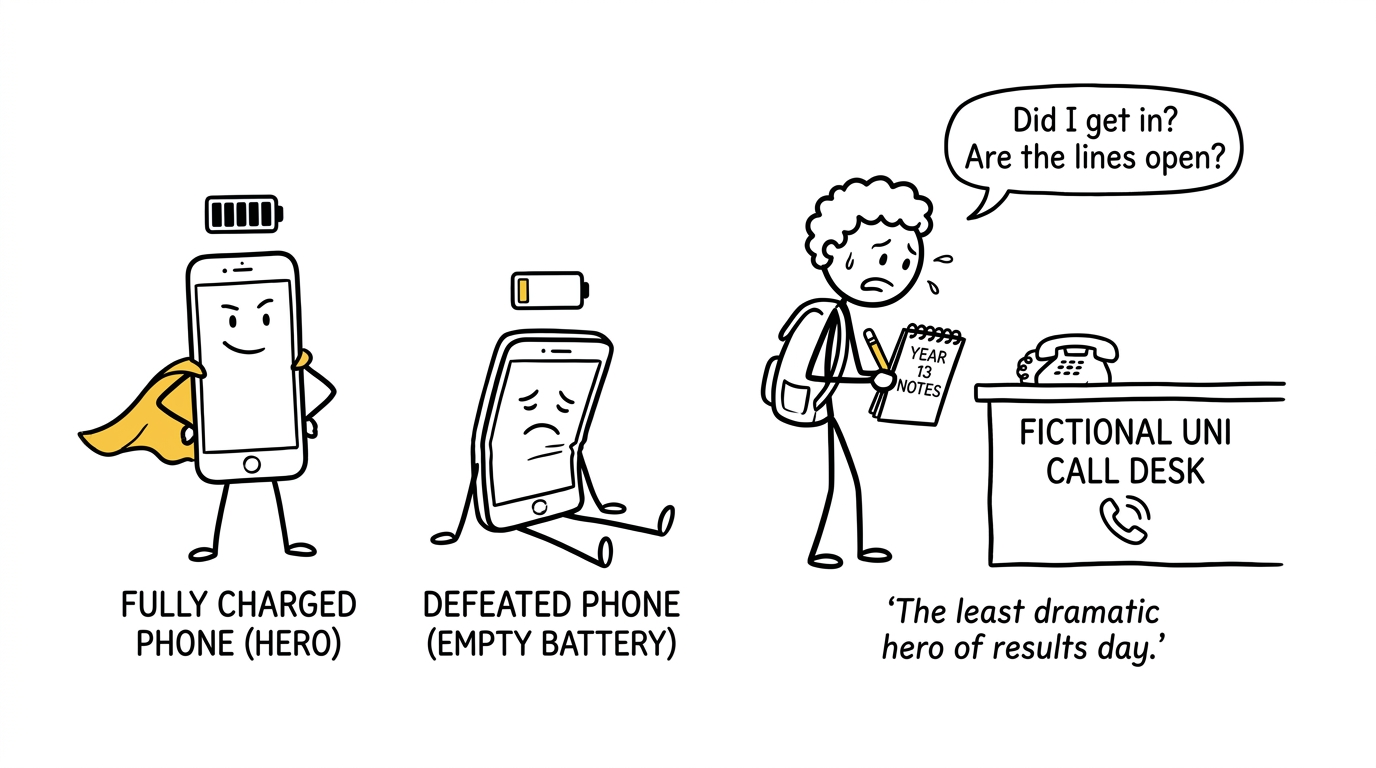 A fully charged phone acting as the quiet superhero of results day
If someone else is collecting your results
- Contact your school or college in advance: Do not simply send a parent or friend on the morning.
- Follow the centre's authorisation process: It may request your written permission and identification from the person collecting.
- Arrange secure contact: Stay available in case your centre, university or nominated person needs to reach you.
Common results day mistakes
- Relying on UCAS for your grades: UCAS shows the status of your application, but your school or college provides your actual results.
- Forgetting passwords: Test your school portal, email and UCAS login beforehand rather than requesting resets during a busy morning.
- Calling without notes: Keep grades, course codes, questions and your Personal ID in front of you.
- Adding a Clearing choice too soon: Speak to the university first and follow its instructions.
- Making an instant decision while overwhelmed: Write down deadlines and terms carefully. Ask staff to repeat anything unclear.
From exam preparation to results day
Results day is the final administrative step in a much longer process. While exams are still ahead, use the free A-Level Maths revision hub, Edexcel A-Level revision resources, Edexcel past papers and mark schemes, AQA A-Level past papers and A-Level predicted papers to prepare deliberately.
Pack your results day folder early, then put your energy where it can still earn marks. Build a realistic schedule with the free MathsGenie revision planner, combining revision lessons, practice questions, mini tests, past papers, predicted papers, mark schemes and video solutions. Preparation cannot control every result, but it can make both the exam season and the morning after it much calmer.











