Tracking Revision Progress Week by Week
Tracking revision progress week by week is easier with a weekly review, evidence-based checks and a flexible plan for GCSE and A Level students and parents.
A student can spend an entire Sunday revising and still feel unsure whether anything has improved. A parent may see the hours accumulating but have the same question: is the revision working?
Tracking revision progress week by week means recording what was completed, checking what can now be recalled or applied, and using that evidence to adjust the next week. Measure whether weak topics are becoming more secure, alongside the time spent revising.
Imagine a student called Sam. In this hypothetical situation, Sam begins with a colour-coded timetable. By the third week, sessions have been missed and completed topics are being forgotten. A weekly review would help Sam decide what needs to change.
Your weekly revision progress checklist
At the end of each week, review five things:
- Sessions completed: Did you follow the plan reasonably well?
- Topics covered: What did you practise?
- Recall: What can you explain without notes?
- Application: Can you answer exam questions on the topic?
- Next action: What should be repeated, changed or moved forward?
Aim to keep this review to about ten minutes. Its purpose is to make the next week's revision more useful.
Start with the GCSE maths revision resources to identify topics. The guides to GCSE revision hours and creating a GCSE maths revision timetable can help you allocate realistic sessions.
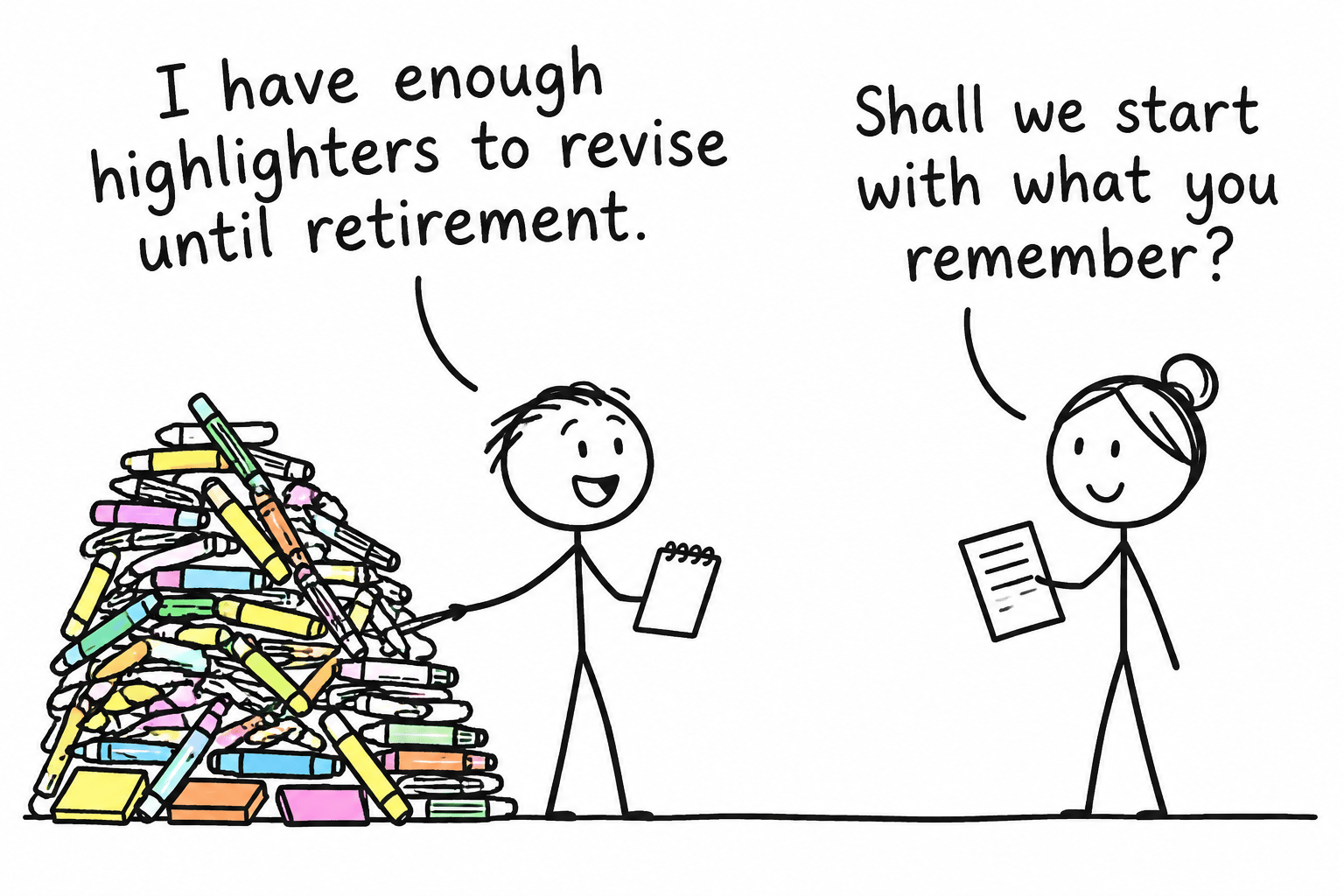 A student surrounded by unused highlighters while a parent suggests beginning with a practice sheet
Track evidence of learning
Reading notes, highlighting a page or watching a video can create familiarity. Yet recognising a method is different from retrieving it independently in an exam.
For each topic, collect a small piece of evidence: an explanation without notes, a completed question set, a mini test or a second attempt several days later.
Sam might watch a revision lesson and then answer questions without looking back. The score matters, but the errors guide the next step. A dropped negative sign needs a different response from not understanding how to begin.
MathsGenie's GCSE maths mini tests offer focused checks. The forty-five-minute maths tests provide a broader checkpoint after revising several topics.
Use a simple weekly scorecard
A useful tracker can be a notebook page with one row per topic.
| What to record | Question to answer |
|---|---|
| Planned work | What did I intend to complete? |
| Completed work | What did I finish? |
| Evidence | What question set or recall check did I use? |
| Current confidence | Is the topic secure, developing or weak? |
| Error pattern | What repeatedly cost marks? |
| Next week | Should I revisit, practise or move on? |
Use confidence labels carefully. “Secure” should mean you can recall the knowledge and apply it independently after a gap.
If Sam understands a demonstration but struggles alone, “developing” is the more useful label. It signals another practice session, without turning a difficulty into a judgement about ability.
Use these priorities to build your weekly schedule in the MathsGenie Revision Planner.
Run the same review every week
Choose a regular review time, perhaps Friday evening or Sunday afternoon. A familiar routine makes it easier to notice patterns across several weeks.
Look back
Compare planned sessions with completed sessions. Ask why work was missed. A timetable that repeatedly clashes with clubs, homework or family commitments needs adjusting.
Parents can help by asking neutral questions. “What did this week teach us about the plan?” keeps the conversation focused on practical changes.
Test something old
Check material revised earlier, alongside recent work. Try a mini test, exam questions or a blank-page recall exercise. This reveals whether learning is lasting and gives older topics another opportunity for practice.
Study the errors
Separate forgotten knowledge, misunderstood methods, misread questions, unclear working, timing difficulties and arithmetic mistakes.
Each category suggests a different response. Forgotten knowledge needs retrieval practice; an unclear method may need another lesson. “Improve algebra” is vague. “Practise expanding brackets and check negative signs” gives next week's session a clear purpose.
Adjust the next week
If a topic is secure, reduce its frequency but return to it later. If it is developing, schedule targeted practice. If it remains weak, revisit the lesson before attempting more exam questions.
Carry forward essential unfinished work and leave enough space to complete it properly.
Measure progress as exams approach
Early in GCSE or A Level revision, track coverage against your specification. This helps identify untouched topics and areas needing attention.
Later, include more mixed questions, timed sections and complete papers. These test whether you can select methods independently when the topic is not announced beforehand.
Use the GCSE past and predicted papers alongside the appropriate mark schemes. Keep conditions similar when comparing scores, and record whether you used notes or extra time.
Similar marks can hide different problems. One paper may reveal knowledge gaps; another may show stronger understanding but unfinished questions. Let that distinction shape your next week. A Level students can use the same review cycle, allowing enough time for longer questions and corrections.
Common mistakes when tracking revision
Counting hours alone. Time records your effort. Pair it with questions or recall checks to assess learning.
Ticking off topics permanently. Schedule a later check before treating a topic as secure.
Rewriting everything after a difficult week. Protect priority sessions and adjust the workload rather than repeatedly starting again.
Stopping after marking. Use mark schemes and video solutions to understand errors, then attempt a similar question independently.
Overcomplicating the tracker. Keep only information that helps you decide what to practise next.
Turn your review into action
For a student like Sam, the timetable becomes more useful when each week's evidence shapes the next. Choose one uncertain topic, complete a short check and record the next action. Then use MathsGenie's free revision lessons, practice questions and Revision Planner to put that action into your schedule.