Tell Parents You’re Struggling with GCSE Citizenship
Tell parents you’re struggling with GCSE Citizenship Studies calmly. Explain the problem, request practical support and build a realistic revision plan.
Sometimes the hardest sentence in revision is not an answer in an exam. It is: “I’m falling behind.” You may have searched “tell parents struggling GCSE Citizenship Studies” because even typing the full thought felt uncomfortable. The useful answer is simple: choose a calm moment, describe the specific difficulty, explain what you have already tried and ask for one or two practical forms of support.
That structure gives the conversation somewhere to go. It makes it less likely to become a lecture about effort and more likely to become a plan. You are not announcing failure. You are identifying a problem while there is still time to act.
A quick conversation checklist
Before speaking to your parents or carers, prepare these five things:
- the part of Citizenship Studies you are finding difficult;
- one piece of evidence, such as a recent assessment or unfinished revision task;
- what you have already tried;
- the support you want from them;
- the next step you will take at school.
You do not need a perfect speech. A few notes on your phone or a piece of paper can stop nerves from turning a clear concern into “Everything is going badly.”
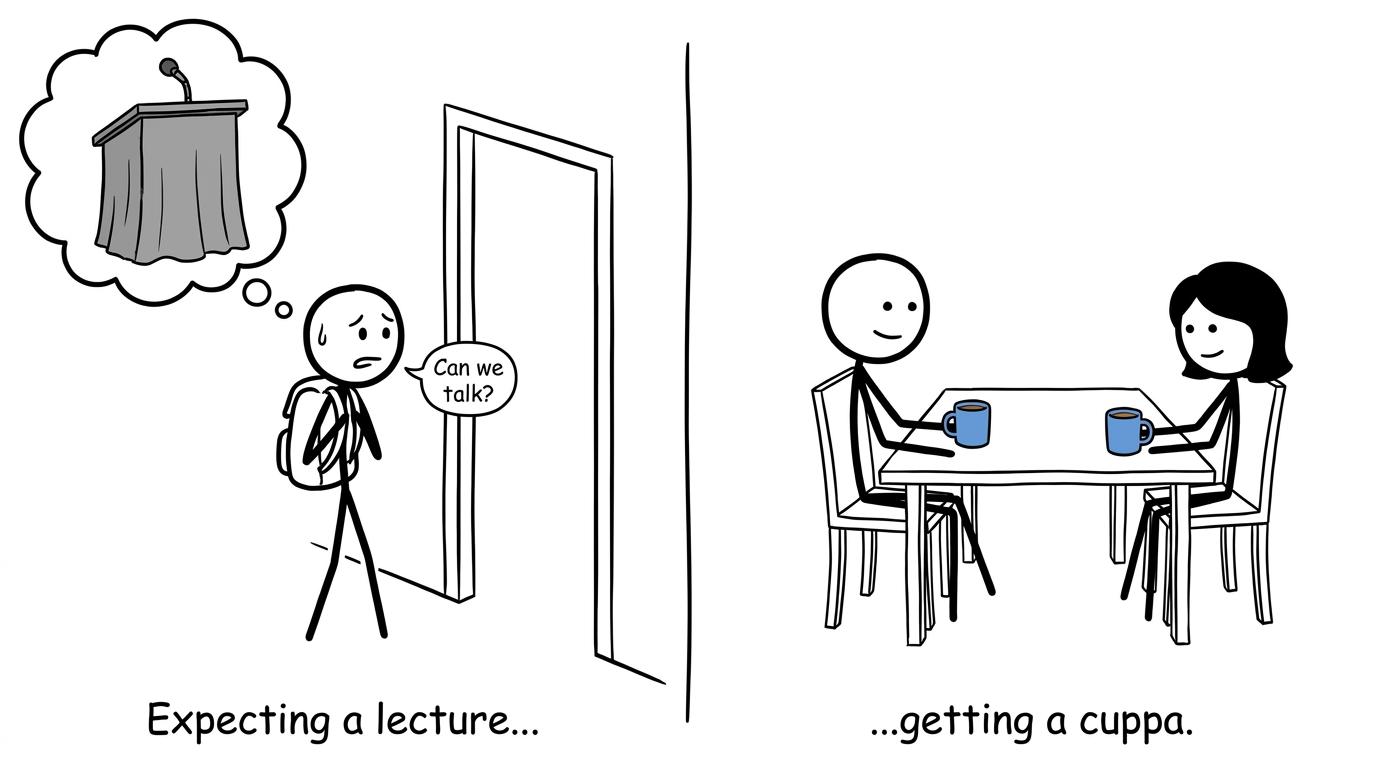 A nervous student discovers that the expected parental lecture is really just a conversation over tea
Work out what “struggling” actually means
“Citizenship is difficult” is true but broad. Parents may respond with broad advice because they cannot see the precise obstacle. Before talking, narrow the problem down.
GCSE Citizenship Studies can cover democracy and government, rights and responsibilities, law, identity, communities and participation in society. It also involves active citizenship and the ability to use evidence, consider contrasting viewpoints and reach justified conclusions. Exact content and assessment requirements depend on your exam board and specification, so check whether you take AQA or Pearson Edexcel rather than relying on a friend’s course.
Ask yourself which difficulty is closest to yours:
- I do not understand some of the course content.
- I know the facts but cannot structure longer answers.
- I run out of time in assessments.
- I find it difficult to use evidence and explain contrasting viewpoints.
- I have missed lessons or fallen behind with notes.
- I keep prioritising maths, English or science and leaving Citizenship until later.
- I feel so worried about the subject that I avoid starting.
The distinction matters. A knowledge gap may require a teacher’s explanation. Weak extended responses may require practice with assessment objectives and mark schemes. Avoidance may require a smaller timetable and support with stress. One label can hide several different problems.
Choose a moment that reduces the chance of a lecture
Timing cannot guarantee a perfect response, but it can improve the odds. Avoid beginning the conversation when someone is leaving for work, dealing with another problem or already upset. Ask for a short, uninterrupted conversation instead.
You might open with:
“Could we talk about Citizenship Studies later? I’m falling behind, and I want your help making a plan rather than leaving it until the exams.”
This opening does three useful things. It names the subject, shows that you want to improve and tells your parents what kind of conversation you need.
If speaking face to face feels overwhelming, send a message first. Writing “I need to talk about school, but I’m worried it will turn into a lecture” can make your concern clear before the discussion begins.
Use facts without turning the conversation into a courtroom
Citizenship teaches students to examine evidence, but home should not become a cross-examination. Bring enough information to make the problem visible, not a folder designed to prove that everything is hopeless.
Useful evidence might include:
- a recent mark and the teacher’s feedback;
- a list of topics you cannot yet explain confidently;
- an unanswered practice paper;
- a missed deadline;
- your current weekly revision timetable;
- a note showing where Citizenship competes with maths revision.
Then use a four-part structure:
Say what is happening
Be specific: “I understand the basic content, but my longer answers do not explain evidence clearly enough.”
Say why it matters
Explain the consequence: “I’m losing marks and beginning to avoid practice because I don’t know how to improve it.”
Say what you have tried
Mention honest attempts, even if they have not worked: rereading notes, completing a question, asking a classmate or reviewing feedback.
Ask for defined support
Try: “Could you help me protect two quiet revision sessions this week and remind me to speak to my teacher tomorrow?”
A precise request is easier to answer than “Can you fix this?” Parents do not need to know the Citizenship specification to help create time, contact school or listen while you explain a topic.
How to prevent the discussion becoming a lecture
Parents may react strongly because they are surprised or worried. Concern can sound like criticism, even when the intention is to help. You can guide the conversation without becoming confrontational.
Say what would be useful:
“I know you may be disappointed, but I need help deciding my next steps first. Could we discuss why it happened after we have a plan?”
If the conversation begins circling around how long you spend on your phone, acknowledge the point and redirect it:
“That may be part of it, and I’m willing to change my routine. Could we agree what I should do this week?”
Do not promise an instant transformation. A smaller promise that you can keep is more credible: speak to the teacher, complete one timed response or organise the missing notes. Trust usually grows through repeated actions, not one dramatic conversation.
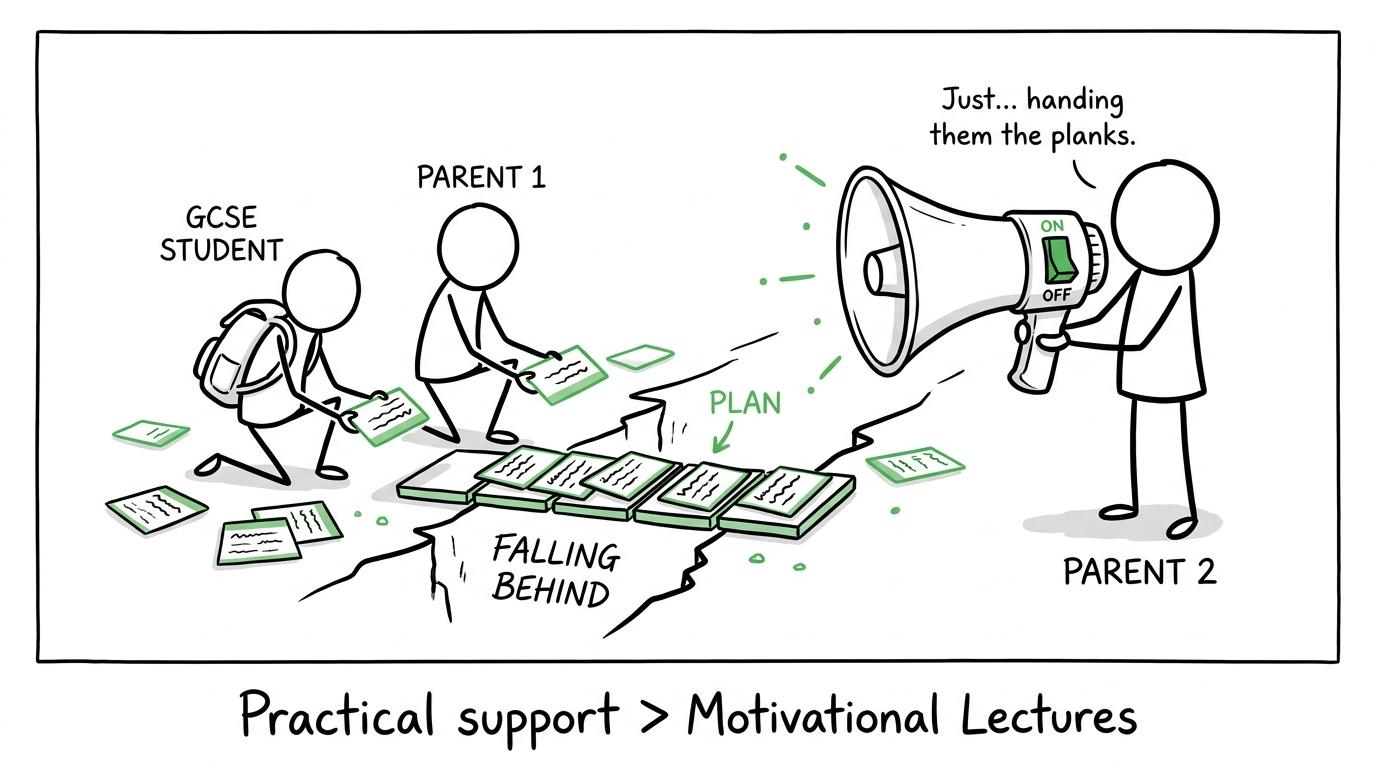 A student and parent build a practical revision bridge while the motivational megaphone stays switched off
Ask for help that matches the problem
Different difficulties need different support. Consider asking your parents or carers to:
- provide a quiet place for a planned revision session;
- help you contact your Citizenship teacher or form tutor;
- check that your timetable is realistic rather than overloaded;
- listen while you explain an issue or viewpoint aloud;
- help obtain the correct textbook or school materials;
- encourage you to stop revision at a sensible time and sleep;
- arrange a meeting with school if absence, additional needs or wellbeing is affecting progress.
Your subject teacher remains the best person to clarify the specification, assessment objectives and question requirements. Ask which topics need attention first, what your recent response was missing and which practice task would be most useful next.
If talking to your parents does not feel safe or you expect a reaction that could put you at risk, speak to a trusted adult at school instead. A teacher, form tutor, pastoral lead or safeguarding lead can help you decide how the concern should be raised.
Build a plan that protects your maths revision too
Students rarely struggle with only one demand on their time. Citizenship may be falling behind while maths, English and science continue to produce homework, assessments and revision tasks. The answer is not to abandon one subject for another. It is to make the workload visible.
For maths, use the free GCSE revision lessons and exam questions to identify topics rather than revising “all of maths”. You can then place short, purposeful sessions beside Citizenship tasks in your weekly plan.
Use the MathsGenie revision planner to organise what you will do and when. Keep tasks concrete: a Citizenship topic review, one extended response or one maths mini test. “Revise for exams” is too vague to begin.
When you need to check your maths under exam conditions, choose the correct board from the Edexcel GCSE maths past papers, AQA GCSE maths past papers or OCR GCSE maths past papers. Mark schemes and video solutions can then show whether the issue is knowledge, method or exam technique.
Closer to the exam period, GCSE maths predicted papers can support focused practice. They should complement specification coverage and past-paper work, not replace them. For shorter checks between larger tasks, MathsGenie mini tests make it easier to keep maths moving without allowing it to consume every revision session.
The goal is not to create a beautiful timetable. It is to make the next action obvious.
What to do after the conversation
Within the next school day, complete the first agreed action. Speak to your teacher, gather missed materials or submit the practice response you discussed. This shows your parents that the conversation was the beginning of action, not simply a release of worry.
Arrange a brief check-in after several days. Report what has changed, what remains difficult and whether the support is helping. If the first plan was unrealistic, adjust it. Revision plans are tools, not promises carved in stone.
Keep evidence of improvement wider than marks. Better signs may include beginning work without avoidance, completing an answer in time, understanding feedback or knowing exactly what to ask the teacher. Marks often follow those changes rather than arriving first.
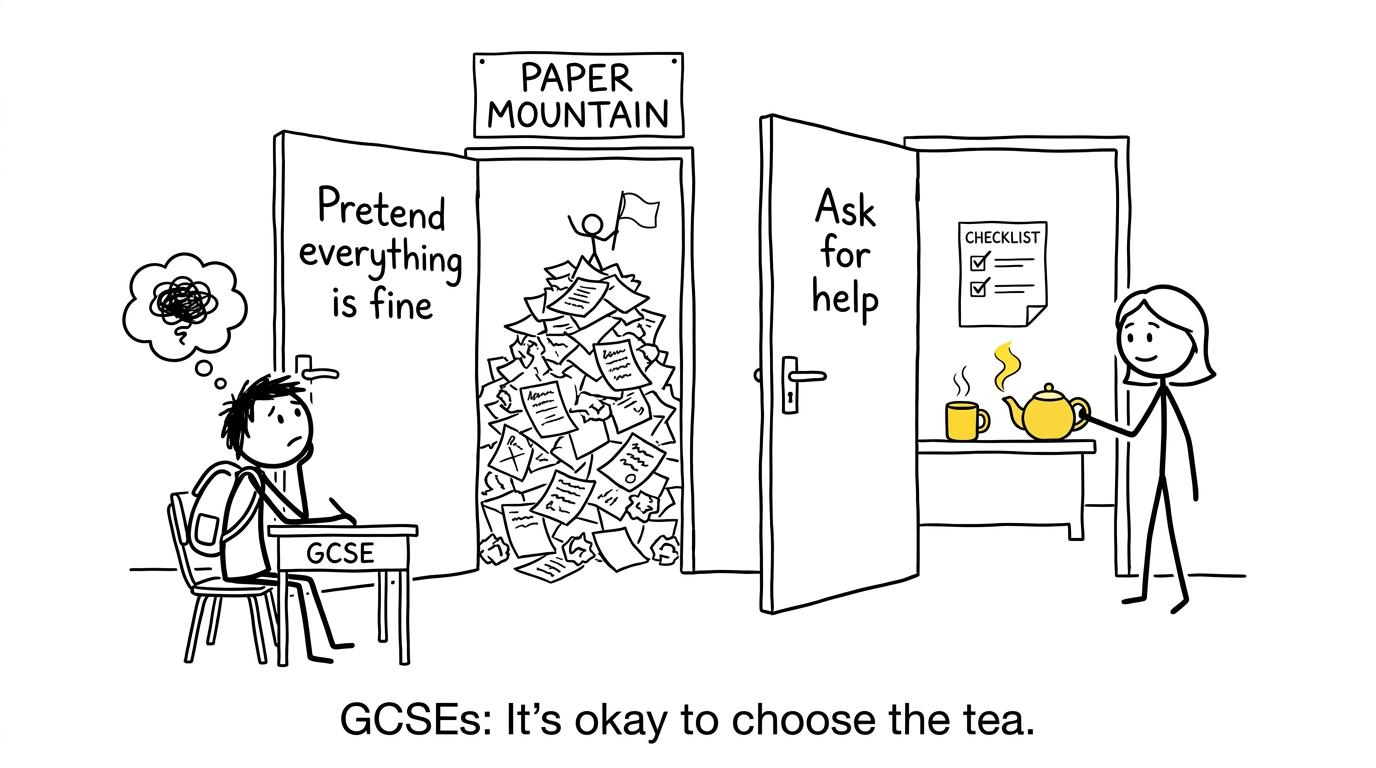 A student chooses asking for help instead of letting an ignored paper mountain continue to grow
Common mistakes when telling parents you are struggling
Waiting for a report or parents’ evening
Silence can feel easier today but removes time and choices later. Raise the problem when you notice a pattern, not only when an official result reveals it.
Starting during an argument
If the conversation begins while everyone is defensive, even sensible advice can sound hostile. Request another time unless the matter is urgent.
Making the problem sound universal
Statements such as “I’m terrible at everything” hide the part that can be changed. Name the topic, skill or routine causing difficulty.
Blaming the teacher, the course or yourself entirely
There may be several causes. Focus first on what support is available and what action you can control.
Asking for support without proposing a next step
Parents are more likely to lecture when they believe nothing is being done. Arrive with one realistic action, even if you need help shaping the rest.
Creating an impossible catch-up timetable
Trying to repair months of difficulty in one weekend often creates another disappointment. Prioritise according to teacher advice, deadlines and the areas most likely to unlock further progress.
One honest conversation can change the direction
Falling behind in GCSE Citizenship Studies is a problem to address, not a judgement about your ability. Tell your parents early, make the difficulty specific and ask for practical support. If their first response is not ideal, return the conversation to the plan: what help is needed, who at school should be involved and what you will do next.
Then make revision manageable across all your subjects. Use MathsGenie’s free revision lessons, practice questions, mini tests, past papers, predicted papers, mark schemes and video solutions to keep your maths preparation organised while you rebuild confidence in Citizenship. Open the GCSE maths revision hub, choose one clear task and let a small completed action begin the recovery.