

Supporting a Friend After Bad GCSE Results
Supporting a friend after GCSE results starts with listening. Learn what to say, what to avoid, and how to help after disappointing grades calmly.
Opening GCSE results beside friends can make every grade feel public. One person celebrates; another becomes unusually quiet. If you are supporting a friend after GCSE results, your first job is not to rescue their plans or persuade them that the grades do not matter. Listen, acknowledge the disappointment and help them find the right adult when they are ready.
A disappointing result can affect a sixth-form course, college place or simply how someone sees themselves that morning. Calm company is often more useful than instant advice.
A quick support checklist
- Give them space to react without judgement.
- Listen before suggesting solutions.
- Avoid comparing grades.
- Ask whether they want comfort, practical help or privacy.
- Encourage them to speak to a teacher, exams officer or trusted adult.
- Check in again after results day.
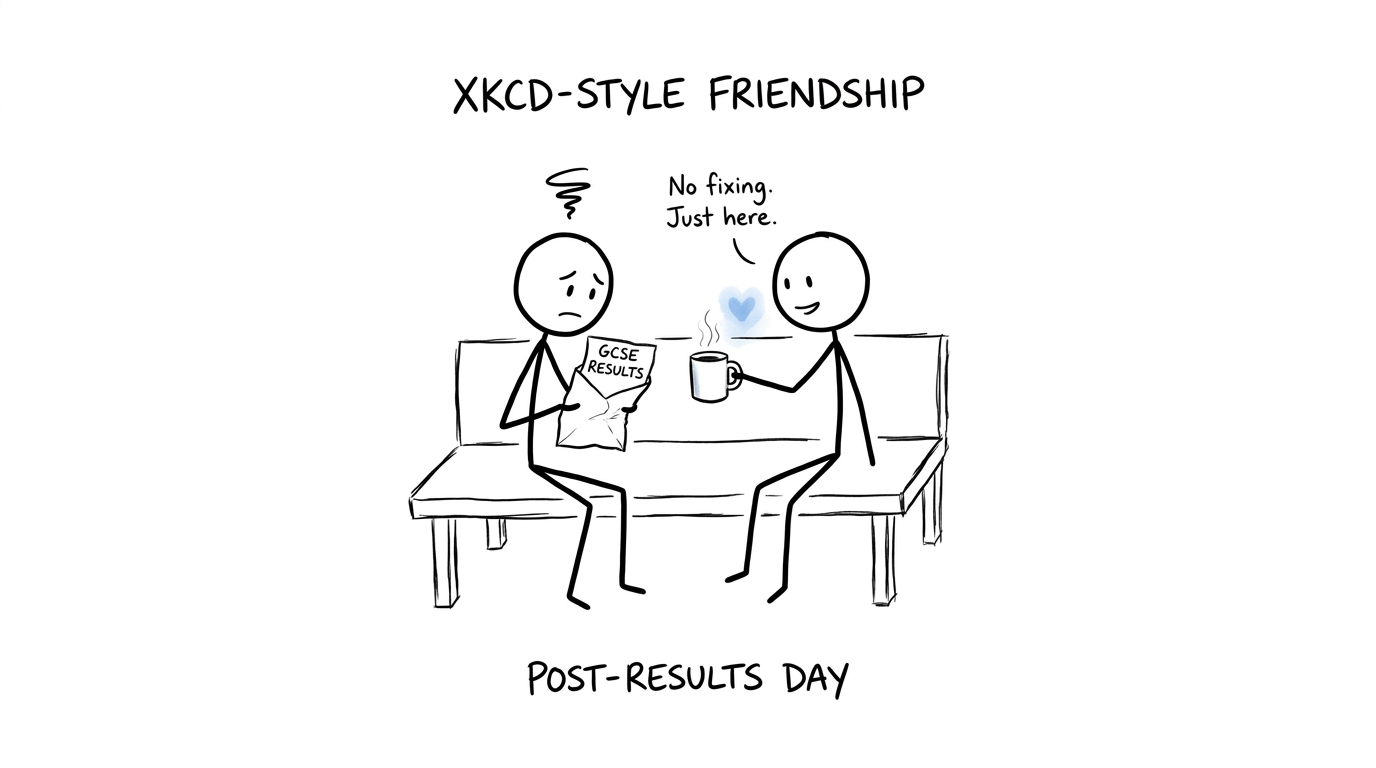 Two friends quietly supporting each other after GCSE results
Tips for comforting a friend after bad GCSE results
Start with one simple question
Try: “Do you want to talk about it, or would you rather have some space?”
This gives your friend control. They may want to explain everything, leave the building or sit silently for a while. None of those reactions needs correcting.
Avoid rushing into phrases such as “It could be worse” or “You’ll be fine”. They are usually intended kindly, but they can make disappointment sound unreasonable. A better response is: “I can see why you’re upset. I’m here.”
Keep your own results out of the comparison
Results day makes comparison almost automatic. Even so, announcing your marks, discussing grade boundaries or naming everyone who performed better can deepen embarrassment.
Ask before sharing your own grades. If your friend says no, respect that. Friendship on results day is not pretending your achievement does not matter; it is recognising that celebration can wait until you are somewhere else.
Ask what kind of help they want
Support can mean different things:
- Emotional help: listening or sitting together.
- Practical help: finding a teacher or contacting a college.
- Information: checking the next available options.
- Privacy: not discussing their grades with other people.
Do not assume they want a revision plan immediately. Advice becomes useful when someone is ready to receive it.
Help them find accurate next steps
If a grade appears unexpected, encourage your friend to speak promptly to their school or college. Official post-results guidance says a school or college can request a review from the exam board when it believes an error may have occurred. The exams officer can explain deadlines, costs, consent and whether a review is appropriate.
A review is not something friends should promise will change a grade. Your role is simply to help them ask informed questions.
If another maths attempt becomes part of the plan, begin with the correct exam board and tier. MathsGenie has free GCSE Maths revision resources for Edexcel, AQA, OCR and Eduqas, including topic practice and papers. Students can also use the revision planner to turn an overwhelming goal into manageable sessions.
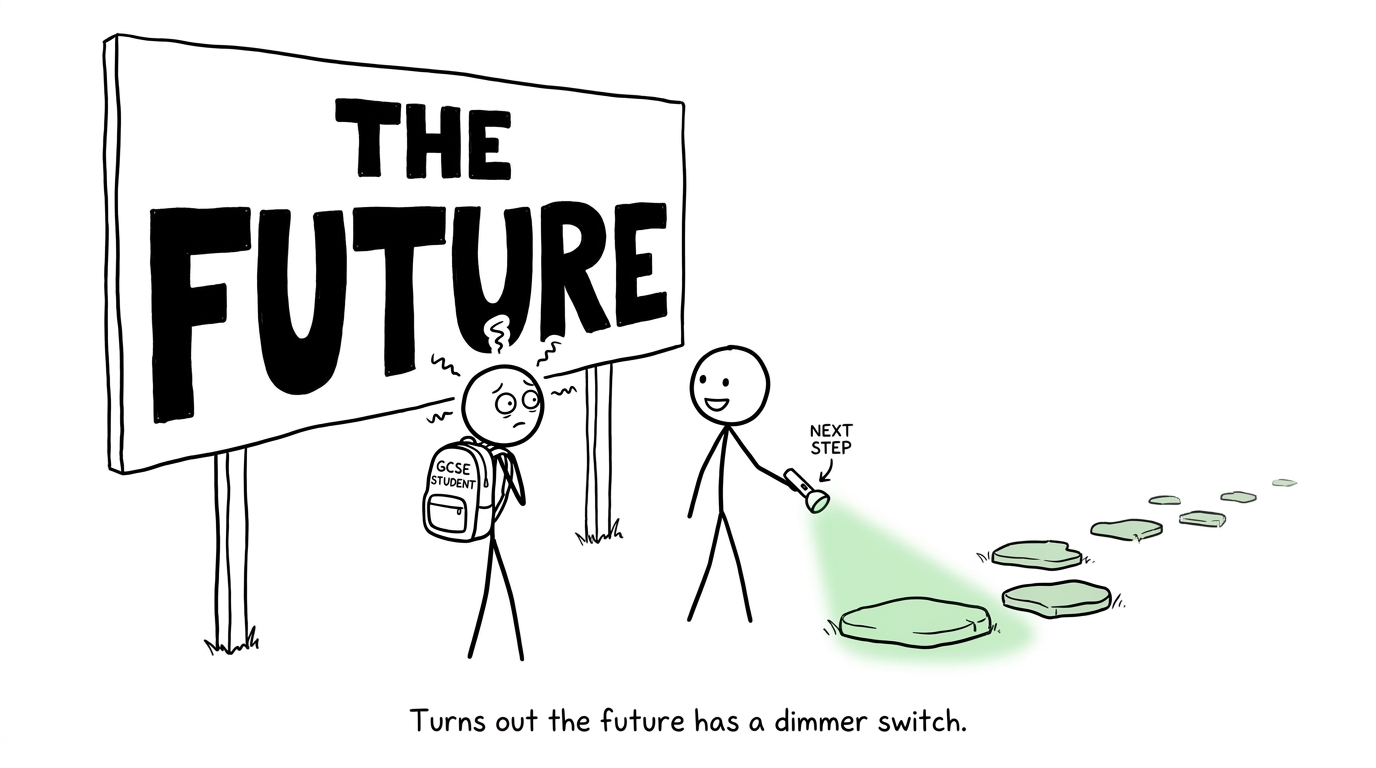 A friend lighting one small next step towards the future
Check in after the crowd disappears
Results day support should not end at lunchtime. Send a message later that day or during the following week. A quiet “How are you feeling now?” can matter more than a dramatic speech in a crowded hall.
If your friend wants to rebuild their maths confidence, offer to work alongside them rather than supervise them. They could start with Edexcel GCSE Maths revision, AQA GCSE Maths revision or focused Edexcel revision guides. Later, GCSE maths past papers and predicted papers can help them practise under timed conditions.
Common mistakes when supporting a disappointed friend
- Trying to fix everything immediately: listen first.
- Calling the result unimportant: it may feel very important to them.
- Making promises: do not guarantee a remark, course place or higher future grade.
- Sharing their grades: let your friend decide who knows.
- Turning support into pressure: a colour-coded timetable is not always the answer on results day.
- Ignoring serious distress: if they talk about harming themselves, feeling unsafe or not wanting to live, tell a trusted adult immediately. If there is immediate danger, call emergency services.
Be present for the next step
Supporting a friend through disappointing GCSE results is mostly about making the moment less lonely. Listen without comparison, protect their privacy and help them reach reliable support.
When they are ready to think about maths again, MathsGenie offers free revision lessons, practice questions, mini tests, mark schemes, video solutions, past papers and predicted papers through its GCSE revision resources. You do not need to map their entire future. Sometimes being there for the next small step is enough.











