

Supporting a Friend After Bad A-Level Results
Supporting a friend after bad A-Level results starts with listening. Learn what to say, useful next steps, and when to involve a trusted adult at school.
Results day can change mood in seconds. One friend is celebrating; another is staring at grades that feel nothing like the future they imagined. If you are supporting a friend after disappointing A-Level results, the most helpful first step is simple: listen without comparing, fixing or rushing them.
A-Level results day in England is Thursday 13 August 2026. Your friend may still have a university place, or they may need time to consider Clearing, a review of marking, resits, an apprenticeship or another route. You do not need to solve everything. You need to help them feel less alone while they find reliable advice.
A quick results-day support checklist
- Give them space to react.
- Listen before suggesting solutions.
- Avoid comparing grades.
- Ask what kind of help they want.
- Encourage them to speak to their school or college.
- Check in again after results day.
- Tell a trusted adult if you are seriously worried about their safety.
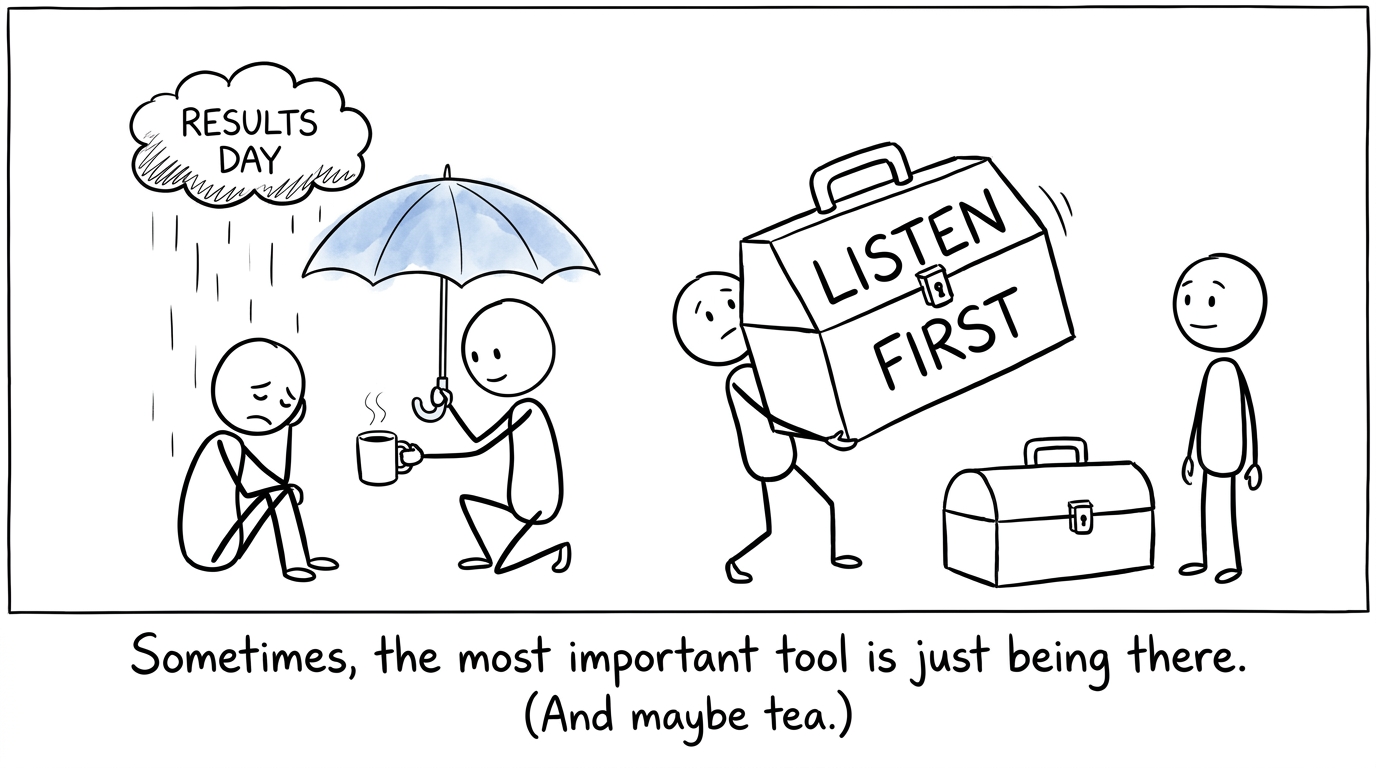 A supportive friend shelters someone from the results-day rain cloud
Tips for comforting a friend after bad A-Level results
Start by listening
Disappointment does not always need an immediate positive spin. Your friend might be shocked, angry, embarrassed or quiet. Let them decide whether they want to talk.
You could say, “I’m here. Do you want to talk, or would you rather have some space?” This gives them control on a day when events may feel beyond their control.
Avoid interrupting with your own results. Even a well-meant story can turn support into comparison.
Acknowledge what the result means to them
Saying “grades do not matter” can feel dismissive when someone has worked for months or believes a university offer is at risk. A better response is: “I know how much this mattered to you. I’m sorry today has been so difficult.”
A result can matter without defining a person. Both things can be true.
Ask before offering practical help
Once your friend has had time to breathe, ask: “Would you like me to help you look at your options?”
They should check UCAS Hub because it shows the status of university choices, although it does not display their grades. If a place is not confirmed, they can speak to a teacher, careers adviser or university admissions team about Clearing and other routes.
If they believe a marking error occurred, encourage them to contact their school or college promptly. In England, the centre can request access to a script or a review of marking. Marks and grades can remain unchanged, rise or fall, so this needs informed advice rather than a rushed decision.
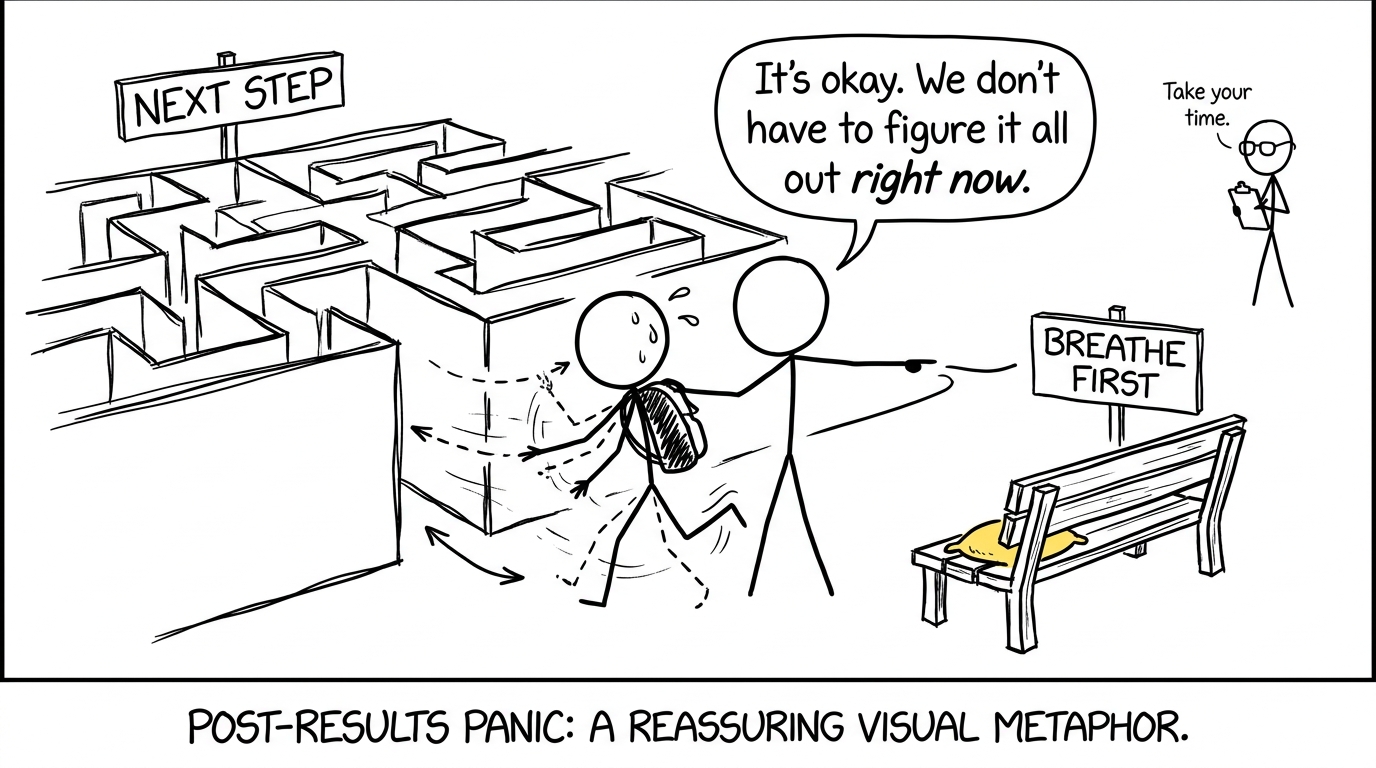 Two friends pause before entering the maze of next steps
Offer small, specific support
“Let me know if you need anything” is kind, but it leaves an upset person with another decision. Try a specific offer:
- “Shall I sit with you while you call college?”
- “Would a short walk help?”
- “Do you want me to help write down your questions?”
- “Would you like me to check in this evening?”
The decision remains theirs. You are offering company, not taking control.
Keep their results private
Do not share grades, screenshots or university news without permission. Results belong to the student. This matters particularly when group chats and social media make private information travel quickly.
Check in after the crowd disappears
Results-day support should not end by lunchtime. Send a message later that day and again during the following week. The first shock may pass, but decisions about applications, resits or alternative routes can take longer.
If your friend chooses to strengthen their maths before resitting or moving into further revision, point them towards free, structured resources rather than making the choice for them. MathsGenie has a complete GCSE Maths revision hub, Edexcel GCSE revision resources, topic worksheets with answers and Edexcel past papers. Students continuing with maths can also explore OCR A-Level Maths revision.
Common mistakes when supporting a disappointed friend
- Forcing optimism: “Everything happens for a reason” may close down an honest conversation.
- Turning it into a comparison: Your grade does not make their disappointment smaller.
- Assuming university is the only route: Clearing, resits, foundation years, apprenticeships and other plans may all deserve consideration.
- Taking over: Support their decisions rather than making calls or choices without permission.
- Ignoring serious warning signs: If they talk about harming themselves, seem unsafe or cannot cope, involve a trusted adult immediately. In an emergency, call the emergency services.
Be the steady person, not the perfect person
Comforting a friend after bad A-Level results is not about finding one brilliant sentence. It is about staying calm, listening carefully and helping them reach qualified support when they are ready.
For your own GCSE preparation, you can reduce some results-day uncertainty by building a steady routine now. Use MathsGenie’s GCSE predicted papers, revision lessons, practice questions, mini tests, mark schemes and video solutions to learn from mistakes before the real exams. Start small, practise consistently and remember to be as patient with yourself as you would be with a friend.











