

A Six-Month GCSE Maths Revision Plan That Works
A six-month GCSE Maths revision plan with topic triage, weekly sessions, past papers, rest days and a calm way to recover when you fall behind.
A six-month GCSE Maths revision plan works best when it changes gradually. Find your weakest topics, build a repeatable weekly routine, introduce timed papers later and leave space for rest and catch-up.
Six months can feel generous until schoolwork, other GCSEs and ordinary life fill the calendar. A realistic plan expects missed sessions and tells you what to do next.
For help balancing topics and time, begin with the GCSE Maths revision timetable guide. The structure below turns those principles into practical weekly decisions.
Your six-month plan at a glance
- Months 1-2: diagnose gaps and rebuild essential knowledge.
- Months 3-4: practise mixed topics and strengthen problem-solving.
- Month 5: complete timed sections and full past papers.
- Month 6: correct recurring errors and rehearse exam conditions.
- Every week: include questions, marking, corrections and rest.
- Every month: review your priorities and adjust the timetable.
Months 1-2: identify your topic priorities
Writing every topic into a calendar in specification order feels organised, but it treats secure knowledge and serious gaps as equally urgent. Instead, divide topics into three groups:
- Red: you cannot begin typical questions without help.
- Amber: you understand the method but make errors or need prompts.
- Green: you can answer independently and explain your method.
Use a school assessment, mixed questions or a past paper to make your first judgement. Check that resources match your exam board and teacher-confirmed foundation or higher tier.
Start red topics with a revision lesson and untimed practice. Amber topics need questions and careful corrections. Green topics need occasional retrieval, but should not consume most of your time.
The GCSE Maths revision hub provides lessons and practice across the course, giving each session a clear starting point.
At the end of month two, repeat some diagnostic questions. Move a topic from red to amber because your answers have improved, rather than because you have watched a video.
Months 3-4: build a weekly revision rhythm
Create a timetable that can survive an ordinary school week. Try three focused sessions, adjusting their length around homework and other subjects.
Learn and practise
Choose one red or amber topic. Review the method, then answer questions without copying the steps. Mark your work and record the precise error.
Retrieve and mix
Revisit last week's topic before answering questions from several areas. Mixed practice helps you recognise which method a question needs without a topic heading providing the clue.
Test and correct
Complete a mini test or timed section. Use the mark scheme, then redo incorrect questions without looking at the solution.
Keep tasks specific. “Revise algebra” leaves too many decisions. “Complete expanding brackets questions, mark them and redo errors” gives you a finish line.
Protect a full rest day and leave a catch-up slot empty unless something needs moving. You can map this routine in the MathsGenie Revision Planner.
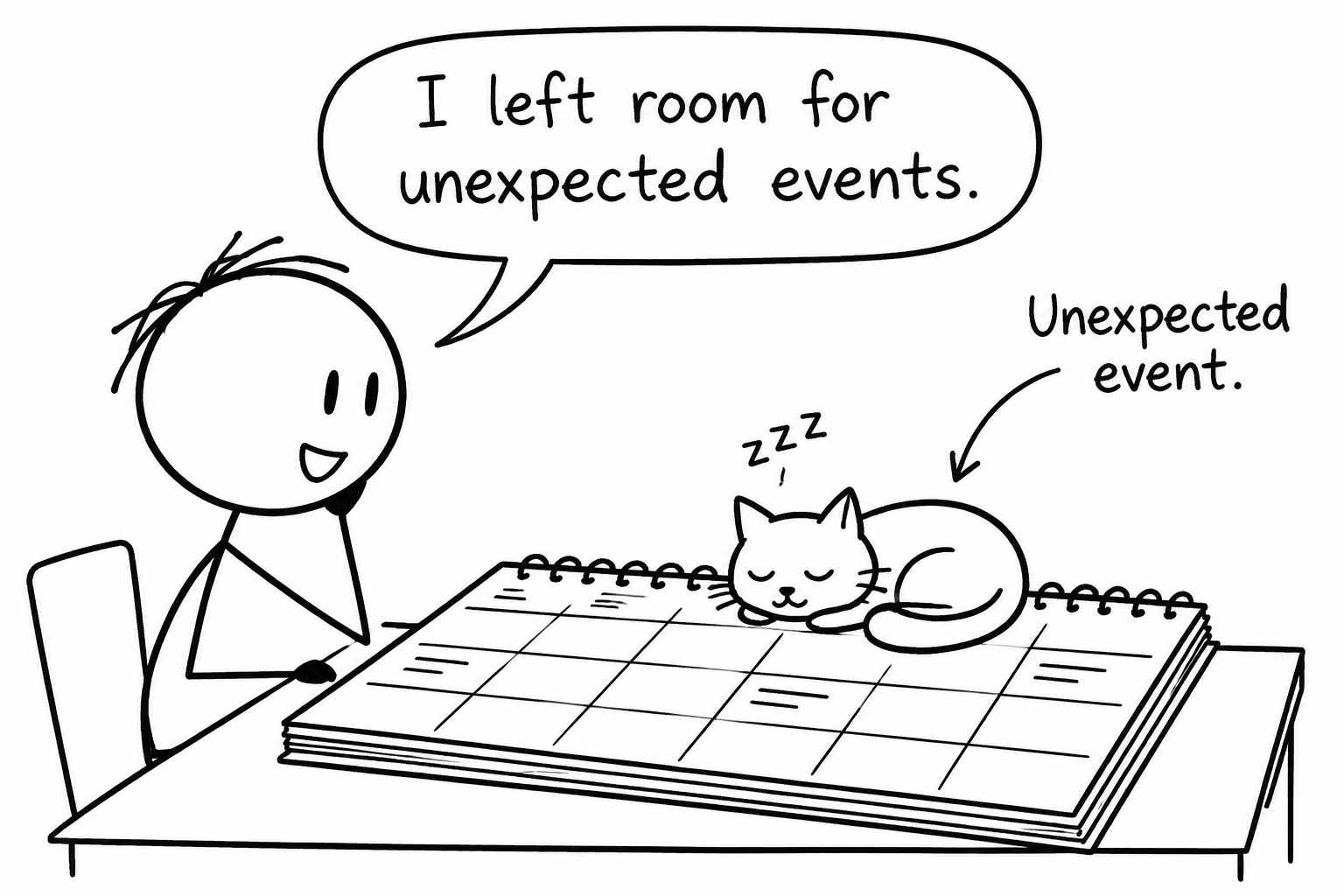 A GCSE student wisely leaves room in a revision calendar for an unexpected cat
Month 5: introduce regular past papers
Use one timed paper or substantial paper section each week, alongside targeted topic practice. Choose your board and tier; students following Edexcel can use GCSE Maths past papers and mark schemes.
The most useful work starts after the timer stops. Label each lost mark:
- Knowledge: you did not know the method.
- Recognition: you knew the method but did not identify it.
- Accuracy: arithmetic, algebra or rounding went wrong.
- Communication: working or reasoning was incomplete.
- Timing: you rushed or did not reach the question.
Let this evidence shape next week's sessions. Repeated fraction errors call for fraction practice; repeated sign errors call for checking each algebraic line.
Mark schemes explain how marks are awarded, while video solutions help you compare methods. Predicted papers can add variety, but should supplement specification-matched past papers.
Month 6: rehearse and repair
The final month is for making your knowledge easier to access under pressure. Complete papers in realistic conditions, following the calculator rules for each paper, and review each attempt before starting another.
Keep a short list of recurring errors, such as missing units, mishandling negative numbers or leaving reasoning incomplete. Read it before timed practice and check it afterwards.
Use mini tests between papers to revisit weak topics. If time is shorter, the one-month GCSE Maths revision plan helps you compress the same learn, practise, mark and retest cycle.
In the final days, reduce the workload, review familiar methods, organise equipment and protect sleep.
What to do when you fall behind
Imagine missing a week and moving every unfinished task into the next. The timetable becomes harder precisely when you need it to become manageable.
Keep the most important missed task, usually a red topic or marked correction. Delay lower-priority green-topic practice and use your catch-up slot for one defined task. Avoid doubling the workload.
If you miss several weeks, repeat a short diagnostic assessment. Lessons and mocks may have changed your priorities. Rebuild from your current needs.
Common revision planning mistakes
Filling every hour: leave breathing room for homework and difficult days.
Watching without practising: follow revision lessons with independent questions to check whether you can apply the method.
Collecting scores without corrections: record why marks were lost and revisit the skill later.
Choosing only comfortable topics: maintain secure knowledge while giving red and amber topics more attention.
Removing rest: preserve sleep, meals and time away from revision so your routine remains manageable.
Turn the plan into your schedule
Choose your first priority topic, book three manageable sessions and decide when you will review them. You do not need to schedule every question six months ahead.
Use MathsGenie's free revision lessons, practice questions and past papers to give each session a purpose. Build your schedule in the MathsGenie Revision Planner, then adjust it as your marked work shows what needs attention next.















