

Revise GCSE Bengali With a Sibling: Does It Help?
Revise GCSE Bengali with sibling support effectively. Learn what past experience still helps, what may be outdated and how to protect your maths revision.
The night before a speaking practice, an older sibling can feel like the perfect person to ask. They know Bengali, remember the nerves and have already walked into the exam room. But if your plan is to revise GCSE Bengali with sibling support, use their experience carefully: they can be an excellent practice partner, yet they should not be your source of truth about the current exam.
The most useful help is active and practical: testing vocabulary, holding conversations, checking whether an answer makes sense and helping you maintain a routine. What may be outdated is their memory of paper formats, timings, themes, tier rules and mark schemes. Check those details against your current specification and teacher guidance.
That distinction matters even more if Bengali is one of several subjects competing with GCSE maths for your time. Your sibling should make revision more efficient, not turn every evening into an unplanned lesson.
The quick answer
Working with a sibling is likely to be useful when they:
- test you without showing the answer first;
- listen to your spoken Bengali and ask natural follow-up questions;
- help you notice unclear pronunciation or wording;
- use a current paper, mark scheme or teacher checklist;
- keep sessions short and focused;
- respect the time you have reserved for GCSE maths.
Be cautious when they:
- insist that their exam format is still current;
- teach memorised answers as if the same questions will return;
- correct formal Bengali solely according to family speech habits;
- give generous marks because they understand what you meant;
- replace your teacher, specification or official assessment materials.
The principle is simple: use your sibling for interaction, feedback and accountability. Use current documents for assessment facts.
Why sibling support can work
A sibling who has completed the qualification occupies a useful middle ground. They are not an examiner, but they understand both the language and the experience of preparing for a timed assessment.
Educational evidence on peer tutoring suggests that structured peer support can help learners, particularly when it is used to review or consolidate material rather than introduce unfamiliar content. Structure is the important word. Sitting together and vaguely “going over Bengali” is companionship; one person asking questions, checking responses and recording weaknesses is revision.
They can turn recognition into recall
Vocabulary often feels familiar when it is visible. That is not the same as being able to produce it during an exam. Ask your sibling to say an English word, describe a situation or name a theme while you retrieve the Bengali without looking at notes.
Only reveal the answer after you have made a genuine attempt. Retrieval practice is most useful when recall comes before support and corrective feedback follows. Your sibling can therefore run a simple cycle:
- prompt;
- wait;
- listen;
- correct precisely;
- return to the same item later.
This same habit transfers neatly to maths. Looking at a completed solution can create familiarity without independence. On the MathsGenie GCSE maths revision hub, use revision lessons to learn a method, then close the explanation and attempt the practice questions yourself.
They can create genuine conversation
Speaking to a recording is useful, but it cannot react. A sibling can interrupt politely, ask for a reason, change the direction of a conversation or request clarification. That makes you practise responding rather than delivering a speech from memory.
Ask them to vary the difficulty. One round might focus on accurate basic answers. Another can require opinions, reasons and different time frames where these are relevant to your current course. They should note repeated problems rather than correcting every sentence mid-flow, which can destroy fluency and confidence.
They can spot language that sounds unnatural
Someone who uses Bengali regularly may notice when an expression is technically understandable but awkward. That is valuable. However, home Bengali can include regional vocabulary, informal phrasing and code-switching. None of those is inherently wrong, but exam writing may require a more formal or standard register.
When your sibling suggests a correction, record it and check uncertain points with your teacher or current course materials. The best question is not merely, “Would our family say this?” It is also, “Is this accurate and suitable for the task?”
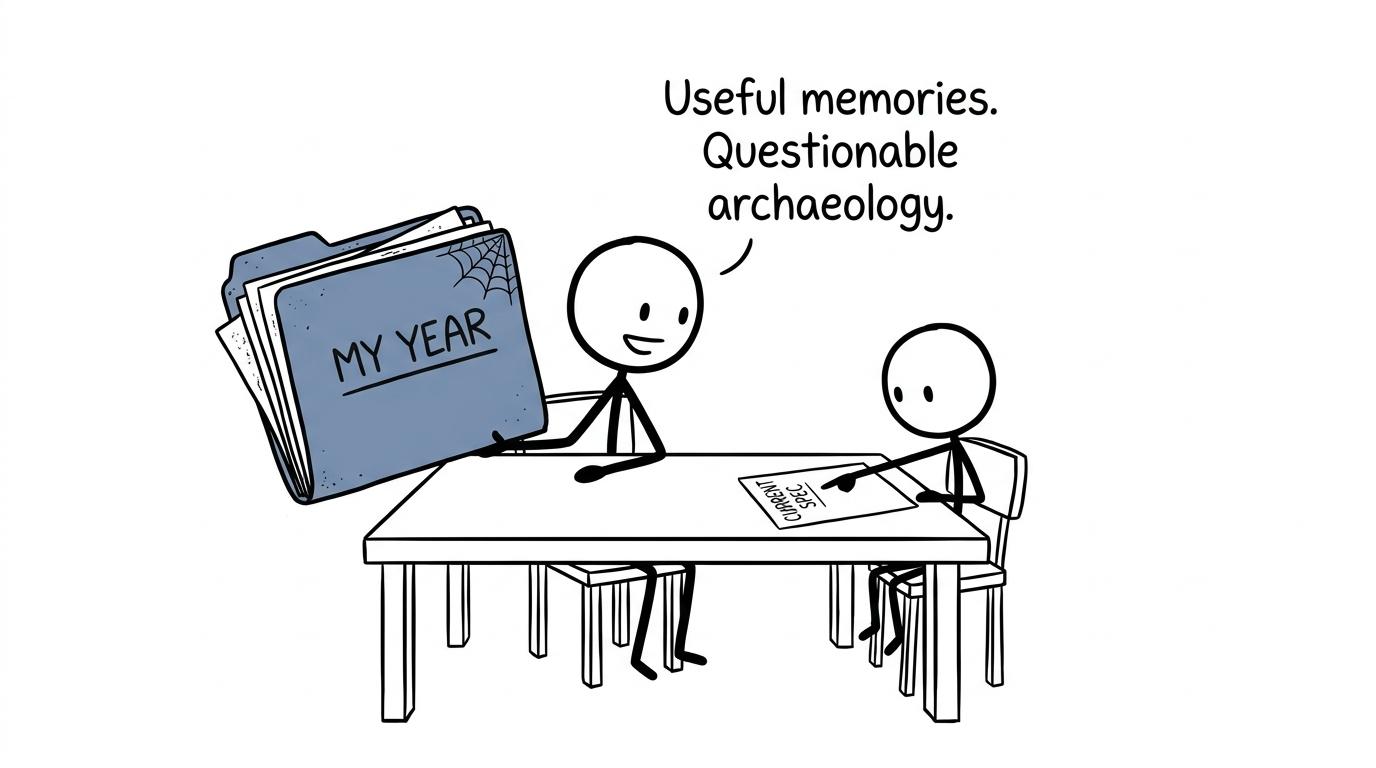 Two siblings compare current revision guidance with an enormous dusty folder from a previous exam year
What is still useful from their GCSE experience
Some advice survives specification changes because it concerns behaviour rather than paper design.
Your sibling may still be helpful with:
- preparing calmly for a speaking assessment;
- listening carefully before answering;
- reading every bullet point in a writing task;
- checking whether an answer actually addresses the question;
- practising translation without relying on word-for-word substitution;
- budgeting time and leaving space to review;
- recovering after a difficult question rather than dwelling on it.
They can also explain the emotional shape of an exam: the first minute may feel uncomfortable, an unfamiliar word does not ruin the whole paper, and moving on is often wiser than chasing one uncertain answer. This is experience, not specification knowledge, so it ages more slowly.
The same is true in maths. An older sibling can time a paper, remove distractions and ask you to explain an error, even if they no longer remember every method. MathsGenie's guide to using GCSE past papers properly shows how an attempt becomes useful through marking, repair and retesting.
What may now be outdated
This is where confidence can become misleading. A sibling may remember their own exam vividly and still remember it inaccurately for your course.
At the time of writing, the regulated GCSE Bengali qualification in England is AQA Bengali 8638. Its current structure assesses listening, speaking, reading and writing, with each contributing approximately one quarter of the qualification. It has Foundation and Higher tiers, and students take all components at the same tier in the same exam series.
That does not mean every qualification called Bengali or Bangla has the same structure. International GCSE courses can assess different combinations of skills and use different papers. Confirm the exact qualification, specification code and tier with your school.
Treat these parts of a sibling's memory as potentially outdated:
- component names and order;
- paper lengths and raw marks;
- speaking preparation and assessment arrangements;
- permitted or prohibited materials;
- writing lengths and task formats;
- themes and prescribed vocabulary;
- grade boundaries;
- the wording of assessment criteria.
Old papers can still provide extra language practice, but they should not silently become your model of the current exam. Label them clearly as old. Use current papers for final timed rehearsals.
This is also why maths students must match resources to their board and tier. The GCSE maths topics by exam board and tier guide helps distinguish shared mathematical content from differences in organisation and assessment. If you take Edexcel, for example, use the correct Edexcel GCSE maths past papers rather than assuming every paper follows the same pattern.
A practical sibling revision routine
A useful session does not need to occupy the whole evening. Agree the skill before starting and stop when the planned task is complete.
Begin with independent recall
Spend the opening minutes answering prompts without notes. Your sibling should avoid rescuing you too quickly. A short silence is not failure; it is the moment recall is being tested.
Practise one exam skill
Choose one clear purpose: vocabulary retrieval, listening responses, reading comprehension, conversation or checking a completed writing task. Avoid combining every component in one unfocused session.
For speaking, your sibling can ask the prepared prompts and then natural follow-up questions. For writing, you should complete the response independently before they comment. Their job is to identify what is unclear, missing or inconsistent, not to rewrite it in their own voice.
Finish with actionable feedback
Record no more than a few priorities. Useful feedback is specific:
- a recurring word you cannot retrieve;
- a pronunciation that changes meaning;
- an opinion lacking explanation;
- a missed instruction;
- a formal phrase requiring verification.
Schedule those items for another attempt. Feedback only becomes revision when you act on it.
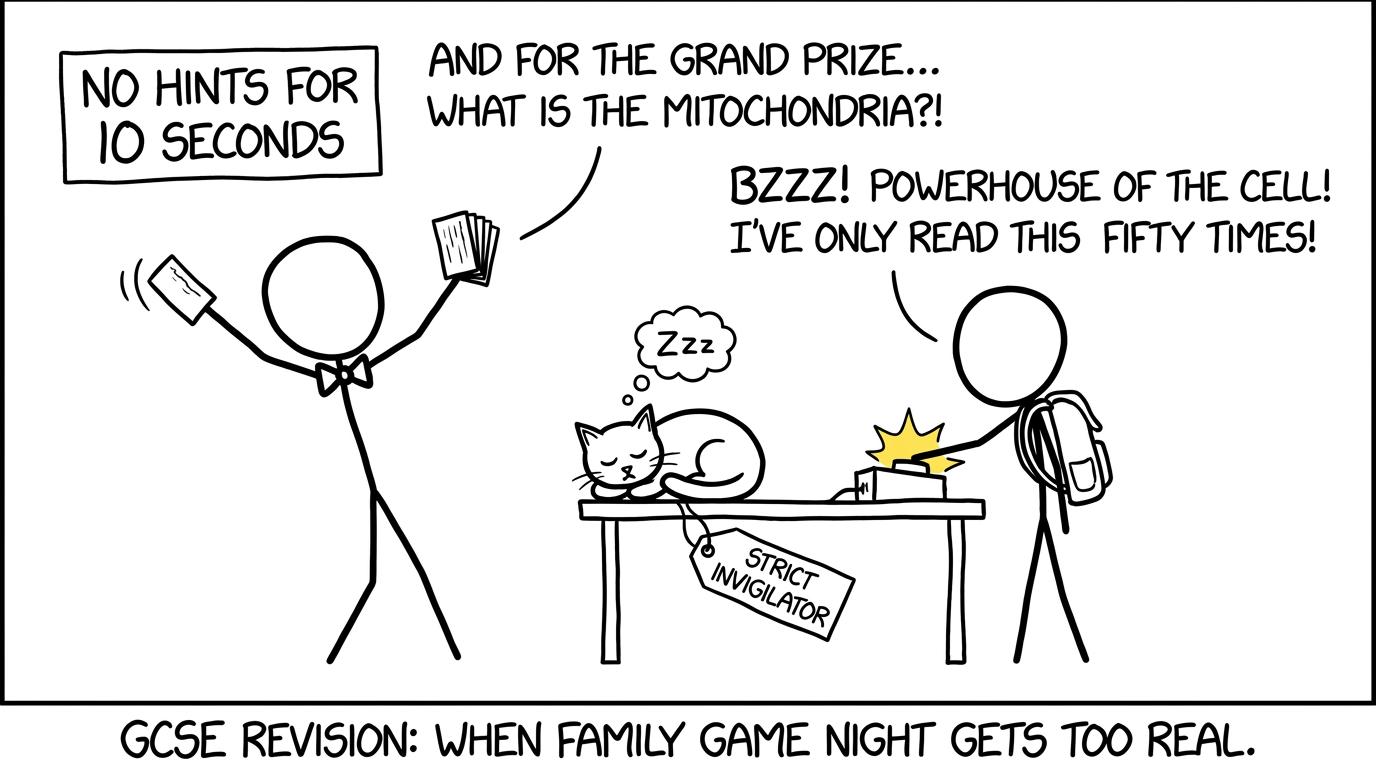 A sibling runs a no-hints flashcard game while a cat acts as the strict invigilator
Protect your GCSE maths revision time
Students preparing for maths exams cannot give unlimited time to one language subject. The solution is not to avoid sibling sessions, but to place boundaries around them.
Plan the week before asking for help. A balanced evening might contain a focused Bengali retrieval session followed by a separate maths block. Do not let the first task expand simply because conversation is easier than beginning algebra or geometry.
Use the GCSE maths revision timetable guide to organise lessons, practice and timed work around your commitments. If exams are close, the one-month GCSE maths revision plan gives each session a defined purpose.
You can use the sibling principle in maths without expecting them to tutor the content. Ask them to:
- choose a question at random;
- keep the mark scheme hidden until you finish;
- time a short test;
- ask you to explain your first incorrect step;
- remind you to retest the topic later.
The authoritative explanation should come from a current revision lesson, mark scheme or video solution. To decide what deserves attention, use the MathsGenie weakest-topics diagnostic routine rather than revising whichever chapter happens to be open.
Common mistakes when revising with a sibling
Letting them answer for you
A quick hint feels efficient, but it removes the retrieval attempt. Agree that your sibling will wait before prompting and will reveal only the smallest useful clue.
Treating fluency as complete exam readiness
Speaking Bengali confidently at home is a major strength, but the assessment may also require careful reading, formal writing, translation and responses shaped around specific instructions. Practise every component on your current course.
Arguing over regional usage
Different forms of Bengali may be familiar in different families and communities. If there is genuine uncertainty about what an examiner will accept, record the question and ask your teacher. A revision session should not become a contest over whose everyday phrasing is “real”.
Trusting remembered exam details
Your sibling's memory may relate to an older specification, another tier or an International GCSE. Verify the paper, timing and mark scheme before building a plan around their advice.
Receiving vague feedback
“Good” and “that sounded wrong” are not enough. Ask what was successful, what needs changing and what you should do next. The same rule applies when marking maths: identify the exact step where marks were lost.
Make sibling help one part of a reliable system
A sibling can make GCSE Bengali revision more responsive, less lonely and harder to avoid. Their greatest value is not that they once sat the exam. It is that they can prompt genuine recall, react to your speaking, notice unclear language and help you return to weaknesses.
Keep their old papers and memories in the right category: useful context, not current authority. Check your qualification and assessment details with your school, then give every joint session one goal and one follow-up action.
For the maths side of your timetable, let MathsGenie provide the structure. Start with free revision lessons and practice questions, check progress through mini tests, then build exam confidence with past papers and predicted papers. Mark your work using the mark schemes and video solutions, repair the exact weakness and try it again. Your sibling can keep you honest; MathsGenie can show you what to do next.










