Remote Learning: GCSE English Results Explained
Remote learning GCSE English Language and Literature results explained: what school closures changed, what the data shows and where attainment stands now.
A results chart can look reassuring while hiding a harder story. That is the central lesson behind remote learning GCSE English Language and Literature results. Grades rose sharply when normal exams were cancelled, yet official research found that disrupted education reduced learning for many pupils. Both statements can be true because the method used to award grades changed.
The clearest conclusion is this: school closures harmed learning overall, with unequal effects between pupils, but the GCSE grades issued in 2020 and 2021 cannot measure that loss directly. Exams returned in 2022, grading largely returned to pre-pandemic standards in 2023, and the latest complete official evidence available is from 2025.
For maths students, this is more than an English story. It shows why data needs context, and why rebuilding routines matters more than wondering whether your year group has been permanently left behind.
The evidence at a glance
Keep these points in mind before interpreting any results graph:
- Schools in England experienced extended closures and further disruption from self-isolation.
- Official reviews found reduced learning overall, particularly in literacy and maths.
- Summer GCSE exams did not take place normally in 2020 or 2021.
- Grades in those years were based principally on teacher judgements, not directly comparable national exam performances.
- Exams returned with transitional grading in 2022.
- Pre-pandemic grading standards returned in 2023, with protection for the disrupted cohort.
- The 2025 National Reference Test found weaker English language performance at the grade 444 threshold than its 2017 baseline, but no statistically significant difference at grade 777.
- The National Reference Test covers English language, not English literature, so it cannot establish the same trend for literature.
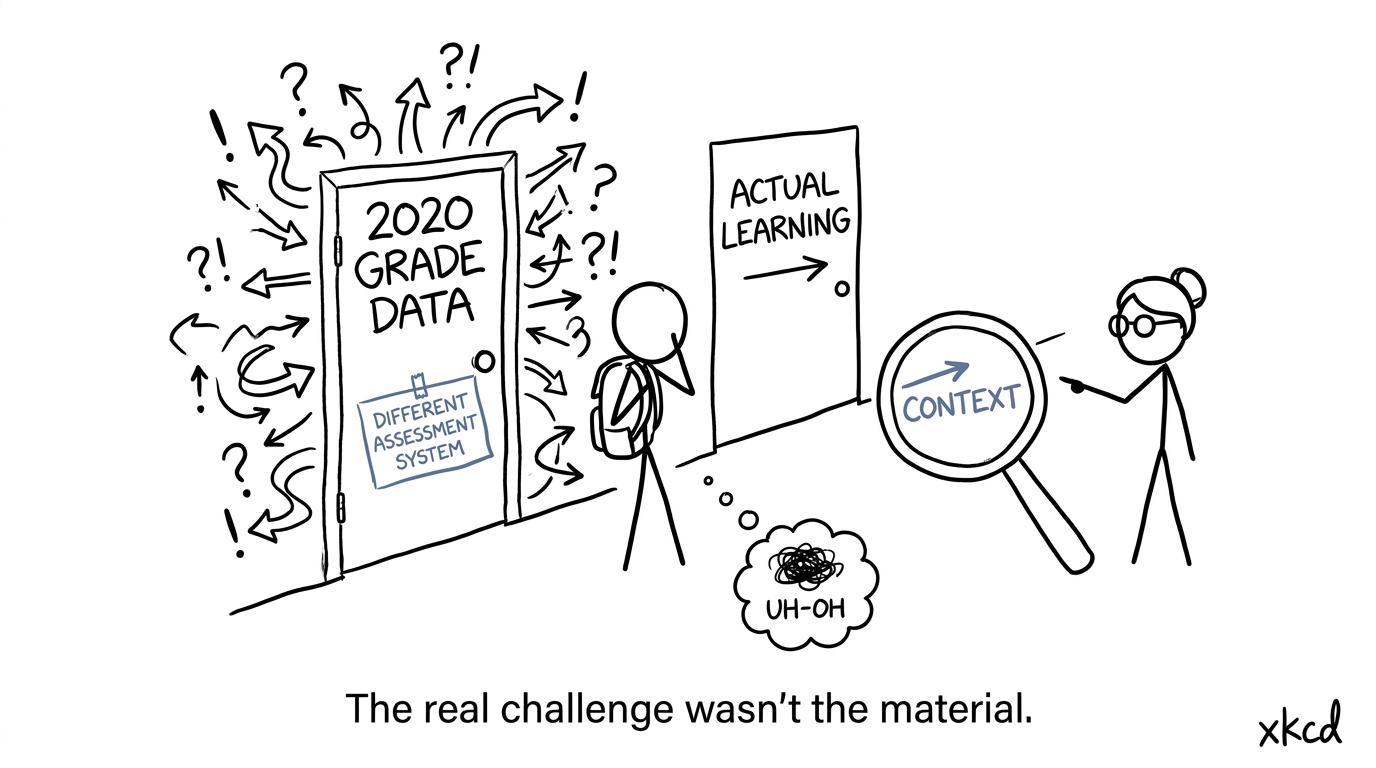 A student discovers that grade data and learning are not the same door
What school closures changed for GCSE pupils
Remote teaching was introduced because pupils could not safely receive normal classroom teaching. It preserved access to education, but it was not experienced equally.
A Department for Education review of research from England concluded that the pandemic reduced both the quality and quantity of learning for most pupils. Teachers reported particularly noticeable losses in literacy and maths. Disadvantaged pupils generally faced greater disruption, although experiences varied considerably between individuals and schools.
Access was only one part of the problem. A pupil might have had a laptop and still lacked a quiet room, immediate teacher feedback, reliable internet or the routines that make sustained concentration possible. English pupils missed classroom discussion, live modelling of analytical writing and regular feedback on essays. Maths pupils lost guided practice, quick correction of misconceptions and opportunities to ask questions at the moment confusion appeared.
Remote provision improved during the second national closure. Schools had more established systems, teachers had greater experience of online teaching and digital access had improved. However, research reviewed by Ofqual and the Department for Education still found substantial disruption. Remote learning softened the damage caused by closure; it did not reproduce ordinary schooling for every pupil.
Why GCSE results initially appeared to improve
Looking only at grades creates a paradox. If learning was disrupted, why were GCSE results higher in 2020 and 2021?
The answer is assessment.
| Results period | How results should be interpreted |
|---|---|
| 2019 | The final pre-pandemic summer exam series and the most useful baseline for later comparisons |
| 2020 | Summer exams were cancelled; final grades were based on centre assessment grades following changes to the original standardisation arrangements |
| 2021 | Exams were cancelled; teacher-assessed grades used a range of evidence from content pupils had been taught |
| 2022 | Exams returned with grading intended to sit between 2019 and 2021 outcomes |
| 2023 onwards | Grading returned broadly to pre-pandemic standards, with specific protections used during the transition |
Across all GCSE subjects in England, outcomes at grade 444 and above reached 76.9%76.9\%76.9% in 2021, compared with 67.1%67.1\%67.1% in 2019. Outcomes at grade 777 and above were also considerably higher. These figures do not demonstrate that pupils learnt more during school closures. They reflect a different assessment and grading system.
Ofqual explicitly warned against treating 2020 and 2021 outcomes as directly comparable with exam years. Teacher-assessed grades were supported by evidence and quality-assurance procedures, but they answered a different question: what grade did the available evidence show the pupil was performing at on the content taught?
Normal examinations ask every candidate to respond to standardised papers under controlled conditions. Changing that mechanism changes what the resulting distribution can tell us.
English Language and Literature were affected differently
English Language and English Literature are separate GCSEs, and the effects of disruption should not be treated as identical.
GCSE English Language
English Language depends heavily on transferable reading and writing skills: interpreting unseen texts, selecting evidence, comparing viewpoints and controlling written communication. These skills develop through repeated practice and feedback. Interrupted teaching could therefore leave gaps that remained visible after pupils returned to classrooms.
Ofqual's 2025 National Reference Test offers the strongest current evidence about underlying performance in English language because it is designed to monitor national standards over time. Almost 14,00014{,}00014,000 Year 11 pupils from more than 350350350 English schools participated in the 2025 English or maths tests.
For English, the estimated proportion reaching grade 444 and above was 67.0%67.0\%67.0% in 2025, compared with the 2017 baseline of 69.9%69.9\%69.9%. Ofqual reported that the reduction at this threshold was statistically significant. At grade 777, however, there was no statistically significant difference from 2017.
That is a nuanced result. It suggests concern around the grade 444 threshold, but it does not show uniform decline at every level. Nor does it prove that remote learning alone caused the difference. Attendance, later disruption, cohort composition and other educational factors may also matter.
GCSE English Literature
Literature created different pressures. Pupils needed secure knowledge of set texts, quotations, context and essay structures. Schools that lost teaching time sometimes had less opportunity to revisit texts or develop timed analytical writing.
However, there is no directly equivalent National Reference Test for English Literature. Grade distributions can describe outcomes, but comparisons across 2020, 2021 and 2022 remain complicated by altered assessment and grading. Claims that school closures produced one precise national fall in Literature performance therefore go beyond what the evidence can support.
What has changed since remote learning?
The assessment system has largely normalised. Full summer exams returned in 2022, that year used transitional grading, and 2023 brought a return to pre-pandemic grading standards. Overall GCSE outcomes in 2024 and 2025 were broadly stable, and 2025 outcomes at grade 444 across all subjects were close to 2019.
That does not mean every effect has disappeared. National averages can recover while individual pupils still carry specific gaps. A missed skill is rarely labelled “pandemic learning loss” on an exam paper. It appears as difficulty sustaining an explanation, manipulating fractions or deciding how to begin an unfamiliar problem.
The useful response is diagnosis rather than speculation. In maths, the free GCSE Maths revision hub lets you choose your exam board and move between lessons, worksheets, topic questions and papers. That is more actionable than trying to estimate how many months of learning your cohort may have lost.
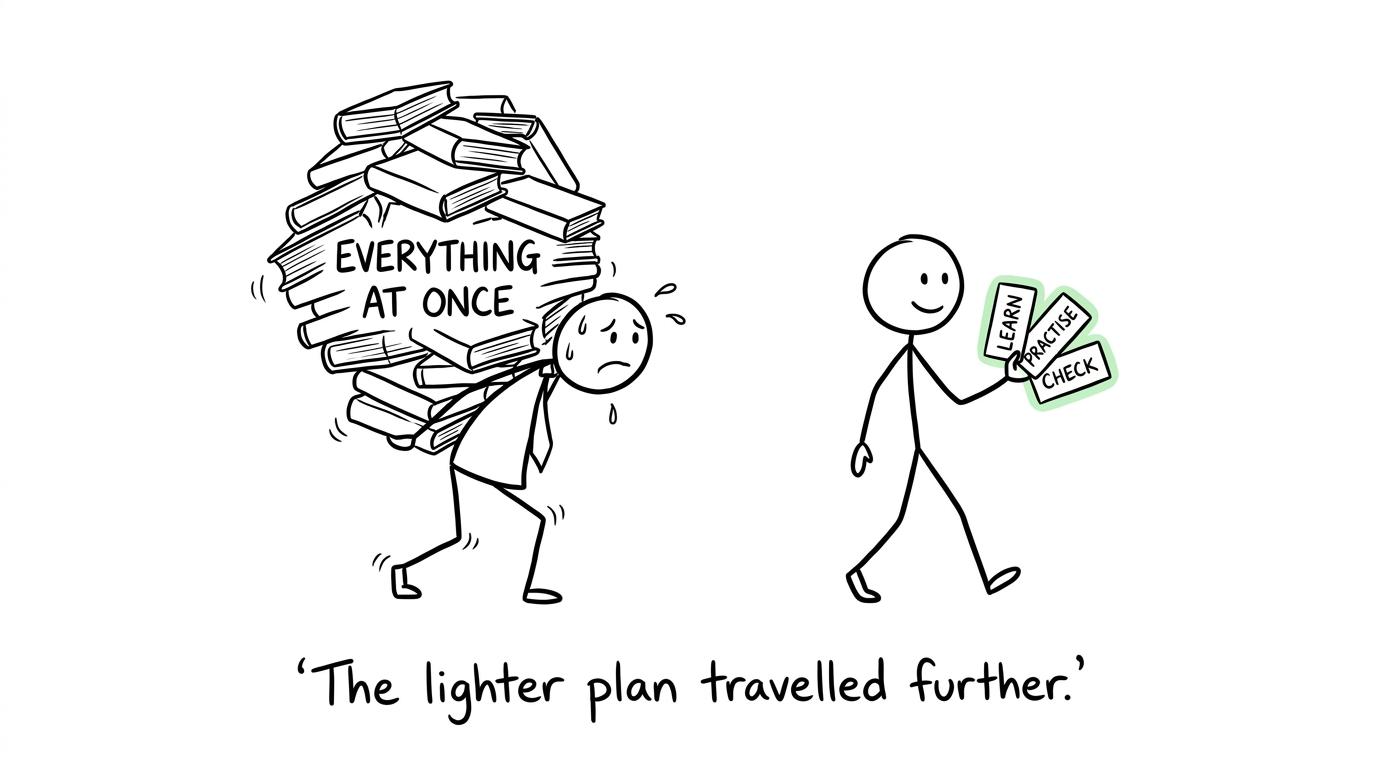 A small repeatable revision plan proves easier to carry
What maths students can learn from the English results
The first lesson is statistical: outcomes are not the same as learning. Whenever a graph changes sharply, ask whether the measurement process changed too. A rise in awarded grades during a year without standard summer exams cannot be interpreted like a rise under unchanged exam conditions.
The second lesson is practical. Skills recover through feedback loops. Choose a weak topic, review the method, practise exam questions, mark the work and return to the errors later. MathsGenie's guide to revising GCSE maths without wasting time explains how to make that loop manageable.
Use short assessments to diagnose gaps before attempting repeated full papers. When the exams approach, start past papers at the right stage, then use the relevant mark scheme to identify exactly where marks disappeared.
Edexcel students can use GCSE Maths past papers with mark schemes and solutions. The guide to using Edexcel past papers properly shows how to turn each error into targeted revision. Nearer the exam, Edexcel predicted papers provide fresh exam-style practice, but they should supplement official past papers rather than replace them.
English and maths reward different knowledge, yet both depend on attention, retrieval, timing and clear communication. Those habits survived remote learning, and they can still be strengthened.
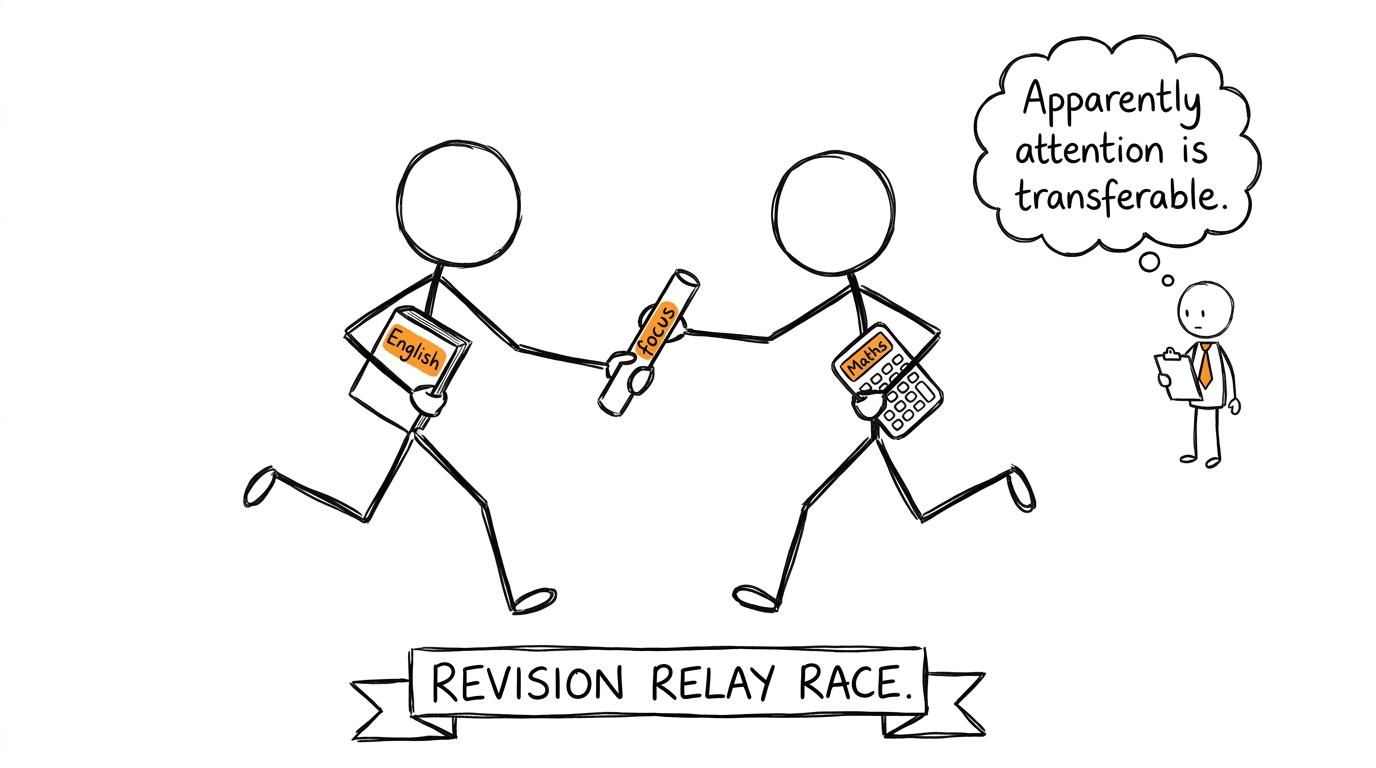 English and maths students exchange the revision baton labelled focus
Common mistakes when reading the results
Assuming higher grades mean higher attainment
Grades rose in 2020 and 2021 while exams were cancelled. That does not contradict evidence of learning loss because the assessment method changed.
Comparing percentages without checking the cohort
Figures may cover England, the whole UK, all ages or only 161616-year-olds. Policies also differed across the four nations. Comparisons need the same population and qualification context.
Treating English Language and Literature as one measure
They are separate qualifications. The National Reference Test monitors English language, not Literature, so its results should not be silently extended to both subjects.
Claiming remote learning was the only cause
School closures mattered, but pupils also experienced illness, absence, self-isolation, uneven access, wellbeing pressures and later attendance disruption. Observational results cannot isolate one cause perfectly.
Letting national data define an individual pupil
A national average cannot tell you which algebra skill you need to repair. Use a diagnostic paper, mini test or topic assessment instead. If time is short, follow a realistic one-week GCSE maths revision plan rather than trying to relearn the entire specification at once.
Results tell a story, but not the whole story
School closures disrupted GCSE English learning, particularly for pupils whose access to teaching, feedback and suitable revision conditions was weakest. Yet the unusually high grades awarded in 2020 and 2021 mainly show why assessment context matters. Since 2022, examinations and grading have moved back towards their pre-pandemic form. The 2025 evidence suggests broad stability alongside a real concern at the English Language grade 444 threshold.
Your next maths result will be shaped less by the national story than by what you practise now. Start at MathsGenie’s free GCSE and A Level maths revision site, choose your board and tier, then build a steady cycle of revision lessons, practice questions, mini tests, past papers, mark schemes, video solutions and predicted papers. History explains the gap. Focused practice closes it.