

Rebuild Confidence After GCSE Dance Exam Setback
Rebuild confidence after GCSE Dance exam worries with a calm plan for maths revision, results day, marking questions, sleep and practical next steps.
A difficult GCSE Dance paper can follow you out of the exam hall. One uncertain answer becomes five in your memory. By evening, the paper can feel much worse than it did when you handed it in.
If you are trying to rebuild confidence after GCSE Dance exam disappointment, the immediate answer is not to reconstruct every response or predict your grade. Give yourself one short review, separate facts from fears, then redirect your attention towards sleep, routine and any exams still ahead, especially maths, where focused practice can still earn marks.
You do not have to feel completely confident before continuing. You only need a useful next action.
Your before-results-day checklist
Use this as your plan for the weeks ahead:
- Allow yourself one brief, factual reflection on the Dance exam.
- Stop comparing remembered answers with friends or social media posts.
- Remember that one paper is not necessarily the whole qualification.
- Protect the GCSE exams that you can still influence.
- Rebuild momentum through small, completed maths tasks.
- Keep a regular routine for sleep, meals, movement and downtime.
- Prepare a short results-day plan so uncertainty does not become panic.
- Speak to a trusted adult if worry is disrupting daily life.
The aim is not to force positive thinking. It is to stop one completed exam from taking time and attention away from everything that remains within your control.
Put the Dance exam back into perspective
A bad feeling is real, but it is not a mark scheme.
Immediately after an exam, your mind naturally gives more attention to the questions that felt difficult. You are less likely to replay the sections you answered steadily because they did not create the same emotional reaction. That makes memory a poor results predictor.
For AQA GCSE Dance, the qualification combines performance and choreography with a written Dance Appreciation examination. The non-exam assessment contributes 60%60\%60% of the qualification, while the written examination contributes 40%40\%40%. The written paper is marked out of 808080 and covers choreographic processes, performing skills, students' own work and professional works from the anthology.
That does not mean the written exam is unimportant. It means your final grade is based on more evidence than the few questions currently circling in your head. You also cannot reliably estimate how an examiner will apply the mark scheme to extended analytical responses.
Write down three separate statements:
- What I know: for example, one section felt rushed.
- What I suspect: for example, I may have missed some analytical detail.
- What I cannot know yet: the mark, grade boundary and final result.
This distinction matters. Anxiety often presents a suspicion as if it were a confirmed result.
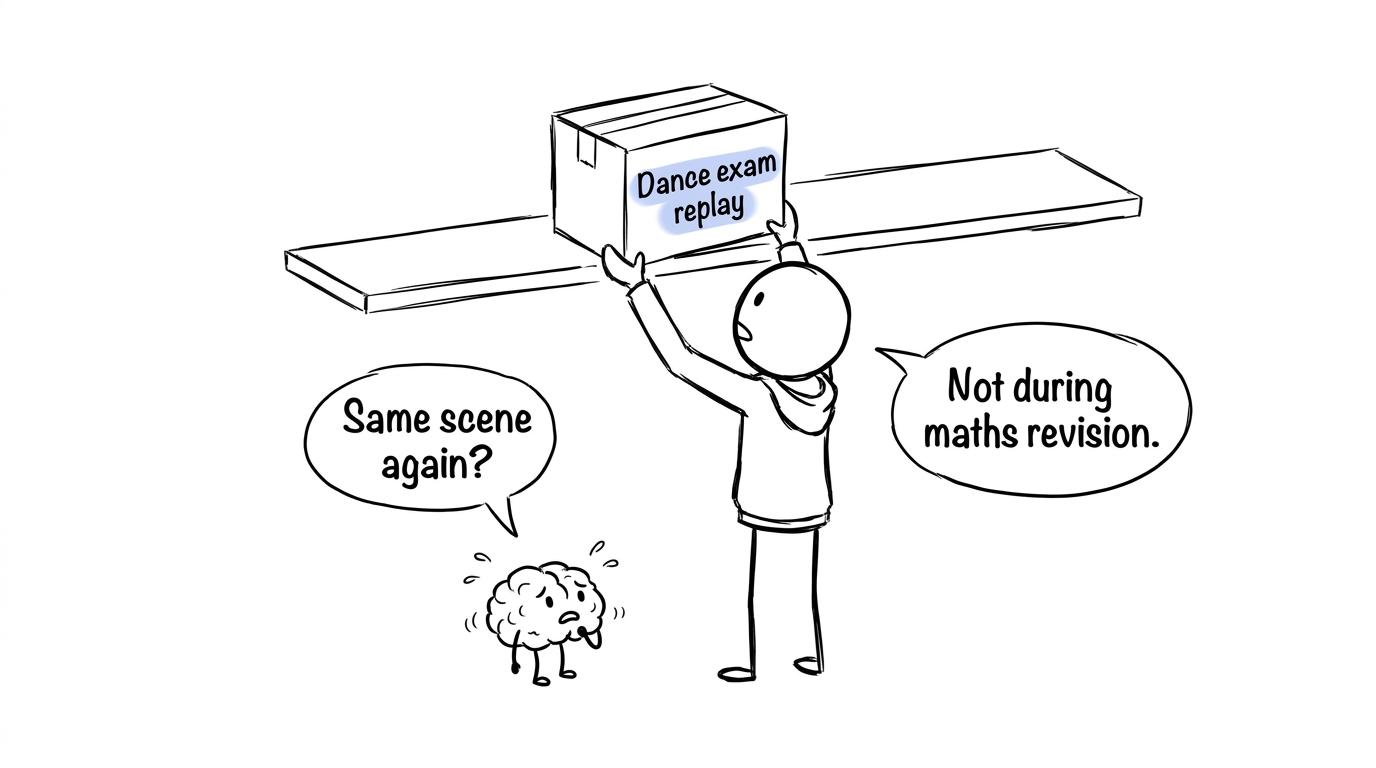 A student puts the Dance exam replay away during maths revision
Close the exam without pretending it went well
You do not need to tell yourself that the paper was brilliant. If it felt poor, acknowledge that honestly. Then close the review.
Set aside around ten minutes and record anything genuinely useful, such as:
- which section caused difficulty;
- whether timing became a problem;
- whether nerves affected concentration;
- one exam habit you would change in future.
After that, stop. Repeatedly rebuilding answers from memory will not change the submitted paper. It can also distort your recollection as you hear other people's interpretations.
If friends begin an answer-by-answer post-mortem, it is reasonable to say that you are leaving the paper alone until results day. That is not avoidance. Avoidance means refusing to deal with something actionable. This exam is already complete.
Protect the maths marks still available
The hidden cost of one bad exam is sometimes the next exam. A student loses an evening replaying Dance, sleeps badly, then begins maths revision tired and convinced that the entire exam season has gone wrong.
Interrupt that chain quickly.
Open the GCSE Maths Revision hub, choose the correct exam board and tier, and complete one manageable task. MathsGenie includes resources for Edexcel, AQA, OCR, Eduqas, WJEC and CCEA, with free revision lessons, exam questions, worksheets and paper practice.
Your first session back should be deliberately small:
- choose one weak topic;
- review the method using a revision lesson;
- answer a short set of questions;
- check the solutions or mark scheme;
- record one correction.
The twenty-minute GCSE maths revision routine is useful when concentration feels fragile. Finishing a short session gives your brain evidence that the difficult Dance paper did not remove your ability to work.
Confidence rarely arrives first. More often, action comes first and confidence catches up.
Use a weekly plan rather than waiting to feel motivated
Between the exam and results day, structure is more reliable than mood. If maths examinations are still ahead, build the week around specific jobs rather than vague promises to revise more.
A simple pattern is:
- Two focused sessions: revise one weak maths topic in each.
- One mixed session: complete a mini test or short timed section.
- One review session: correct mistakes and reattempt difficult questions.
- One longer session: use a past paper when your remaining exam timetable allows it.
The GCSE maths revision timetable guide explains how to balance topic work, timed practice and rest. If you do not know where to begin, use the weakest-topics diagnostic approach instead of revising familiar material for reassurance.
Keep the target visible and modest. “Complete one mini test and correct it” is actionable. “Become confident at maths” is not.
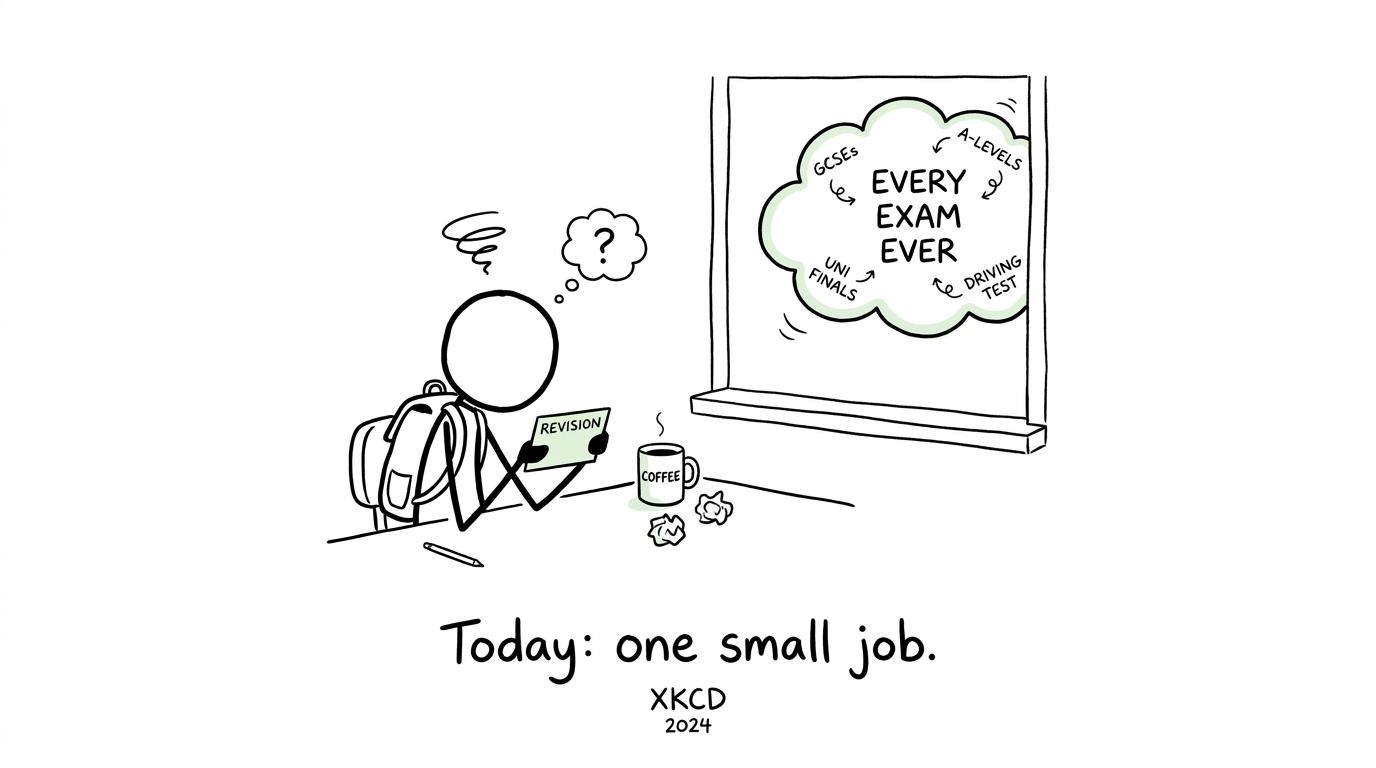 A student focuses on one small revision job
Build confidence from evidence
There are two kinds of reassurance. One says, “Everything will probably be fine.” The other says, “I completed this task, checked it and improved it.” The second kind lasts longer because it has evidence behind it.
Create a small confidence log for maths. After each session, record:
- the topic practised;
- what you can now do unaided;
- one error you corrected;
- the next task.
Do not turn this into another large revision project. Four short lines are enough.
Once topic questions feel steadier, move into mixed practice. GCSE predicted papers can provide fresh exam-style questions, but they should be used as practice rather than as promises about what will appear. Past papers provide exam realism, while predicted papers and mini tests provide additional evidence of what needs attention.
The guide to starting GCSE past papers can help you decide whether a full paper, timed section or smaller topic test is appropriate. Marking and correction matter more than simply accumulating completed papers.
Look after the physical side of confidence
Exam worry is not only a thought. It can appear as poor sleep, tense shoulders, low appetite, irritability or an urge to keep checking discussions about the paper.
Return to ordinary routines where possible:
- keep a reasonably consistent bedtime and waking time;
- put your phone away before trying to sleep;
- eat regularly and drink enough water;
- take short walks or do gentle movement;
- plan revision in manageable blocks;
- include time in which exams are not discussed.
Breaking large tasks into smaller steps, planning ahead and speaking to someone you trust are established approaches for managing stress. If anxiety is affecting sleep, appetite, school attendance or everyday activities, tell a parent, carer, teacher, pastoral lead or GP. You do not need to wait until the feeling becomes unbearable before asking for support.
Prepare for results day without predicting it
For the summer 2026 series, GCSE results are released to candidates on Thursday 20 August 2026. Your school may have its own collection time or online arrangements, so check its instructions in advance.
Prepare a short plan:
- decide who you would like nearby;
- know how to contact your school or exams officer;
- keep details of sixth-form, college or training options available;
- plan not to make rushed decisions based on friends' grades;
- arrange something calm for later in the day.
If the Dance result is genuinely surprising, speak to your school. For an externally marked paper, the school can request access to the script and may discuss a clerical re-check or review of marking. A review checks whether the mark scheme was applied correctly; it is not automatically a complete re-mark. Written consent is required, and a mark can rise, remain unchanged or fall.
Dance performance and choreography are non-exam assessment, marked by the centre and externally moderated. A review of moderation is a different, centre-led process and applies to the cohort rather than simply changing one student's internally assessed work. Your teacher or exams officer can explain which process, if any, is relevant.
For the June 2026 series, awarding bodies must receive most review-of-results requests by 24 September 2026, although schools often set earlier internal deadlines. Ask promptly rather than relying on the final date.
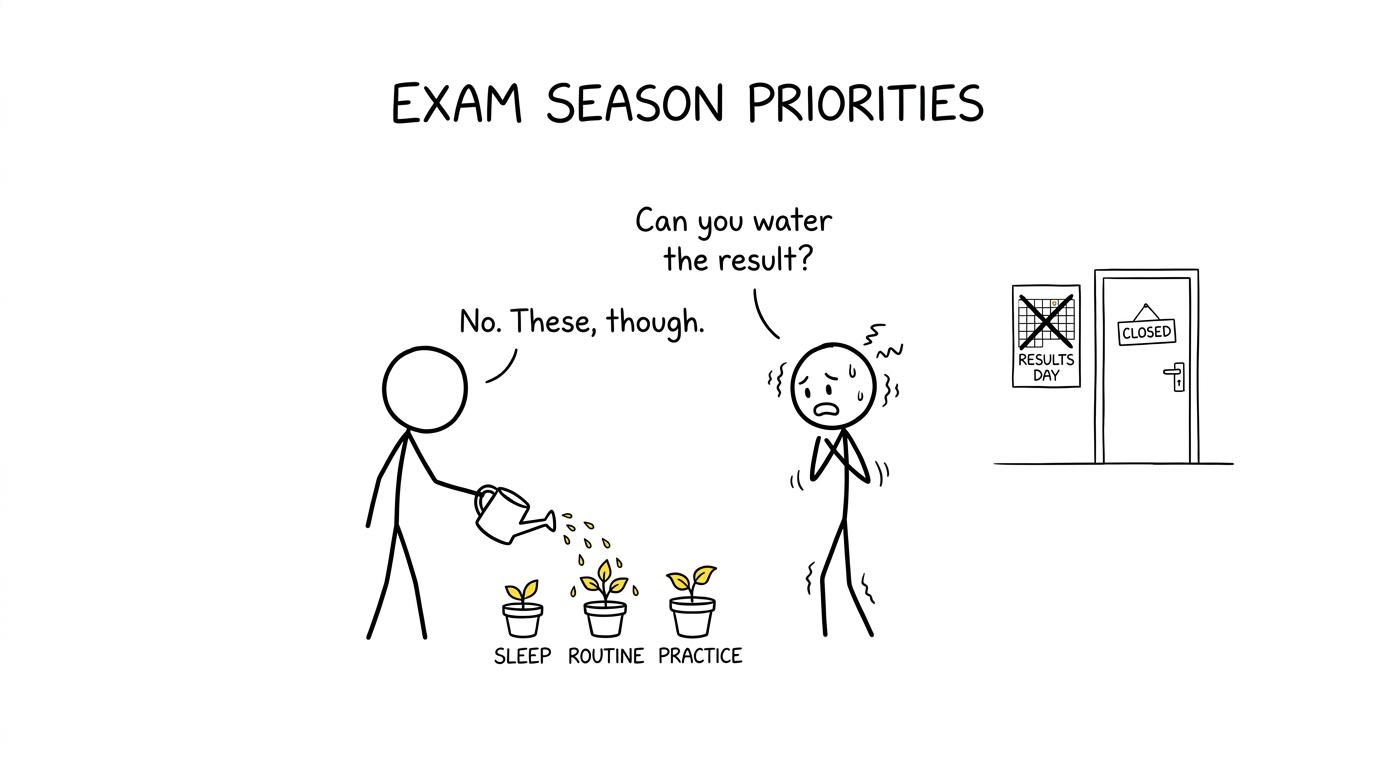 A student waters sleep, routine and practice before results day
Common mistakes after a difficult exam
Treating a feeling as a final grade
“I found it hard” and “I have failed” are different statements. Until the paper is marked and grade boundaries are applied, the second is not known.
Searching endlessly for unofficial answers
Online discussions may be incomplete, based on imperfect memories or written by students who interpreted a question differently. Checking repeatedly usually adds uncertainty rather than removing it.
Abandoning revision for remaining exams
One completed paper cannot be changed, but your remaining maths marks can. Return to a small task on the same day or the following morning.
Using full papers when concentration is exhausted
A full timed paper is not always the best recovery task. Begin with topic questions or a mini test, then rebuild stamina. The GCSE maths night-before plan also shows how to prioritise accuracy without panic-driven cramming.
Keeping serious worry private
If exam stress is affecting daily life, silence does not make it more manageable. Tell someone you trust and ask for practical support.
Move forward one completed task at a time
The weeks before results day are not a waiting room in which nothing matters. They are time you can use to recover your routine, protect your remaining exams and remember that one performance does not define your ability.
Close the Dance paper. Choose one maths topic. Practise it, mark it and correct it. Then repeat tomorrow.
Start with the free MathsGenie GCSE revision resources, using revision lessons and practice questions to repair weak topics. Add mini tests, past papers and predicted papers when you are ready, then use mark schemes and video solutions to turn mistakes into clear next steps.
You cannot revise the paper you have already submitted. You can still shape what happens next.











