

Managing Family Expectations on GCSE Results Day
Managing family expectations on GCSE results day: calm scripts, practical boundaries and next steps for students facing pressure from parents or relatives.
The envelope is small. The expectations around it can feel enormous. Managing family expectations on GCSE results day is difficult because you may be processing your own emotions while parents and relatives immediately ask what happened, what the grades mean and what comes next.
The short answer is this: decide in advance who sees your results, ask for time before discussing them, and keep the first conversation focused on practical next steps. Your grades matter, but you do not have to manage everyone else's reaction at the same time.
Your results-day pressure checklist
Before results day:
- Check how and when your school will release results.
- Decide whether you want to open them alone or with someone supportive.
- Prepare one sentence asking for space.
- Identify a teacher or pastoral staff member you can approach.
- Make a simple plan for good, disappointing and uncertain outcomes.
In England, GCSE results day in 2026 is Thursday 20 August. Collection arrangements differ, so follow the information from your school or college.
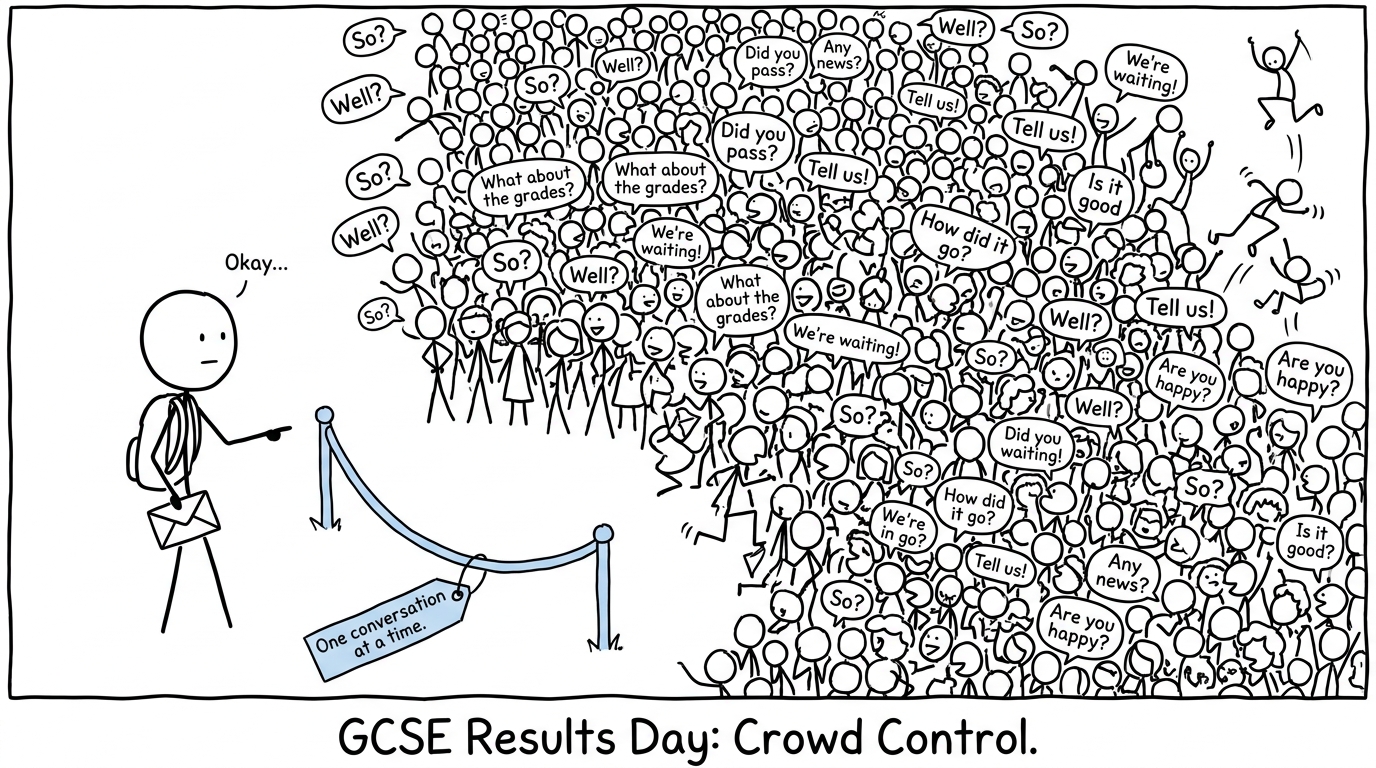 A student uses a boundary rope to manage a crowd of curious relatives on GCSE results day
Tips for managing family expectations around GCSE results
Set expectations before results day
A calm conversation beforehand is usually easier than negotiating boundaries while holding your results slip.
Try saying: "I know you care about my results. I would like to read them first, speak to school if necessary, and then talk at home."
Be specific about what would help. You might want one parent with you, no extended-family group chat, or half an hour without questions. A boundary is not a rejection of support. It is a way of making support useful.
Separate hopes from requirements
Families sometimes speak as though every hoped-for grade is essential. Ask what is genuinely required for your sixth form, college course or apprenticeship and what is simply preferred.
That distinction reduces uncertainty. A result below a family target may still meet your progression requirements. Equally, if one grade affects your next step, your school can help you examine the available options. Facts make a better guide than the loudest reaction in the room.
Use a short script when pressure rises
You do not need to improvise a perfect speech. Keep one or two sentences ready:
- "I need a little time to understand these results before discussing them."
- "Please do not compare my grades with anyone else's."
- "Can we focus on what I can do next rather than what has already happened?"
- "I will talk about this after I have spoken to my teacher."
Repeat the same sentence if necessary. Lengthy explanations can turn into arguments when emotions are high.
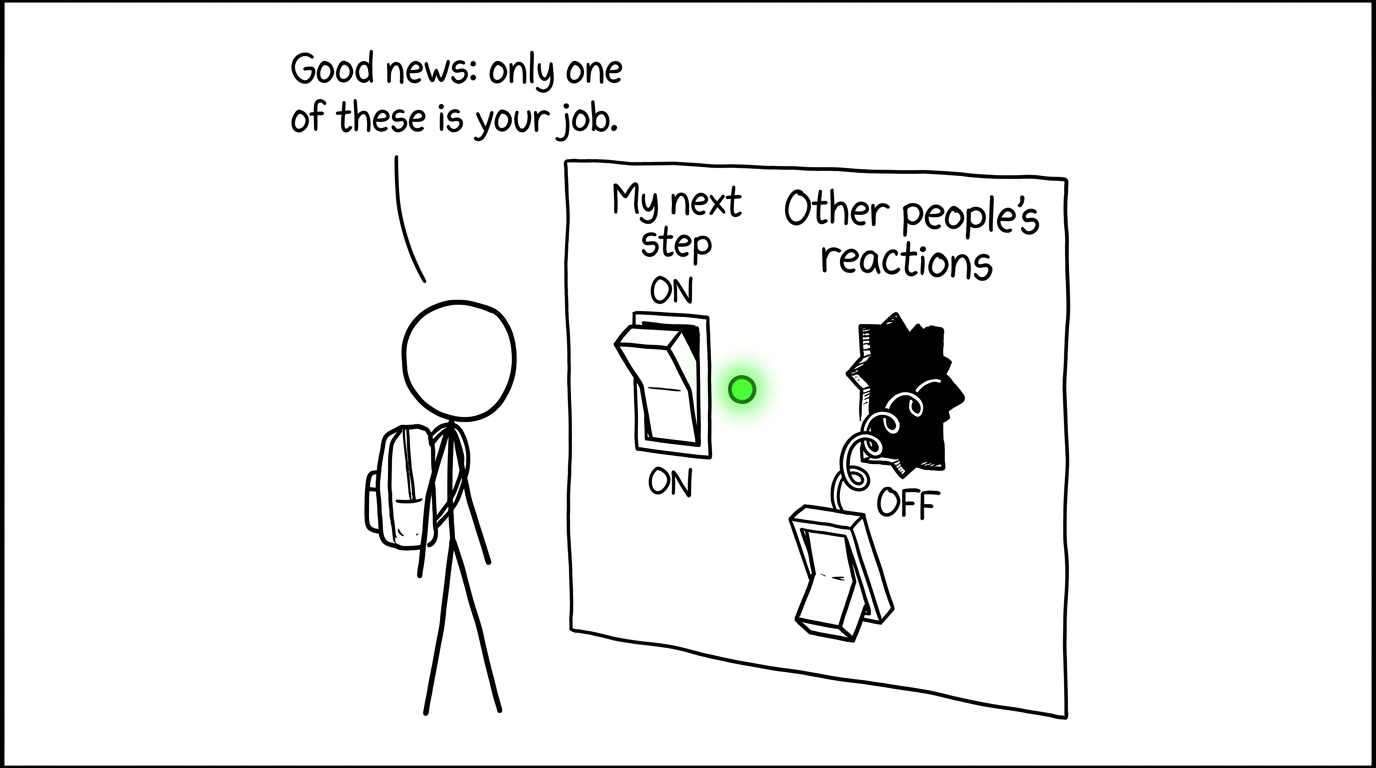 A results-day control panel shows that only the student's next step is controllable
Let evidence replace repeated questioning
Before the exams, family pressure often grows from uncertainty. A visible revision routine can make conversations more concrete without allowing someone else to take over.
Use the GCSE Maths revision hub to choose the correct exam board, whether that is Edexcel, AQA, OCR or Eduqas. Build your routine around revision lessons and practice questions, then use GCSE Maths past papers and mark schemes to check progress.
For Edexcel students, the Edexcel GCSE Maths revision area brings foundation and higher resources together. Short Edexcel GCSE Maths mini tests can also provide a manageable alternative to another full paper.
This does not guarantee a particular grade. It simply shifts the family conversation from vague demands to actions you can control.
Protect the first few minutes after opening your results
You are allowed to feel pleased, disappointed, confused or nothing at all. Avoid posting immediately or comparing every subject with friends. Read the full results slip and check any progression conditions.
If a grade appears unexpectedly low, speak to your school or college. Schools can explain marks, grade boundaries and post-results services. A review of marking is not an automatic re-mark, and a mark or grade can move down as well as up. Your school should explain the process, deadlines, possible fees and the need for your consent before proceeding.
Make the next step smaller
A difficult result can make the future feel as though it has closed all at once. Usually, the useful question is narrower: "Who do I need to speak to today?"
That may be a subject teacher, exams officer, sixth-form adviser or college admissions team. If maths remains part of your next plan, Edexcel GCSE Maths past papers, GCSE predicted papers and the broader collection of MathsGenie revision resources can help you prepare with a clearer routine.
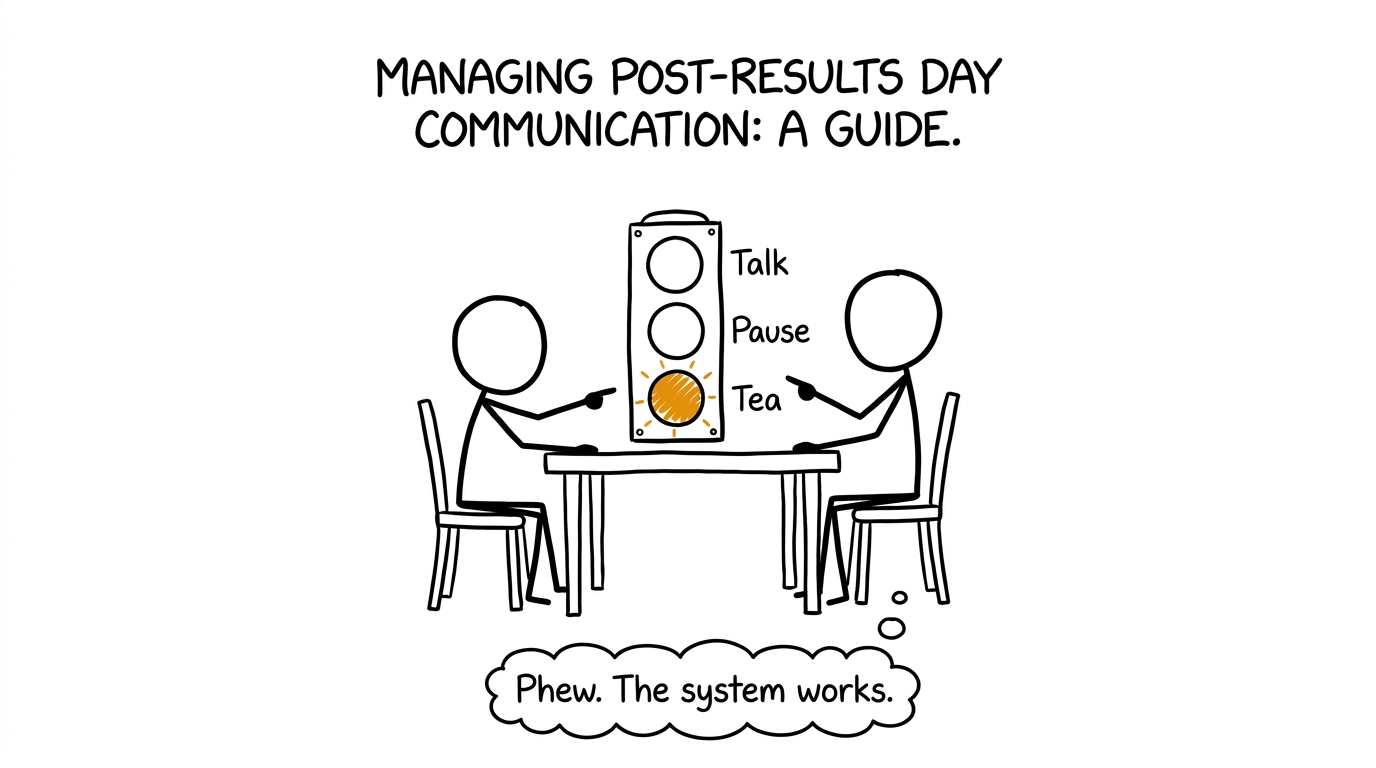 A student and parent use a talk pause tea traffic light during a difficult results conversation
Ask another adult to help
If speaking directly to your family feels impossible, ask a trusted teacher, relative, coach or pastoral lead to help explain your options. Sometimes family pressure around GCSE results comes from fear rather than a lack of care, but that does not make hurtful comparisons or constant criticism acceptable.
If the pressure is seriously affecting your sleep, mood or daily life, tell a trusted adult and seek appropriate wellbeing support. You do not have to carry severe anxiety alone.
Common mistakes when handling family pressure
- Promising a particular grade: Focus on revision behaviours rather than an outcome no student can guarantee.
- Opening results in front of everyone by default: Choose the setting that helps you think clearly.
- Arguing immediately: Ask for a pause, gather accurate information and return to the conversation later.
- Treating one grade as your identity: A result records performance in an assessment. It does not measure your character or future potential.
- Assuming nothing can be done: Speak to school before drawing conclusions about progression, reviews or future exam options.
Results are information, not a family verdict
GCSE results day can be important without becoming a judgement on your worth. You can care about your grades, appreciate your family's hopes and still ask for privacy, accuracy and respect.
For now, concentrate on the part you control: prepare carefully, use trustworthy resources and take the next sensible step. MathsGenie is there when you need quiet, practical support, from free revision lessons and practice questions to past papers, predicted papers, mini tests, mark schemes and video solutions. Start with one topic or one paper, and let progress speak more calmly than pressure.











