

Is GCSE Design and Technology Worth It? Honest Guide
Is GCSE Design and Technology worth it? Explore the workload, NEA, maths content, honest pros and cons, and routes after GCSE before choosing.
Choosing GCSE options can feel strangely permanent. A subject described as creative may hide a large written portfolio; one described as practical may still contain calculations and extended responses. So, is GCSE Design and Technology worth it? For many students, yes, particularly if you enjoy solving real problems, developing ideas and making prototypes. But it is not an easy escape from academic work. Half of the qualification is normally a written examination, while the other half is non-exam assessment completed over an extended period.
The decision comes down to fit. Design and Technology is valuable when its mixture of creativity, technical knowledge, maths, writing and project management suits how you like to work. It may be a poor choice if you dislike refining ideas, documenting decisions or managing a long deadline.
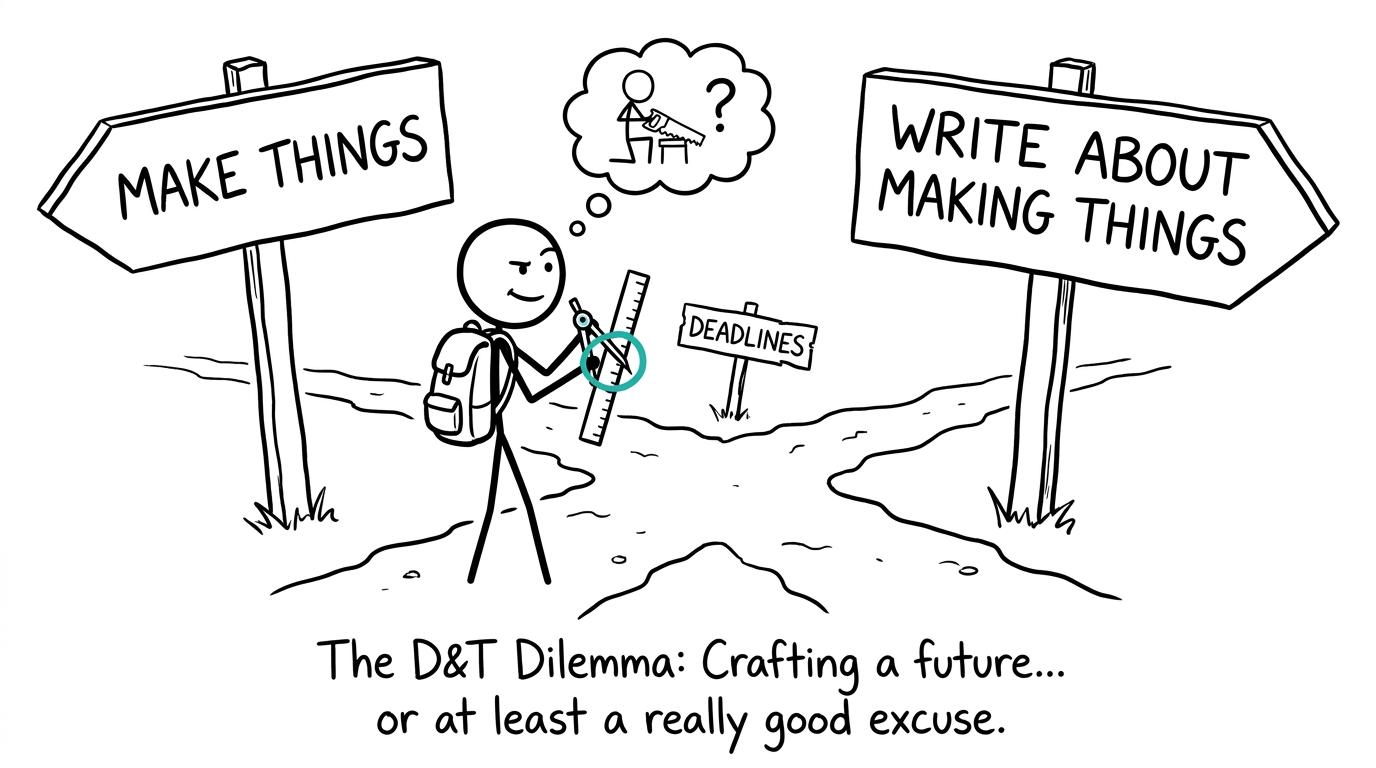 A student choosing between making, writing and deadlines
The quick decision checklist
GCSE Design and Technology may be worth taking if you:
- enjoy understanding how products work and how they could improve;
- like sketching, modelling, computer-aided design or practical making;
- can explain and evaluate your decisions rather than simply produce an attractive object;
- are willing to keep a substantial project moving over many weeks;
- are interested in design, engineering, manufacturing, architecture or technical apprenticeships;
- want to apply maths and science to tangible problems.
Think carefully before choosing it if you:
- expect every lesson to involve making;
- regularly leave coursework-style tasks until the final deadline;
- dislike written analysis, research and evaluation;
- are choosing it only because friends are taking it;
- have not checked what materials, facilities and specialist route your school offers.
The last point matters. GCSE Design and Technology follows regulated subject content, but schools may teach different material categories or specialise in areas such as timbers, polymers, textiles, papers and boards, metals or systems. Ask what your school actually teaches before deciding.
What do you study in GCSE Design and Technology?
The subject is built around iterative design. That means identifying a need, exploring possible solutions, making and testing prototypes, evaluating the result and improving the design. It is less like following one perfect recipe and more like making a series of defensible decisions.
Across the main specifications used in England, including AQA, Edexcel and OCR, assessment is divided equally between an externally assessed written examination and non-exam assessment. Eduqas also uses a written component and a design-and-make task, each worth 50%50\%50% of the qualification.
The written examination can assess:
- materials and their properties;
- manufacturing methods and processes;
- new and emerging technologies;
- sustainability and environmental impact;
- energy, mechanisms and electronic systems;
- designing and making principles;
- calculations, graphical questions and extended written responses.
The NEA typically asks you to respond to a contextual challenge by investigating users, writing a design brief and specification, generating and developing ideas, producing a prototype, testing it and evaluating the outcome. The precise instructions and recommended time vary by exam board, so use your own specification and teacher guidance.
Students following Edexcel can explore the free GCSE Design and Technology revision resources, including lessons, questions and past-paper support.
How much work does GCSE Design and Technology take?
The honest answer is that the workload can feel heavier than the timetable suggests. The challenge is not necessarily one exceptionally difficult task. It is the accumulation of research, design development, practical work, photographs, annotations, testing and evaluation.
For example, AQA recommends approximately 303030-353535 hours for its NEA, while arrangements differ between specifications. That controlled assessment time does not remove the need to learn technical content or prepare for the written paper.
A long project also creates a particular kind of pressure: unfinished work remains mentally present. If you miss an early design milestone, the consequences can spread into modelling, manufacturing and evaluation. Good project management therefore matters almost as much as practical confidence.
A sensible routine is to:
- break the project into weekly outcomes;
- record evidence while decisions are fresh;
- compare progress with the assessment criteria;
- respond to testing instead of treating the first design as final;
- keep written-exam revision going while completing the NEA.
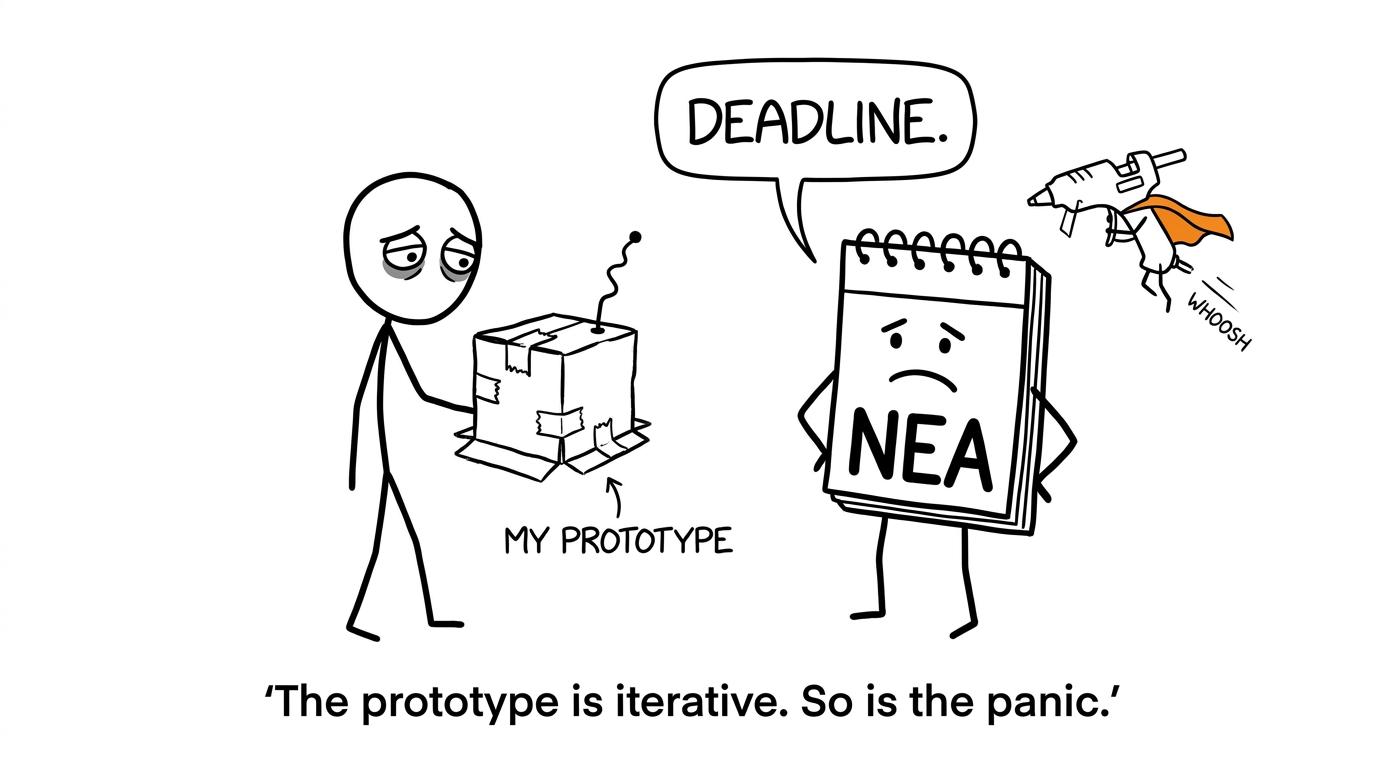 A prototype faces the NEA calendar
This is not a reason to avoid the subject. It is a reason to choose it with open eyes. Students who prefer steady, visible progress may find the project satisfying. Students who depend on last-minute revision may find it unforgiving.
The honest advantages of taking Design and Technology
You learn to turn ideas into evidence
An idea feels convincing when it exists only in your head. Design exposes it to users, materials, dimensions, budgets and manufacturing limits. You learn that improvement often comes from testing what fails rather than defending the first idea.
That process develops research, communication, evaluation and decision-making skills. These are useful beyond one GCSE because they train you to justify a conclusion with evidence.
It connects subjects that can otherwise feel separate
Design and Technology draws on maths, science, computing, art and business thinking. Geometry helps you represent products accurately. Percentages and data help you interpret user research. Material science explains why one solution may perform better than another.
This can make abstract knowledge feel purposeful. A formula is no longer merely something to remember; it becomes a way to estimate material, cost, size or performance.
It supports several progression routes
The qualification can provide useful preparation for A Level Design and Technology, engineering or design courses, T Levels and apprenticeships. Related careers include product design, design engineering, computer-aided design, manufacturing, architecture, furniture design and some areas of construction.
However, one GCSE does not guarantee entry to any course or career. Post-161616 providers set their own requirements, and engineering routes often place particular importance on maths and science grades. Check actual sixth-form, college or apprenticeship requirements rather than relying on a general subject description.
The NEA rewards sustained performance
Because the NEA contributes 50%50\%50%, your final result is not determined entirely by one examination. Students who work consistently may value the opportunity to demonstrate designing and making over time.
The reverse is also true: the NEA cannot be treated as an optional extra. Falling behind can put a large share of the qualification at risk.
The disadvantages you should consider
Practical lessons are only part of the course
You will not spend every lesson freely building products. Research, technical theory, annotation, testing and evaluation are central to the qualification. Even practical decisions must normally be explained and evidenced.
If making is the only part you enjoy, ask to see an example project portfolio and written paper before selecting the subject.
The workload arrives alongside other GCSE deadlines
NEA work may overlap with mock examinations, revision and assessments in other subjects. This can make Year 111111 feel crowded. Choosing several subjects with substantial project components may increase that pressure.
Use a realistic revision plan rather than assuming you will somehow find extra time. MathsGenie's guide to the best order for learning GCSE maths topics can help you organise maths revision around project deadlines.
Marking rewards process, not just the finished product
A polished prototype does not automatically produce a high grade. Assessment also considers investigation, design development, communication, technical understanding, analysis and evaluation. A less spectacular outcome supported by thoughtful evidence may demonstrate more of the required process.
Access to tools and materials differs
Your experience will depend partly on your school's facilities, available materials, taught specialism and supervised workshop time. Ask current teachers what students typically design, which software and equipment are available, and how missed practical sessions are managed.
How much maths is in GCSE Design and Technology?
Maths is a defined part of the subject, not an occasional surprise. Ofqual requires at least 15%15\%15% of the marks in the written examination to reward mathematical skills used in a Design and Technology context. The required demand is not lower than Key Stage 333, although questions may combine several familiar skills with technical information.
Relevant areas include:
- decimals, standard form and metric units;
- ratios, fractions and percentages;
- scale drawings and proportional reasoning;
- costs and quantities of materials;
- interpreting tables, charts and graphs;
- angles and dimensions;
- area, surface area and volume;
- representing two-dimensional and three-dimensional forms.
If these topics currently feel uncertain, that does not mean you should reject Design and Technology. It means you should strengthen them. Start with the GCSE maths revision hub, where you can choose your exam board and work through free revision lessons and practice questions.
The GCSE maths topics by board and tier guide helps you identify relevant number, ratio, geometry and statistics skills. Higher-tier students working with scale factors can also revisit similar shapes, area and volume.
 A calculator and pencil interview a nervous prototype
Who is the subject best suited to?
The strongest fit is not simply “someone who is creative”. Creativity matters, but GCSE Design and Technology also suits students who are curious, methodical and willing to improve imperfect work.
You do not need to arrive as an expert craftsperson. You do need to listen to feedback, learn safe techniques and explain why your choices meet a user's needs. Good written communication is useful because examinations and portfolios require precise technical reasoning.
It can also suit mathematically minded students. Dimensions, tolerances, quantities and performance data give numerical ideas a physical purpose. If you like problems with constraints rather than one obvious answer, the subject may feel naturally engaging.
Common mistakes when deciding whether to take it
Choosing it because it sounds easy. The practical element does not make the qualification effortless. It combines technical knowledge, written explanation, mathematics and sustained project work.
Ignoring the written examination. The exam normally contributes 50%50\%50% of the qualification. Look at a paper from your intended board before making your decision.
Assuming one specialism is available everywhere. Confirm the materials and systems your school teaches. The local course matters more than a generic online description.
Focusing only on careers. A subject may connect to an interesting career but still be a poor match for your preferred way of working. Interest in the weekly process matters.
Leaving maths weaknesses untouched. Scale, percentages, units, area and volume are useful in both Design and Technology and GCSE maths. Regular practice is more effective than waiting until the exam season.
Treating past papers as the whole revision process. A paper diagnoses gaps; improvement happens when you repair them. Read how to use GCSE past papers properly, then use lessons, mark schemes and targeted practice to fix each weakness.
So, is GCSE Design and Technology worth taking?
It is worth taking when you want a demanding mixture of creative design, technical understanding, practical production and evidence-based evaluation. It can build useful skills and support later routes in design, engineering and manufacturing. It is less suitable if you want a purely practical subject, dislike documenting your process or struggle to manage long projects without regular prompting.
Before choosing, ask your teacher three things: which specification and specialist material your school follows, what a typical NEA portfolio looks like, and how practical time is organised. Then inspect a real examination paper. That will tell you more than the subject's name ever could.
Whatever option you choose, strong maths will keep more routes open. Use MathsGenie's free revision lessons and practice questions to repair individual topics, then build confidence with mark schemes, video solutions and mini tests. As exams approach, add board-specific past papers and GCSE predicted papers. A good decision chooses the right subject; a good revision system helps you make the most of it.











