How to Use Maths Genie for Revision: A Practical Guide
Learn how to use maths genie for revision: choose topics, practise questions, mark mistakes and build a realistic schedule for GCSE and A Level maths exams.

Imagine opening MathsGenie after school. There are lessons, questions and papers ready to use, but where should revision begin?
If you are wondering how to use maths genie for revision, follow this loop: identify a weak topic, review the method, answer questions independently, mark your work and revisit it later. Use past papers to check whether those skills hold together under exam conditions.
Give every resource a job. A video explains a method; practice questions reveal whether you can use it; a later test checks whether it has stayed with you.
Your MathsGenie revision checklist
Before beginning, have these ready:
- Your qualification, exam board and, for GCSE, foundation or higher tier.
- Marked work showing where you struggled.
- Paper for working and a simple record of mistakes.
- A realistic revision slot with time for marking.
- A topic to revisit from an earlier session.
For the wider approach, read the guide to revising GCSE maths efficiently. Here, the focus is on using MathsGenie's resources within that approach.
Start with evidence from your own work
Choosing algebra because it feels difficult is a starting point, but it is too broad to guide a useful session.
Look through a marked paper. Did you misunderstand the question, forget a method, make an arithmetic error or struggle to choose a first step? Those problems need different responses.
Write a priority list using specific topic names. Prioritise topics you cannot begin and recurring mistakes. Keep some secure topics in rotation too.
Open the GCSE maths revision resources and choose resources appropriate to your course. For A Level, start with the A Level maths revision resources and select your exam board. Check coverage against your specification or your teacher's advice.
Give lessons and questions different jobs
Use a lesson to resolve a particular gap
Before watching, identify what you need to understand, such as how to recognise which method applies.
Pause before the next step and predict it. Afterwards, close the explanation and describe the method from memory. Notes should capture a decision or useful reminder, rather than become a transcript.
If you already understand the method, begin with questions. Return to the lesson if your answers reveal a gap.
Practise without the solution beside you
Attempt a manageable set independently, showing your working. Keep solutions closed until you have made a serious attempt.
When stuck, identify the stopping point before seeking help. After checking a mark scheme or video solution, close it and redo the question from a blank page. Then attempt a different question testing the same skill.
An explanation becomes useful when it changes what you can do independently.
Turn the method into a repeatable session
Use the same structure across GCSE and A Level revision. Adjust the practice to the topic's difficulty and your available time.
| Part of the session | What you do | What you record |
|---|---|---|
| Recall | Attempt an earlier question without notes | Whether the method is still secure |
| Repair | Review one specific gap | A reminder of the key decision |
| Practise | Answer fresh questions independently | Working you can check |
| Review | Mark answers and correct errors | The next question to revisit |
Finish by choosing the next review task. It might be another question on today's topic or a mixed set containing an older skill. Leave a clear instruction, such as “retry the question I could not start”.
Build this routine into the Revision Planner so you know when to return to each topic.
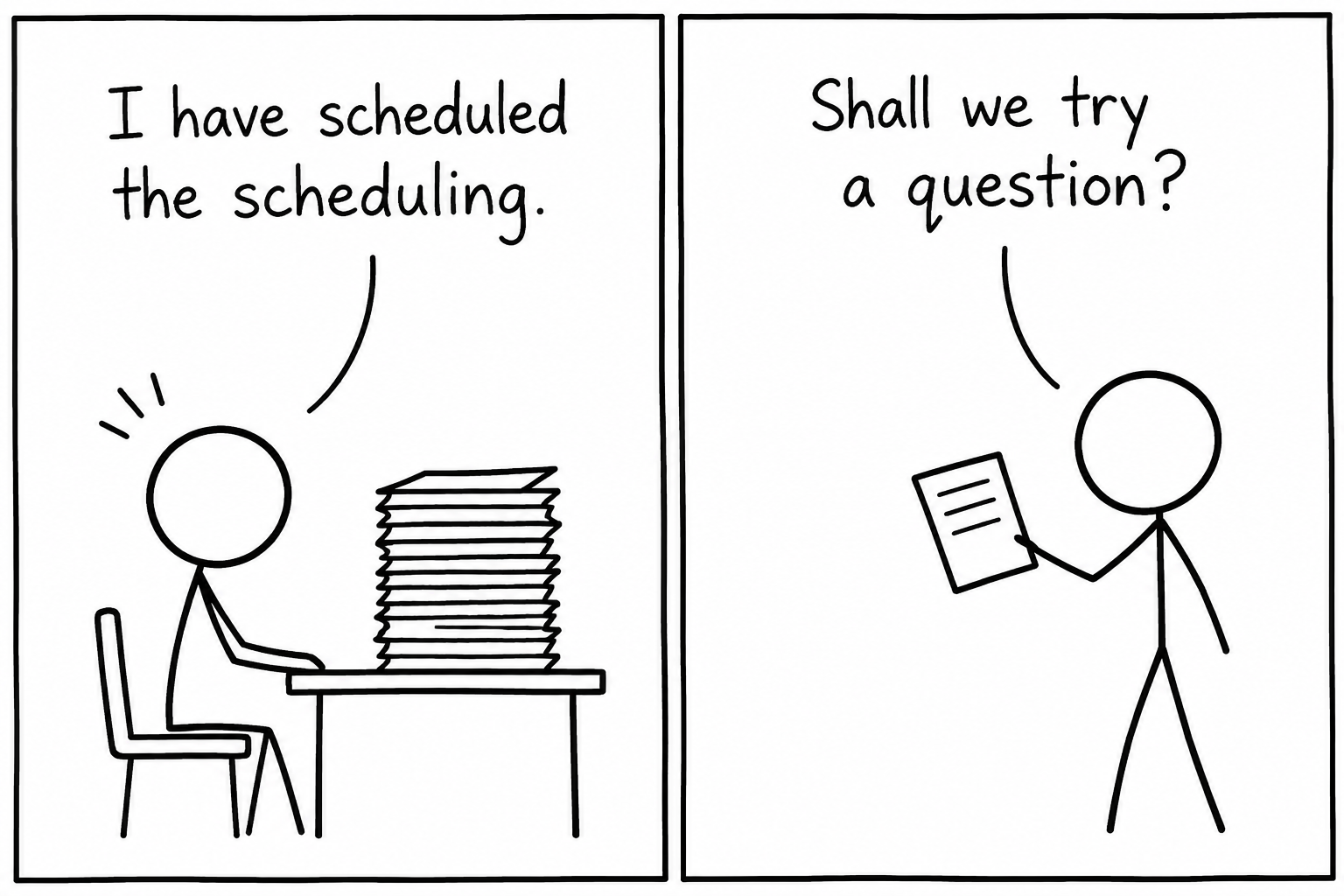 Stick-figure comic about spending so long planning revision that someone suggests trying a question
Use tests and past papers to guide revision
Once a method feels secure, check it without a topic heading giving you a clue. The Edexcel GCSE maths mini tests provide a short testing option for students following that course.
Past papers ask you to recognise methods, move between topics and manage time. Choose the correct qualification, exam board and tier from the GCSE papers collection, or use your A Level course page.
Attempt selected questions to investigate particular weaknesses. Use complete timed papers to assess pacing and performance across a paper. Afterwards, mark carefully and allow time for corrections.
Predicted papers provide additional practice where available, but cannot guarantee exam content. Keep your specification and a broad range of past-paper questions central to preparation.
Connect resources to your revision plan
Each session now has a clear task: open a topic, attempt questions, check the work and record what comes next.
For arranging sessions across a week, use the GCSE maths revision timetable guide. For workload advice, read how many hours you should revise for GCSE.
Avoid rebuilding your timetable whenever a difficult question appears. Update tasks using what your answers reveal, leaving room for corrections.
Common mistakes that waste useful effort
Watching without attempting. Check your understanding with a fresh question and the explanation closed.
Choosing only comfortable topics. Include gaps revealed by marked work alongside familiar questions.
Recording scores without investigating errors. Record why you lost marks and a specific correction task.
Moving on immediately after a correction. Return in a later session to check whether you can recall the method.
Delaying marking. Check work while you remember your decisions, then use that feedback to choose your next task.
Parents can ask what today's questions revealed and invite their child to explain one correction, without needing to teach the topic.
Build a routine you can follow
MathsGenie's free revision lessons, questions and papers give each session a purpose. Choose one gap, attempt questions, mark carefully and schedule a return. Put your next task into the Revision Planner and begin there.