How Long to Revise GCSE Biblical Hebrew Each Week
How long revise GCSE Biblical Hebrew per week? Find realistic weekly hours by months remaining and balance language practice with GCSE maths revision.
Revision time has a strange habit of expanding without becoming more useful. A student can spend an evening near a textbook and still finish unsure what has improved. If you are asking how long revise GCSE Biblical Hebrew per week, a realistic starting point is two to four focused hours each week when you have several months left, rising to four to eight hours as the examination approaches.
The right total depends on your current command of vocabulary, grammar, unseen translation and set texts. It must also fit beside maths and your other GCSE subjects. Think in terms of repeatable sessions, not heroic totals: three purposeful sessions usually achieve more than one exhausted Sunday marathon.
Your weekly revision checklist
Before building a timetable, make five decisions:
- Confirm that you are following the current Pearson Edexcel GCSE Biblical Hebrew specification and check your examination arrangements with your teacher.
- Count how many weeks remain, excluding holidays or commitments that will genuinely prevent revision.
- Diagnose whether language, literature or both need attention.
- Choose a weekly total that you can sustain alongside maths and your other subjects.
- Divide that time across several days, with active recall and written practice in every week.
The figures below are planning ranges, not official requirements. Pearson does not prescribe a number of independent revision hours. Your teacher, recent assessments and marked work are better evidence than a generic timetable.
How much Biblical Hebrew revision should you do?
| Time remaining | Suggested weekly time | Practical pattern |
|---|---|---|
| More than 666 months | 1.51.51.5 to 2.52.52.5 hours | Three sessions of 303030 to 505050 minutes |
| 333 to 666 months | 2.52.52.5 to 444 hours | Three or four sessions |
| 666 to 121212 weeks | 444 to 666 hours | Four or five sessions, including timed work |
| 333 to 666 weeks | 666 to 888 hours | Five or six focused sessions |
| Fewer than 333 weeks | 777 to 101010 hours temporarily | Daily short practice plus carefully reviewed papers |
Start near the lower end if you can translate accurately, recall the set texts securely and explain your errors. Move towards the upper end if vocabulary recall is slow, grammatical forms are regularly confused or large sections of the literature course remain uncertain.
More time is not automatically better. Ten tired hours filled with rereading can be less valuable than four alert hours involving retrieval, translation, feedback and correction.
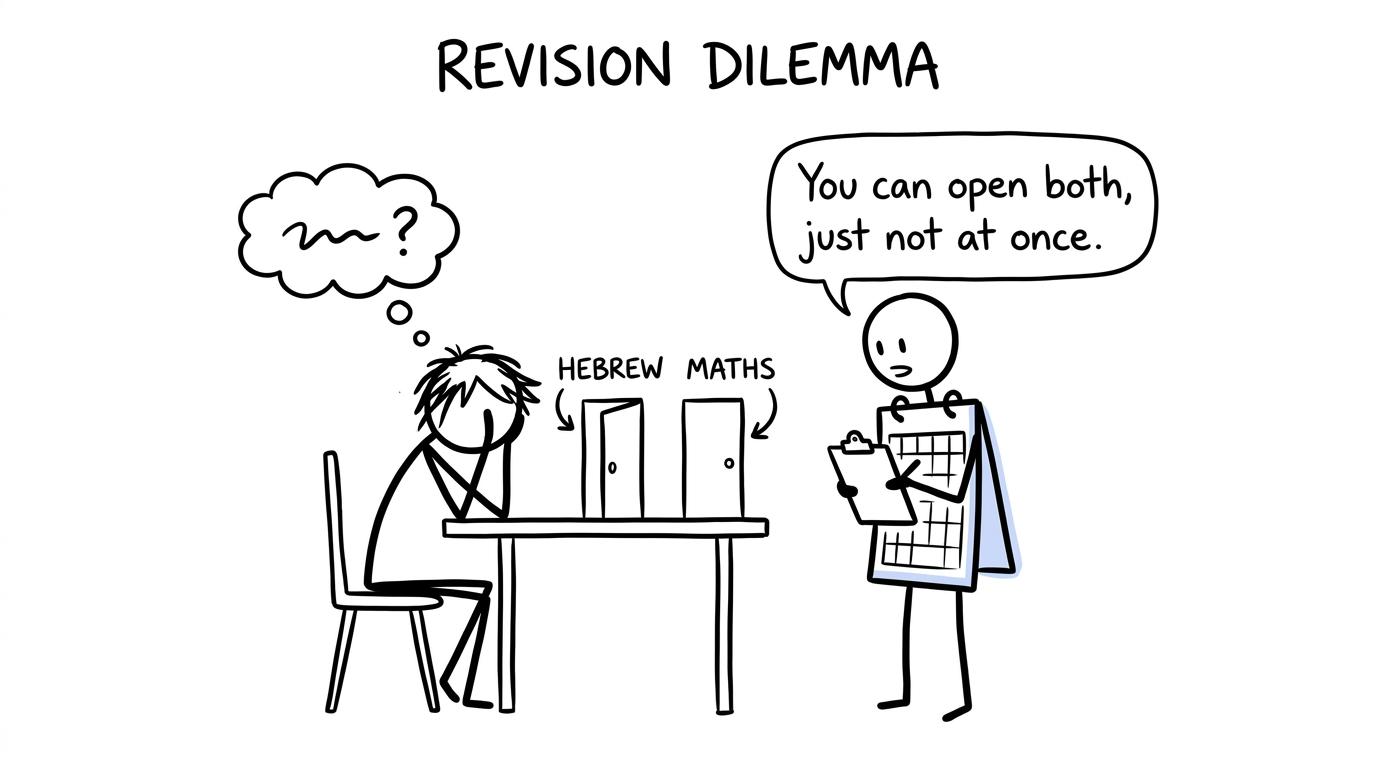 A student balancing Biblical Hebrew and maths revision with a weekly planner
Why the examination structure affects your timetable
The current Pearson Edexcel GCSE in Biblical Hebrew has two externally examined components. Component 111, Language, is a two-hour paper worth 50%50\%50% of the qualification. It assesses understanding of unseen Biblical Hebrew, translation into English and either grammatical knowledge or translation of simple English sentences into pointed Biblical Hebrew.
Component 222, Literature, is also a two-hour paper worth 50%50\%50%. It assesses knowledge, understanding, translation and analysis of the prescribed texts. Set texts can be specified for particular examination periods, so use the current specification and information supplied by your school rather than an old revision list.
This equal weighting suggests a sensible starting split:
weekly revision time=50% language+50% literature.\text{weekly revision time}=50\%\text{ language}+50\%\text{ literature}.weekly revision time=50% language+50% literature.That is a starting point, not a rule. If an unseen translation exposes serious weaknesses, language may temporarily receive about 60%60\%60% of your time. If language is secure but textual analysis is costing marks, reverse the balance.
Biblical Hebrew should not be confused with GCSE Modern Hebrew, which is a different qualification with different assessment demands. Nor does Biblical Hebrew have the foundation and higher tiers familiar from GCSE maths. Always revise the paper you will actually sit.
What to do during those weekly hours
A timetable is only useful when every block has a job. Each week should include four kinds of activity.
Vocabulary and grammatical retrieval
Recall vocabulary without looking at the answer first. Parse forms, identify roots and endings, and retrieve grammatical rules from memory. Keep this work short and frequent. Vocabulary left untouched for a fortnight is much harder to recover than vocabulary revisited briefly across several days.
Educational evidence supports spacing learning across days and using retrieval activities such as quizzes, flashcards and practice tests. That does not mean one exact spacing schedule works for everyone. It means revision should repeatedly bring knowledge back to mind rather than merely placing it back in front of your eyes.
Unseen language practice
Work regularly with unfamiliar passages. Translation depends on connected decisions: recognising forms, using context, selecting precise English and checking that the whole sentence makes sense. Looking at isolated vocabulary cannot fully reproduce that demand.
Early in the year, accuracy matters more than speed. In the final weeks, introduce timed passages so that sound decisions survive examination pressure. Mark the work promptly and identify whether each error arose from vocabulary, grammar, syntax or English expression.
Set-text knowledge and analysis
Literature revision should combine close knowledge of the prescribed passages with the ability to explain language and themes. Alternate between translation, contextual understanding, linguistic detail and analytical response. Do not assume that memorising a translation is the same as understanding the Hebrew beneath it.
Use your teacher's materials and the current specification to confirm exactly which texts are prescribed for your examination series.
Feedback and correction
Reserve part of every session for checking. An unmarked translation is an unfinished revision task. Record the cause of each mistake and revisit it on another day.
A useful error log has four labels:
- vocabulary not recalled;
- form or grammar misidentified;
- sentence structure misunderstood;
- English translation imprecise.
The label matters because each problem needs a different response. Learning another vocabulary list will not repair a recurring syntax error.
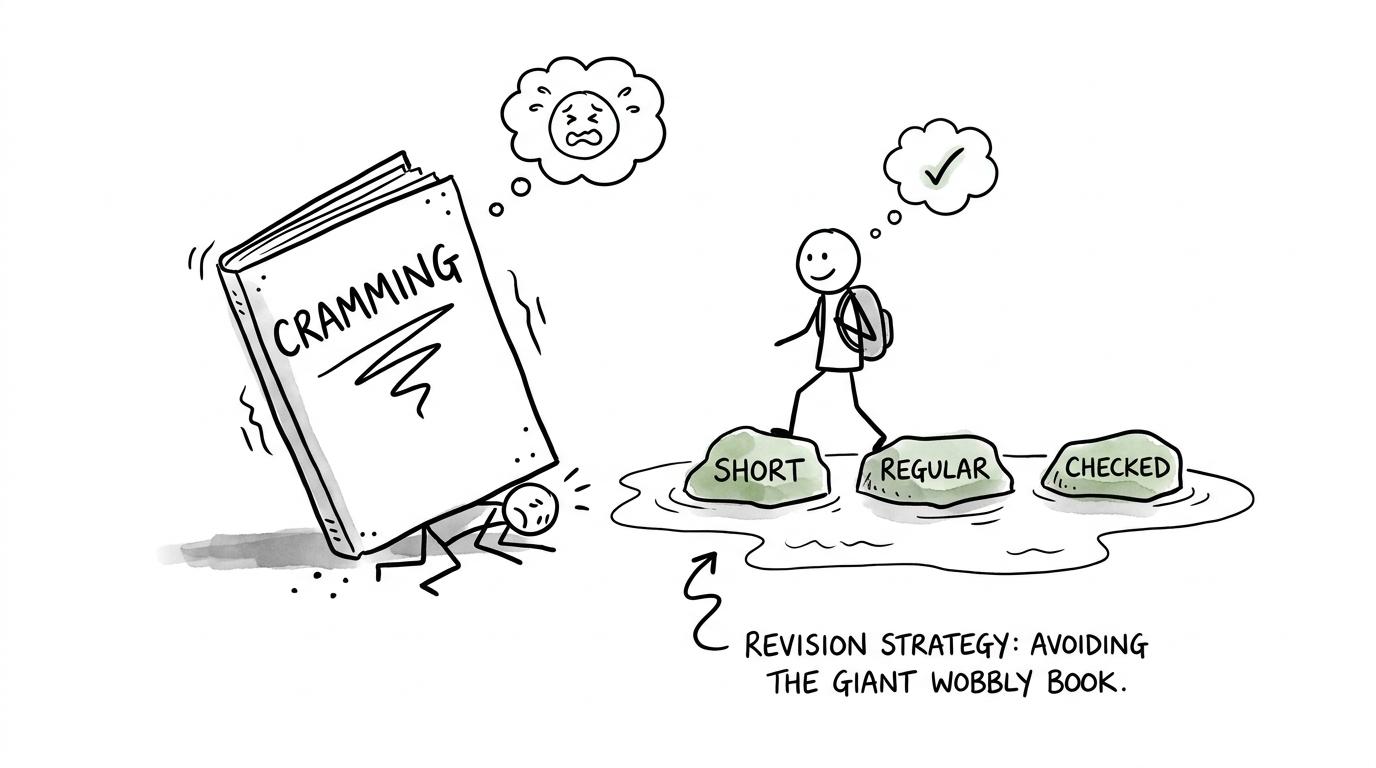 A student choosing short regular revision steps instead of cramming
A sustainable weekly pattern
For a student with three to six months remaining, four sessions might look like this:
| Session | Main purpose | Approximate time |
|---|---|---|
| Early week | Vocabulary and grammar retrieval | 353535 to 454545 minutes |
| Midweek | Unseen comprehension or translation | 454545 to 606060 minutes |
| Later week | Set-text translation and analysis | 454545 to 606060 minutes |
| Weekend | Mixed timed task, marking and corrections | 606060 to 757575 minutes |
These are not worked examples to copy rigidly. Rearrange the sessions around lessons, homework, religious observance, family commitments and other examinations. What matters is that language and literature both return every week.
If a full session feels difficult after school, use a smaller minimum. MathsGenie's twenty-minute GCSE maths revision routine demonstrates the wider principle: decide the task beforehand, retrieve first, practise actively and finish by recording the next action.
Balancing Biblical Hebrew with GCSE maths
Students preparing for maths exams cannot allocate revision time to one subject in isolation. GCSE maths may involve Edexcel, AQA, OCR or Eduqas, together with foundation or higher tier papers. Biblical Hebrew has different content, but both subjects reward frequent practice and honest correction.
Begin by placing fixed commitments on your calendar. Then give each subject several short encounters rather than assigning an entire day to one course. The GCSE maths revision timetable offers a useful structure for protecting topic practice, timed work and review across a busy week.
A simple allocation principle is:
subject share=priority scoretotal priority scores×available revision time.\text{subject share}=\frac{\text{priority score}}{\text{total priority scores}}\times\text{available revision time}.subject share=total priority scorespriority score×available revision time.Your priority score can reflect proximity of the examination, current performance and the size of the knowledge gap. It is a planning tool, not a prediction of your grade.
For maths, use the GCSE maths revision hub to select the correct exam board and tier. Revision lessons and practice questions repair individual methods; mini tests and timed papers reveal whether those methods can be retrieved independently. The Edexcel GCSE maths mini tests are particularly useful when only a short revision window is available.
Do not borrow indefinitely from maths to rescue Biblical Hebrew, or vice versa. If one subject needs an intensive week, plan when the balance will return.
How your plan should change as the exam approaches
Several months before the examination
Build memory and understanding. Keep vocabulary, grammar and set texts moving together, with occasional unseen passages to reveal gaps. This is the stage where modest weekly hours accumulate quietly.
The same principle applies to maths: the MathsGenie guide to starting GCSE past papers recommends beginning with shorter diagnostic work before relying heavily on full papers.
Six to twelve weeks before the examination
Increase timed practice and make the error log central. Complete longer passages and literature responses, then turn the feedback into the next week's plan. Compare your work with the available mark schemes and teacher guidance.
For maths, continue with topic repair while introducing board-specific past papers, mark schemes and video solutions. Full papers become useful only when their mistakes feed back into focused revision.
The final month
Raise the weekly total if it is sustainable, but protect sleep and school attendance. Alternate timed tasks with correction sessions. The GCSE one-month revision plan shows how diagnosis, daily retrieval and weekly paper practice can coexist without turning every evening into a marathon.
In the final week, avoid trying to rebuild the entire course. Use the GCSE one-week revision plan as a model for prioritising a short fix list, marking carefully and preserving calm. For Biblical Hebrew, concentrate on recurring grammar errors, high-value vocabulary, prescribed-text weaknesses and realistic timed practice.
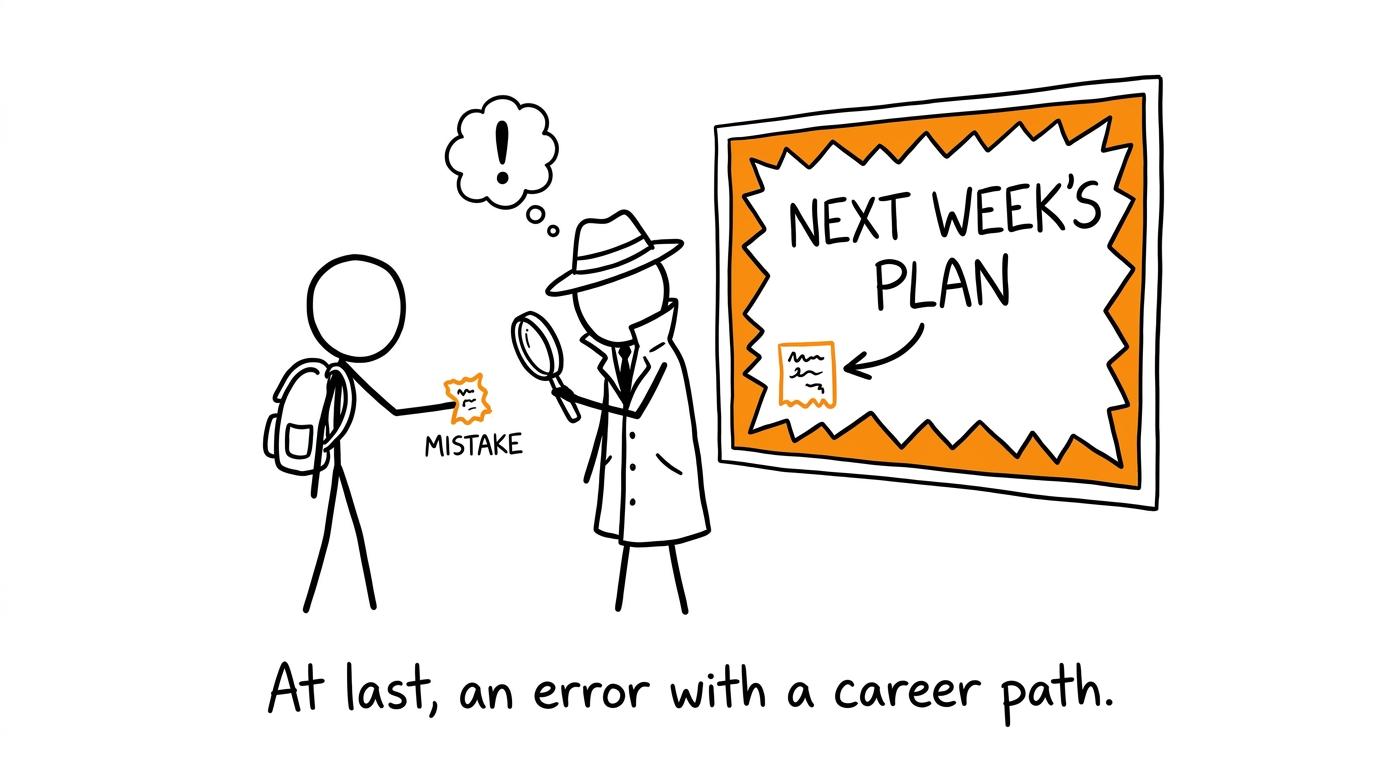 A revision mistake becoming the basis of next week's plan
Common revision mistakes
Counting passive time as revision
Rereading translations, copying notes and highlighting vocabulary can feel productive because they are fluent. Test yourself before opening the notes. Difficulty during retrieval is information about what needs attention.
Revising language but neglecting literature
The two components contribute equally to the qualification. A strong unseen translator can still lose substantial marks through insecure set-text knowledge or weak analysis.
Memorising English without checking the Hebrew
A remembered translation may conceal uncertainty about grammar and syntax. Regularly connect the English meaning to the original forms and structure.
Saving timed work until the final week
Timing is a skill. Introduce it gradually, first with passages or sections and later with longer examination tasks.
Increasing hours without reviewing mistakes
When progress stalls, students often add more time. A better first question is whether feedback is changing the next session. Errors should become decisions, not merely marks on a page.
Allowing one subject to consume the timetable
Biblical Hebrew, maths and other GCSEs all need repeated attention. Use a weekly planner with catch-up space instead of creating a perfect schedule that collapses after one missed evening.
Build a plan you can repeat
The best answer to how long you should revise for GCSE Biblical Hebrew each week is not the largest number you can tolerate once. It is the smallest effective schedule you can repeat, assess and adjust. Begin with two to four hours when the examination is several months away. Increase towards four to eight purposeful hours during the final run-in, guided by marked evidence rather than panic.
Then protect your maths preparation. Open the MathsGenie GCSE maths revision area, choose your board and tier, and use free revision lessons, practice questions, mini tests, past papers, predicted papers, mark schemes and video solutions. Add each result to your revision planner, fix the weakest skill and return to it on another day.
A calm timetable does not promise that every session will feel easy. It does something more useful: it makes sure today's effort tells you what to do next.