

Grade 3 GCSE Maths Meaning: What to Do Next
Grade 3 GCSE maths meaning explained: understand resit rules, review your result and build a practical plan towards grade 4 with free MathsGenie resources.
Results Day can compress two years of work into one small number. If that number is a grade 333, the useful answer is simple: you received a recognised GCSE result, but it is below the grade 444 standard pass usually needed for progression. That is the essential grade 333 GCSE maths meaning.
It may affect entry to a college course, apprenticeship or future job. In England, most full-time students aged 161616 to 181818 who do not hold grade 444 or above in GCSE Maths must continue studying maths. A full-time student with grade 333 will normally study GCSE Maths again rather than switch to another approved maths qualification.
That sounds disappointing. But a grade 333 also says something useful: grade 444 is the next boundary. Your task is not to relearn all of mathematics. It is to identify where marks were lost and build a more reliable route through the paper.
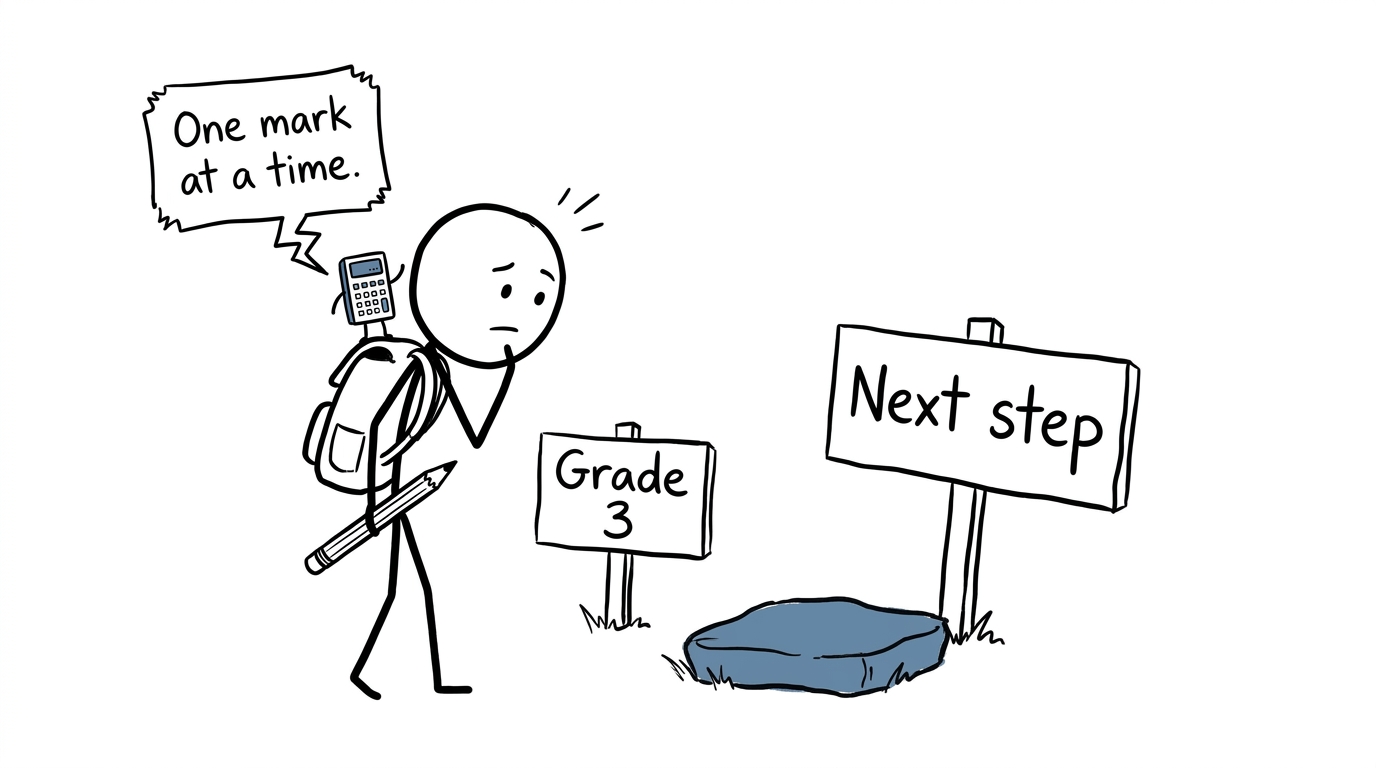 A student treating grade 3 as a stepping stone towards the next result
Your immediate checklist
- Check the maths requirement for your intended college course or apprenticeship.
- Ask your school for your component marks and how far you were from grade 444.
- Discuss access to your marked scripts if the result seems unexpected.
- Confirm your resit arrangements, exam board and tier with your new provider.
- Use a diagnostic paper to find the topics costing you marks.
- Begin short, regular revision rather than waiting for the next exam date.
The MathsGenie GCSE Maths revision hub is a practical starting point, with free resources for Edexcel, AQA, OCR and Eduqas students.
Is a GCSE Maths grade 3 a pass?
In England, grade 444 is described as a standard pass and grade 555 as a strong pass. Grade 333 is therefore below the standard-pass threshold. It shows assessed knowledge and achievement, but it will not meet requirements that specifically ask for GCSE Maths at grade 444 or above.
There is no universal mark total that always produces grade 333. Grade boundaries are set for each exam series and vary between exam boards and tiers. Compare your mark only with the published boundary for your exact qualification, not with a boundary found for another year.
A grade 333 can be awarded on foundation tier, where grades 111 to 555 are available. It can also be awarded on higher tier when a candidate narrowly misses grade 444. Your teacher or resit provider should use your scripts and topic performance to decide which tier gives you the strongest route forward.
What next after grade 3 maths?
Check whether the result should be reviewed
If your result is much lower than expected, speak to your school promptly. It can request access to your scripts and consider a review of marking. Most students cannot request one directly from the exam board unless they entered as private candidates.
A review is not free extra marking. It checks whether the mark scheme was applied correctly, and the mark can remain unchanged, rise or fall. Consider it when there is a genuine marking concern, particularly if you were close to grade 444, rather than simply because you dislike the result.
Confirm how the grade affects your next course
Entry requirements differ between colleges, apprenticeships and individual courses. Contact the provider rather than assuming the offer has disappeared. It might accept you while you resit, suggest another course level or require a discussion with the admissions team.
Under England's current funding rules, full-time students with grade 333 who are covered by the condition of funding normally continue towards GCSE Maths. Arrangements can differ for part-time programmes, students with particular exemptions and learners elsewhere in the UK, so confirm your position with your provider.
Prepare for the resit intelligently
A resit should not become a repeat of Year 111111. Begin with the free GCSE Maths self-assessment, then choose resources matched to your board and tier. Edexcel students can use the Edexcel GCSE Maths revision page to move between lessons, revision guides and exam-style questions.
Use this cycle:
- Diagnose: complete a paper or mini test and record questions you could not start.
- Learn: review one method using a revision guide or the Edexcel GCSE Maths videos.
- Practise: answer a short set without copying the method.
- Check: use the solutions or mark scheme and write down why each mark was lost.
- Retest: return to the skill several days later.
Grade 333 topics such as ratio, percentages, equations, angles, probability and measures deserve attention, but let your marked work choose the exact list. Even everyday applications can leak marks, so targeted pages such as best-buy question practice can be valuable.
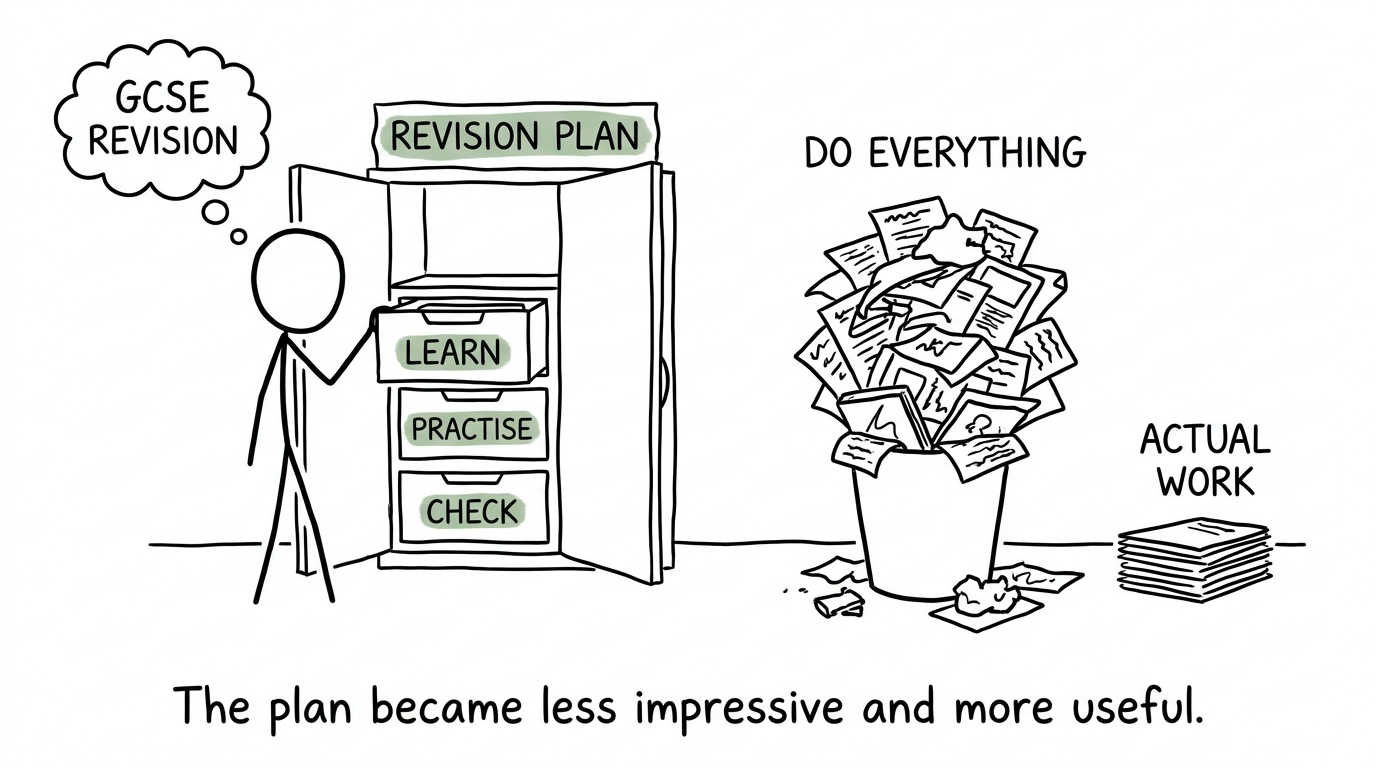 A simple revision plan defeating an unhelpful pile labelled do everything
Build a realistic grade 4 revision plan
Three or four focused sessions each week are usually more manageable than an occasional revision marathon. In each session, combine a brief lesson with independent questions and careful marking. Keep a short list of recurring problems: missing units, weak arithmetic, misunderstood vocabulary, incomplete working or questions left blank.
Once topic questions become more secure, use the MathsGenie paper and mini-test resources. Past papers reveal whether you can select methods independently and manage time. Nearer the examination, GCSE predicted papers can provide additional unseen practice, but they should support rather than replace past papers and topic revision.
Common mistakes after receiving grade 3
- Treating the result as a verdict. It describes one examination series, not your permanent ability.
- Ignoring course requirements. Ask the provider directly and confirm any resit condition in writing.
- Requesting a review without advice. A grade can go down as well as up.
- Revising every topic equally. Start with script evidence, self-assessment and marked papers.
- Completing papers without analysing them. The score matters less than knowing why each mark disappeared.
- Using predicted papers too early. Build missing methods first, then test them under timed conditions.
Turn the result into a starting point
A GCSE Maths grade 333 may close some immediate doors, but it also gives you a clear next target. Check the result, speak to your provider and build revision around the marks you can realistically recover.
MathsGenie gives you one free place to do that: revision lessons for rebuilding methods, practice questions and mini tests for checking skills, and past papers, predicted papers, mark schemes and video solutions for preparing under exam conditions. Open the GCSE Maths revision guides and resources, choose your exam board and make your first session small enough to begin today.











