

GCSE Priority Re-mark: Results Day Guide
GCSE priority remark explained: discover who offers the faster review, how long it takes, what it costs and when a sixth-form deadline makes it worthwhile.
A result can look like one number on a page, yet carry an entire September inside it. If your maths grade is below a sixth form’s entry requirement, waiting several weeks for an answer may feel impossible.
A GCSE priority remark is the faster, paid version of a review of marking. As of summer 2026, Pearson Edexcel is the only major exam board offering a priority re-mark service for GCSE qualifications. It aims to return an outcome within 151515 calendar days, compared with up to 202020 calendar days for a standard review. It may be worth considering when a sixth-form or college place depends on a quick decision, but it is not automatically the best choice.
Priority re-mark checklist
Before paying, establish:
- your exam board and exact mark;
- how far you are from the next grade boundary;
- whether your sixth form will hold your place;
- whether a teacher has checked the marked script;
- the fee per paper and your school’s deadline;
- whether the faster service is actually available for your qualification.
MathsGenie’s guide to Edexcel GCSE grade boundaries can help you understand what a boundary means, although your school should confirm the official boundary and component marks.
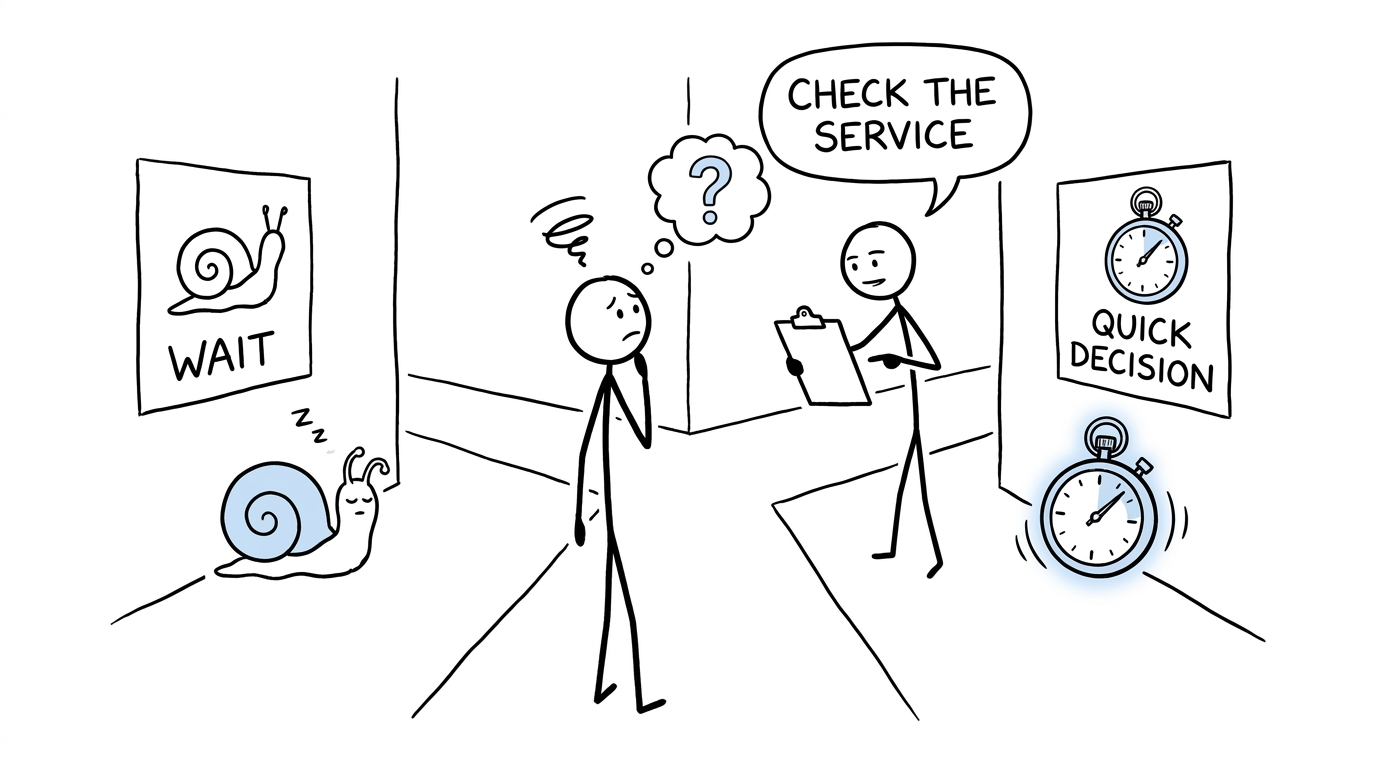 A student choosing between waiting and making a quick results-day decision
What is the priority re-mark service for GCSE?
“Re-mark” is the familiar phrase, but the official service is a priority review of marking. An independent reviewer checks whether the original marker applied the mark scheme correctly. The paper is not simply marked again from scratch because somebody dislikes the result.
Your mark can rise, fall or remain unchanged. For that reason, your school or college must obtain your written consent before submitting the request. Internal candidates normally apply through their exams officer; private candidates should ask their entering centre or Pearson about the correct route.
For summer 2026, AQA, OCR and WJEC/Eduqas do not offer priority reviews for GCSEs. They provide standard reviews of marking, while their priority services are reserved for AS, A Level and other eligible Level 3 qualifications. Availability can change, so always ask your exams officer to check the current board rules.
When is a GCSE priority remark worth it?
The strongest reason is a real deadline. Suppose a sixth form requires a particular maths grade and needs confirmation before enrolment closes. Ask the admissions team whether it will accept your current place provisionally while the review is pending. A priority outcome can still take up to 151515 calendar days, so “priority” does not mean next-day.
It is more persuasive when you are close to the next boundary and a teacher identifies a specific question where the mark scheme may have been applied incorrectly. Being disappointed, by itself, is not evidence of a marking error.
Pros
- The outcome is targeted within 151515 calendar days.
- It can support a time-sensitive sixth-form or college decision.
- The service includes a review of how the mark scheme was applied.
- Pearson normally waives its fee when the overall qualification grade changes, although you should confirm your centre’s payment and refund arrangements.
Cons
- It is a paid service charged per paper or unit.
- The mark can go down as well as up.
- A review may leave the grade unchanged.
- It is currently unavailable for GCSEs from AQA, OCR and WJEC/Eduqas.
- Even the priority timescale may be too slow for your particular deadline.
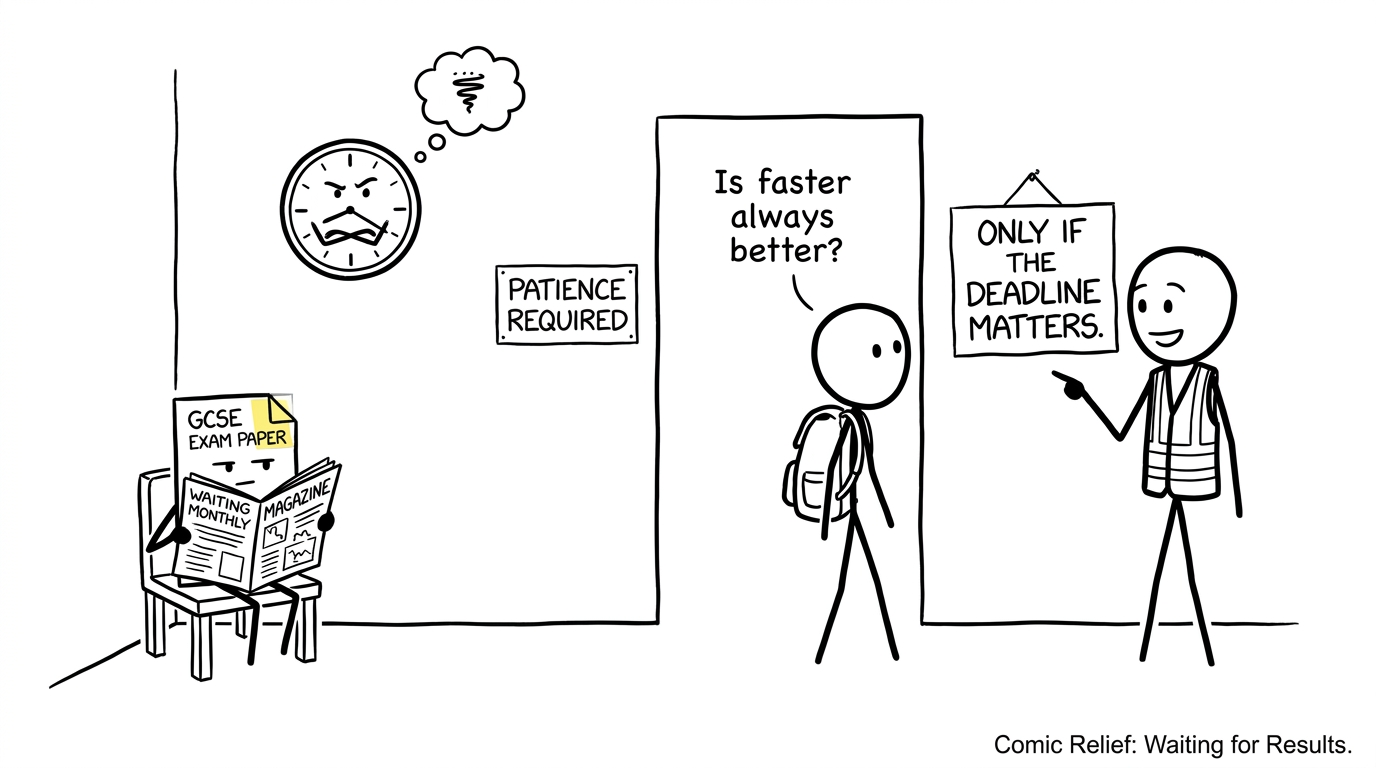 An exam paper waiting while a student asks whether faster is always better
What to do on GCSE results day
Speak to your maths teacher and exams officer immediately. Ask for your component marks, the grade boundary, the centre’s fee and its internal deadline. Where possible, request access to the marked script so a teacher can look for credible marking issues.
Then contact the sixth form. A calm conversation may buy more time than an expensive review buys speed.
If the grade does not change, keep the next step practical. Read what happens if you do not pass GCSE maths, then return to the GCSE maths revision hub. You can rebuild with Edexcel GCSE maths revision, GCSE past papers and predicted papers and mini tests.
Common mistakes
- Assuming every exam board offers a GCSE priority service.
- Calling it a complete re-mark rather than a review of the existing marking.
- Missing the school’s earlier internal deadline.
- Reviewing several papers without first checking the scripts.
- Believing a mark cannot fall.
- Paying before asking whether the sixth form will hold the place anyway.
Make the next decision with evidence
A priority review is valuable when speed changes an actual decision. Otherwise, the standard service may offer the same review without the priority premium. Ask your exams officer for the current cost comparison before choosing.
Whatever the outcome, MathsGenie remains your free route forward: revision lessons for missing methods, practice questions for accuracy, mark schemes and video solutions for feedback, and past papers and predicted papers for exam readiness. Start with the evidence, choose calmly, then take the next useful step.











