

GCSE Modern Hebrew Grade Boundaries Year to Year
GCSE Modern Hebrew grade boundaries year to year often move by a few marks. Explore the latest data, reasons for shifts and how to plan revision wisely.
A boundary can feel like a prediction about your future. It is not. It is a line drawn after the examination to make grading fair.
Looking at GCSE Modern Hebrew grade boundaries year to year, the short answer is that they usually change, but recent movements have mostly been modest. Between summer 202320232023 and summer 202520252025, AQA foundation boundaries were unchanged and then fell by 333 marks. Higher-tier boundaries moved more unevenly, generally by between 111 and 999 marks from one year to the next.
The important lesson is not to guess the next boundary. It is to understand the historical range, build a margin above it and concentrate on the marks your revision can actually influence.
The quick answer
Here is what students should know before looking at the figures:
- A grade boundary is the minimum overall mark required for a grade.
- AQA GCSE Modern Hebrew uses foundation and higher tiers.
- The qualification is reported out of 240240240 marks after component scaling.
- Foundation tier offers grades 111 to 555; higher tier offers grades 444 to 999, with an allowed grade 333 for students who narrowly miss grade 444.
- Boundaries are set after marking, not fixed before the examinations.
- Recent year-to-year changes have normally been smaller than the unusual movements surrounding pandemic-era grading.
- Previous figures are evidence, not a reliable prediction of the next series.
You can check every published figure on the AQA GCSE Modern Hebrew grade boundaries page.
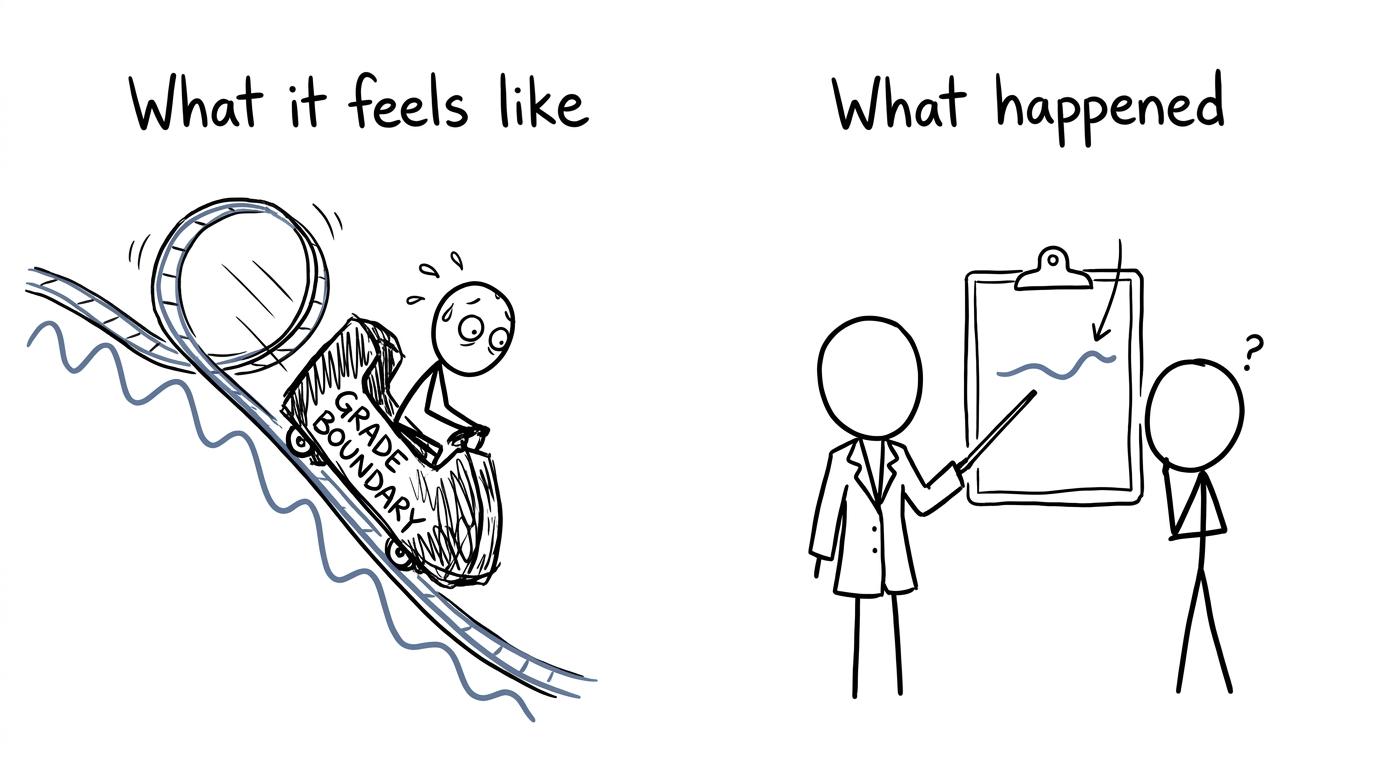 A student imagines a small grade-boundary movement as a giant rollercoaster
How much have Modern Hebrew boundaries changed?
A fair comparison needs the same board, specification, tier and total available mark. The table below therefore focuses on AQA summer series marked out of 240240240. The selected grades show the movement without turning the page into a wall of figures.
| Exam series | Foundation grade 555 | Foundation grade 444 | Higher grade 999 | Higher grade 777 | Higher grade 444 |
|---|---|---|---|---|---|
| June 201920192019 | 164164164 | 139139139 | 205205205 | 142142142 | 959595 |
| June 202220222022 | 153153153 | 128128128 | 193193193 | 131131131 | 838383 |
| June 202320232023 | 160160160 | 135135135 | 210210210 | 144144144 | 929292 |
| June 202420242024 | 160160160 | 135135135 | 203203203 | 143143143 | 848484 |
| June 202520252025 | 157157157 | 132132132 | 208208208 | 148148148 | 828282 |
These are overall qualification boundaries. For example, the higher-tier grade 777 boundary was 144144144 in 202320232023, 143143143 in 202420242024 and 148148148 in 202520252025. That is a fall of 111 mark followed by a rise of 555 marks.
The pattern is less dramatic than it can appear when students discuss boundaries immediately after an examination.
Foundation tier has recently been very stable
Every published foundation boundary was identical in 202320232023 and 202420242024. In 202520252025, each boundary fell by 333 marks:
| Grade | 202320232023 | 202420242024 | 202520252025 |
|---|---|---|---|
| 555 | 160160160 | 160160160 | 157157157 |
| 444 | 135135135 | 135135135 | 132132132 |
| 333 | 110110110 | 110110110 | 107107107 |
| 222 | 858585 | 858585 | 828282 |
| 111 | 606060 | 606060 | 575757 |
So, for the latest two year-to-year comparisons, foundation movement was either 000 or 333 marks. That is useful historical context, but it is not a rule that future boundaries must follow.
Higher-tier movement varies by grade
From 202320232023 to 202420242024, higher boundaries changed by between 111 and 999 marks. The grade 777 boundary fell by only 111 mark, while the grade 444 boundary fell by 888 marks and the grade 333 boundary fell by 999 marks.
From 202420242024 to 202520252025, the upper boundaries rose: grades 999, 888 and 777 each increased by 555 marks. Lower down, grade 444 fell by 222 marks and grade 333 fell by 333 marks.
This is why saying “the boundary went up” can be too vague. Different grade boundaries within the same qualification do not always move by the same amount or even in the same direction.
Why the change from 202220222022 to 202320232023 was larger
The transition from 202220222022 to 202320232023 should not be treated as an ordinary annual comparison. In England, 202220222022 grading was part of the return from pandemic-era arrangements, with outcomes intended to sit between 201920192019 and 202120212021. Grading returned to the normal pre-pandemic standard in 202320232023.
That helps explain why the higher-tier grade 999 boundary rose from 193193193 in 202220222022 to 210210210 in 202320232023, while the foundation grade 444 boundary rose from 128128128 to 135135135.
The figures are accurate, but their context is unusual. If you are trying to judge how much boundaries normally move now, the comparisons between 202320232023, 202420242024 and 202520252025 are more informative.
November 202020202020 and November 202120212021 figures also need care because those series were marked out of 180180180, not 240240240. Comparing their raw marks directly with a normal summer series would be misleading.
Why do grade boundaries change at all?
Every examination paper is new. Exam boards work to make papers comparable, but they cannot know exactly how demanding students will find each question until responses have been marked.
If a paper proves slightly easier, students may generally earn more marks, so boundaries may rise. If it proves harder, boundaries may fall. The purpose is to keep the quality of work required for a grade broadly comparable across years.
AQA and other exam boards use statistical evidence alongside expert judgement. Senior examiners review work around proposed boundaries and compare its standard with work from previous cohorts. Boundaries are then confirmed when marking is nearly complete.
This leads to three important conclusions:
- A higher raw-mark boundary does not automatically mean it was harder to earn the grade.
- A lower boundary does not mean the exam board decided to be generous.
- There is no fixed quota limiting how many students may receive each grade.
Maths students will recognise the same principle from MathsGenie’s guide to how GCSE grade boundaries work: raw marks may move, while the intended grade standard remains stable.
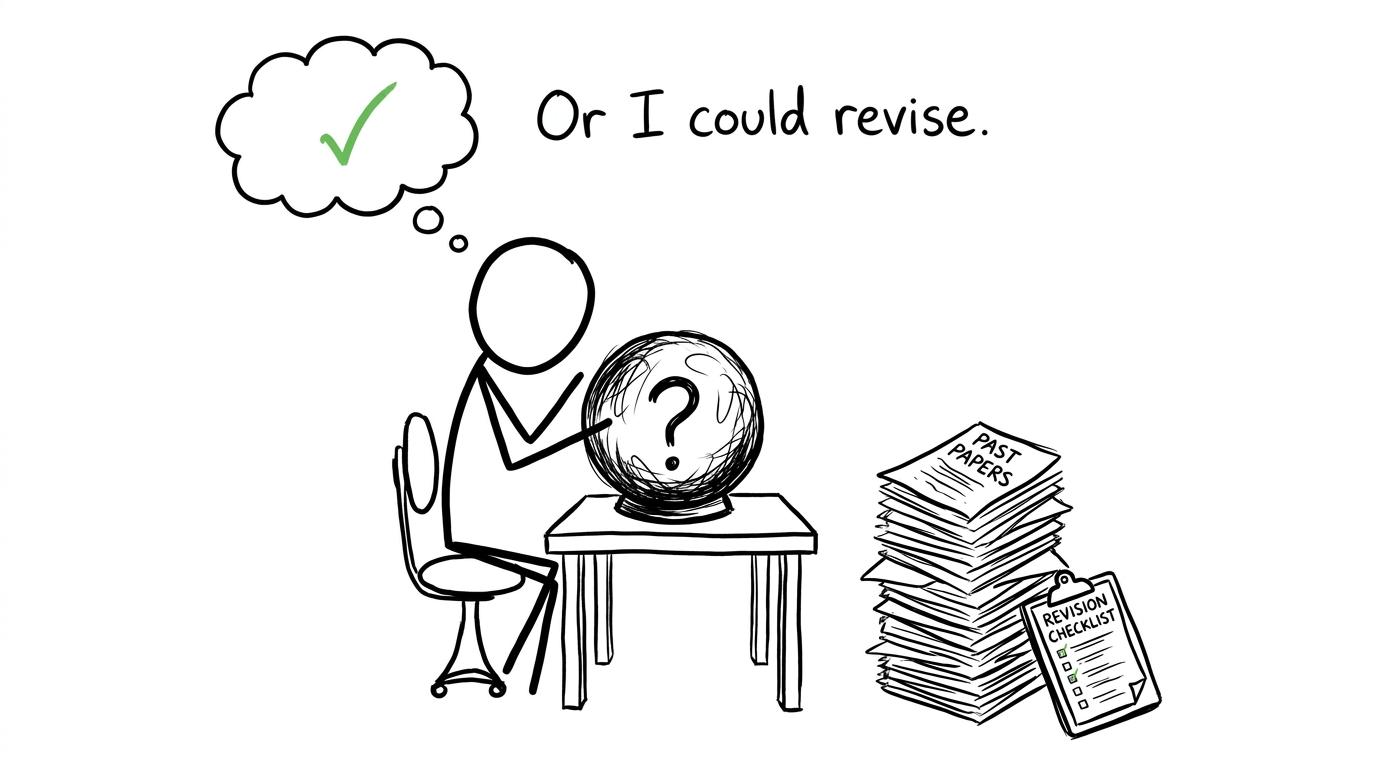 A student considers predicting boundaries with a crystal ball instead of revising
What the four Modern Hebrew components mean for your total
AQA GCSE Modern Hebrew assesses listening, speaking, reading and writing. Each contributes 25%25\%25% of the qualification, and the component marks are scaled to produce an overall total out of 240240240.
Your final grade is based on that overall qualification total. Published component boundaries can be useful when teachers assess individual skills, but they are not separate grades that are combined. A stronger performance in one component can compensate for a weaker performance in another because all four contribute to the final total.
This makes balanced revision sensible. A student who repeatedly practises writing but avoids listening may be protecting a strength while leaving a large source of available marks untouched.
How to use old boundaries without trying to predict the future
Past boundaries are useful as a measuring tool. They are poor as a promise.
Choose a target grade and inspect several comparable summer series. Then aim for a sensible cushion above the historical boundary rather than treating one previous figure as an exact target. The cushion matters because the next paper, your performance under pressure and the final boundary can all differ.
The productive revision cycle is simple:
- complete appropriate exam-style questions;
- mark them carefully;
- identify whether each lost mark came from knowledge, accuracy, timing or interpretation;
- practise the weakest skill;
- retest it later under timed conditions.
That principle transfers directly to maths revision. The GCSE maths revision hub brings together board-specific lessons and practice for Edexcel, AQA, OCR, Eduqas, WJEC and CCEA. If a paper reveals several weak areas, use the guide to finding your weakest GCSE topics rather than revising only what already feels comfortable.
A boundary cannot earn you another mark. Correcting a repeated mistake can.
A calm plan for students revising several GCSEs
Students searching for Modern Hebrew boundaries are often balancing the language with maths and several other GCSEs. The danger is spending revision time monitoring numbers that cannot yet be known.
Give boundary checking a limit. Record the recent range once, choose a target with some headroom and return to active revision.
For maths, that might mean using Edexcel GCSE maths past papers under timed conditions, then reviewing the mark scheme and video solutions. The method explained in how to use GCSE past papers properly is equally valuable across subjects: complete, mark, diagnose, repair and retest.
If competing subjects make revision feel scattered, build a weekly structure using the GCSE maths revision timetable. A timetable does not need to predict every day perfectly. It only needs to protect regular time for the work most likely to improve your marks.
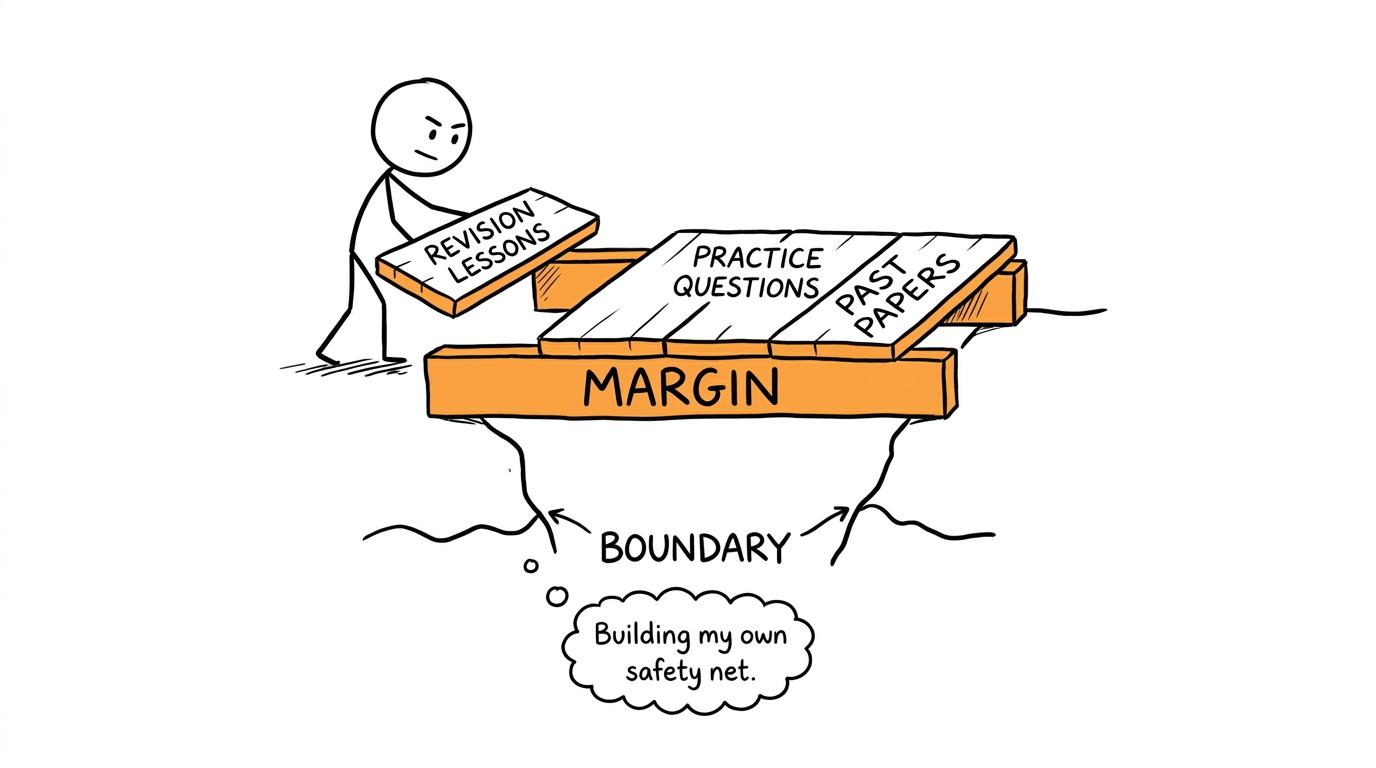 A student builds a revision bridge safely above a wobbling grade boundary
Common mistakes when comparing Modern Hebrew boundaries
Comparing different tiers
Foundation and higher boundaries belong to different papers and grade ranges. A foundation grade 555 boundary should not be compared directly with a higher grade 555 boundary as evidence that one tier is automatically easier.
Treating 202220222022 as a normal baseline
The 202220222022 grading arrangements were transitional. Include the year when reviewing history, but do not assume its larger movement into 202320232023 represents a typical annual shift.
Comparing totals out of 180180180 with totals out of 240240240
The November 202020202020 and 202120212021 series used a different maximum mark. Raw marks only make sense when the assessment scale is the same.
Using a component boundary as the final boundary
Notional boundaries for listening, speaking, reading or writing can help interpret component performance. Your qualification grade is determined by the overall scaled total.
Assuming an unofficial prediction is confirmed
The next boundaries are not known before marking and awarding are complete. Predictions may offer a rough discussion point, but they cannot account fully for the demand of an unseen paper or how students perform nationally.
Revising to scrape one historical mark
Aiming exactly at last year’s minimum leaves no protection against normal variation or avoidable exam errors. Build a margin through secure vocabulary, accurate language, careful reading and timed practice.
Boundaries move, but your next action stays clear
Recent AQA evidence shows that GCSE Modern Hebrew boundaries do change, although the ordinary year-to-year movement is often only a handful of marks. Foundation boundaries were unchanged from 202320232023 to 202420242024 and fell by 333 marks in 202520252025. Higher boundaries moved more unevenly, with shifts of up to 999 marks in the latest comparisons.
The boundary is the final measurement, not the revision strategy.
Check the historical Modern Hebrew grade boundaries, set a target with breathing room and put your attention back on performance. For your maths exams, make MathsGenie your free revision base: use revision lessons to understand methods, practice questions and mini tests to secure them, then past papers and predicted papers with mark schemes and video solutions to make them reliable under pressure.










