

GCSE English Language and Literature Memory vs Understanding
GCSE English Language and Literature memory vs understanding: discover what exams reward and balance English revision effectively alongside GCSE maths.
There is a familiar revision trap: you can spend an evening memorising quotations and still feel unsure what you would write about them. At the same time, you can understand a novel perfectly well but struggle to retrieve useful evidence under exam pressure.
The answer to GCSE English Language and Literature memory vs understanding is that both matter, but they perform different jobs. English Language mainly rewards transferable reading and writing skills. English Literature requires more deliberate recall of texts, quotations and relevant context, yet understanding and analysis are what turn that knowledge into marks.
For students also preparing for maths exams, this distinction matters. Your time is limited. Knowing what must be remembered, what must be understood and what must be practised helps you divide revision more intelligently.
The short answer: memory supplies the material
A useful way to think about English revision is:
- Memory retrieves quotations, vocabulary, plot details, themes, methods and contextual knowledge.
- Understanding explains why a writer made a choice and how it shapes meaning.
- Practice applies both under the conditions of an exam question.
- Feedback improves the quality, relevance and precision of your response.
English Literature generally places a greater burden on memory because you have studied set texts in advance and may not have access to the complete text in the examination. English Language asks you to respond to material supplied in the paper, so memorising content is less important. However, remembering reliable approaches to analysis, comparison, evaluation and writing still helps.
Neither subject rewards memory by itself. A remembered quotation is evidence, not a finished argument.
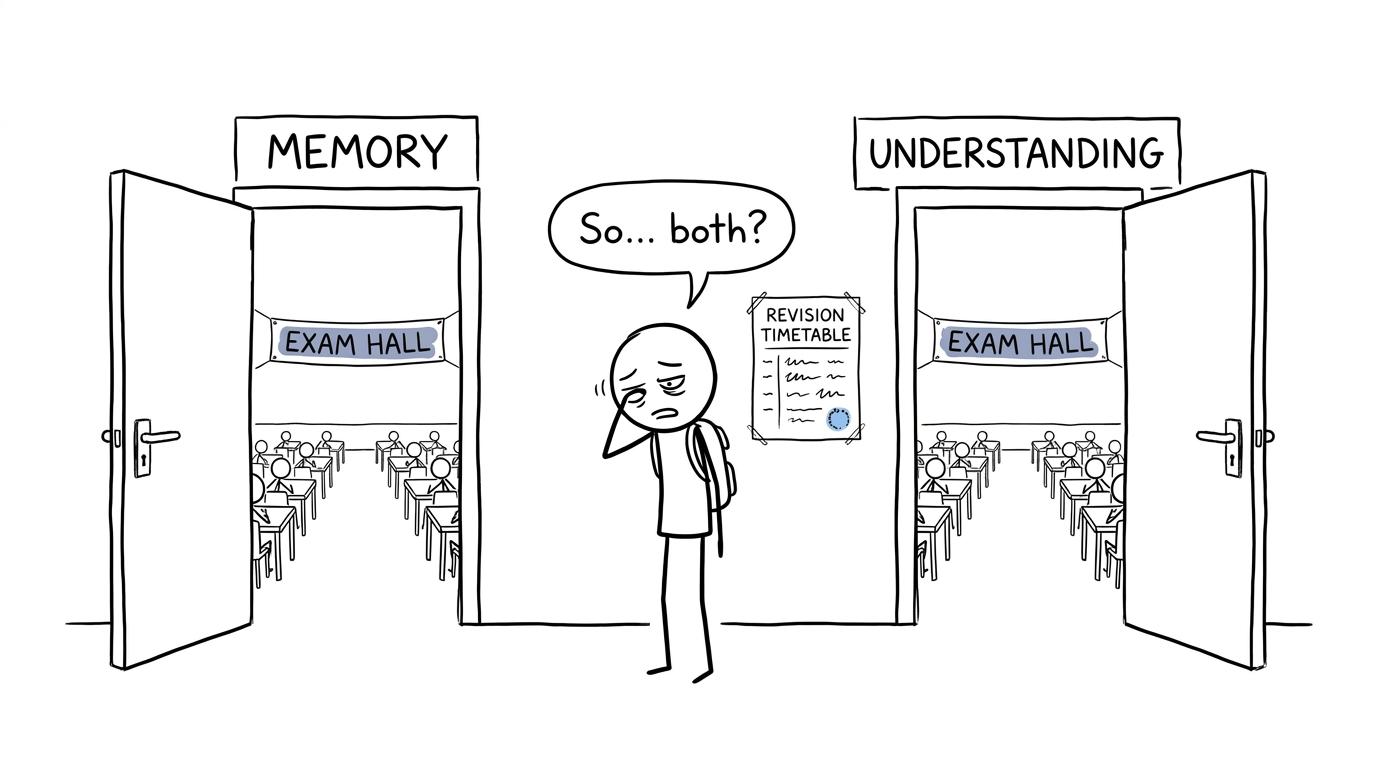 A GCSE student discovers that memory and understanding lead into the same exam hall
What GCSE English Language actually rewards
The exact paper structure depends on whether you take AQA, Edexcel, OCR, Eduqas or another approved specification. Always check your exam board's current specification and materials. Across boards, however, the central skills are broadly similar.
You may be asked to:
- identify explicit and implicit information;
- select and combine evidence;
- analyse language and structure;
- compare writers' ideas or perspectives;
- evaluate a text critically;
- communicate clearly for a specified audience, purpose and form;
- use accurate spelling, punctuation, grammar and vocabulary.
These are acts of understanding and application. You cannot memorise the unseen source because you will encounter it in the exam. You must make sense of the particular words, structure and viewpoint in front of you.
What is worth remembering for English Language?
Memory still supports performance. It is useful to know:
- what each question is asking you to do;
- the meaning of command words such as analyse, compare and evaluate;
- a flexible method for selecting evidence;
- common language and structural methods;
- the conventions of forms such as articles, speeches and letters;
- punctuation and sentence structures you can control accurately;
- approximate timings based on your paper and your teacher's guidance.
The word flexible matters. A rigid paragraph memorised in advance may not answer the question you receive. A compact process that helps you read, decide and explain is much more dependable.
This resembles good maths revision. Memorising a formula can help, but first you must recognise when it applies. MathsGenie's GCSE maths revision resources build this connection between knowledge and application through short lessons, questions and solutions.
Why English Literature needs selective memory
Literature begins with material studied before the exam: plays, novels, poetry and sometimes an unseen poetry component. You need secure knowledge of characters, themes, relationships, turning points and writers' methods.
Many Literature assessments do not provide the complete set text. Some papers may print an extract or a poem, but you should not assume that every passage or quotation you need will appear. The precise arrangements vary by specification, so check the latest information supplied by your school and exam board.
That makes retrieval important. But trying to memorise every page is neither realistic nor necessary.
A better memory bank contains:
- short, versatile quotations connected to several themes;
- the sequence of major events and character changes;
- important contrasts, patterns and structural choices;
- accurate contextual ideas that illuminate the text;
- alternative interpretations you genuinely understand.
A short quotation understood deeply is usually more useful than a long speech remembered without purpose. It can be adapted to several questions and analysed at word, image or structural level.
Understanding is what converts knowledge into marks
Suppose a student remembers the perfect quotation. That creates an opportunity, not a guaranteed reward. The response must still connect the evidence to the question and explain how it supports an interpretation.
Strong literary understanding involves asking:
- What does this detail suggest?
- Why might the writer have chosen it?
- How does it affect the reader or audience?
- Does its meaning change elsewhere in the text?
- How does it support the argument being made?
- Is another interpretation plausible?
Context works in the same way. A memorised historical fact should not sit beside the analysis like an unrelated label. It should clarify the writer's concerns, the text's ideas or a reasonable interpretation. Relevant context is valuable; a prepared paragraph forced into every answer is not.
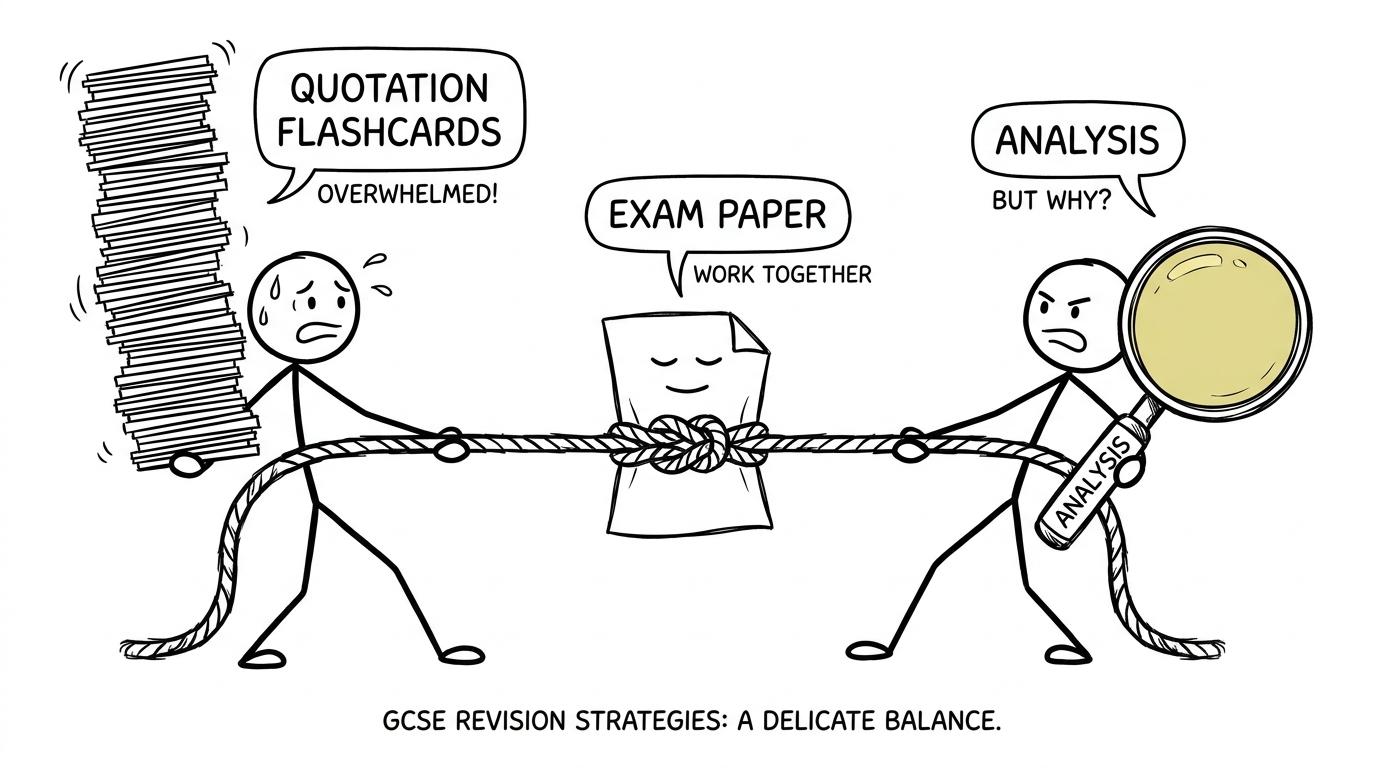 Quotation flashcards and analysis learn to pull in the same direction
A balanced revision method for English and maths
Students preparing for several GCSEs do not need separate philosophies for every subject. A simple cycle works across English and maths:
Retrieve
Close the book and recall what you know. For Literature, this might mean listing quotations connected to a character or arranging plot events in order. For Language, recall the purpose of a question or the features of a writing form.
In maths, retrieval might involve recalling a method or deciding which topic a question tests. MathsGenie's free maths revision lessons organise topics by grade, making it easier to identify what needs attention.
Explain
Do not stop at recall. Explain why the quotation matters, why the structural choice is effective or why a particular maths method works. If your explanation becomes vague, you have found a gap in understanding.
Apply
Answer an unfamiliar question without copying a model response. Application reveals whether your knowledge is flexible. For maths, use Edexcel GCSE past papers, AQA GCSE past papers or OCR GCSE past papers, depending on your specification.
Check and improve
Compare your work with mark schemes, teacher feedback or reliable video solutions. Do not merely record whether an answer was right or wrong. Identify whether the issue was missing knowledge, weak understanding, misreading the question, poor timing or inaccurate execution.
That diagnosis determines what you do next. More flashcards will not repair every problem.
How to divide limited revision time
The best balance depends on your current weakness.
If you repeatedly forget quotations or plot events, increase short retrieval sessions. If you recall plenty but your paragraphs remain descriptive, spend more time planning arguments and analysing individual choices. If your ideas are strong but unfinished, practise timed responses and decision-making.
English Language needs regular contact with unfamiliar texts. Reading an answer and thinking that it makes sense is not the same as producing one independently. Literature similarly requires question practice so that remembered knowledge becomes adaptable rather than attached to one predicted theme.
The same principle applies to maths. Watching a video can establish understanding, but attempting questions establishes whether you can use it. GCSE predicted papers can support final preparation, while past papers provide broader evidence of how specifications have been assessed. Predicted papers are practice materials, not promises about what will appear.
A sensible weekly plan therefore mixes:
- brief retrieval rather than rare cramming;
- focused skill practice;
- timed sections or papers;
- careful review of errors;
- another attempt after feedback.
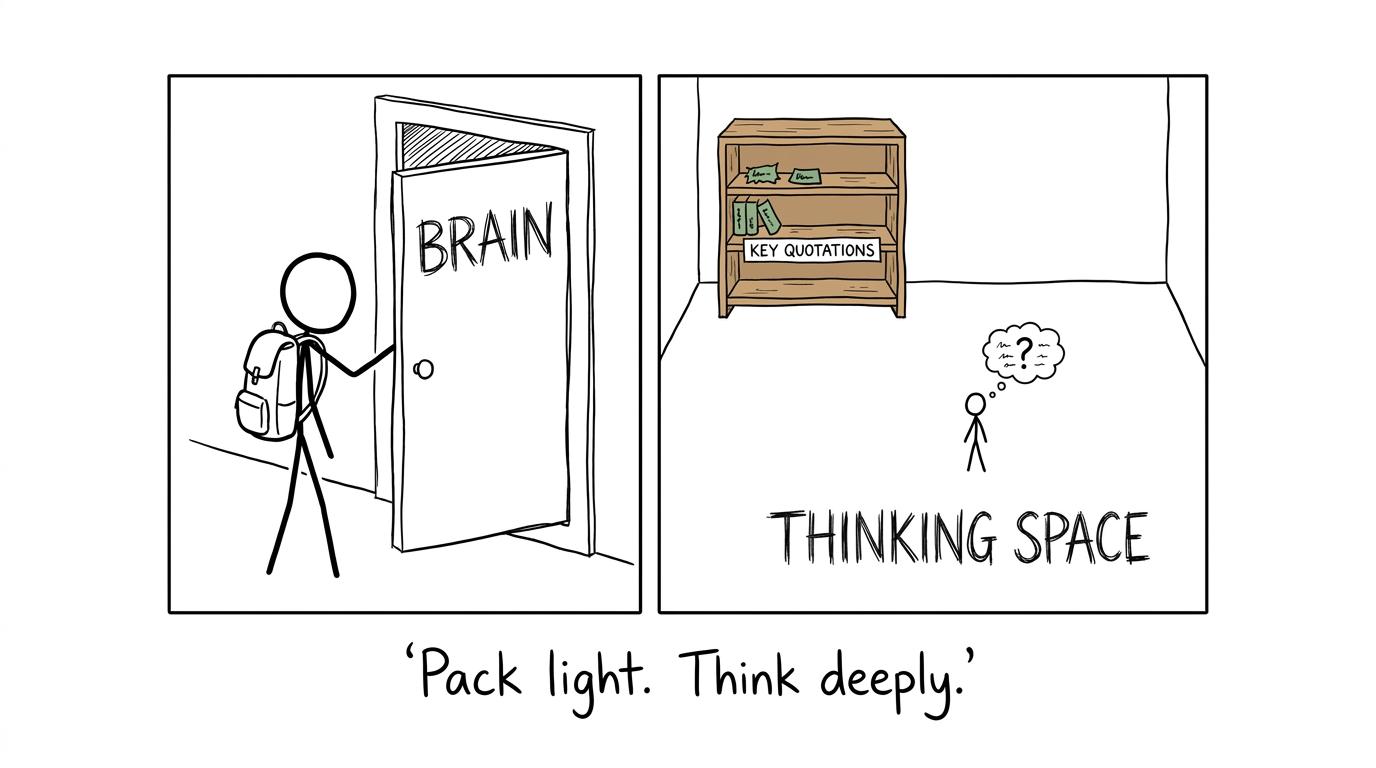 A student's brain keeps a small quotation shelf and leaves plenty of room for thinking
Common mistakes in memory and understanding revision
Memorising complete essays
A prepared essay may fit a familiar question but collapse when the wording, character or theme changes. Memorise useful knowledge and flexible connections, not a script that prevents you from answering the actual task.
Collecting too many quotations
A huge quotation list can create the feeling of progress while making retrieval harder. Choose a manageable set of short quotations with several possible uses, then practise connecting them to different arguments.
Treating technique spotting as analysis
Naming a metaphor, verb or contrast does not explain its effect. The method should lead into a precise discussion of meaning, purpose and relevance to the question.
Revising Language as if it were Literature
English Language is not mainly a test of remembered content. Spending all your time learning terminology can displace the more important work of reading unseen sources, selecting evidence and writing under time pressure.
Ignoring the exact specification
GCSE English Language and Literature are generally untiered, unlike foundation and higher tier GCSE maths, but paper structures and requirements vary between exam boards. Revise from materials that match your qualification rather than assuming every online checklist applies to you.
Reviewing without attempting
Rereading notes often feels fluent because the ideas are already visible. Cover the page, retrieve the knowledge and use it in a fresh question. Productive revision must occasionally feel difficult.
Memory or understanding: the decision that matters
The real choice is not between memory and understanding. It is between passive familiarity and usable knowledge.
For GCSE English Language, prioritise understanding, adaptable methods and practice with unseen material. Memorise only the compact knowledge that helps those skills operate efficiently. For GCSE English Literature, build a selective bank of quotations, events and context, then practise transforming that recall into relevant analysis.
As you balance English with maths, keep the same rhythm: learn, retrieve, apply and review. Start with the MathsGenie home page to choose revision lessons, practice questions, mini tests and video solutions suited to your needs. Then move into past papers, mark schemes and predicted papers when you are ready to test connected knowledge under exam conditions.
Memory gets useful material onto the desk. Understanding decides what to do with it. Consistent practice teaches you to do it when the exam clock is running.










