

GCSE English Language vs Language and Literature
GCSE English Language and Literature vs GCSE English Language explained: compare content, workload and skills to decide which option fits you best at school.
There is a particular kind of confusion that appears when a subject-choice form turns up. The headings look similar, the consequences feel important, and nobody seems to explain what the choice actually means.
The question behind GCSE English Language and Literature vs GCSE English Language has a fairly simple answer: in most English schools, English Language and English Literature are separate GCSEs. Taking “Language and Literature” usually means completing both qualifications, while taking English Language alone means completing only the Language GCSE. It is not normally a choice between two versions of the same course.
English Language focuses on reading unfamiliar texts and communicating effectively in writing. English Literature focuses on interpreting studied plays, novels and poetry. If your school genuinely allows a choice, taking both usually suits students who enjoy reading, discussion and extended analytical essays. Language alone may suit someone who needs a more manageable workload or whose school recommends a different pathway.
Your school, location and exam board matter, so confirm the exact qualification titles before deciding.
The comparison at a glance
Here is the practical distinction:
- English Language develops comprehension, textual analysis, comparison and creative or transactional writing.
- English Literature involves studying set texts, remembering relevant textual evidence and constructing interpretations.
- Taking both normally produces two separate GCSE grades.
- Taking Language alone produces one GCSE grade and reduces the number of texts and examinations you must prepare for.
- The decision may not be entirely yours. Many schools enter most students for both qualifications.
- Assessment varies by exam board. AQA, Edexcel, OCR and Eduqas use different papers, text selections and question structures.
Before changing anything, ask your English department which specification you follow, whether Literature is optional and how the decision could affect your timetable or future applications.
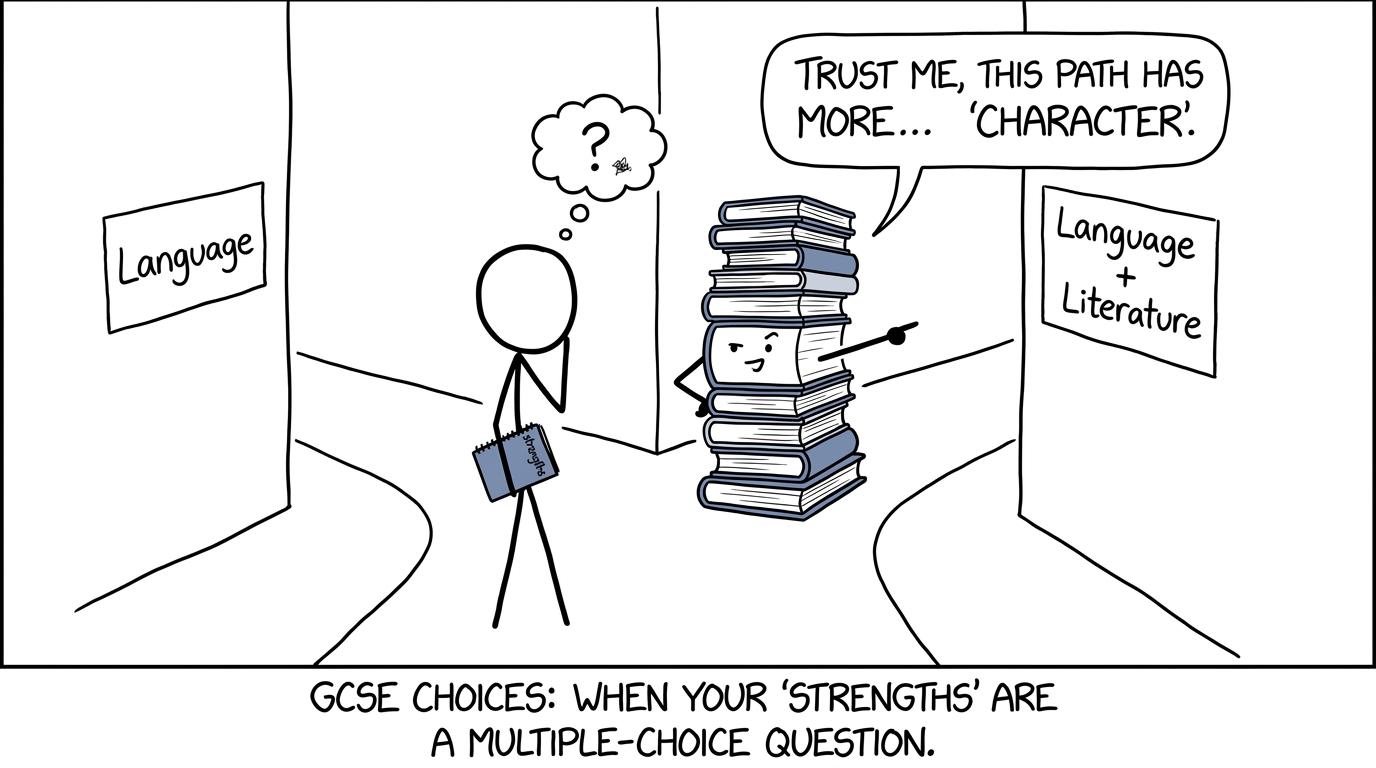 A student choosing between English Language and Language plus Literature
What GCSE English Language actually involves
GCSE English Language is not mainly a test of spelling complicated words. Accuracy matters, but the course is broader than that.
You will normally read unfamiliar fiction and non-fiction extracts, identify explicit and implicit ideas, analyse how writers use language and structure, and compare viewpoints. You will also produce your own writing. Depending on the paper, this might involve description, narrative, argument, explanation or writing for a particular audience and purpose.
The precise balance depends on the specification. Current GCSE English Language qualifications in England are primarily assessed through final written examinations. They also include spoken-language assessment, reported separately from the numbered GCSE grade rather than contributing to it.
Language often suits students who:
- respond well to material they have not seen before;
- enjoy explaining how a writer creates an effect;
- can adapt their tone for different audiences;
- prefer developing transferable skills to learning several set texts;
- are willing to plan, draft and improve extended writing.
It is worth noticing the similarity with maths. An unfamiliar English extract is not unlike an unfamiliar problem-solving question: you cannot memorise the final answer, but you can practise a reliable method. Regular exposure matters more than one heroic revision session.
What English Literature adds
English Literature asks you to study complete texts rather than meeting every passage for the first time in the examination. Specifications commonly include areas such as Shakespeare, a nineteenth-century novel, a modern text and poetry, although the exact selection and assessment structure vary.
The central skill is interpretation. You need to form a clear argument, select relevant evidence and explain how language, form, structure and context support your reading. Knowing the plot is useful, but retelling it is not enough.
Literature tends to fit students who:
- enjoy discussing why characters behave as they do;
- notice patterns, contrasts and recurring ideas;
- can remember short, flexible quotations;
- like developing an argument across several paragraphs;
- are prepared to revisit the same texts more than once.
The workload is not simply “more English”. It is a different kind of preparation. Language improves through repeated reading and writing practice. Literature also requires secure knowledge of characters, themes, relationships, contexts and textual evidence.
That distinction should shape your decision more than whether you currently “like books”. You may not love every set text, just as you may not love every maths topic. The better question is whether the thinking suits you.
Is English Literature really optional?
This is where a general online answer can become misleading.
For most pupils in England, GCSE English Language is a core qualification. Schools commonly teach English Literature alongside it, and many enter the majority of students for both. However, entry policies differ. A school may recommend Language alone in particular circumstances, including when a student needs additional curriculum time or a more accessible examination programme.
Arrangements also differ across England, Wales and Northern Ireland, and qualification names can sound deceptively similar. Eduqas qualifications used in England should not automatically be assumed to follow the same structure as qualifications designed for Wales.
If a form uses the phrase “English Language and Literature”, establish whether it means:
- two separate GCSE qualifications;
- a particular combined qualification available in your nation;
- a teaching group that covers both subjects;
- or simply the school’s informal name for English lessons.
The qualification title, awarding body and specification code provide a more reliable answer than the wording on a timetable.
Which option fits your strengths better?
A useful decision starts with evidence, not identity. “I am bad at English” is too broad to help. Look instead at the tasks producing your strongest and weakest marks.
Choose both when your strength is sustained analysis
Language and Literature together may be the better fit if you can read closely, explain more than one interpretation and maintain an argument. Literature gives those strengths more room to count.
Taking both may also preserve a broader academic profile. Literature can develop careful reading and essay writing that remain useful in subjects such as history, psychology, law and the humanities. That does not mean it is required for every future course, but it can be valuable preparation.
Consider Language alone when workload is the main barrier
Language alone may be sensible if your school offers the pathway and preparing several set texts would seriously weaken your progress across the curriculum. A smaller programme is not automatically an easier grade, because Language still demands fluent reading and controlled writing. It simply removes the separate Literature content and assessments.
Think in terms of opportunity cost. Every evening spent relearning a Literature text is an evening unavailable for another priority, including GCSE Maths revision lessons. But dropping a subject solely to create free time will not help unless that time receives a clear purpose.
Look at your actual assessments
Compare recent marks in unseen reading, creative or transactional writing, Literature essays and quotation recall. Ask your teacher whether the issue is knowledge, examination technique, writing accuracy or time management.
A weak mock result does not by itself prove that a qualification is wrong for you. It may reveal a specific skill that can improve. Equally, choosing Literature because friends are taking it is not evidence that the workload fits your needs.
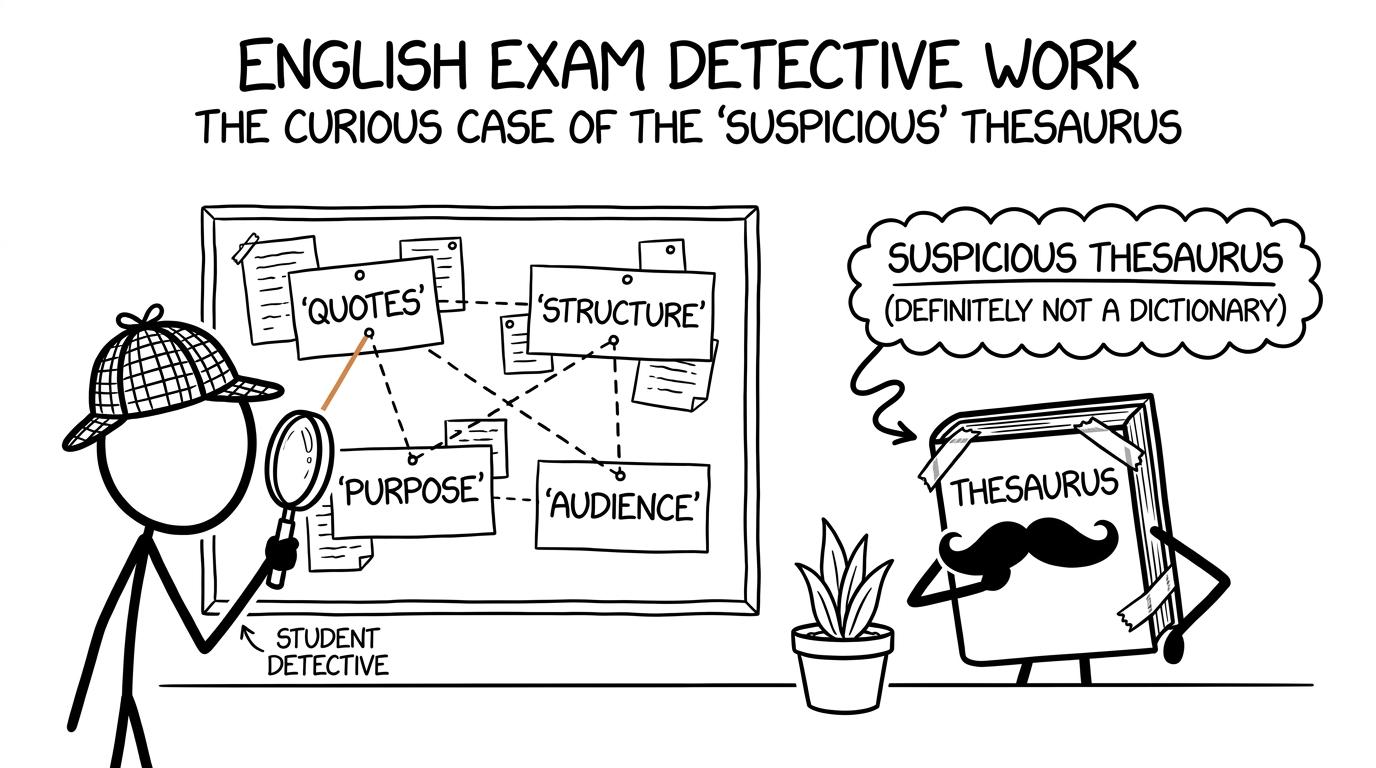 A student detective investigating English exam clues
How the choice affects maths revision
Students rarely revise one subject in isolation. The real problem is fitting several demanding courses into the same week.
English and maths require different forms of retrieval. Literature might involve recalling quotations and themes; maths requires retrieving procedures and then recognising when to use them. Alternating these tasks can make a revision plan less monotonous, but only if each session has a defined outcome.
Start by mapping fixed commitments and examination dates. Then use the MathsGenie revision planner to turn vague intentions into specific maths topics. A realistic week might contain short Language practice, focused Literature retrieval and targeted maths questions rather than a single block labelled “revision”.
For maths, identify gaps through GCSE past papers, then return to the relevant lesson and questions. Closer to the examinations, MathsGenie predicted papers can provide additional practice in a full-paper format. Predicted papers are practice resources, not forecasts of exact examination questions.
If full papers feel overwhelming, MathsGenie mini tests can make progress easier to measure. The aim is not to give every subject equal time. It is to give each subject the kind of practice it needs.
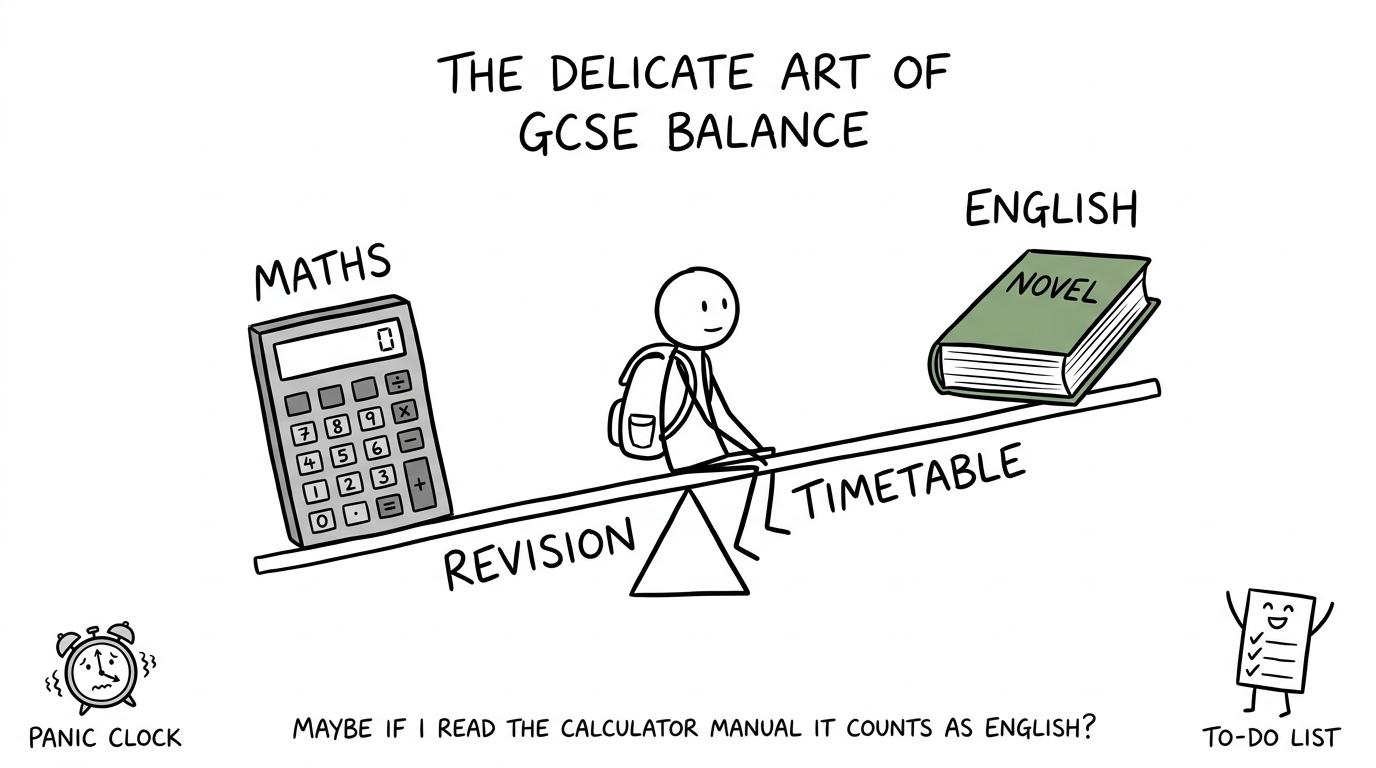 A student balancing a novel and calculator on a revision timetable
Questions to ask before choosing
Use this checklist with a teacher, parent or carer:
- Am I choosing between one GCSE and two separate GCSEs?
- Is Literature genuinely optional at my school?
- Which exam board and specification will I follow?
- What texts and papers would I study?
- How have I performed in Language and Literature tasks separately?
- Would dropping Literature change my timetable or support arrangements?
- Are there sixth-form or college entry requirements I should check directly?
- What will I do with the revision time I expect to save?
If you are considering A Level English later, ask the relevant sixth form about its published entry requirements. Do not assume that every institution follows the same rule.
Common mistakes when comparing the options
Assuming Language and Literature form one grade
In most English schools, they are separate GCSE qualifications with separate results. Check the formal course titles rather than relying on shorthand.
Thinking English Language has no content to revise
The extracts may be unseen, but the skills and question formats are not mysterious. Timed reading, planning, comparison and writing practice all need preparation.
Choosing only by current grade
A grade records performance across particular assessments. It does not explain whether weak knowledge, timing or technique caused the result. Diagnose the cause before changing your programme.
Underestimating Literature revision
Watching a plot summary is not the same as knowing a text. Strong preparation connects concise quotations with themes, characters, methods and possible arguments.
Ignoring the rest of the timetable
An additional GCSE creates real work, but so do foundation gaps in core subjects. Use MathsGenie's free GCSE resources to see what your maths preparation requires before making assumptions about spare time. Students considering future sixth-form maths can also preview the demands of A Level Maths revision.
Make the decision from evidence
The best choice is not automatically the option with more qualifications, nor the one that appears to promise less work. It is the route that fits your strengths, circumstances and future plans while remaining realistic about time.
For many students, taking GCSE English Language and English Literature together is the normal and most suitable route. If your school offers Language alone, it can still be a responsible choice when made with clear advice and a deliberate plan.
Once the decision is made, turn your attention back to controllable actions. For maths, use MathsGenie's revision lessons to rebuild weak topics, practise with topic questions and mini tests, and then test your progress using past papers, mark schemes, video solutions and predicted papers. A subject choice matters. What you repeatedly do afterwards usually matters more.











