

GCSE Engineering Grade 9 Rate Explained
GCSE engineering grade 9 rate explained using recent official results, fair subject comparisons, and practical maths revision advice for ambitious students.
The GCSE engineering grade 9 rate is small: in recent normal-exam years, roughly one student in every twenty has achieved the top grade. The precise percentage changes from year to year, and the relatively small number of Engineering entries means that even a modest change in results can move the rate noticeably.
That headline matters, but it needs context. A grade 999 is deliberately demanding, yet the national percentage is not your personal probability of success. It describes what happened across a particular group of students. It does not know the quality of your coursework, how carefully you revise, or whether you use past papers to turn weaknesses into marks.
This guide explains what the published figures mean, why yearly comparisons require care and how Engineering compares with larger GCSE subjects such as Maths, English and the sciences.
The short answer
Here is the useful overview:
- Around 5%5\%5% of GCSE Engineering candidates achieve grade 999 in a typical recent exam year.
- That is approximately one candidate in every twenty.
- The annual figure is not fixed and should always be connected to a particular year and dataset.
- Results from 202020202020 and 202120212021 are not directly comparable with normal examination years because grades were awarded through exceptional pandemic arrangements.
- The rate tends to be below the grade 999 share in separate sciences, but can be similar to the rate in GCSE Maths or Design and Technology.
- Different subjects have different candidates, assessment structures and entry sizes, so raw percentages do not reveal which GCSE is objectively harder.
The safest interpretation is therefore not, “I have a one-in-twenty chance.” It is, “Grade 999 is uncommon, so I need consistently high-quality work across every assessed component.”
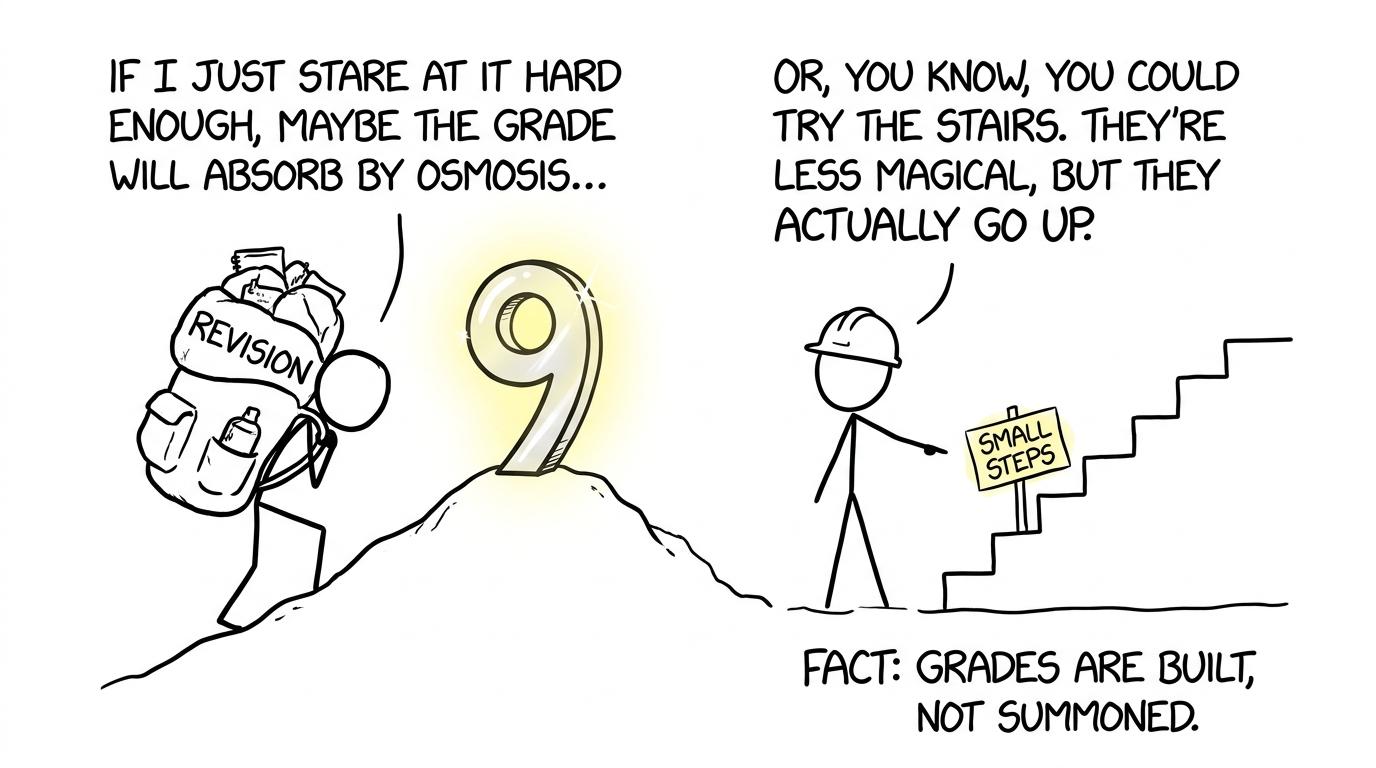 A student discovering that the route to grade 9 is made of small steps
What the annual Engineering figures really show
Official subject-level results are published after each summer series by organisations including the Joint Council for Qualifications and Ofqual. Their tables show the percentage of entries receiving each grade, rather than the percentage of all teenagers in the country.
A sensible broad reading of the recent series is:
| Award period | What the figures indicate | How to interpret it |
|---|---|---|
| 201920192019 | A low-single-digit grade 999 rate | A useful pre-pandemic examination benchmark |
| 202020202020 | A higher top-grade share | Centre-assessed grades replaced summer examinations |
| 202120212021 | A further elevated share | Teacher-assessed grades were used |
| 202220222022 | Above the usual pre-pandemic pattern | A transition year with grading protection |
| 202320232023 | A return towards normal grading | More comparable with pre-pandemic standards |
| 202420242024 and 202520252025 | Roughly one in twenty entries at grade 999 | The most relevant guide to current exam-era outcomes |
The table deliberately avoids presenting pandemic-era results as if they came from equivalent assessments. It also rounds the recent headline because published UK-wide and England-only datasets can cover slightly different populations.
If a dataset records n9n_9n9 grade 999 results from NNN entries, the rate is calculated using:
Grade 9 rate=n9N×100%\text{Grade 9 rate}=\frac{n_9}{N}\times 100\%Grade 9 rate=Nn9×100%That percentage describes entries, not necessarily unique students. It is also a historical result, not a grade boundary or an individual forecast.
Why the percentage moves each year
A common assumption is that exam boards reserve grade 999 for a fixed percentage of candidates. They do not simply award the grade to a predetermined quota.
Grade boundaries are set after the papers have been taken and marked. Awarding organisations use evidence about the difficulty of the assessment and the expected standard so that results remain appropriately comparable. A harder paper can have lower boundaries; an easier paper can have higher ones.
Engineering has a much smaller entry than GCSE Maths or English Language. That makes its percentages more sensitive to changes in the cohort. If several hundred results move between neighbouring grades in Maths, the national rate may barely shift. In a smaller subject, far fewer results can produce a visible change.
The qualification's assessment structure matters too. AQA's GCSE Engineering combines a written examination with non-exam assessment. The examination contributes 60%60\%60% of the qualification and the non-exam assessment contributes 40%40\%40%. Success therefore depends on technical knowledge, mathematical reasoning, design decisions, analysis and sustained project work.
Students should check the exact specification used by their school. Courses carrying names such as Engineering, Engineering Design or an engineering Technical Award are not automatically the same qualification, and their grading systems should not be combined.
How Engineering compares with other GCSEs
Subject comparisons look simple until you ask who entered each qualification and how they were assessed.
In recent results, the grade 999 rate for GCSE Maths has generally been in the low single digits, while English Language has also had a relatively small top-grade share. Separate sciences such as Biology, Chemistry and Physics usually report markedly larger grade 999 percentages. Engineering tends to sit much closer to Maths and Design and Technology than to the separate sciences.
| Subject area | Typical recent grade 999 pattern | Important context |
|---|---|---|
| Engineering | Around 5%5\%5% | Small cohort and mixed examination/NEA assessment |
| Mathematics | Low single digits | Very large, broad national entry |
| English Language | Low single digits | Very large and diverse entry |
| Design and Technology | Similar broad range to Engineering | Includes written and non-exam assessment |
| Separate sciences | Often above 10%10\%10% | More academically selected entry than Combined Science |
These are deliberately broad comparisons rather than claims that one paper is easier. Separate sciences often have a different prior-attainment profile because many schools select or guide students into those courses. GCSE Maths, by contrast, is taken by almost the entire age group.
Tiering creates another difference. GCSE Maths has foundation and higher tiers, and grade 999 is available only on higher tier. GCSE Engineering is not divided into foundation and higher papers in the same way. Comparing their overall grade distributions without mentioning this would be misleading.
The deeper lesson is that the trophy and the toolbox are different things. The grade records a result. The skills produce it.
 A grade trophy proves less useful than a toolbox of real skills
Why maths matters in GCSE Engineering
Engineering turns mathematical ideas into decisions. Measurements must be interpreted, tolerances understood and quantities compared. A polished design cannot compensate for calculations that do not make physical sense.
Useful areas include:
- percentages and percentage change;
- ratio, proportion and scale;
- rearranging formulae;
- area, volume and compound measures;
- interpreting tables, charts and graphs;
- accuracy, units and conversions;
- averages and comparison of data.
The free GCSE Maths revision programme organises topics by grade and includes videos, practice questions and answers. It gives Engineering students a practical way to revisit the mathematical tools behind technical problems without revising everything at once.
Begin with the areas that appear most often in your classwork. Then use MathsGenie's GCSE past papers to practise recognising those ideas when they are hidden inside longer questions. That change of context is important: knowing a formula in isolation is not the same as identifying when it should be used.
Students aiming for the highest grades can also use the grade 8 and 9 GCSE revision resources to strengthen multi-step reasoning. The purpose is not to collect difficult questions for their own sake. It is to become comfortable deciding what information matters, choosing a method and checking whether an answer is reasonable.
A realistic plan for aiming at grade 9
A rare result usually grows from ordinary actions repeated carefully. Start by separating Engineering revision into four strands:
- technical knowledge from the specification;
- mathematical and scientific application;
- evaluation and written explanation;
- non-exam assessment skills and evidence.
For the written component, revise one defined area and answer questions on it soon afterwards. Mark the work while your reasoning is still fresh. Record whether each lost mark came from missing knowledge, an incorrect method, weak terminology, poor interpretation or an avoidable slip.
For mathematical weaknesses, return to a relevant MathsGenie revision lesson, complete the practice questions and revisit the topic several days later. This is more useful than watching several videos without attempting anything independently.
Timed practice should come later, once the underlying topics are secure. Use the available GCSE Maths exam papers and mark schemes to develop pace and precision. Closer to the examination, MathsGenie predicted papers can provide additional practice in unfamiliar combinations of topics. They should complement official past papers, not replace them.
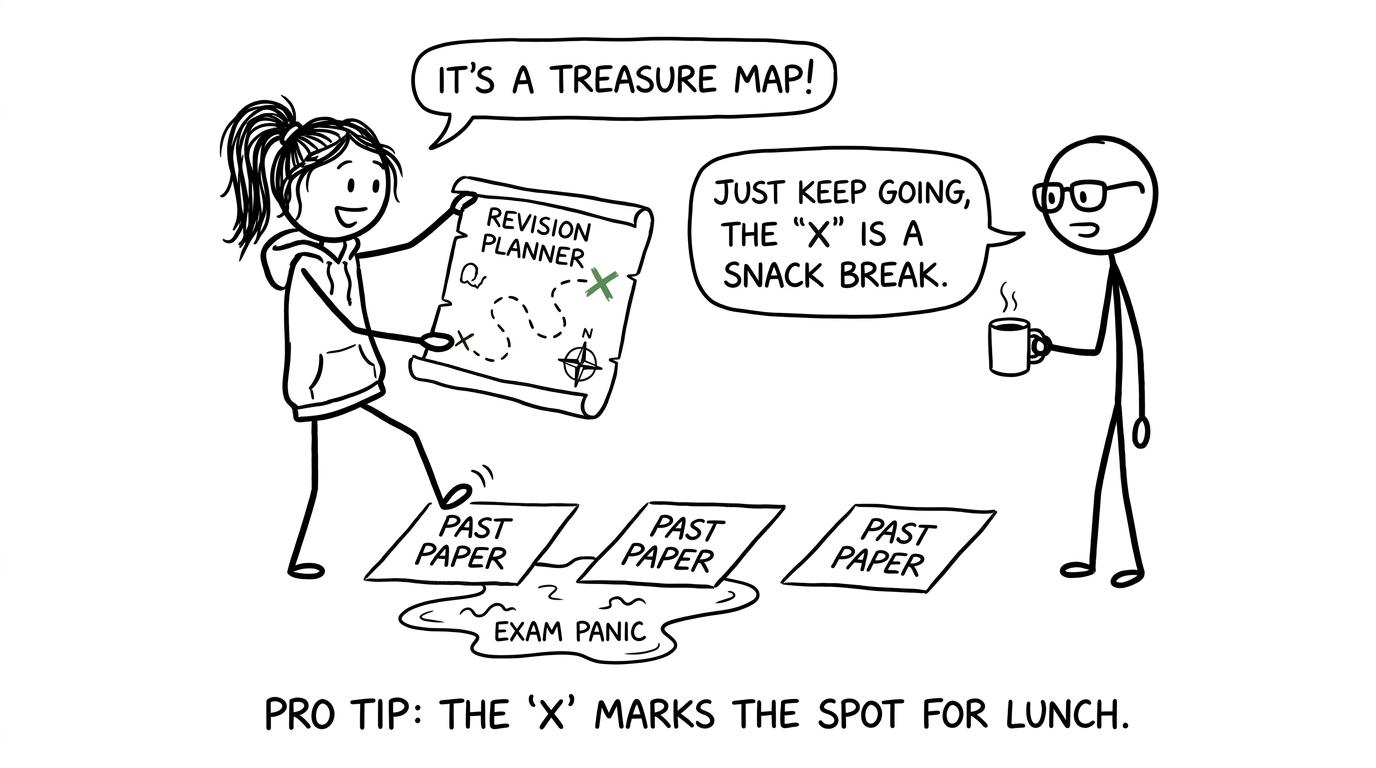 A revision planner becomes a map across the puddle of exam panic
Common mistakes when interpreting the grade 9 rate
Treating the national rate as a personal probability
A national result cannot measure your preparation. Two students entered for the same qualification may have very different attendance, project evidence, revision habits and understanding.
Comparing pandemic and exam years directly
The 202020202020 and 202120212021 results were produced through exceptional grading arrangements. They are part of the historical record, but they are not clean benchmarks for students sitting normal examinations now.
Mixing different engineering qualifications
A GCSE graded 999 to 111 is not interchangeable with a vocational or technical qualification using Pass, Merit, Distinction or another scale. Check the title, awarding organisation and qualification code.
Assuming a higher subject rate means an easier GCSE
Entry patterns matter. A subject chosen by a smaller, more specialised group may have more top grades without having easier assessments.
Revising only the written paper
For AQA GCSE Engineering, non-exam assessment represents 40%40\%40% of the final qualification. Ignoring its requirements places unnecessary pressure on the examination.
Chasing difficult questions before securing foundations
Grade 999 performance still depends on accurate basic work. Units, percentages, substitutions and clear written reasoning are not minor details. They are marks that strong candidates protect.
Make the statistic useful
The GCSE engineering grade 9 rate tells you that the highest grade is uncommon. It does not tell you that it is inaccessible.
Use the figure as a planning signal rather than a prediction. Know your specification, take both assessed components seriously and strengthen the maths that supports technical decision-making. Then practise under realistic conditions and study the mark scheme instead of merely counting your total.
MathsGenie gives you a free structure for that process: targeted GCSE revision lessons, topic practice, video solutions, past papers with mark schemes and predicted papers. Choose one weak mathematical topic today, complete the questions and turn a national statistic into a personal next step.











