GCSE Chemistry Results Day Questions: 2026 FAQ
GCSE chemistry results day questions answered for 2026: understand grades, combined science, boundaries, marking reviews and sensible next steps.
Results day compresses months of lessons, practicals and revision into a few characters on a screen or sheet of paper. It is no wonder that students and parents have questions.
This guide answers the most common GCSE chemistry results day questions for the June 2026 exam series. The short version is this: check the qualification carefully, speak to your school before making decisions, and remember that a surprising result is the beginning of a conversation rather than the end of one.
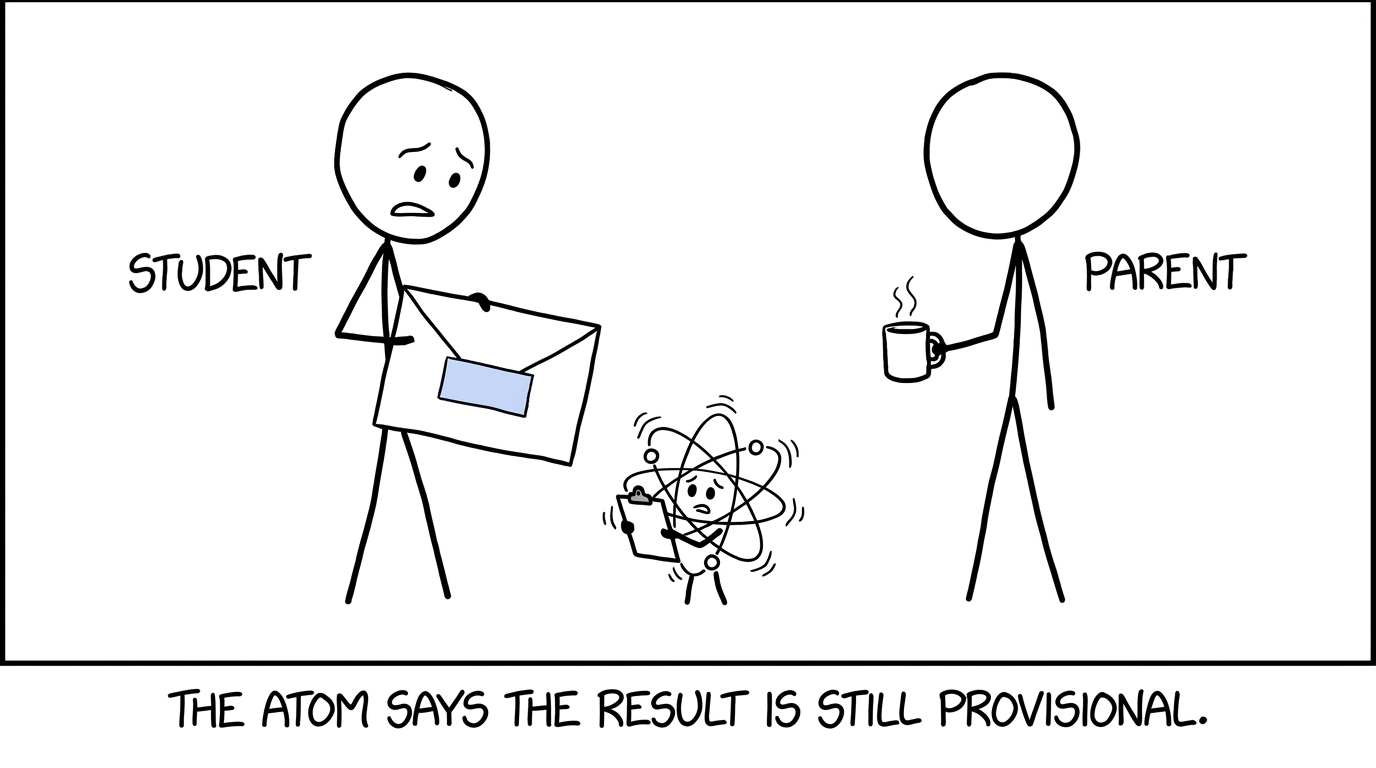 A nervous student, parent and atom waiting for GCSE results
Your results-day checklist
Before examining every boundary or comparing results with friends:
- Check whether you took separate Chemistry or Combined Science.
- Read the exact subject title and grade on your results slip.
- Keep the slip safe for sixth-form or college enrolment.
- Ask a teacher or exams officer about anything unclear.
- Discuss access to your script before requesting a review of marking.
- Avoid making decisions from unofficial grade-boundary tables online.
When is GCSE Chemistry results day in 2026?
For the June 2026 exam series, GCSE results are released to candidates on Thursday 20 August 2026. Official results cannot be issued before 8.00 am, although your school or exam centre decides its own collection time and whether results are provided in person or through an online portal.
Check your centre's instructions beforehand. If you cannot attend, ask whether another person may collect your results or whether an alternative arrangement is available. Do not assume that a parent can collect them without prior authorisation.
What should I take with me?
Follow your school's instructions. Some centres may ask for identification, while others simply require students to attend at an allocated time.
It is also useful to bring details of any sixth-form or college offer. If Chemistry, Combined Science or maths is below an entry requirement, having the offer information ready makes the conversation more practical. Staff can then explain your options rather than relying on memory during an emotional morning.
Where will my Chemistry result appear?
If you took separate sciences, Chemistry should appear as its own GCSE with a grade on the 999 to 111 scale. Biology and Physics will also have separate grades.
The precise wording may vary by exam board and results system. Your statement might include a qualification title, specification code or tier alongside the grade. If you are unsure what any code means, ask your exams officer rather than trying to decode it from an unofficial social-media post.
Students preparing for a future sitting can find board-specific material in the GCSE Chemistry revision hub, including revision guides, practice questions and papers.
Why have I received two Combined Science grades?
Combined Science is worth two GCSEs. It produces two equal or adjacent grades, such as $6$-$6$ or $6$-$5$, based on performance across Biology, Chemistry and Physics.
You do not receive a separate Chemistry grade within Combined Science. A stronger performance in one science can compensate for a weaker performance elsewhere because the papers contribute to the overall double award.
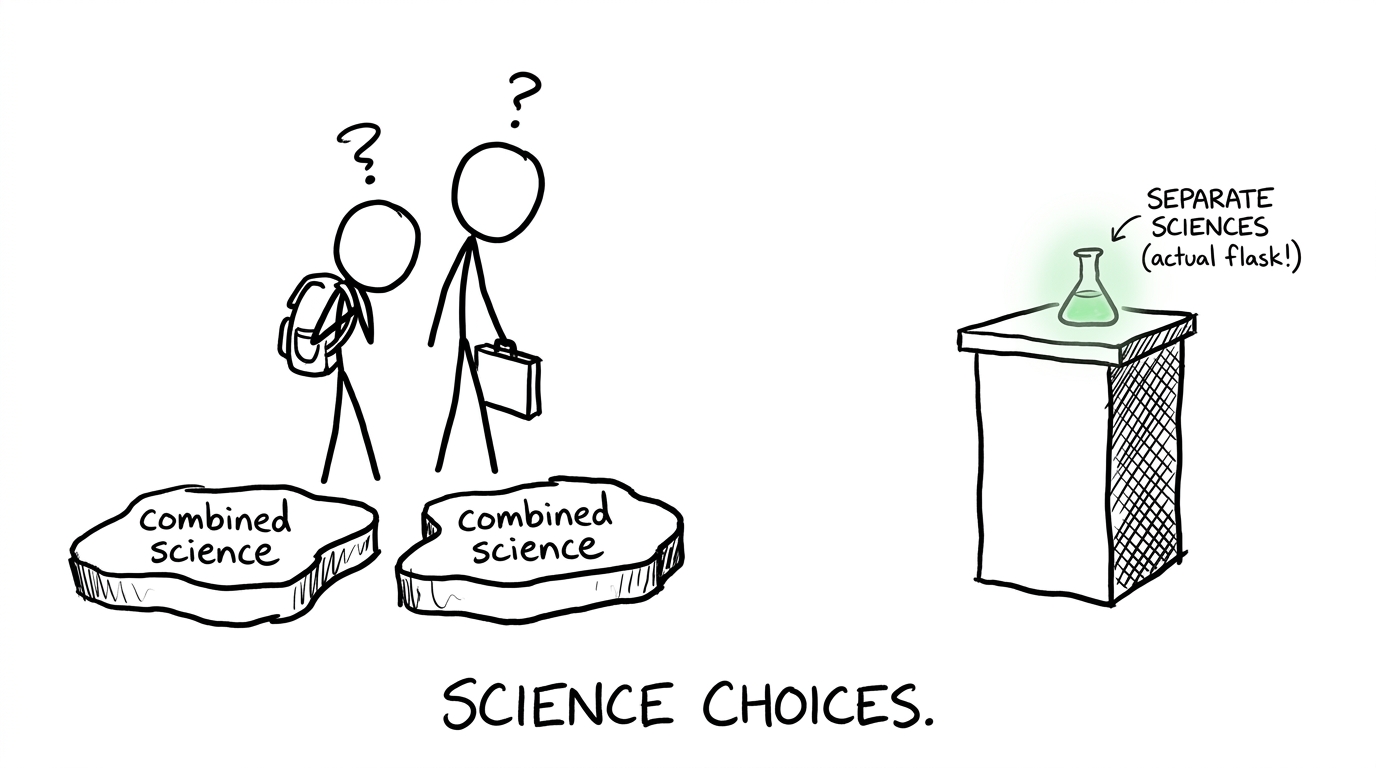 Combined Science represented by two stepping stones beside separate Chemistry
For continued revision, use resources that match your qualification. Maths Genie provides Edexcel Combined Science revision as well as an AQA Combined Science Chemistry guide.
How are GCSE Chemistry grade boundaries decided?
A grade boundary is the minimum total mark required for a particular grade in that exam series. Boundaries are set after papers have been taken and marked, so they can reflect differences in the demand of papers from one year to another.
They may therefore move, but that does not mean standards have deliberately become easier or harder. Ofqual's stated approach is to maintain comparable standards between years and exam boards. There is no fixed quota requiring a particular number of students to pass or fail.
Always use the boundary document for your exact exam board, specification, tier and series. Notional paper boundaries, where published, do not necessarily determine the final qualification grade.
Why is my grade different from my predicted grade?
A predicted grade is an informed estimate, not a guaranteed result. It may be based on mocks, classwork or the judgement used for an application. Your awarded grade is based on the assessment evidence and the official boundary for the relevant series.
A lower result does not automatically show that something went wrong with marking. Equally, you are entitled to ask sensible questions. Begin by comparing the result with your recent performance and speaking to your Chemistry teacher about whether accessing the marked scripts would be useful.
What if I am close to the next grade boundary?
Being one or two marks below a boundary does not automatically mean a review is appropriate. An exam board cannot add marks simply because a candidate was close to the next grade or had been predicted a higher result.
Your school can request access to scripts and consider whether marking appears to contain an error. A review checks whether the mark scheme was applied correctly; it is not an automatic fresh mark designed to find extra credit.
For the June 2026 series, the JCQ deadline for reviews of results is 24 September 2026, but schools normally set earlier internal deadlines. Ask promptly.
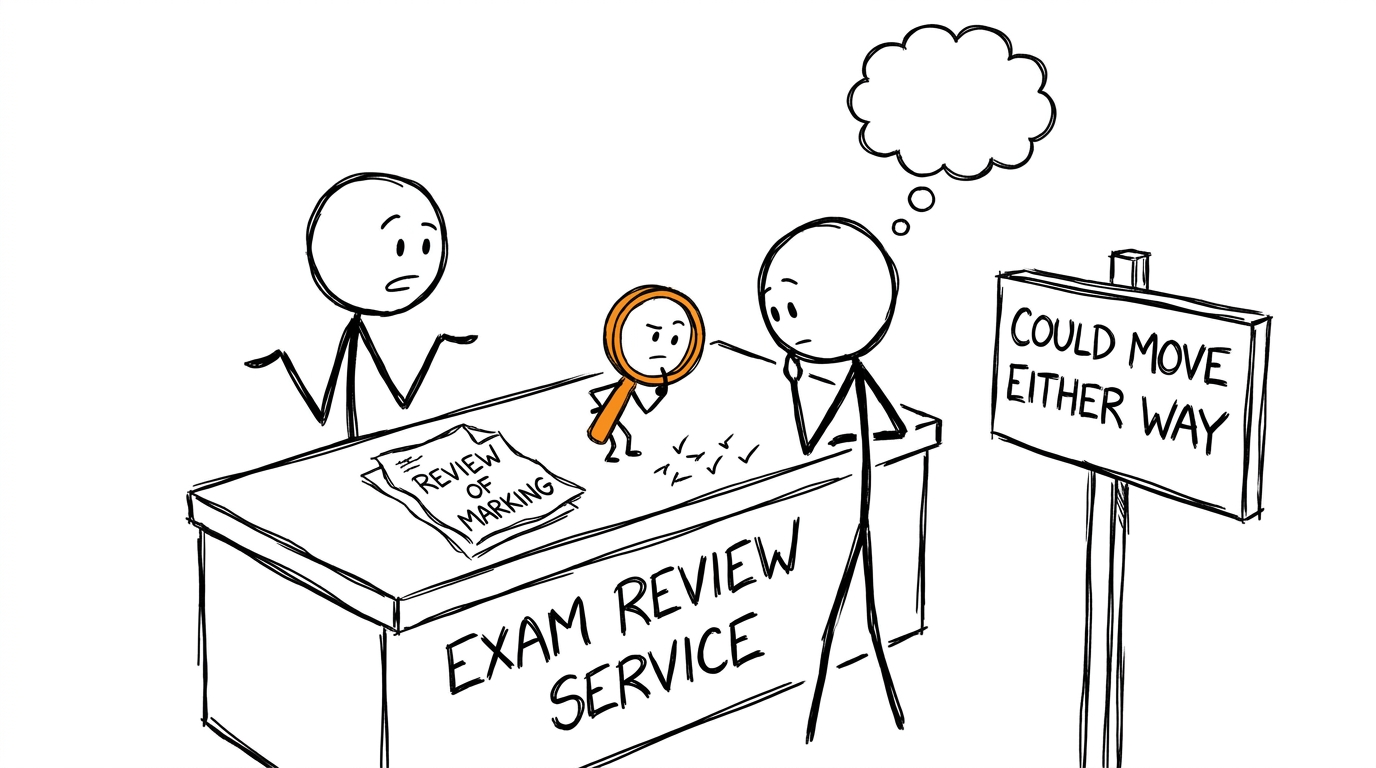 An exam paper requesting a careful review of marking
Can a review of marking lower my grade?
Yes. Following a review, a mark may rise, stay unchanged or fall. A changed mark may or may not alter the overall qualification grade. Schools must obtain the candidate's written consent because of this risk, and fees may apply depending on the outcome and local arrangements.
The calmest approach is evidence first, decision second. Ask your teacher to inspect the available information and explain whether there is a credible marking concern. The fact that a result feels disappointing is understandable, but it is not itself evidence of an error.
Will the result affect sixth-form or college entry?
It may, particularly if a course has a stated requirement for Chemistry, Combined Science or maths. Requirements vary between institutions, so check the conditions of your actual offer rather than assuming that every sixth form follows the same rule.
If you narrowly miss a requirement, speak to the admissions team. They may consider your wider results, available places and the demands of the course, but no outcome is guaranteed. If you plan to take A Level Chemistry, strengthening algebra, ratios, standard form and graphs through GCSE Maths revision can also make the transition more manageable.
What should I do if the result is disappointing?
Pause before treating one grade as a verdict on your ability. First establish what qualification and grade you received. Then speak to your school about progression, scripts and post-results services.
If another attempt or further science revision is appropriate, work with resources matched to your board. Maths Genie offers AQA Chemistry revision guides, Edexcel GCSE Chemistry resources and OCR Twenty First Century Chemistry revision.
Common results-day mistakes
The most common mistakes are practical rather than academic:
- Confusing Combined Science with separate Chemistry.
- Reading an old or incorrect grade-boundary document.
- Assuming a predicted grade must become the final grade.
- Requesting a review without understanding that marks can fall.
- Missing a school's internal post-results deadline.
- Comparing raw marks across different boards, tiers or exam series.
- Making an immediate course decision without speaking to admissions staff.
Results day rewards patience. Check the evidence, ask the right person and keep copies of important correspondence.
Turn the result into a useful next step
A result tells you where one assessment ended. It does not decide where your learning must stop.
If you are continuing with science, begin at the Maths Genie GCSE Chemistry hub. Use revision lessons to rebuild uncertain topics, practice questions and mini tests to develop recall, and mark schemes to understand what examiners reward. Past papers build familiarity, while AQA Chemistry predicted papers offer fresh timed practice when another exam is ahead.
Open the right exam-board page, choose one clear next action and begin there. Calm progress is still progress.