GCSE Bengali Flashcards Quizlet: Best Decks
GCSE Bengali flashcards Quizlet guide: find reliable AQA decks, reject weak sets and build specification-matched cards quickly for effective revision.
A flashcard deck can look reassuringly complete while quietly revising the wrong course. That is the central problem when searching for GCSE Bengali flashcards Quizlet sets: there are useful resources, but the number of cards or learners does not prove that a deck matches your specification.
The short answer is to begin with a clearly labelled AQA GCSE Bengali collection, compare it against your specification, and then build a smaller personal deck for missing vocabulary, grammar and recurring errors. Avoid generic Bangla decks unless every useful card has been checked. If you are balancing Bengali with GCSE maths, use brief, scheduled reviews rather than allowing flashcards to consume your entire revision session.
Your quick flashcard checklist
A worthwhile GCSE Bengali deck should:
- name the qualification and exam board clearly;
- cover the themes in your current specification;
- use readable, accurate Bengali script;
- distinguish Foundation and Higher vocabulary where relevant;
- include vocabulary in useful phrases rather than isolated words alone;
- test both English-to-Bengali and Bengali-to-English recall;
- contain no obvious spelling, meaning or formatting errors;
- be small enough to review repeatedly;
- support listening, speaking, reading and writing rather than pretending vocabulary alone is the course.
A large public set that fails these checks is not a shortcut. It is simply a larger collection of uncertainty.
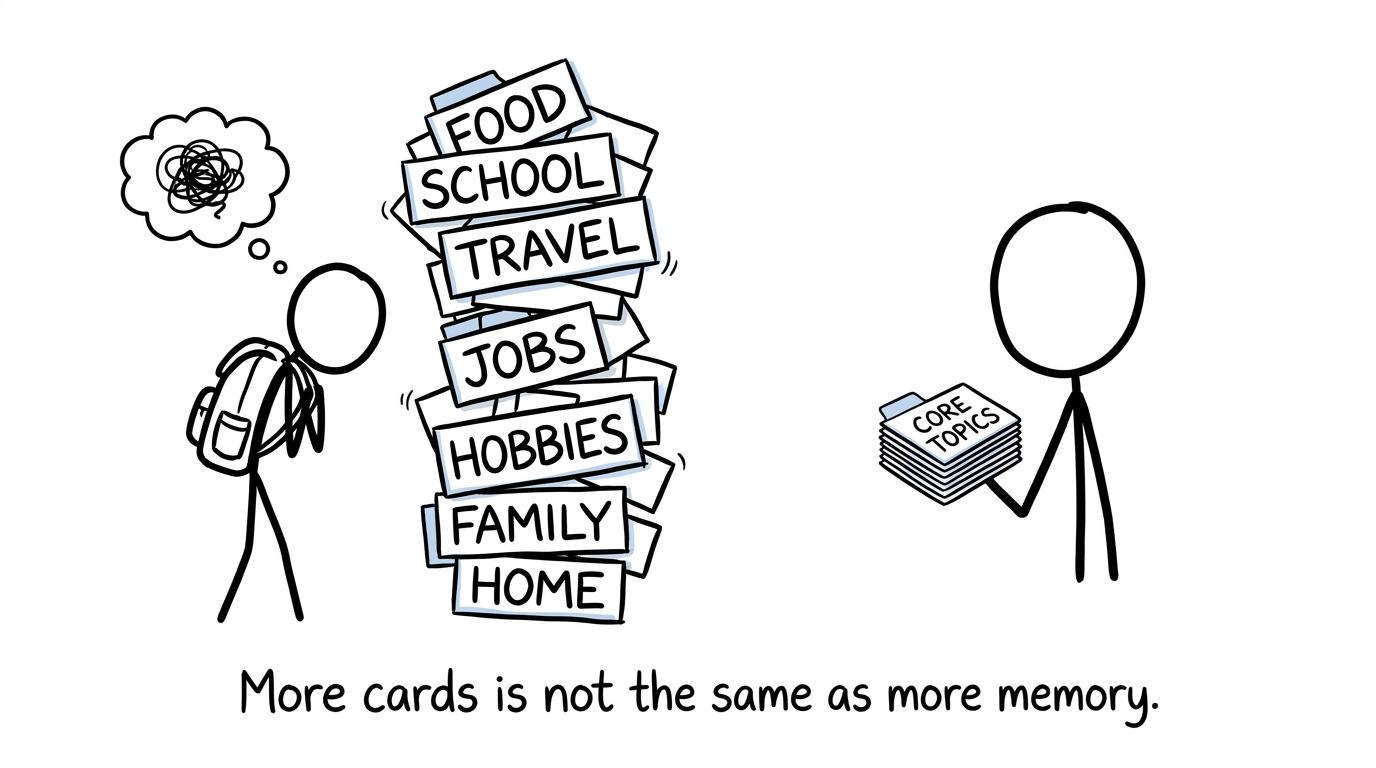 A student comparing a chaotic flashcard tower with a small organised deck
Which GCSE Bengali Quizlet decks are worth using?
Public Quizlet sets can be edited, duplicated or removed, so a permanent ranking by popularity would quickly become unreliable. A safer approach is to rank the types of deck worth using.
| Deck type | Verdict | What to check |
|---|---|---|
| uTalk AQA GCSE Bengali collection | Best public starting point found | Confirm each section against your AQA theme and correct any differences identified by your teacher |
| Teacher-created class set | Often excellent | Check that it follows your school’s board, tier and current teaching sequence |
| Your own specification-based set | Best for final revision | Build it from official vocabulary, lesson content and mistakes from assessed work |
| AQA theme-specific public set | Potentially useful | Look for a precise theme title, accurate script and complete card answers |
| Generic Bengali or Bangla vocabulary deck | Use selectively | Keep only vocabulary that appears in your course or supports an exam task |
| Unlabelled “complete GCSE” deck | Usually avoid | No board, tier, source or theme structure means there is little basis for trusting it |
The strongest public starting point
The most clearly relevant searchable collection is uTalk AQA GCSE Bengali Flashcards on Quizlet. Its explicit AQA labelling makes it a more sensible starting point than a general Bengali-language deck.
That still does not make every card automatically correct for your needs. Treat a public deck as borrowed notes: useful, but not authoritative. Check its words against your specification, classroom materials and teacher guidance before investing hours in learning them.
Why AQA alignment matters
The current AQA GCSE Bengali course is a linear qualification with Foundation and Higher tiers. Students take listening, speaking, reading and writing papers at the same tier. Its content is organised around three broad themes:
- identity and culture;
- local, national, international and global areas of interest;
- current and future study and employment.
Those themes contain topics such as relationships, technology, free time, customs, home and region, social and global issues, travel, school and careers. A deck entitled only “Bengali vocabulary” may contain perfectly valid language while missing much of this examinable coverage.
Do not confuse AQA GCSE Bengali with International GCSE Bangla
Pearson Edexcel offers International GCSE Bangla, whose published specification uses five themes and a different assessment structure. Its vocabulary can still be linguistically useful, but an Edexcel International GCSE Bangla deck is not automatically an AQA GCSE Bengali deck.
Check the exact qualification shown by your school. This distinction matters because a flashcard set can be accurate in itself yet poorly matched to the paper you will sit.
How to judge a deck in five minutes
Do not begin by learning the cards. Audit them first.
Check the title and description
A credible title should identify AQA GCSE Bengali or the precise International GCSE Bangla qualification. Look for a theme, topic or tier. Labels such as “advanced Bengali words” reveal little about exam relevance.
Sample cards from across the set
Open cards near the beginning, middle and end. Check whether:
- Bengali characters display properly;
- translations are precise rather than vague;
- verbs and useful forms are identified clearly;
- alternative meanings are explained when necessary;
- English spelling is accurate;
- cards avoid mixing unrelated transliterations or dialect forms without explanation.
Ask your teacher about anything uncertain. Repeated exposure makes an error feel familiar, and familiarity can be mistaken for correctness.
Compare coverage with your course
Create a simple list of your specification themes and tick them off. A good deck does not need to contain everything, but it must be honest about what it covers.
A set devoted to food and festivals may be excellent for one topic. It becomes misleading only when treated as complete GCSE revision.
Test both directions
Recognising a Bengali word when shown its English meaning is different from producing it in writing. Reverse the cards regularly. For speaking and writing, say or write the answer before revealing it.
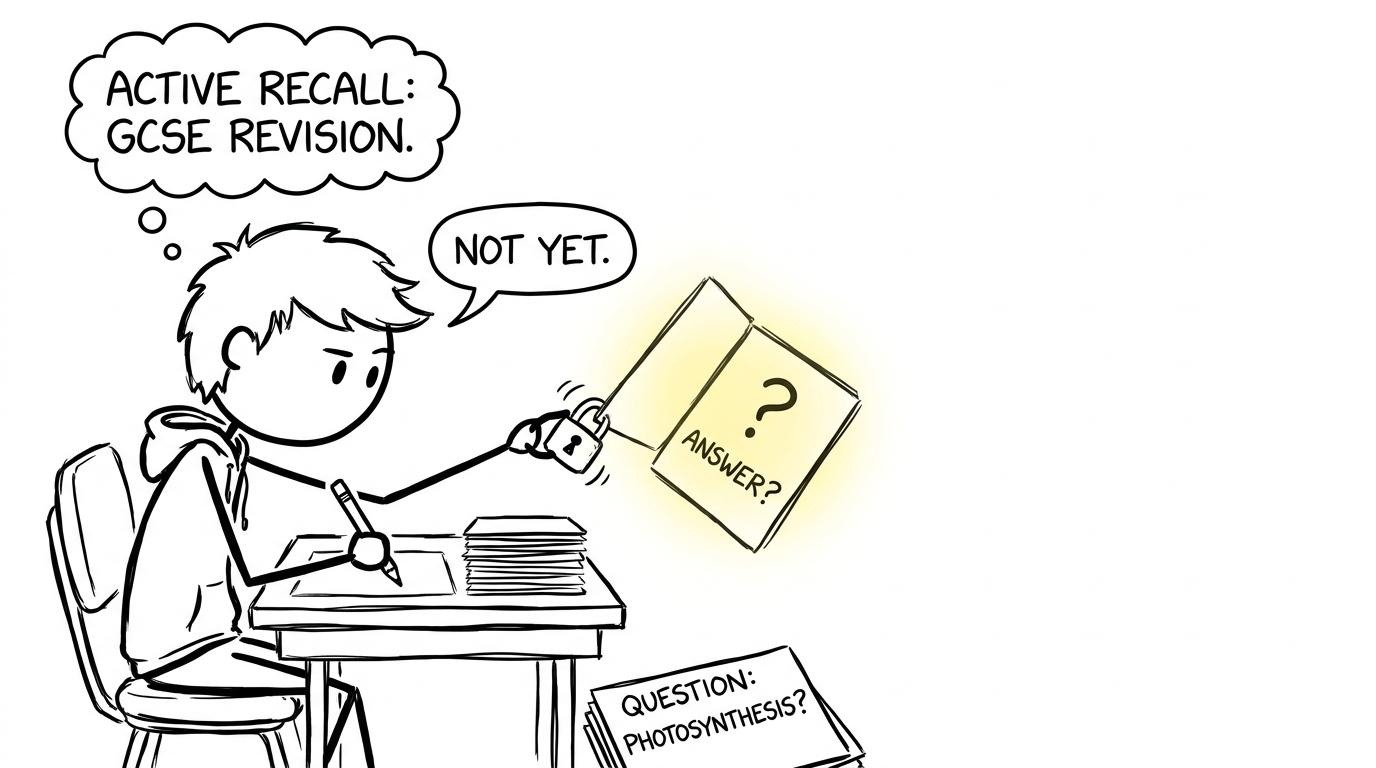 A student stopping a flashcard from revealing its answer too early
How to build your own GCSE Bengali deck quickly
The best personal deck is not the prettiest one. It is the deck that contains what you need to retrieve.
Start with the specification structure
Create separate sets for each theme rather than importing one enormous list. Within each theme, use folders or titles for narrower topics such as family, technology, travel, school or employment.
This gives every card a reason to exist. It also makes weak areas easier to find.
Import only verified material
Use your official specification vocabulary, teacher-approved lists and corrected classroom work. If importing text in bulk, inspect the result carefully because Bengali script, punctuation and line breaks may not transfer cleanly.
Begin with a manageable core. Add cards when you encounter a useful word, phrase or correction. Building thousands of cards before testing any of them turns preparation into procrastination.
Write prompts that force recall
Useful card formats include:
- English word or phrase on the front, Bengali on the back;
- Bengali on the front, precise English meaning on the back;
- a sentence with one missing word;
- a tense or grammar cue requiring the correct form;
- an exam theme prompt requiring an opinion phrase;
- a correction card based on an error from writing or speaking practice.
Keep one main retrieval task per card. If the answer contains an entire paragraph, it becomes difficult to decide whether you genuinely knew it.
Add phrases, not only nouns
Isolated vocabulary helps with recognition, but GCSE language papers also reward communication and accurate language. Include reusable constructions for giving opinions, reasons, comparisons, past experiences and future intentions.
A productive deck therefore contains three layers: core vocabulary, grammar or sentence structures, and personal error cards. The last layer is often the most valuable because it reflects the gap between what you have seen and what you can produce.
Build from mistakes
After a writing task, translation or speaking practice, turn each meaningful correction into a card. This is the language equivalent of keeping a marks-leak list in maths.
MathsGenie recommends the same feedback loop for numerical revision: attempt, check, identify the exact error and retest. Its guide to moving from GCSE notes to active recall explains why questions are more useful than passive notes.
How to use flashcards so they actually work
Flashcards are effective when they create retrieval, not when they become tiny pages to reread. Research on learning consistently supports spacing practice over time and retrieving an answer before checking it.
Answer before flipping
Say the Bengali aloud or write it down. Then reveal the answer and compare carefully. A vague feeling that you “would have known it” is not successful recall.
Keep difficult cards in circulation
Do not permanently remove a card because you answered it correctly once. Revisit it later, with longer intervals after repeated success. Shuffle the order so that neighbouring cards do not become accidental clues.
Use short sessions
A focused daily session is easier to repeat than a weekly flashcard marathon. The 20-minute GCSE revision routine offers a useful model for balancing recall, practice and review across busy school days.
If Bengali and maths are competing for time, place both in a realistic GCSE maths revision timetable. Short Bengali retrieval can sit beside, rather than replace, the exam-question practice needed in maths.
Move beyond flashcards
Vocabulary cards cannot reproduce a listening recording, spontaneous conversation, extended reading passage or timed writing task. Once words become secure, use them in the skill being examined.
The same principle applies in maths: recalling a formula is only the beginning. You must apply it in unfamiliar questions. MathsGenie’s free GCSE maths revision hub moves from lessons and recall to practice questions, while GCSE past papers test whether knowledge survives real exam wording.
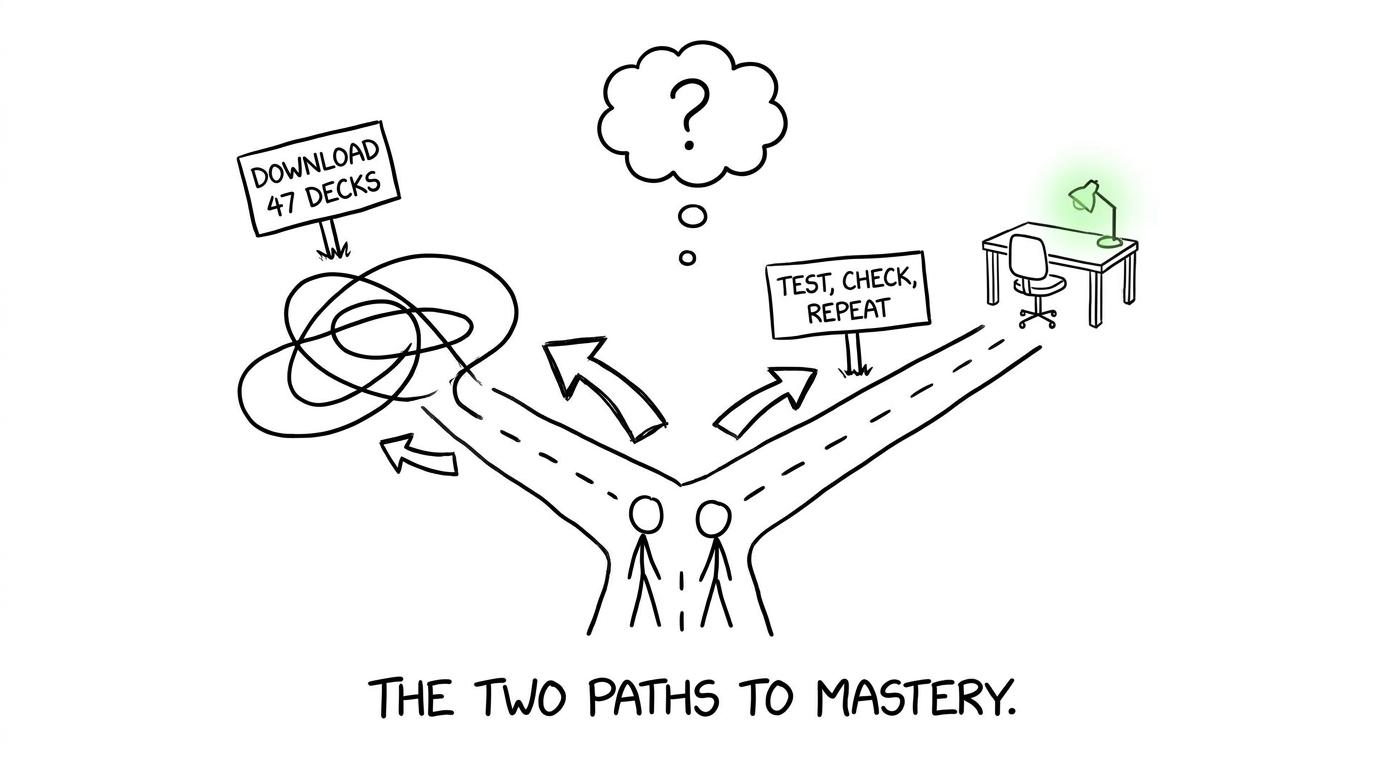 Revision paths showing downloading decks versus testing and repeating
Common GCSE Bengali flashcard mistakes
Choosing by size or popularity
A popular deck may serve a different board, tier or qualification. Accuracy and specification coverage matter more than impressive numbers.
Learning incorrect cards repeatedly
Check unfamiliar translations and script before repeated review. If a card is ambiguous, edit it or ask your teacher rather than memorising uncertainty.
Flipping too quickly
Recognition feels smooth, but the examination asks you to retrieve and communicate. Produce an answer before checking it.
Revising only one direction
Reading requires recognition; writing and speaking require production. Practise both Bengali-to-English and English-to-Bengali recall.
Treating vocabulary as the whole subject
Flashcards support vocabulary and grammar, but they do not replace listening, speaking, translation, reading or extended writing practice.
Letting Bengali cards displace maths questions
Students preparing for several GCSEs need boundaries. Use a planner and assign each subject a specific task. For maths, pair the Edexcel GCSE mini tests with revision lessons, then progress to papers and mark schemes. The one-month GCSE maths revision plan provides a broader weekly structure.
Build the deck that earns its place
The best GCSE Bengali Quizlet resource is not necessarily a single public set. A clearly labelled AQA collection such as the uTalk deck is a useful starting point, but your strongest revision tool will usually be a checked, specification-matched deck refined by your own mistakes.
Audit before learning. Retrieve before flipping. Revisit after a gap. Then use the language in listening, speaking, reading and writing tasks.
For the maths side of your GCSE preparation, make MathsGenie’s free revision resources your next stop. Use revision lessons to repair understanding, practice questions and mini tests to build fluency, and past papers, predicted papers, mark schemes and video solutions to turn recall into exam marks.