

Extra Practice Material for GCSE Dance: Is It Worth It?
Extra practice material GCSE Dance: learn what to request, how to show prior effort and how to balance Dance practice with GCSE maths revision.
The hardest part of asking for help is often not the asking. It is the fear of what the question might imply: Will my teacher think I have ignored the work already given? Will I sound as though I expect them to create more?
If you are considering asking for extra practice material GCSE Dance support, the short answer is yes; it can be worthwhile. But the best request is specific, based on work you have already attempted and linked to a weakness you want to improve. That makes your question evidence of effort, not a substitute for it.
This matters when you are balancing Dance with GCSE maths and other subjects. More material is only useful when it gives you better practice, clearer feedback or a reliable way to check progress. An untouched pile of worksheets changes nothing.
A quick checklist before you ask
Before speaking to your teacher, check that you can answer these questions:
- What material have you already completed?
- Which part of the course is causing difficulty?
- Do you need questions, exemplars, rehearsal prompts or feedback criteria?
- How will you use the material?
- When could you show your teacher the completed work?
- Does the request fit alongside your other GCSE revision commitments?
If your answers are clear, ask. You are not saying, “I have done nothing and need rescuing.” You are saying, “I have reached the edge of what I can improve alone.”
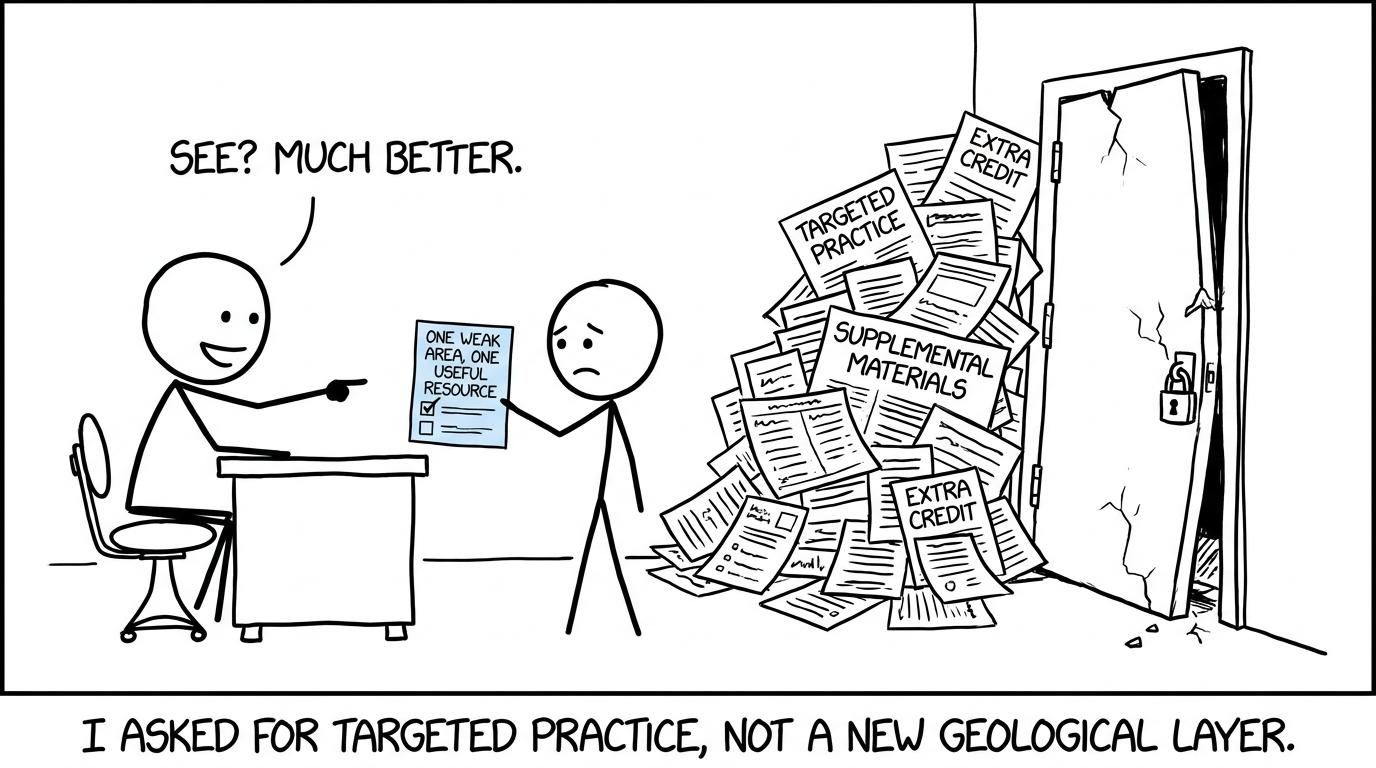 A student asks for targeted practice rather than an avalanche of worksheets
Why extra GCSE Dance practice material can help
Under the current AQA GCSE Dance specification, performance and choreography form the non-exam assessment, worth a combined 60%60\%60% of the qualification. The written Dance Appreciation component accounts for the remaining 40%40\%40%.
Those parts demand different kinds of preparation. Repeating a performance phrase is not the same as developing an analytical response about a professional work. Likewise, reading notes about choreography cannot replace creating, refining and evaluating movement.
Useful extra material might therefore include:
- a fresh Dance Appreciation question;
- a past-paper section and its mark scheme;
- a planning frame for an extended response;
- an exemplar with examiner or moderator commentary;
- a checklist for physical, technical or expressive skills;
- a rehearsal task focused on one performance weakness;
- a prompt for applying choreographic devices;
- guidance on evaluating your own work.
AQA's published subject information also confirms that students must study all six works in its current GCSE Dance anthology. Targeted questions comparing production features, choreographic intention or performance skills can therefore be more valuable than another broad set of notes.
The principle is familiar from maths revision: a resource should expose a gap and give you a way to close it. On the MathsGenie GCSE Maths revision hub, lessons lead into practice questions, mark schemes and solutions. The subject is different, but the productive cycle is similar:
attempt, check, identify the weakness, practise and retry.
Ask for a type of practice, not simply “more work”
“Can I have more Dance work?” places the decision entirely on your teacher. They must work out what you need, locate it and explain how to use it.
A focused request is easier to answer. You might say:
“I completed the questions you set on performance skills, but I am still finding the longer evaluation responses difficult. Is there another question or exemplar I could use to practise structuring them?”
Or:
“I have rehearsed the phrase and used the feedback checklist. Could you suggest one task that would help me improve my projection and focus?”
These are not worked academic answers. They are models for a useful conversation. Each one contains three signals:
- previous effort: you explain what you have done;
- diagnosis: you name the difficulty;
- intention: you say how you will practise.
That is what stops the request from sounding as though you are not trying.
Bring evidence of your first attempt
Evidence can be simple: an answered question, annotated feedback, a rehearsal log or a list of points you could not develop. You do not need to produce a perfect folder before you are allowed to ask for help.
In fact, imperfect work is often the most useful evidence. It gives your teacher something concrete to respond to. “I lose focus halfway through this section” is actionable. “I am bad at Dance” is not.
The same distinction improves maths revision. A student who can identify “forming equations from worded problems” has a better starting point than one who writes “all algebra” on a revision plan. MathsGenie's guide to finding your weakest GCSE topics explains how to turn broad uncertainty into a manageable target.
Choose material that matches the assessment
Extra work earns its place only if it resembles the skill being assessed. Before requesting anything, decide which category describes your need.
Written examination practice
Ask for past questions, command-word practice, mark schemes or examples of responses at different standards. A completed answer followed by precise feedback is usually more useful than repeatedly reading revision notes.
The current AQA assessment resources include past papers, mark schemes and examiner reports, although teachers may have access to some materials through secure school services before they become publicly available. If a teacher cannot share a restricted resource, ask whether they can recommend a publicly available alternative or create a short question from material you are already authorised to use.
Performance practice
Ask for a narrow rehearsal focus rather than another complete routine. The official GCSE subject content includes physical, technical, mental and expressive skills, as well as safe working practices. A teacher may therefore suggest a task based on timing, accuracy, control, projection, movement memory or response to feedback.
Extra practice must remain safe. Follow your teacher's guidance on warming up, cooling down, appropriate space and the safe execution of movement. More repetition is not automatically better if fatigue is reducing control.
Choreography practice
You could request a stimulus, motif-development prompt or checklist covering action, dynamics, space and relationships. The purpose is not to have someone else solve the creative task. It is to give your experimentation a boundary.
Constraints often make practice more productive. A blank page asks you to invent everything. A precise prompt asks you to make one decision well.
 A student balances Dance, maths and a revision timetable
How to ask your teacher without appearing unprepared
Choose a calm moment rather than raising a complicated request while the teacher is beginning a lesson. If appropriate at your school, you could ask briefly after class or send a concise message through the approved school system.
Use this structure:
- State what you completed: “I have finished...”
- Identify what happened: “My feedback shows...” or “I could not...”
- Request one resource: “Could you recommend...”
- Offer a next step: “I can complete it by...”
For example:
“I have completed the anthology comparison questions and checked my answers against the feedback. I am still struggling to make evaluative judgements rather than describe the works. Could you recommend one extra question or model response? I can attempt it before our next lesson.”
Keep the request proportionate. One well-chosen task is easier for your teacher to provide and easier for you to complete. You can always return after using it properly.
Turn extra material into measurable improvement
The quiet trap in revision is confusing possession with progress. Downloading a paper feels organised. Completing, marking and correcting it creates evidence.
Use a short practice loop:
- Attempt the task without immediately opening your notes.
- Check it using authorised feedback, a mark scheme or your teacher's comments.
- Record one specific weakness.
- Make one correction.
- Retry the skill later using a different task.
This is also the foundation of effective maths practice. The GCSE 20-minute maths revision routine shows how a brief session can include retrieval, questions and marking rather than passive rereading.
If a full paper feels too large, short tests are useful diagnostic tools. MathsGenie's GCSE predicted papers can support later maths exam preparation, while focused topic questions help repair the gaps those papers reveal. Dance practice should follow the same logic: diagnose first, then choose material.
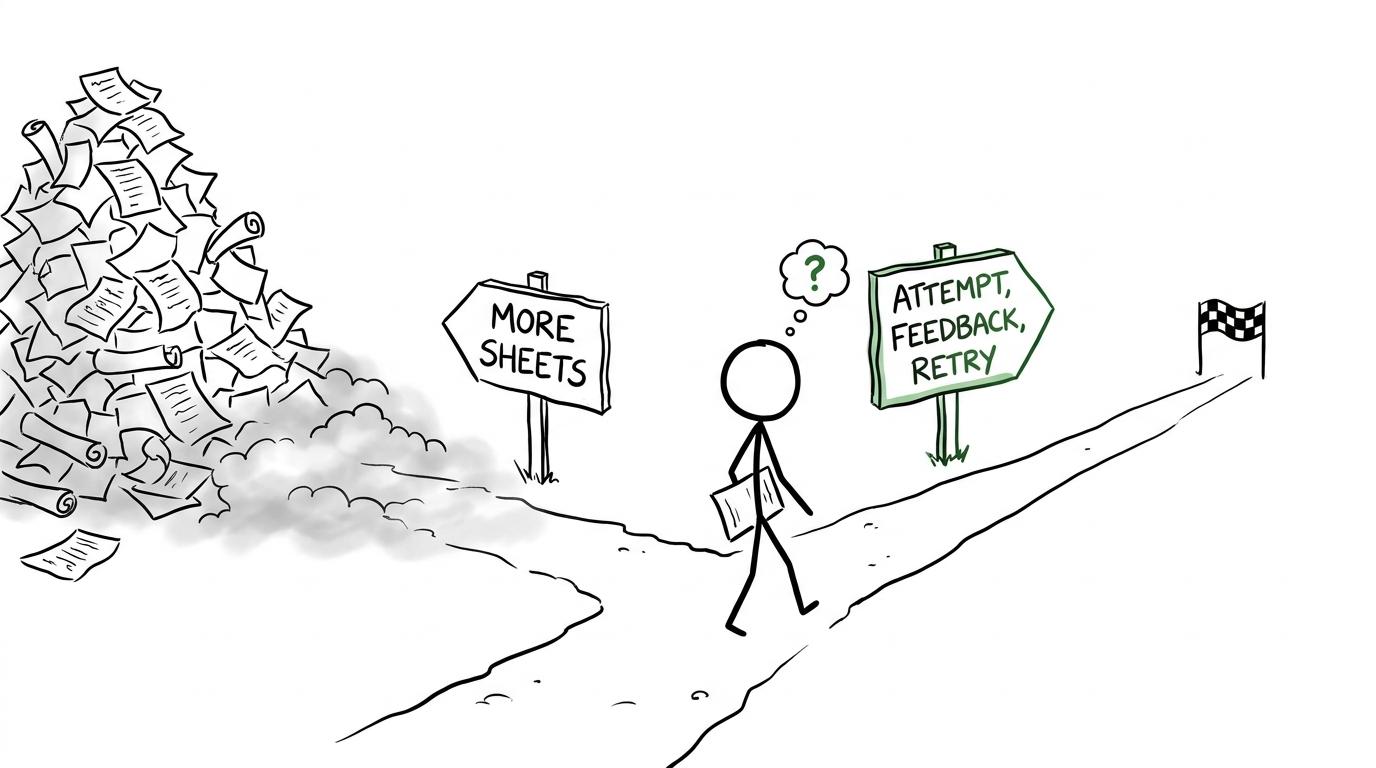 The useful revision path runs through attempt, feedback and retry
Balance Dance practice with GCSE maths revision
A request for extra material creates a commitment. Before asking for five tasks, look honestly at the week ahead. Dance requires practical rehearsal and written appreciation; maths requires frequent problem-solving and regular exposure to exam-style questions.
Give each session a defined outcome. “Revise Dance” and “do maths” are too vague. Better plans might be:
- answer one Dance Appreciation question and annotate the feedback;
- rehearse one section with a single expressive focus;
- complete one maths topic set and mark it;
- sit one timed maths mini test and log the errors.
The GCSE revision timetable guide recommends planning what you will do, not merely when you will revise. If you are already behind, use the GCSE revision catch-up plan to prioritise a small number of weaknesses instead of trying to repair every subject at once.
More practice should make your plan clearer. If it only makes the pile taller, reduce the volume.
Common mistakes when requesting extra practice
Asking before using the existing material
Check your exercise book, online classroom, specification guidance and previously issued sheets first. If something is confusing, bring it with you and ask about that specific point.
Requesting an entire new pack
A broad request can create unnecessary work for the teacher and leave you overwhelmed. Ask for one appropriate next task.
Treating exemplars as scripts to copy
An exemplar helps you notice structure, terminology and the standard of judgement expected. It should not replace your own analysis or creative decisions.
Completing work without reviewing it
Practice without feedback can strengthen the same mistake. Use mark schemes where appropriate, respond to teacher comments and revisit the weak skill.
Ignoring safe practice
Do not attempt unsuitable movement in a cramped space or continue when pain or unsafe fatigue appears. Practical improvement depends on controlled, informed rehearsal.
Letting one subject consume the timetable
GCSE revision is a portfolio of competing demands. Use a short, repeatable system for maths through the MathsGenie GCSE Maths revision area, then protect realistic time for Dance and your other subjects.
Ask for the next useful step
Yes, asking your teacher for extra GCSE Dance practice material is worth it when the request follows genuine effort and names a clear need. Show what you attempted. Explain where you became stuck. Ask for one targeted resource and commit to using the feedback.
That small sequence changes the meaning of the conversation. You are not asking your teacher to prove that you care. You are showing that you care enough to find the next useful step.
For your maths preparation, make MathsGenie your free revision base. Use revision lessons and practice questions to strengthen individual topics, mini tests to check progress, then past papers and predicted papers to build exam readiness. Mark your work with the available mark schemes and use video solutions when a method still feels uncertain. Do not collect more revision. Turn it into action.











