

A-Level Results Day Social Media: Do's and Don'ts
A-level results day social media advice for sharing grades safely, protecting personal details and supporting friends without comparison or pressure online.
Results day can shrink your world to one bright screen. Before you have spoken to a teacher, considered your options or even absorbed the grades, your phone may already be filling with celebrations and questions.
The simplest a-level results day social media advice is this: pause before posting. Share only what feels right, remove identifying information and remember that somebody else's results may be very different from yours.
For students collecting results in 2026, A-level results day is Thursday 13 August. Your school or college provides your grades, while UCAS shows the status of relevant university applications. Check both before announcing an outcome.
Your quick sharing checklist
Before posting A-level results online, ask:
- Does the image reveal my full name, candidate number, school or other personal details?
- Have I checked who can view or reshare it?
- Am I posting because I want to, rather than because others expect it?
- Could my wording make someone else's difficult morning harder?
- Have I confirmed my university or college position through the proper channel?
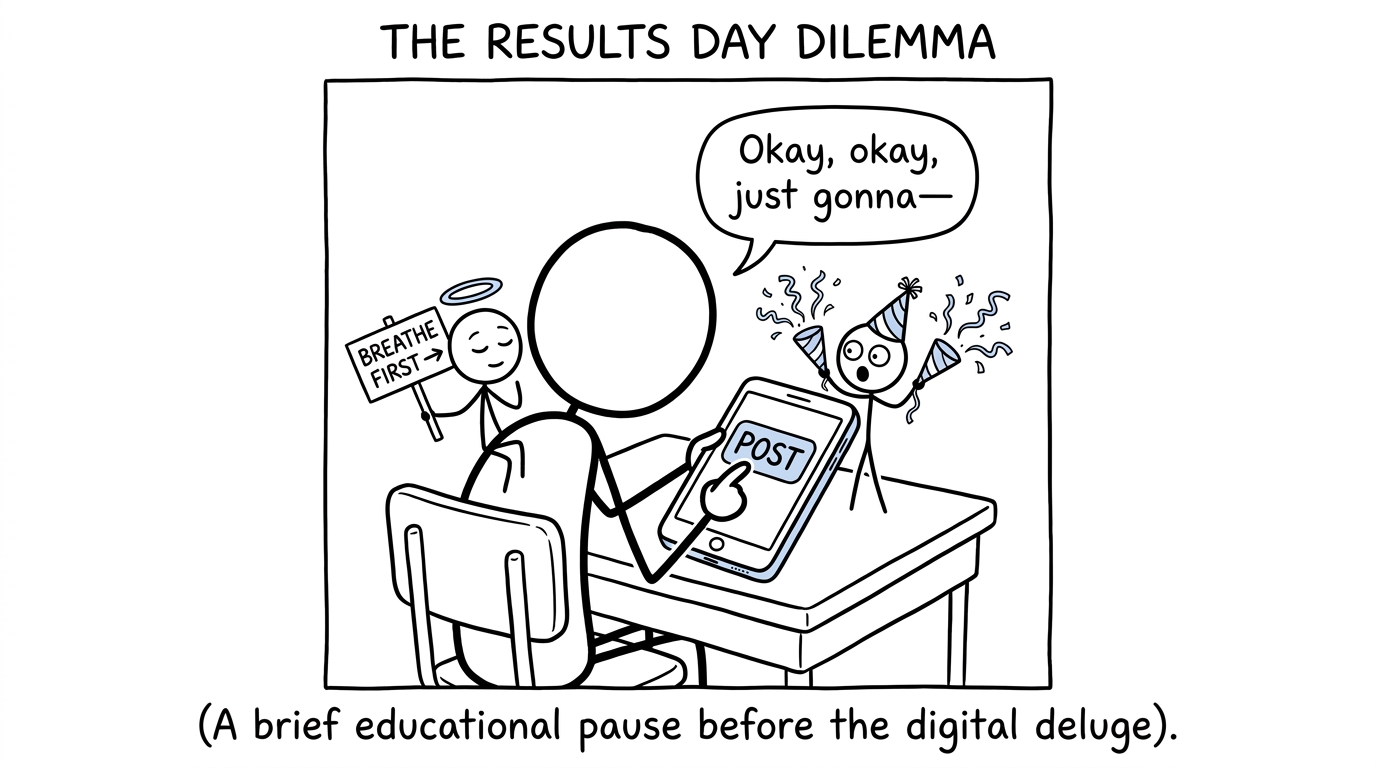 A student pauses thoughtfully before pressing the results-day post button
Do: give yourself time before posting
A result can be excellent, disappointing or simply complicated. None of those reactions needs to become public immediately.
Open your results, speak to the people supporting you and check your next steps. If a university application is involved, review your UCAS status and contact your school, college or university when necessary. Social media cannot interpret a pending decision or explain your options.
Don't: upload an unedited results slip
A results document may contain more than grades. Crop or cover your name, candidate details, centre information, barcodes, reference numbers and login information before sharing any image.
The National Cyber Security Centre advises people to consider what they post, who can access it and which details are unnecessary. Review your privacy settings, but remember that a private post can still be saved or forwarded.
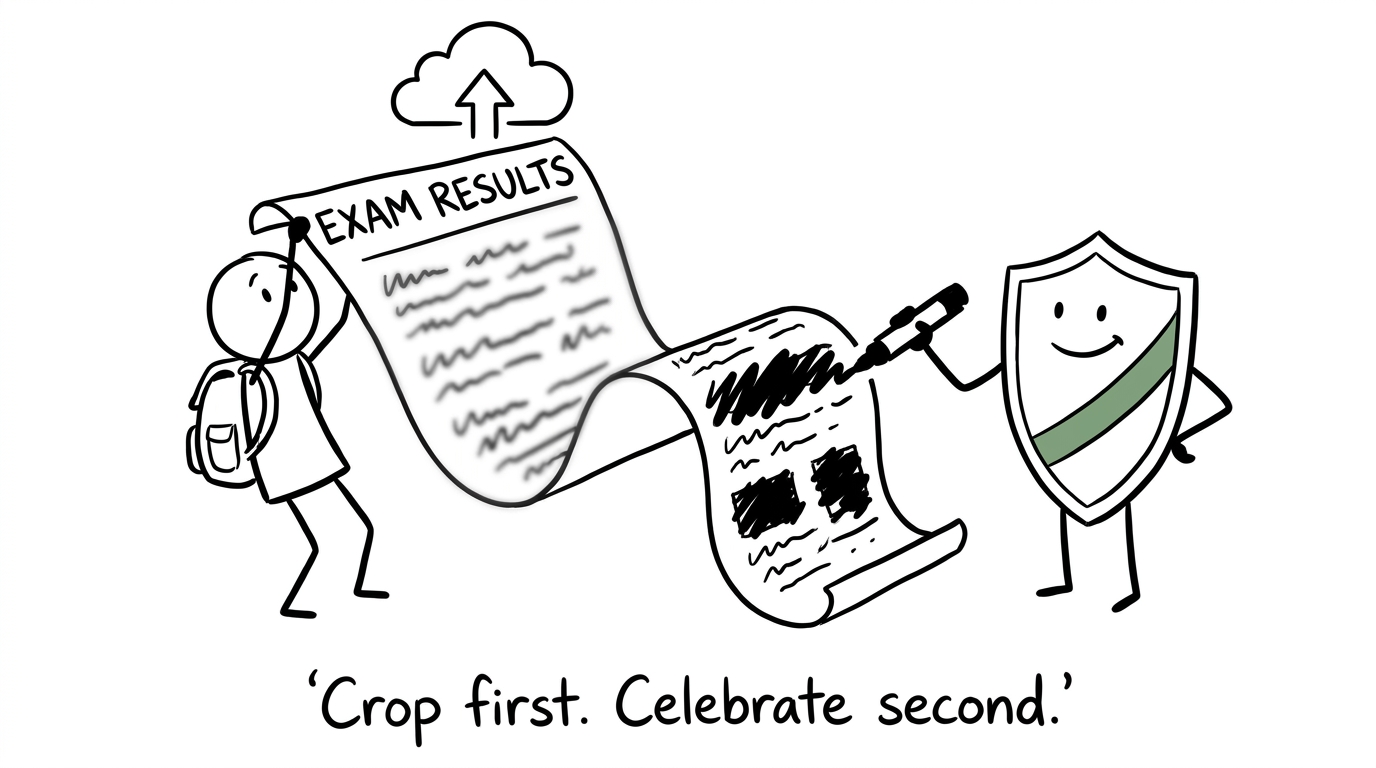 A privacy shield helps a student crop personal details before celebrating online
Do: celebrate without turning results into a ranking
You are allowed to be proud. A thoughtful post can thank teachers, family or friends without suggesting that one set of grades determines everyone's worth.
If you mention another person, ask permission first. Do not reveal their grades, photograph their results or tag their destination without consent. A supportive private message is often kinder than a public comparison.
Don't: make major decisions through social media
Rumours spread quickly on results day. Do not treat a viral post as authoritative guidance about grade boundaries, remarks, resits or Clearing. Speak to your school or college and use official application channels.
GCSE students can learn from this too. When your own results day arrives, the same rules apply: check the facts, protect your information and take time before responding publicly. Then turn your attention towards what comes next, using the GCSE maths revision hub or a realistic MathsGenie revision planner.
Common results-day posting mistakes
- Posting while emotions are at their strongest: draft the message and return to it later.
- Showing personal data accidentally: inspect every corner of a photograph before uploading it.
- Assuming silence means failure: nobody owes social media an announcement.
- Comparing grades without context: courses, offers and personal circumstances differ.
- Arguing about results online: use teachers and official procedures for practical help.
Share carefully, then focus on your next step
A post lasts seconds. Your choices afterwards matter much more.
If you are preparing for GCSE maths, build confidence quietly and consistently with revision guides, exam booklets and practice questions, GCSE predicted papers and past papers with mark schemes. Students continuing with maths can later use the A-level past paper collection.
Celebrate what you want to celebrate. Keep private what deserves to stay private. Then let MathsGenie help you prepare for the next result, one lesson and one question at a time.











