

A-Level Law Career Paths After Results Day
A-level law career paths include law degrees, apprenticeships, paralegal work and wider careers. See what each results-day outcome can unlock in the UK.

Results day can make one envelope feel like a verdict. It is not. A-level law career paths are broader than a single university offer, and your grade does not permanently decide whether you can work in law. It changes the next available step: a law degree, another degree followed by legal training, an apprenticeship, an entry-level legal role or a planned resit.
The useful question is not simply, “Is this grade good?” It is, “Which realistic routes does this result leave open?” Start by checking your confirmed offers and entry requirements, then compare the choices below.
Your results-day checklist
- Check your UCAS application and read the exact status of each choice.
- Speak to your firm or insurance university before assuming a near miss means rejection.
- Compare available courses through Clearing if you are not holding a place.
- Check apprenticeship adverts individually because employers set their own grade requirements.
- Consider foundation years, related degrees and paralegal routes alongside an LLB.
- Avoid accepting a rushed alternative that does not support your longer-term goal.
For 2026 applicants, A-level results day is Thursday 13 August. UCAS Clearing runs during the summer and into October, although course availability changes continually.
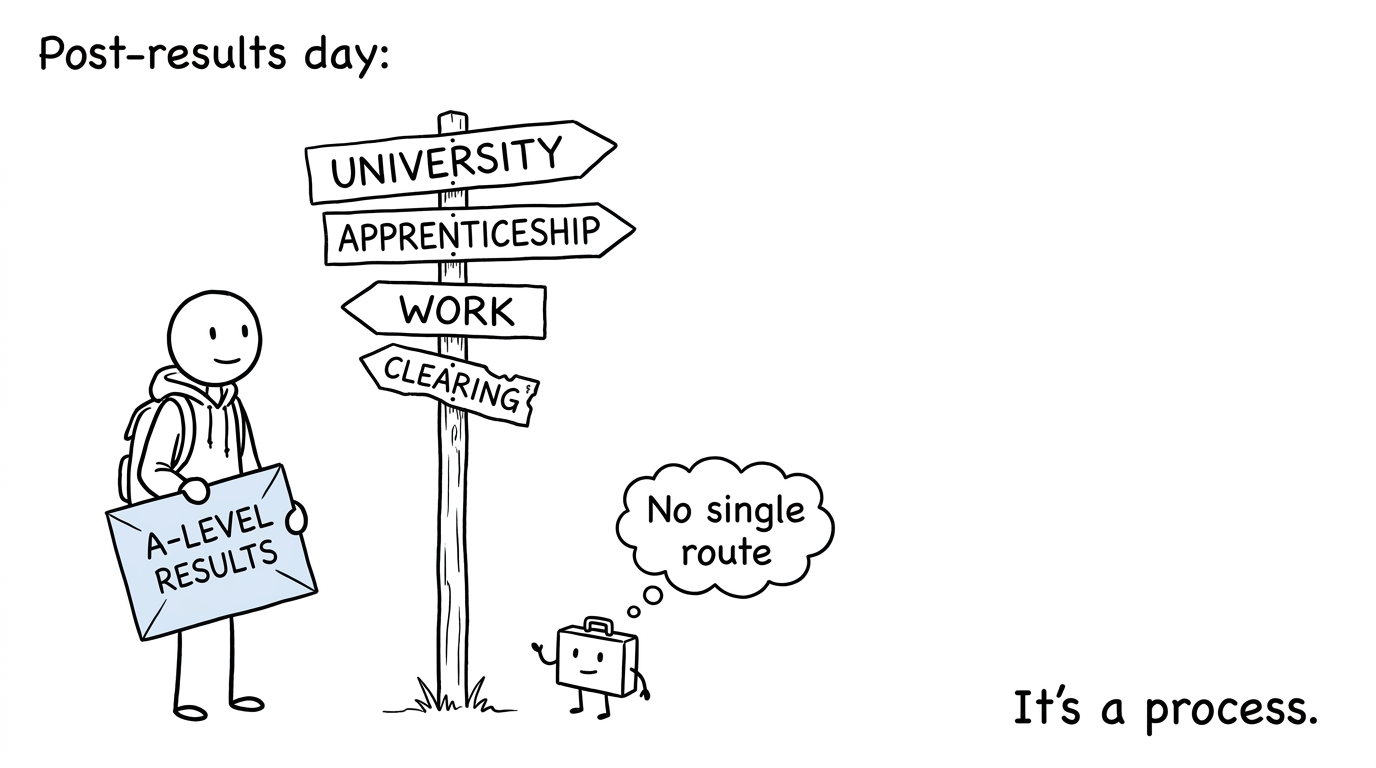 A student calmly choosing between university, apprenticeship, work and Clearing
What does an A-level in law qualify you to do?
A-level law is an academic qualification, not a professional licence. It develops knowledge of legal principles alongside analysis, argument, application and evaluation. These abilities can support applications for higher education, apprenticeships and junior legal roles, but the qualification alone does not make someone a solicitor or barrister.
Universities do not generally require A-level law for an undergraduate law degree. Subjects involving careful reading, research, communication and analysis are also useful. This means your result matters as part of your overall grade profile rather than as the only gateway into the profession.
If you are still preparing for the subject, the A Level Law revision hub brings together free resources for AQA, Eduqas, OCR and WJEC.
Realistic A-level law career and course pairings
| Career direction | Possible next course or route |
|---|---|
| Solicitor | LLB law degree, another degree followed by SQE preparation, or a solicitor apprenticeship |
| Barrister in England and Wales | Law degree, or non-law degree plus conversion, followed by vocational Bar training and pupillage |
| Paralegal | Paralegal apprenticeship, entry-level legal role or degree with relevant work experience |
| CILEX Lawyer | Work-based legal employment combined with the CILEX professional route |
| Licensed conveyancing or probate | Specialist apprenticeship, professional training or junior property and probate work |
| Civil Service or policy work | Law, politics, public policy, economics or another relevant degree |
| Compliance and risk | Law, business, finance or criminology, followed by sector-specific experience |
| Police, investigation or criminal justice | Degree, apprenticeship or direct-entry route depending on the organisation |
These are pairings rather than guarantees. Course offers, professional rules and employer requirements vary, so always check the current conditions for the route you choose.
Routes into the legal professions
Becoming a solicitor
Under the current route in England and Wales, aspiring solicitors ordinarily need a degree or equivalent qualification, both stages of the Solicitors Qualifying Examination, two years of qualifying work experience, and to satisfy character and suitability requirements. The degree can be in any subject.
A solicitor apprenticeship offers another route. It combines paid work and training, normally leading towards the same professional assessment. Recommended entry profiles commonly include GCSE English and maths plus A levels, but employers decide their own requirements and competitive vacancies may ask for higher grades.
Becoming a barrister
Bar training in England and Wales has three components: academic, vocational and work-based learning. The academic stage can be completed through a law degree or through a non-law degree followed by an appropriate conversion course. Vocational Bar training follows, then pupillage, which is competitive.
Scotland and Northern Ireland have different legal systems and qualification routes. Check the relevant professional regulator before building your plan around requirements for England and Wales.
Paralegal and CILEX routes
A paralegal role can involve legal research, preparing documents, managing files and supporting qualified lawyers. Entry may be through employment, a Level 3 apprenticeship or further study. Some paralegal experience may later count towards qualifying work experience if it satisfies the regulator’s conditions.
CILEX offers a work-based route towards becoming a specialist legal professional. It can suit students who want to earn, gain practical experience and progress through professional qualifications rather than follow a conventional full-time university path.
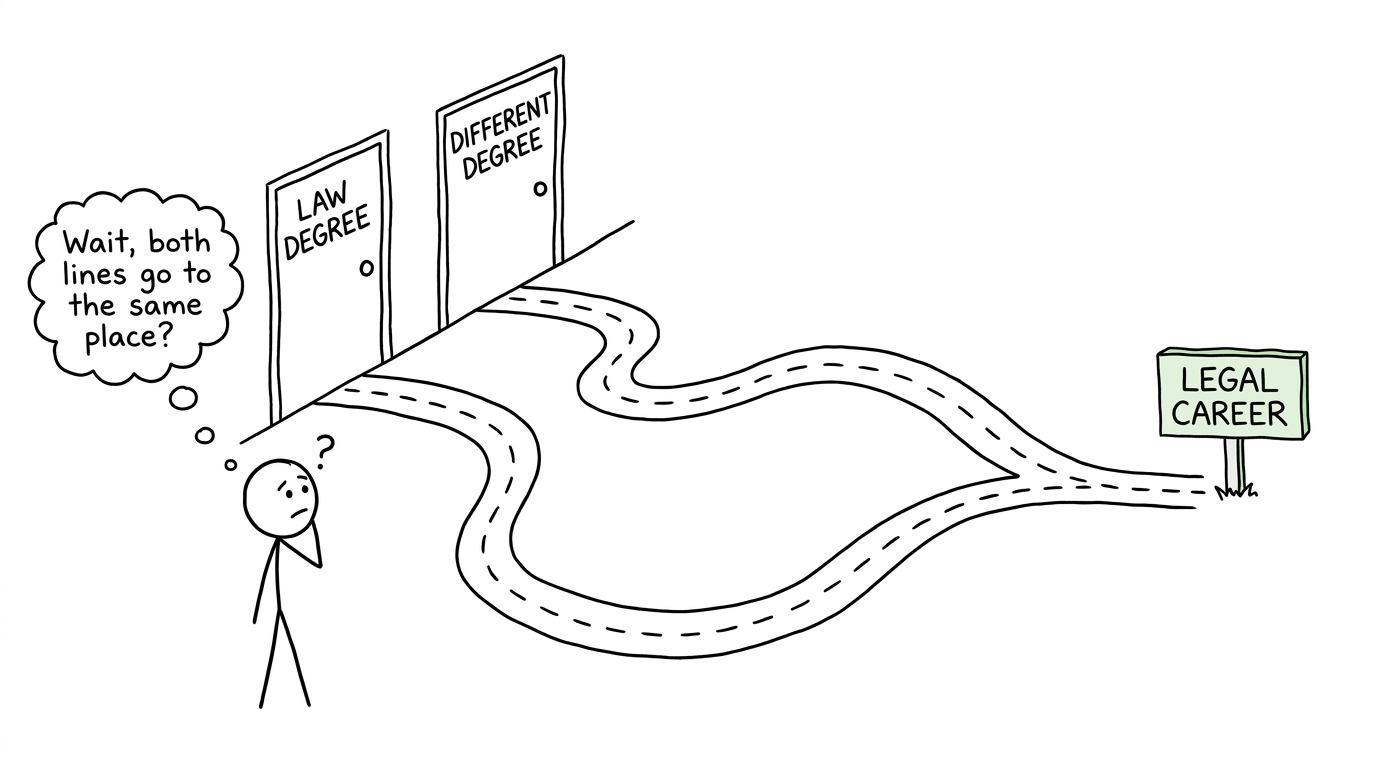 Two different degree routes eventually connecting to a legal career
What different results may mean
Strong grades may confirm a competitive university offer or strengthen an apprenticeship application. They do not remove the need to compare course content, cost, location and professional relevance.
If you narrowly miss an offer, wait for the university’s decision and contact its admissions team if necessary. You might still be accepted, offered an alternative course or able to find a suitable place through Clearing.
Lower-than-expected grades can still leave routes through foundation years, different universities, apprenticeships, college qualifications, employment or resits. A resit is most useful when it supports a clear destination, rather than serving as an automatic reaction to disappointment.
Skills that connect law, maths and wider careers
Law and maths appear different, but both reward structured reasoning. You identify what is known, select an appropriate rule, apply it carefully and justify the conclusion. Accuracy also matters in commercial law, tax, finance, damages, compliance and evidence analysis.
GCSE students can build that discipline now. Use the GCSE maths revision hub to strengthen problem-solving and practise checking each stage of an argument. Short Edexcel GCSE Maths mini tests are particularly useful for learning to work accurately under time pressure.
In law revision, the same principle applies: evidence beats vague confidence. Use the AQA A Level Law course page or OCR A Level Law resources, then mark your answers honestly.
 A revision checklist cross-examining a nervous pile of flashcards
Common mistakes when choosing a route
Treating one grade as a career verdict. A result affects immediate options, but legal careers contain several entry points and opportunities to change direction.
Assuming an LLB automatically qualifies you as a lawyer. Professional training, assessment and workplace experience are still required.
Thinking A-level law is compulsory for a law degree. It can provide useful preparation, but universities normally consider applicants with several different subject combinations.
Ignoring non-university routes. Solicitor, paralegal and other legal apprenticeships can combine employment with recognised training.
Choosing through panic. Before accepting a Clearing place, check the modules, entry conditions and whether the course supports your intended profession.
Your next step starts before results day
Results day is easier when you have more than one acceptable plan. Write down a preferred route, a realistic alternative and a fallback that still moves you towards work you value.
Then prepare properly. Explore judicial precedent revision, strengthen your understanding with the criminal law revision guide, and test yourself using past papers and mark schemes.
MathsGenie gives you free revision lessons, practice questions, past papers, predicted papers, mini tests, mark schemes and video solutions. Begin with the A Level Law revision resources, identify the marks you are losing, and turn your preferred career path into a practical revision plan.










