

A-Level Economics Results Day Questions Answered
A-level economics results day questions answered clearly: grades, UCAS, Clearing, marking reviews, resits and calm next steps for students and parents.
Results morning compresses two years of work into a few letters on a screen or sheet of paper. That can make every decision feel urgent. Most are not.
This guide answers the most common A-level economics results day questions for students and parents. The short version is simple: collect your grades, check your UCAS status, speak to your school or college before requesting a marking review, and contact universities directly if an offer remains uncertain.
For students receiving results in England, Wales and Northern Ireland, A-level results day in 2026 is Thursday 13 August. Your school or college will confirm how and when it will release grades.
Your results-day checklist
Have these ready before the morning begins:
- your school or college's collection or online-access instructions;
- your UCAS sign-in details and Personal ID;
- your firm and insurance offer conditions;
- a charged phone and somewhere to record conversations;
- contact details for your school exams officer and universities;
- a short list of possible Clearing courses;
- a calm adult who can help you think, without making decisions for you.
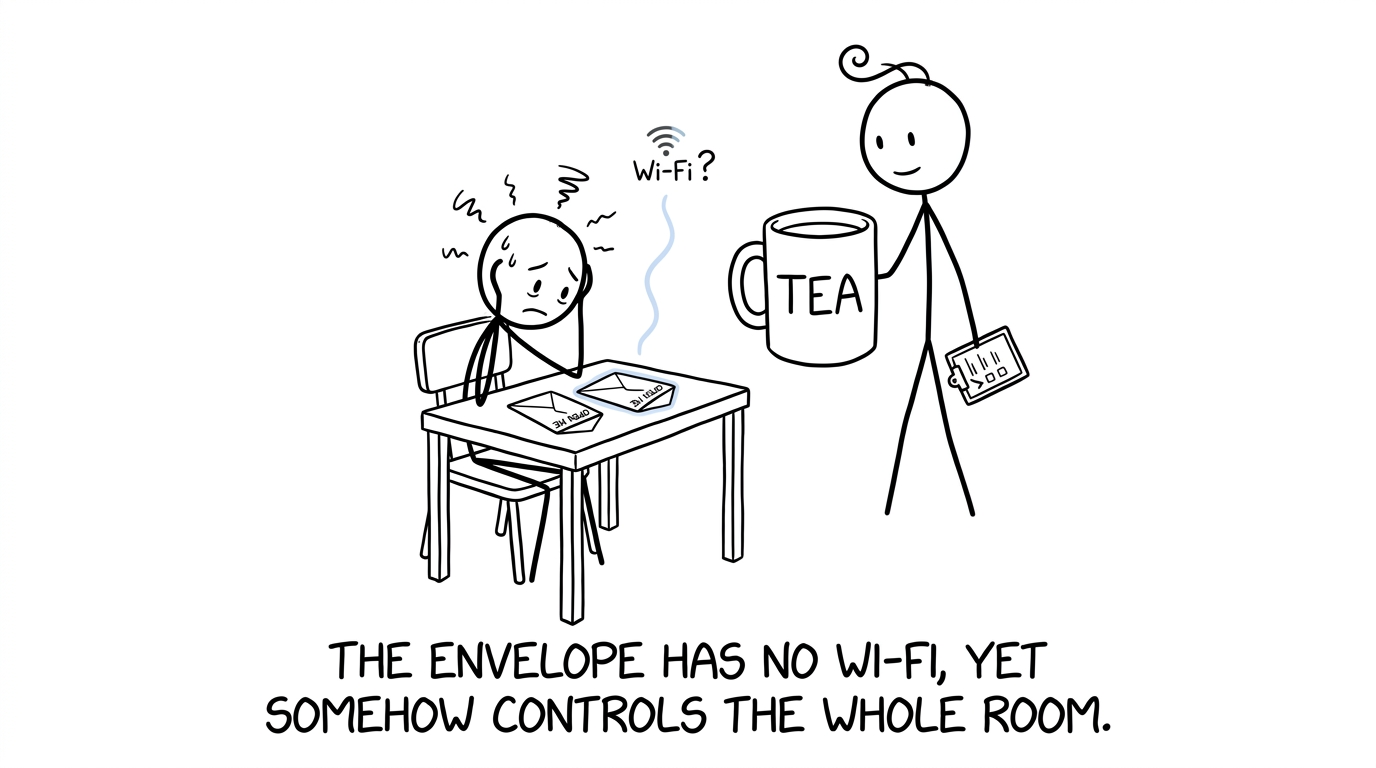 A student faces two results envelopes while a parent brings tea and a checklist
When and where will I receive my Economics result?
Schools and colleges can issue A-level results to candidates from the official release time, but their opening and online-access arrangements differ. Check your centre's instructions rather than assuming you can arrive at a particular time.
Your results slip gives your final Economics grade. Depending on your centre and exam board, additional component information may also be available. If it is not clear how the result was assembled, ask your Economics department or exams officer to explain it.
UCAS Hub is different: it shows the status of your university application, not your complete results slip. In 2026, applicants can check their status from 08:00 on results day.
What should I do first after opening my result?
Pause before judging it. Then take these steps in order:
- read the grade carefully and keep the result secure;
- compare all your grades with your offer conditions;
- check UCAS Hub;
- ask your school for help if a result is missing or unclear;
- contact the university if your application is still pending.
One Economics grade should be read alongside the whole offer. A university may confirm your place even if you narrowly miss one stated condition, but that is the university's decision. Do not assume rejection before checking your application status.
What does my UCAS status mean?
A confirmed firm place normally means your first-choice university has accepted you. A confirmed insurance place means your firm choice has not accepted you, but your insurance choice has.
If the application is still conditional or pending, the university may still be considering your results or waiting for information. Contact its admissions team rather than immediately entering Clearing.
If neither choice confirms your place, you may be eligible for Clearing. Search thoughtfully, speak directly to universities, and obtain an offer before adding a Clearing choice in UCAS Hub. On the 2026 results day, applicants can add a Clearing choice from 13:00.
What if I missed my Economics offer by one grade?
Call the university promptly and ask whether it is still considering you. Admissions teams can assess the complete application, available places and the grades achieved; there is no automatic rule that applies to every course.
Prepare your UCAS Personal ID, grades and course details before calling. The student should lead the conversation because universities normally need to discuss an application with the applicant. Parents can help by taking notes and keeping alternative options visible.
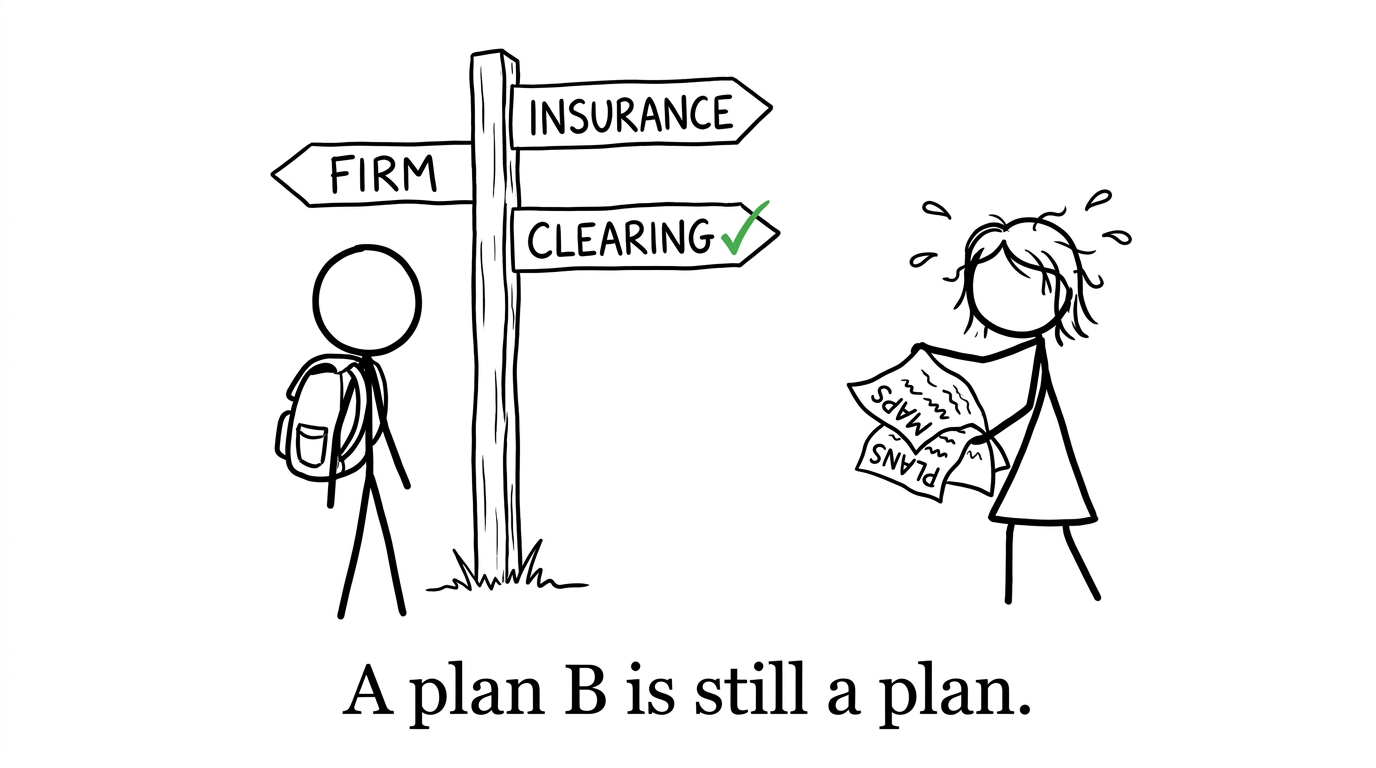 A calm student chooses between Firm, Insurance and Clearing while a parent studies maps
Should I ask for a remark?
What students often call a remark is formally a review of marking. It is not a completely fresh mark by a new examiner. The reviewer checks whether the mark scheme was applied correctly and corrects identified marking errors.
Start by speaking to your Economics teacher and exams officer. Your centre may be able to obtain your marked script so that a teacher can compare the responses with the mark scheme and grade boundary.
A reviewed mark can rise, remain unchanged or fall, so your written consent is required. A fee may apply. Where a university place depends on the outcome, ask immediately about the priority service: for the June 2026 series, the JCQ deadline for an A-level priority review is 20 August 2026. The standard review deadline is 24 September 2026, although your centre may impose an earlier internal deadline.
How do I decide whether a marking review is sensible?
Distance from the grade boundary matters, but it is not the only consideration. Economics includes extended responses requiring examiners to apply level-based mark schemes, yet a near-boundary result is not proof of an error.
Ask three practical questions:
- How many marks are needed for the next grade?
- Does a teacher see a credible marking issue in a particular paper?
- Could a lower mark affect a confirmed place or another plan?
Use evidence rather than disappointment. You can revisit the style of official assessment through Edexcel A A-level Economics past papers, while the AQA Economics question bank shows how exam-style responses connect to mark schemes.
Can I appeal my Economics grade?
A review of marking normally comes before an appeal. If concerns remain after the review, the school or college may appeal on permitted marking or procedural grounds. Most exam boards do not accept ordinary review requests directly from students, although arrangements can differ for private candidates.
An appeal is not simply a second attempt because you dislike the grade. Speak to your centre, follow the published process and observe its deadlines. If the centre refuses to request a review, it must provide an internal route through which you can challenge that decision.
Can I resit A-level Economics?
Yes, but A-level resits are generally taken in the next summer exam series rather than during an autumn window. Students resitting an A level normally retake all examined components. Rules for carrying forward non-exam assessment depend on the qualification, so confirm the position with your centre and exam board.
Before committing, consider whether a resit is required for your intended course and how you will prepare differently. MathsGenie's free AQA A-level Economics revision hub, Edexcel A Economics resources and OCR A-level Economics revision hub combine lessons, questions, papers and marking support.
What should parents do on results day?
Be useful without taking control. Help the student slow the morning down, find contact details and record names, offers and deadlines. Avoid calling a university in the student's place unless nominated access has been arranged and the university permits it.
The most helpful question is often not, “What went wrong?” but, “What information do we need for the next decision?” Results day is an administrative crossroads, not a verdict on someone's ability.
Common results-day mistakes
- Checking UCAS but forgetting to obtain the actual grades from school or college.
- Assuming a missed offer means automatic rejection.
- Requesting a marking review without checking the script, boundary or downside risk.
- Missing the centre's internal post-results deadline.
- Adding a Clearing choice before receiving an offer from the university.
- Declining a confirmed place before researching alternatives carefully.
- Letting a parent speak for the applicant when the university needs the student.
- Comparing boundaries from different years as though they are fixed.
Take the next step with MathsGenie
A result may close one route, confirm another or create a decision you did not expect. What matters now is replacing uncertainty with information.
If you are continuing, resitting or helping a younger student prepare, use MathsGenie's specification-focused resources. Start with Edexcel A Economics revision guides, then move through practice questions, mini tests, past papers, predicted papers and mark schemes. For students earlier in their Economics journey, OCR GCSE Economics past papers provide structured exam practice.
Open the resource for your exam board, identify the next useful action and begin there. A calm plan cannot change yesterday's paper, but it can change what happens next.










