

A-Level Computer Science Results Day Questions
A-level computer science results day FAQ covering grades, UCAS status, Clearing, marking reviews and calm next steps for students and parents.

Results day can make a few minutes feel unusually important. A screen refreshes. An envelope sits unopened. Everyone wants to know what one grade means for everything that follows.
This guide answers the most common A-level computer science results day questions for students and parents. The short version is reassuring: collect the official result, check your UCAS application if relevant, speak to your school or college before making irreversible decisions, and remember that a disappointing grade does not remove every route forward.
For students still preparing for GCSEs, this is also a useful glimpse of how results day works later. The habits that help now, practising questions, correcting mistakes and using mark schemes properly, remain valuable at A Level.
Your results-day checklist
Before the day, make sure you have:
- your school or college's collection time and arrangements
- your UCAS sign-in details, if you applied to university
- contact details for your firm and insurance universities
- your UCAS Personal ID and a charged phone
- a trusted teacher or exams officer you can consult
- possible alternative courses, apprenticeships or gap-year plans
Do not decide your entire future in the first emotional minute. Read the information, confirm what it means and then act.
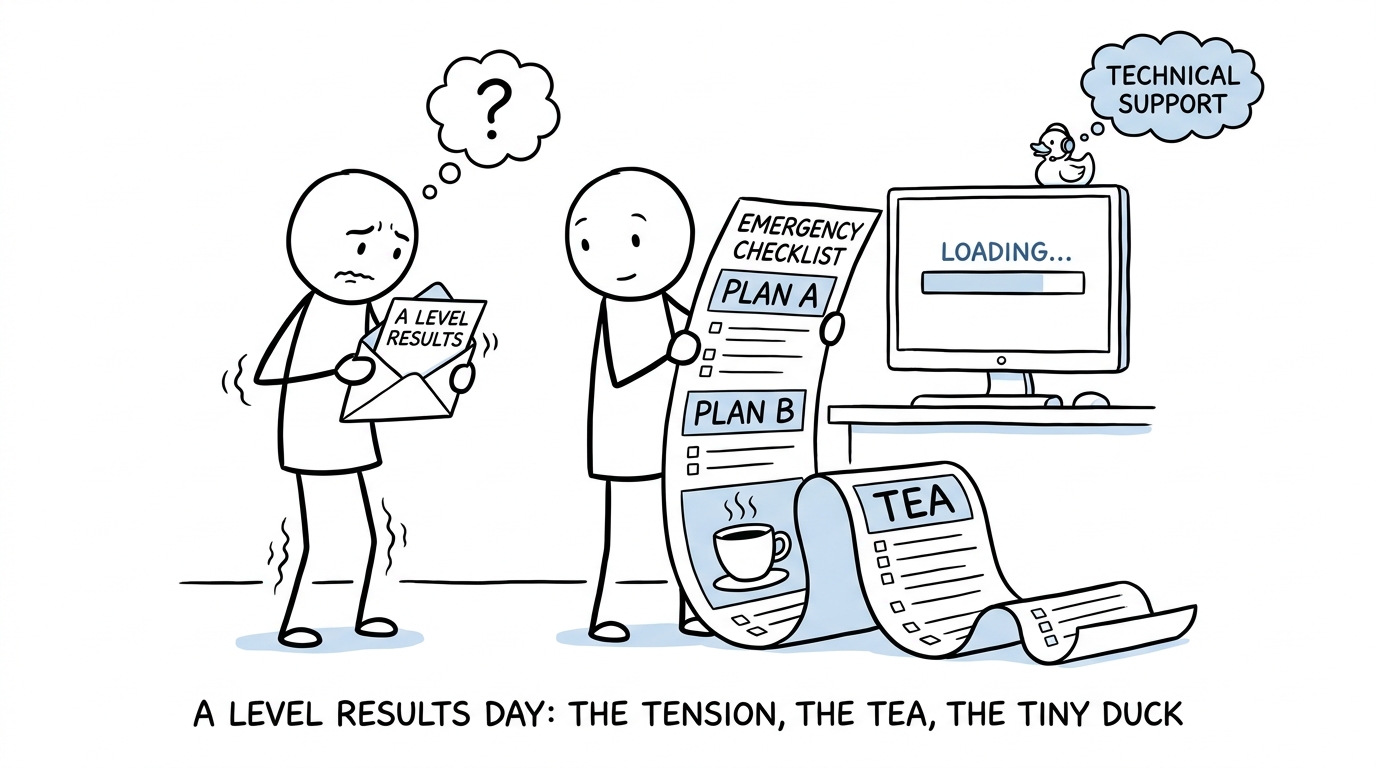 A student opens a results envelope while a rubber duck provides technical support
When is A-Level results day in 2026?
A-Level results day in England, Wales and Northern Ireland is Thursday 13 August 2026. Your school or college decides when and how you can receive your results, so check its instructions rather than assuming the building will open at a particular time.
UCAS also updates applications on results day. However, your school or college provides your actual subject grades, while UCAS tells you the status of your university application.
What will my Computer Science result show?
Your results slip normally shows your overall A-Level Computer Science grade. It may also include marks or component information, depending on the exam board and your centre's reporting system.
A-Level Computer Science is a linear qualification, so the final result reflects the assessment structure specified by your exam board. This can include written examinations and non-exam assessment. The precise weighting and component labels differ between specifications, so compare your result with the correct AQA, OCR, Pearson Edexcel or Eduqas documentation.
If you studied OCR, the free OCR A-Level Computer Science revision hub brings together lessons, revision guides, flashcards, past papers, mark schemes, predicted papers and mini tests.
How are grade boundaries decided?
Grade boundaries are the minimum marks needed for each grade in that examination series. They are set after the papers have been taken and marked, helping exam boards account for differences in paper difficulty between years.
That is why last year's boundary cannot confirm this year's grade. Boundaries published before results day should not be treated as official for the current series. Use the confirmed information from your exam board and ask your exams officer if your mark is not shown clearly.
A component boundary may also be described as notional. Your qualification grade is based on the overall subject result, not on treating every component as a separate qualification.
What should I check in UCAS Hub?
Check whether your application says that you have been placed at your firm choice, placed at your insurance choice, are still waiting for confirmation, or are eligible to use Clearing.
A pending decision does not automatically mean rejection. A university may still be considering your application, particularly if you narrowly missed an offer. Check messages from the university and contact its admissions team if instructed to do so.
Avoid repeatedly pressing buttons without understanding the consequence. In particular, declining a confirmed place is a significant action and should only be done when you are certain about your alternative.
What happens if I miss my university offer?
First, check UCAS rather than assuming the outcome from the grades alone. A university may accept an applicant who has narrowly missed the stated conditions.
If your place is not confirmed, speak to your school or college and consider:
- contacting the university if your decision remains pending
- accepting an insurance place that has been confirmed
- finding a suitable course through Clearing
- requesting a priority review of marking when a genuine marking concern could affect your place
- exploring an apprenticeship, resit or planned gap year
A missed offer changes the immediate route. It does not decide the quality of the destination.
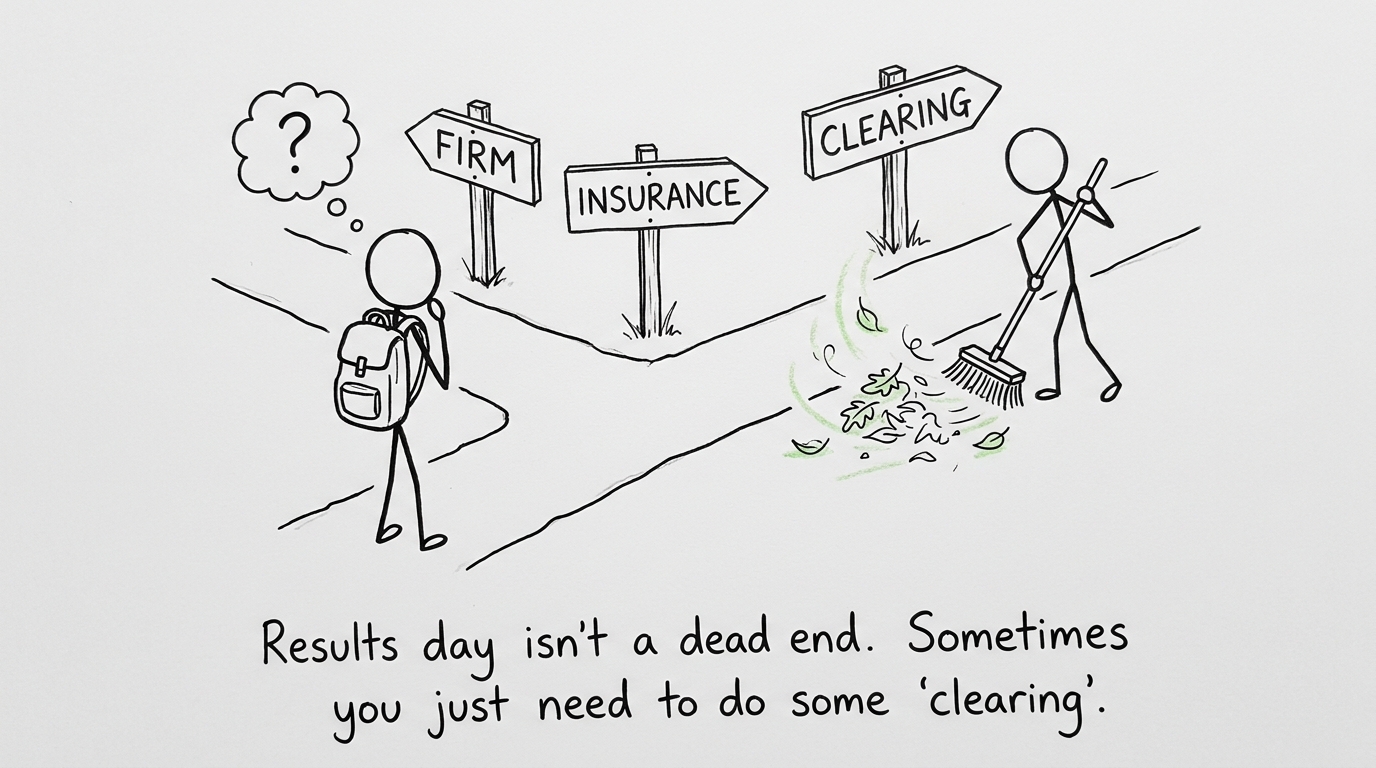 A student chooses between Firm, Insurance and a surprisingly literal Clearing path
How does Clearing work?
Clearing allows universities and colleges with vacancies to consider applicants who do not currently hold a place. Search for appropriate courses, research them carefully and contact the provider before adding a Clearing choice.
Have your grades, UCAS details and questions ready. Ask about the course content, entry requirements, accommodation and any deadline attached to an informal offer. The student should normally lead the conversation, although a parent can help organise notes and compare options.
Do not choose solely because a course has “computer science” in its title. Compare modules, programming content, assessment methods, placement opportunities and the mathematical demands of the course.
Can I request a review of marking?
If you believe an error may have occurred, speak to your teacher or exams officer promptly. Your centre can request access to a script to help decide whether a review of marking is sensible. Most exam boards require requests to go through the school or college, although arrangements can differ for private candidates.
A review checks whether the mark scheme was applied correctly; it is not a request for extra marks because the result feels disappointing. Your mark and grade may rise, stay the same or fall. Your written consent is therefore normally required, and fees or strict deadlines may apply.
Where a university place depends on the outcome, ask immediately about the priority service and inform the university.
What should parents do on results day?
Be useful before being optimistic. Help the student slow the process down, record names and telephone numbers, and distinguish confirmed information from assumptions.
Parents can research vacancies or prepare questions, but universities will usually need to speak directly to the applicant. Avoid comparing results with friends or pushing for an instant decision. Results day is important, but calm information usually produces better choices than urgency.
What should I do after the decision is settled?
If your place is confirmed, read the university's instructions and check accommodation, finance and enrolment tasks. If you are resitting or changing direction, ask for a written plan with dates and entry requirements.
Students moving from GCSE to A Level can prepare through the wider GCSE Maths revision hub, GCSE predicted papers and Edexcel GCSE revision guides. Strong algebra, logic and problem-solving habits provide useful foundations for both maths and Computer Science.
Common results-day mistakes
- Treating an old grade boundary as this year's confirmed boundary.
- Assuming a missed offer means rejection before checking UCAS.
- Entering Clearing without comparing the course itself.
- Requesting a marking review without understanding that marks can decrease.
- Letting a parent make every admissions call for the student.
- Declining a confirmed place before securing and checking an alternative.
- Missing post-results deadlines while waiting to see what happens.
Make the next stage more deliberate
Results day feels like a verdict because it compresses years of work into a small line of text. In practice, it is a junction. Some students continue directly; others take a route they had not considered until that morning.
Whatever the result, use evidence for the next decision. Start with MathsGenie's free OCR A-Level Computer Science resources, then build confidence through revision lessons, practice questions, past papers, predicted papers, mini tests and mark schemes. If maths is part of your next course, the Edexcel A-Level Maths revision hub and A-Level predicted papers can turn uncertainty into a clear revision plan.










