A-Level Computer Science Resit: Your UCAS Application
A-level computer science resit UCAS application advice: declare grades accurately, explain what changed and prove you are better prepared for university.
Results day can compress two years of work into one uncomfortable letter. If your grade was lower than expected, an A-level computer science resit UCAS application should not hide that result or turn it into a dramatic confession. Declare the original grade and pending retake accurately, check each university's resit policy, then explain briefly what changed and support that explanation with evidence.
A resit is part of your academic record. It does not have to become the whole story.
Your resit application checklist
Before submitting your application:
- enter your original Computer Science result in the education section;
- enter the qualification again with the resit result shown as pending;
- check the resit policy for every course and university;
- ask your referee to include a predicted grade and relevant context;
- explain improvement rather than making excuses;
- show evidence through structured revision, programming or wider reading;
- keep most of your personal statement focused on the course ahead.
UCAS requires applicants to include completed qualifications, unsuccessful grades, pending qualifications and results from previous sittings. Omitting an inconvenient result risks making the application inaccurate.
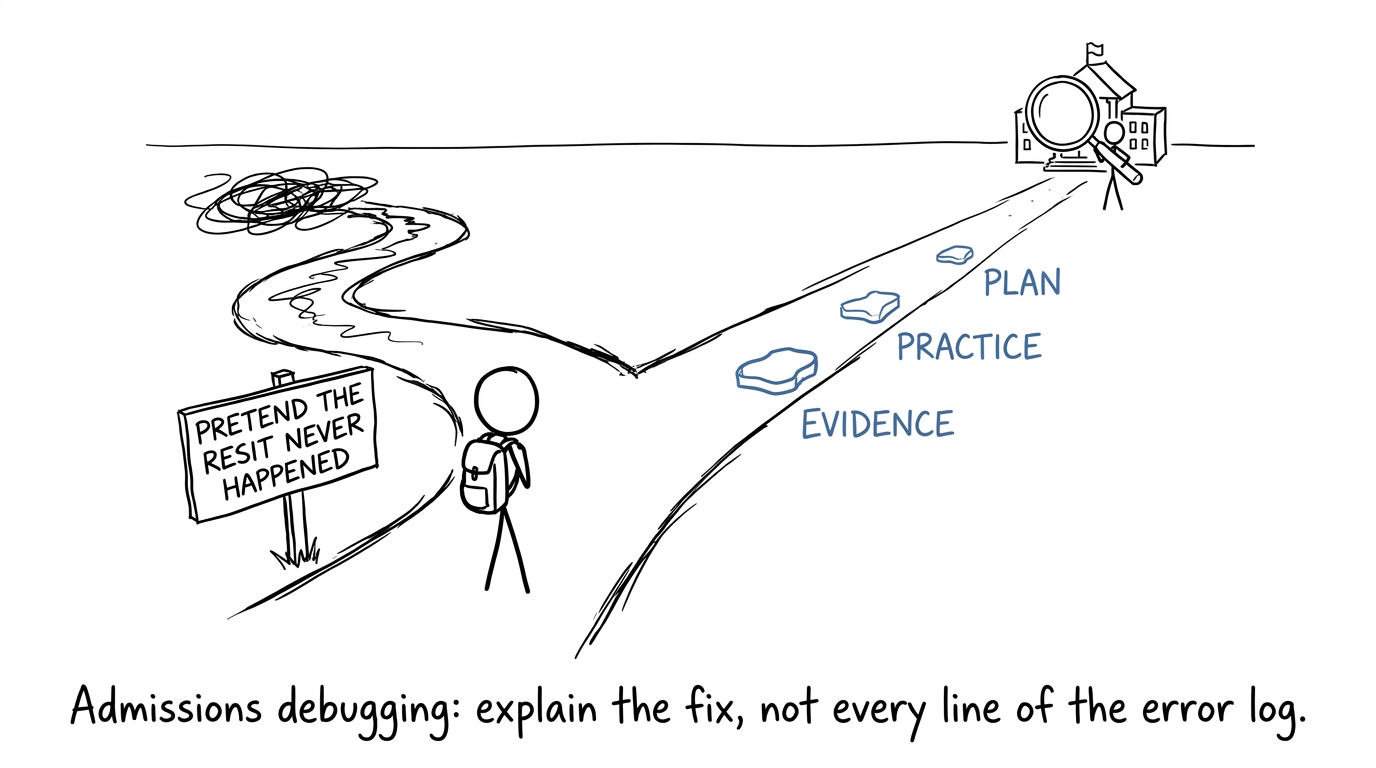 A student choosing between hiding a resit and showing what changed
Check the university's resit policy first
Universities do not share one national policy on A Level retakes. Some courses consider resit applicants through their usual selection process. Others may request information about the first sitting, set a higher condition or expect several qualifications to have been completed within a particular period.
Computer Science entry requirements also vary. Some degrees require A Level Mathematics, while others accept applicants from a wider range of subjects. Read the current course page and admissions policy for each choice. If the wording is unclear, contact the admissions team before applying and ask a precise question:
I achieved [grade] in A Level Computer Science and am retaking the qualification in [exam series]. Would this be considered for entry to [course], and are there any additional conditions for resit applicants?
Do not assume that one university's answer applies elsewhere. Policies can differ between institutions and sometimes between courses at the same institution.
If Mathematics forms part of your offer, use the free A Level Maths revision hub to find resources for AQA, Edexcel, OCR, WJEC and other boards. You can also go directly to AQA A Level Maths revision or Edexcel A Level Maths revision.
How to explain a resit on UCAS
From the 2026 entry cycle onwards, the UCAS personal statement uses three questions. The second asks how your qualifications and studies have prepared you for the course. That is normally the most natural place for a short resit explanation, although relevant experiences can be placed elsewhere when they answer another question more directly.
The overall limit remains 4,0004{,}0004,000 characters, including spaces, and each answer must contain at least 350350350 characters. Space is valuable. Use a simple structure:
State the position
Acknowledge the result and decision without defensive language.
After my original A Level Computer Science result, I decided to retake the qualification to strengthen my understanding and demonstrate the standard I can now achieve.
Identify what changed
Name the weakness accurately. It might have been inconsistent retrieval, limited timed practice or an ineffective balance between programming and theory. If illness or personal circumstances materially affected the result, discuss with your referee whether the factual context belongs in the reference.
Provide evidence
Admissions teams need more than a promise to “work harder”. Describe observable changes:
I now use weekly timed questions, analyse errors against mark schemes and revisit weak areas such as algorithms and data representation through scheduled retrieval practice.
The strongest wording connects action to preparation:
This process has made my revision more systematic and strengthened the independence, problem analysis and persistence I will need for degree-level study.
That is what explaining a resit on UCAS should achieve: honesty, change and evidence in a few sentences.
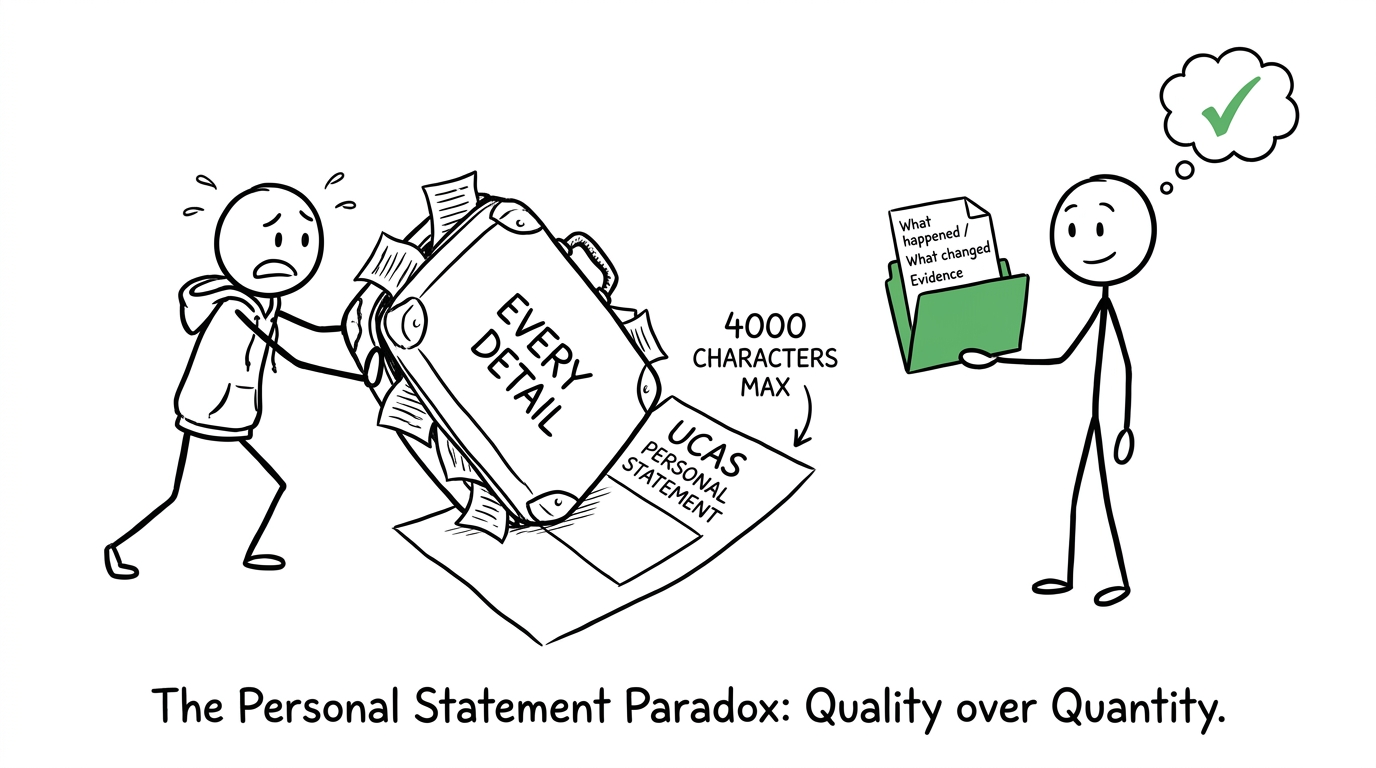 A student fitting useful evidence into a UCAS text box
Keep the statement focused on Computer Science
A retake explains where you are. The rest of the application should show where you are going.
Use the first UCAS question to explain why Computer Science interests you. Be specific about ideas rather than merely saying that technology is important. You might discuss algorithmic efficiency, cybersecurity, machine learning, software engineering or the social consequences of automated systems.
Use the third question for preparation beyond formal lessons. Relevant evidence could include a programming project, structured online learning, reading, work experience or careful reflection on a technical problem. Only include activities you genuinely completed, and explain what each taught you.
A useful balance is:
- brief context for the resit;
- clear evidence of a better preparation method;
- substantial evidence of academic interest and course readiness.
Your referee can reinforce this account. A teacher or registered centre may provide predicted grades for pending qualifications and, with your permission, explain circumstances that affected earlier achievement. Contact them early enough to discuss what evidence they can responsibly include.
Turn the retake plan into credible evidence
A convincing application and an effective revision plan rely on the same principle: specific systems are more believable than vague intentions.
Create a weekly cycle of topic review, timed questions, marking and correction. For any accompanying Mathematics retake, AQA A Level past papers and Edexcel A Level past papers provide mark schemes and worked solutions where available.
The same feedback loop applies to Computer Science: diagnose the gap, practise under realistic conditions, check the assessment requirements for your exam board and revisit errors. AQA, OCR and Eduqas specifications are not interchangeable, so use materials matching your qualification and confirm arrangements with your school or examination centre.
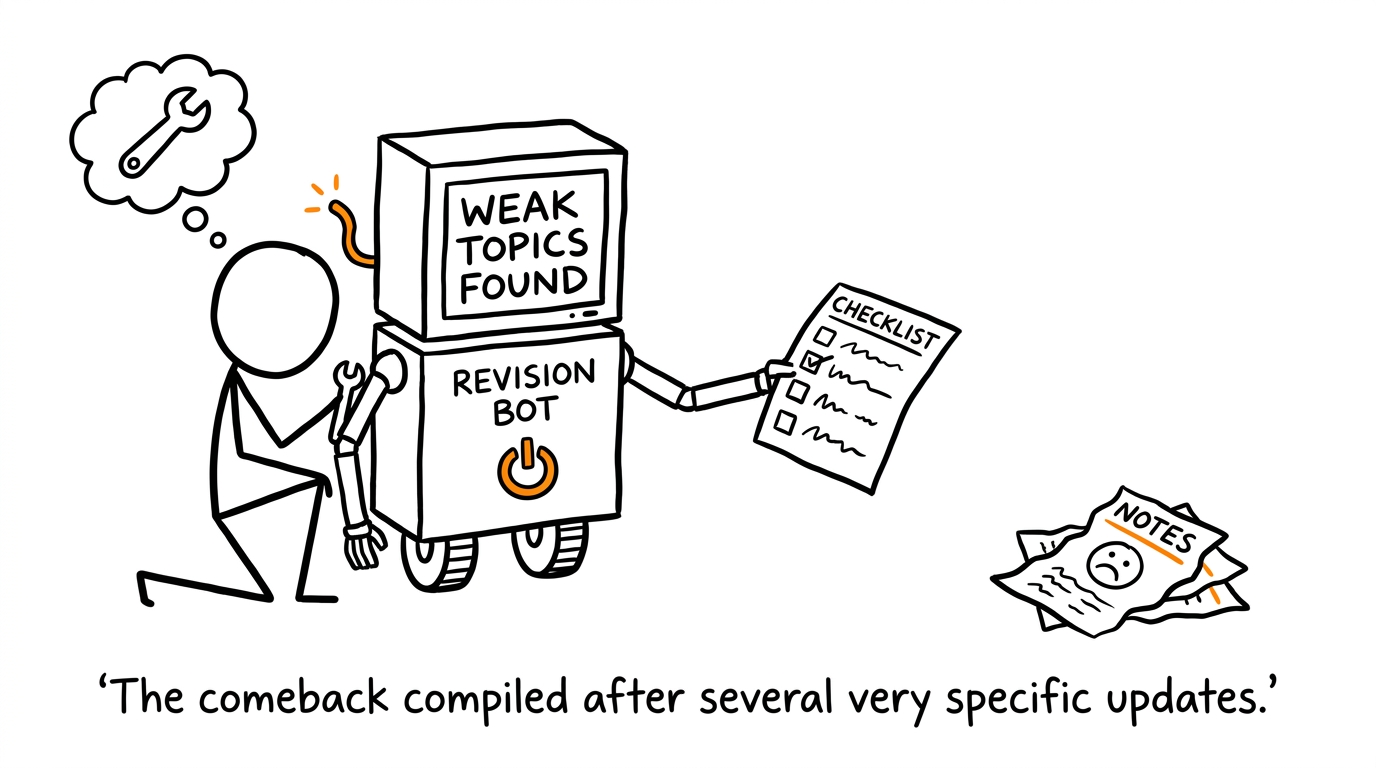 A student debugging a revision plan rather than rereading notes
Common mistakes when explaining a resit
Hiding the original grade
UCAS requires previous and pending qualifications to be declared. Enter the achieved result and the pending retake separately.
Writing a long apology
A personal statement is not an appeal letter. Give necessary context, explain the response and move back to your suitability for the course.
Blaming teachers or the exam board
Even when the experience was difficult, accusatory wording does not demonstrate readiness. Concentrate on what you can now control.
Claiming improvement without evidence
“More motivated” is difficult to assess. A timetable, regular timed practice, an error log and stronger mock performance are concrete.
Ignoring Mathematics requirements
Many Computer Science courses value mathematical preparation, and some require A Level Mathematics. If maths is part of your application, use MathsGenie's free revision lessons and practice, then test your progress with past papers and mark schemes.
Make the second application stronger than the first
An A Level Computer Science retake application is strongest when it is accurate, concise and forward-looking. Declare both sittings, verify every course's policy, coordinate with your referee and describe the system behind your improvement.
Then make that system real. MathsGenie does not currently host dedicated A Level Computer Science revision materials, but it remains the free home for your supporting maths preparation. Start with A Level Maths revision, use revision lessons and practice questions to repair gaps, and move into past papers, predicted papers, mini tests, mark schemes and video solutions. Your application can describe a better plan. Your daily work must prove it.