

A-Level Computer Science Grade: University Meaning
A-level computer science grade meaning explained: compare A* to E with 2026 UK degree entry examples, Maths requirements and practical next steps.
A result can look like a single letter, but a university reads it as part of a much larger story. If you are searching for the A-level computer science grade meaning for university, the short answer is this: a higher grade expands your options, but universities normally assess your complete set of qualifications, required subjects and circumstances rather than Computer Science alone.
For many computer science degrees, A-level Mathematics matters at least as much as A-level Computer Science. Some highly selective courses require Mathematics but do not require Computer Science at all. That distinction is especially important if you are still choosing A levels after GCSE.
What to check before comparing grades
Use this checklist when researching computer science degree entry requirements:
- Check the overall A-level offer, such as ABB or A*AA.
- Look for a required grade in Mathematics, Further Mathematics or Computer Science.
- Check GCSE Mathematics and English Language requirements.
- Read the requirements for your exact course and entry year.
- Investigate contextual offers and foundation years if relevant.
- Compare several universities rather than treating one course as the standard.
Requirements change, so the examples below reflect published requirements for 2026 entry unless stated otherwise. Always confirm them on the university's current course page before applying.
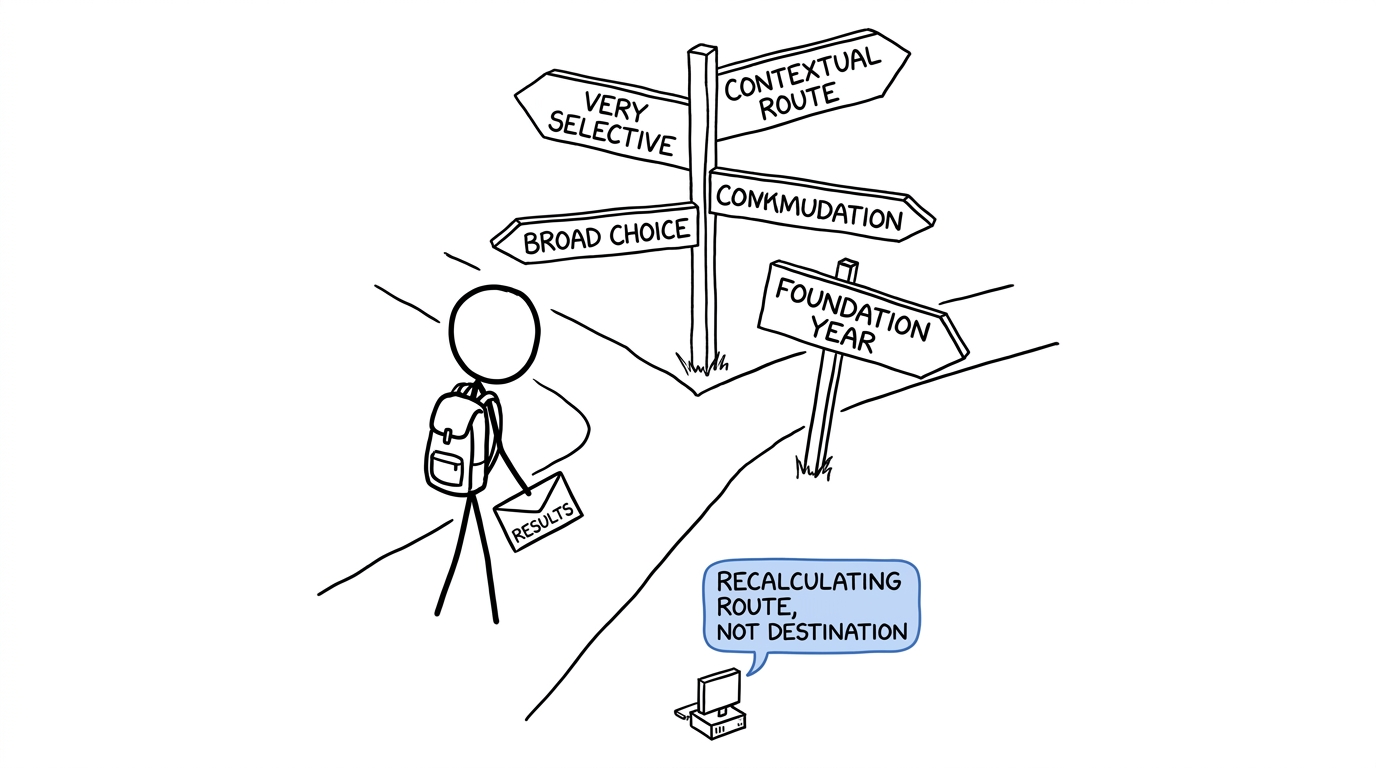 A student discovering that a grade changes the route rather than the destination
A-Level Computer Science grades and university choices
Grade A*: the widest range of options
An A* demonstrates excellent performance and supports an application to highly competitive courses. It does not, however, replace another compulsory subject.
For example, UCL's 2026 Computer Science BSc asks for A*A*A, including an A* in Mathematics or Further Mathematics. Bath lists A*A*A, including an A in Mathematics. An A* in Computer Science could strengthen the overall grade profile for these courses, but it would not compensate for missing the specified Mathematics grade.
At this level, your next task is not simply to collect higher grades. It is to check whether your subject combination keeps the right doors open. Build mathematical fluency through the free A Level Maths revision hub, while using A Level Computer Science revision resources to improve subject knowledge and exam technique.
Grade A: a strong result for many courses
An A is a strong Computer Science grade and can satisfy a relevant-subject condition where a university accepts Computer Science as one of several options.
Queen Mary University of London's 2026 Computer Science BSc, for example, has a typical offer of AAA and requires one of Mathematics, Computer Science or Physics. Manchester's joint Computer Science and Mathematics course asks for A*A*A, including an A* in Mathematics and another science from an approved list that includes Computer Science.
These examples reveal an important pattern: the value of an A depends on the wording around it. “AAA including Computer Science” means something different from “AAA including Mathematics”. Read every condition, not just the headline grades.
Grade B: plenty of realistic routes remain
A B can support applications across a broad range of universities, particularly when your other grades meet the complete offer.
For 2026 entry, Sussex lists ABB for its Computer Science BSc. Leicester also lists ABB and requires GCSE Mathematics at grade 5. Neither example means that every applicant with a B in Computer Science will receive an offer. Universities consider the full application, and subject or GCSE conditions still apply.
A B is therefore better understood as a planning signal than a verdict. Build a balanced shortlist containing aspirational, realistic and safer choices. If Mathematics is part of your offer, practise with exam-style questions and mark schemes rather than relying on passive reading.
 A computer and calculator explaining the two locks on a university offer
Grade C: direct entry becomes more course-dependent
A C does not end the possibility of studying computer science. It does mean that you must search more carefully for courses with suitable grade or UCAS Tariff requirements.
Options may include less selective direct-entry courses, computing degrees with different subject requirements, or an integrated foundation year. Course titles also matter. Software engineering, information technology, cybersecurity and business computing can have different entry profiles from a theoretical computer science degree.
Do not assume that a course with lower overall requirements will ignore GCSE conditions. Universities may still specify Mathematics or English Language grades.
Grades D or E: consider alternative entry routes
Grades D and E are passing A-level grades, but the number of direct-entry computer science choices is likely to be more limited. Sensible routes to investigate include:
- a computer science degree with a foundation year;
- a relevant higher or degree apprenticeship;
- further education followed by university progression;
- resitting an A level where that supports a clear goal;
- related courses with more flexible subject requirements.
The best route is the one you can complete successfully, not the one that looks shortest on paper. Check funding, progression rules and qualification requirements before committing.
Why Mathematics can matter more than Computer Science
UCAS guidance notes that relatively few computing courses specify A-level Computer Science, while theoretical courses are more likely to require Mathematics. Selective examples make the pattern clear: UCL, Bath, Southampton and Bristol all publish specific Mathematics conditions for their computer science courses.
This matters now if you are a GCSE student choosing sixth-form subjects. Not taking A-level Computer Science does not automatically prevent a future computer science application. Not taking Mathematics, however, can exclude you from some mathematically demanding courses.
Your current GCSE preparation is part of that foundation. Use the GCSE Maths revision hub to find resources for Edexcel, AQA, OCR and Eduqas, or work through the Edexcel GCSE Maths revision area for tier-specific lessons, questions and papers. Students also considering Computer Science at A level can explore OCR GCSE Computer Science revision or AQA GCSE Computer Science lessons.
Common mistakes when interpreting entry requirements
Looking only at the headline offer. A course may advertise A*AA but also require a particular grade in Mathematics.
Assuming Computer Science is compulsory. Many degrees accept applicants who have not taken it, although suitable preparation and genuine subject interest still matter.
Treating one university as typical. Published offers range considerably by course content and selectivity.
Ignoring contextual admissions. Eligible applicants may receive a reduced offer, but required-subject conditions can remain.
Using old requirements. Offers, admissions tests and course structures can change between application cycles.
Neglecting GCSE Mathematics. Some universities specify a minimum GCSE grade even where A-level Mathematics is not compulsory.
Turn the grade into a practical plan
Your grade is information. Use it to choose an appropriate university shortlist, identify required subjects and decide where revision will have the greatest effect.
MathsGenie gives you a free place to do that work. Start with A Level Computer Science revision, then strengthen any required Mathematics through lessons, practice questions, past papers, predicted papers, mini tests, mark schemes and video solutions. If GCSE exams come first, use GCSE predicted papers alongside real past papers to find and repair weak topics.
A university offer may be written as three letters. Reaching it is usually the result of many smaller decisions: checking the details, practising deliberately and keeping more than one good route open.











