

A-Level Chemistry Results Day Questions Answered
A-Level chemistry results day questions answered: understand grades, reviews, university offers, Clearing and practical endorsements with a calm plan.
Results day has a strange rhythm. Months of work are compressed into a few letters, and the questions arrive before the envelope has quite settled in your hands. These A-Level chemistry results day questions give students and parents a clear plan: check the result, understand what it means, speak to the right people and avoid making a rushed decision.
For students still preparing for GCSE exams, this guide also shows what lies beyond Year 11. The details change, but the principle does not: a result is information. What matters next is how intelligently you use it.
Your results-day checklist
- Check how and when your school or college will issue results.
- Have your UCAS sign-in details and personal ID ready, if applicable.
- Read your Chemistry grade, marks and practical endorsement carefully.
- Check UCAS before assuming that a missed grade means a missed place.
- Speak to a teacher or exams officer before requesting a review.
- Keep copies of emails, deadlines and decisions.
- Do not decline a confirmed university place until you understand the consequences.
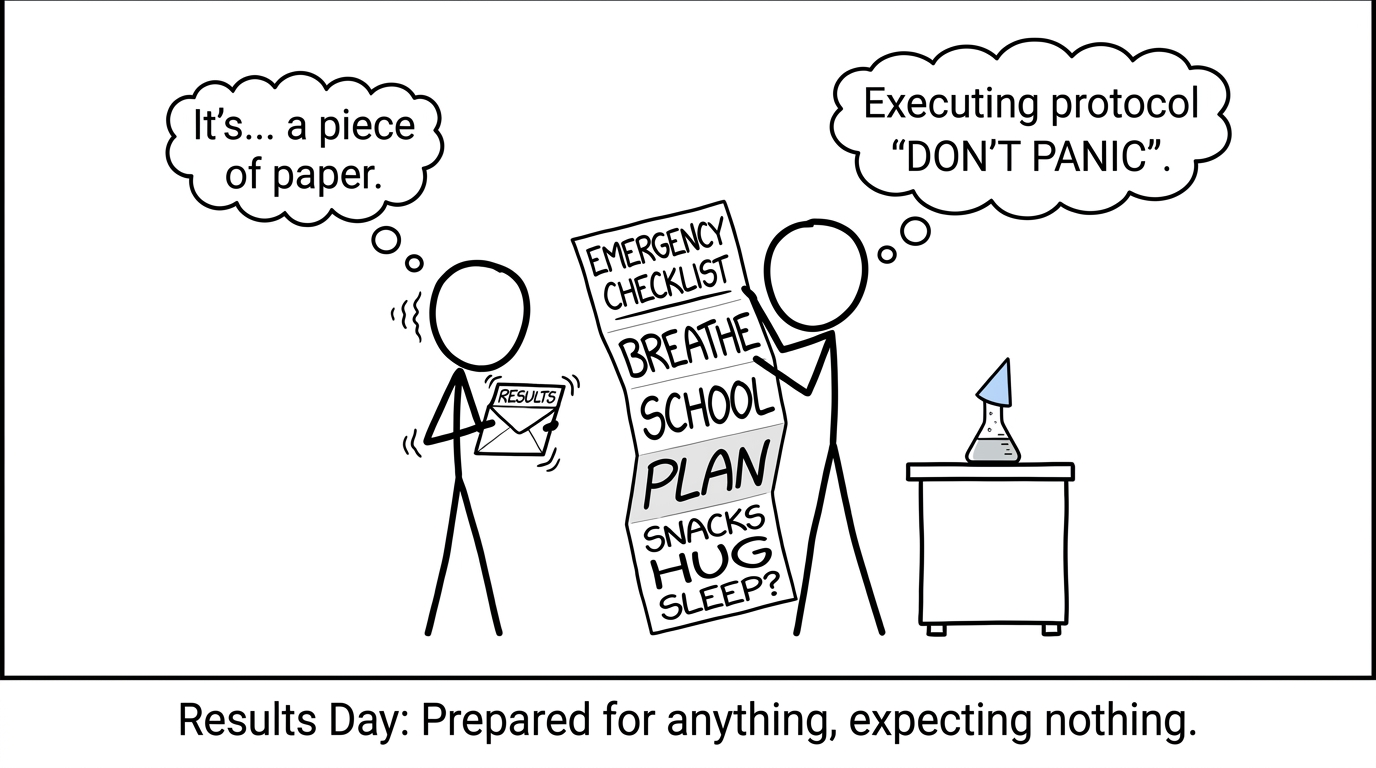 A nervous student opens a results envelope beside a reassuring checklist and a chemistry flask wearing a party hat
When is A-Level results day in 2026?
A-Level results will be released to candidates on Thursday 13 August 2026. Under the published JCQ arrangements, results must not be given to candidates before 8.008.008.00 am, although each school or college decides its own collection or online-release arrangements.
Check your centre's instructions beforehand. If you cannot attend, ask whether results can be emailed or collected by an authorised person. Do not assume that a parent can collect them without prior permission.
What does my A-Level Chemistry result mean?
A-Level Chemistry is graded from A* to E, with U meaning unclassified. Your final subject grade is based on your overall performance across the written assessments, rather than the grade you might informally calculate for one paper.
Results slips vary. Yours may show a grade, an overall mark, component marks and a separately reported practical endorsement. If anything is missing or labelled as pending, speak to your exams officer immediately rather than trying to interpret it alone.
Students comparing specifications can use the free A-Level Chemistry revision hub, covering AQA, Edexcel, Eduqas, OCR A, OCR B and WJEC resources.
How are Chemistry grade boundaries decided?
Grade boundaries are the minimum marks needed for each grade in that examination series. They are set after the papers have been taken and marked, allowing awarding bodies to consider the difficulty of that year's assessments.
This means boundaries can move from one year to another. A previous boundary is useful for revision estimates, but it cannot guarantee a future grade. Always use the confirmed boundary for your exam board and series when checking how far your mark is from the next grade.
If you are planning future preparation, A-Level past papers across exam boards are best used with their matching mark schemes and boundaries.
What is the Chemistry practical endorsement?
For A-Level Chemistry in England, practical competency is reported separately from the overall A-Level grade. It normally appears as Pass or Not Classified and does not contribute to the letter grade awarded for the written qualification.
That does not make it unimportant. A university offer may require a pass, particularly for a science-related course, so read the exact conditions in UCAS or contact the university if the status is unclear.
The endorsement reflects practical competencies demonstrated during the course. It is not an extra written-paper percentage added to your final grade.
What happens if I miss my university offer?
First, check UCAS Hub. A university may still confirm your place even if you have narrowly missed the published conditions. If your application remains pending, contact the university and ask what information it needs.
If neither your firm nor insurance choice accepts you, Clearing may provide another route. Contact a university before adding a Clearing choice, and only enter that choice once the institution has given permission. You can add only one Clearing choice at a time.
A missed offer can feel final because it arrives all at once. It rarely means there is only one route forward.
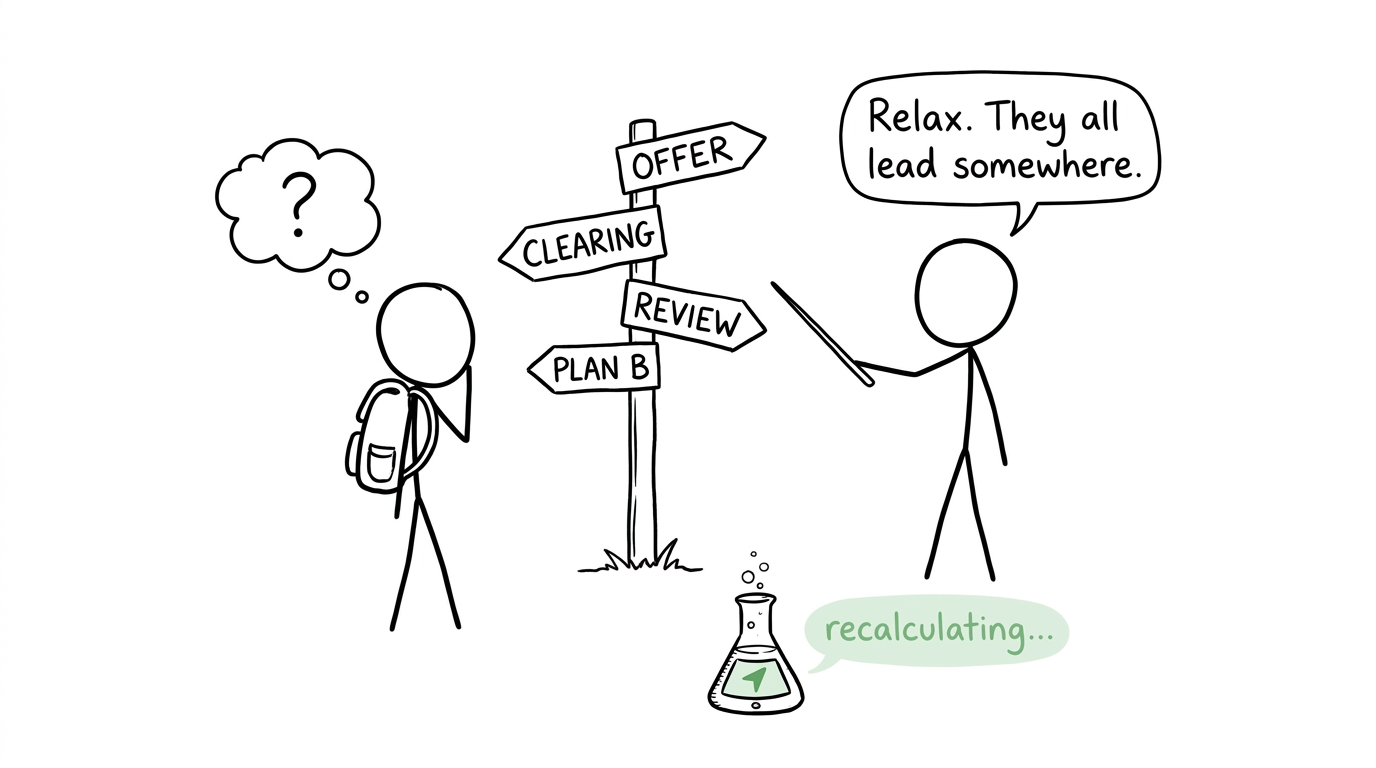 A student considers several results-day paths while a tiny chemistry beaker acts as a satnav
Should I request a review of marking?
Start with evidence. Check your mark against the confirmed grade boundary, discuss your performance with your Chemistry teacher and, where appropriate, ask whether your script can be inspected.
A review of marking is not a complete fresh mark. It checks whether the mark scheme was applied correctly and whether marking errors were made. Your mark and grade can rise, remain unchanged or fall, so centres must obtain your consent.
For the June 2026 series, the JCQ deadline for a priority A-Level review of marking is 20 August 2026. The standard review deadline is 24 September 2026, but schools often set earlier internal deadlines. Contact your exams officer immediately if a university place depends on the outcome.
Can I see my Chemistry exam paper?
Your school or college can request access to marked scripts under the relevant exam board's arrangements. A teacher can then examine where marks were awarded and whether a review is sensible.
The script can also make future revision more precise. Instead of concluding that you are simply “bad at physical chemistry”, you may discover that the lost marks came from units, significant figures, practical interpretation or incomplete explanations.
For comparison with examiner expectations, use AQA A-Level Chemistry past papers and mark schemes or the resources for your own board.
Can I resit A-Level Chemistry?
Resitting may be possible, but arrangements, costs and practical-endorsement rules depend on your exam board and centre. Speak to your school, college or an approved examination centre before making plans.
Also check whether your intended university course accepts resits and whether it applies additional conditions. A resit is most useful when it is attached to a specific improvement plan, not simply the hope that the next paper will feel kinder.
That plan might combine AQA Chemistry lessons, timed papers and targeted question practice. Edexcel students can rebuild weak topics with the Edexcel A-Level Chemistry revision guides, while OCR students can use the OCR A Chemistry revision hub.
How can parents help on results day?
Be calm, available and practical. Help the student record names, telephone numbers and deadlines, but let them speak when contacting universities or their centre unless nominated access has been arranged.
The most useful question is not “How did this happen?” It is “What information do we need before deciding?” Results day rewards clear sequencing: establish the facts, identify the options, then act.
Common results-day mistakes
- Comparing marks with a different exam board or examination series.
- Assuming a narrow miss automatically means university rejection.
- Requesting a review without understanding that the grade can fall.
- Missing a centre's internal deadline for post-results services.
- Treating the practical endorsement as part of the written grade.
- Declining a confirmed place before securing or investigating an alternative.
- Waiting for a review without also discussing the situation with the university.
Make the next step smaller
A Chemistry result can confirm a plan, alter it or create a pause. None of those outcomes removes the value of what has already been learned.
When you are ready to prepare for the next sitting or strengthen the foundations for university, start with MathsGenie's free A-Level Chemistry resources. Use revision lessons and practice questions to repair specific gaps, past papers and mark schemes to understand examiner expectations, and AQA Chemistry predicted papers or your board's resources to rehearse under timed conditions. One result gives you a position. A clear next action gives you direction.










