Differentiation
123456789101112131415161718192021222324252627282930313233343536373839404142434445464748495051525354555657585960616263646566676869707172737475767778798081828384858687888990919293949596979899100101102103104105106107108109110111112113114115116117118119120121122123124125126127128129130131132133134135136137138139140141142143144145146147148149150151152153154155156157158159160161162163164165166167168169170171172173174175176177178179180181182183184185186187188189190191192193194195196197198199200201202203204205206207208209210211212213214215216217218219220221222223224225226227228229230231232233234235236237238239240241242243244245246247248249250251252253254255256257258259260261262263264265266267268269270271272273274275276277278279280281282283284285286287288289290291292293294295296297298299300301302303304305306307308309310311312313314315316317318319320321322323324325326327328329330331332333334335336337338339340341342343344345346347348349350351352353354355356357358359360361362363364365366367368369370371372373374375376377378379380381382383384385386387388389390391392393394395396397398399400401402403404405406407408409410411412413414415416417418419420421422423424425426427428429430431432433434435436437438439440441442443444445446447448449450451452453454455456457458459460461462463464465466467468469470471472473474475476477478479480481482483484485486487488489490491492493494495496497498
Question 333
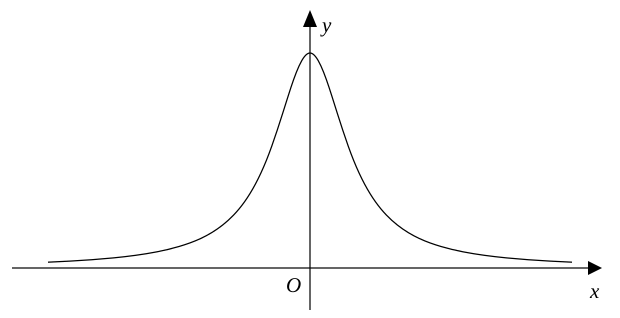
The diagram shows the curve with the equation y=11+kx2\displaystyle y = \frac{1}{1+kx^2}y=1+kx21, where k k\,k is a positive constant.
a.[5]
Find d2ydx2\displaystyle \frac{d^2y}{dx^2}dx2d2y
b.[2]
Hence find the value of k k\,k for which the curve is concave when −36<x<36\displaystyle -\frac{\sqrt{3}}{6}<x<\frac{\sqrt{3}}{6}−63<x<63.
Differentiation Questions
717 exam-style questions on Edexcel A Level Maths Differentiation, covering 9.1 Differentiating sin x and cos x, 9.2 Differentiating exponentials and logarithms, 9.3 The Chain Rule, 9.4 The Product Rule, 9.5 The Quotient Rule, 9.6 Differentiating Trigonometric Functions, 9.7 Parametric Differentiation, 9.8 Implicit Differentiation, 9.9 Using Second Derivatives, and 9.10 Rates of Change. Each one has a worked solution and a mark scheme showing where the marks go.