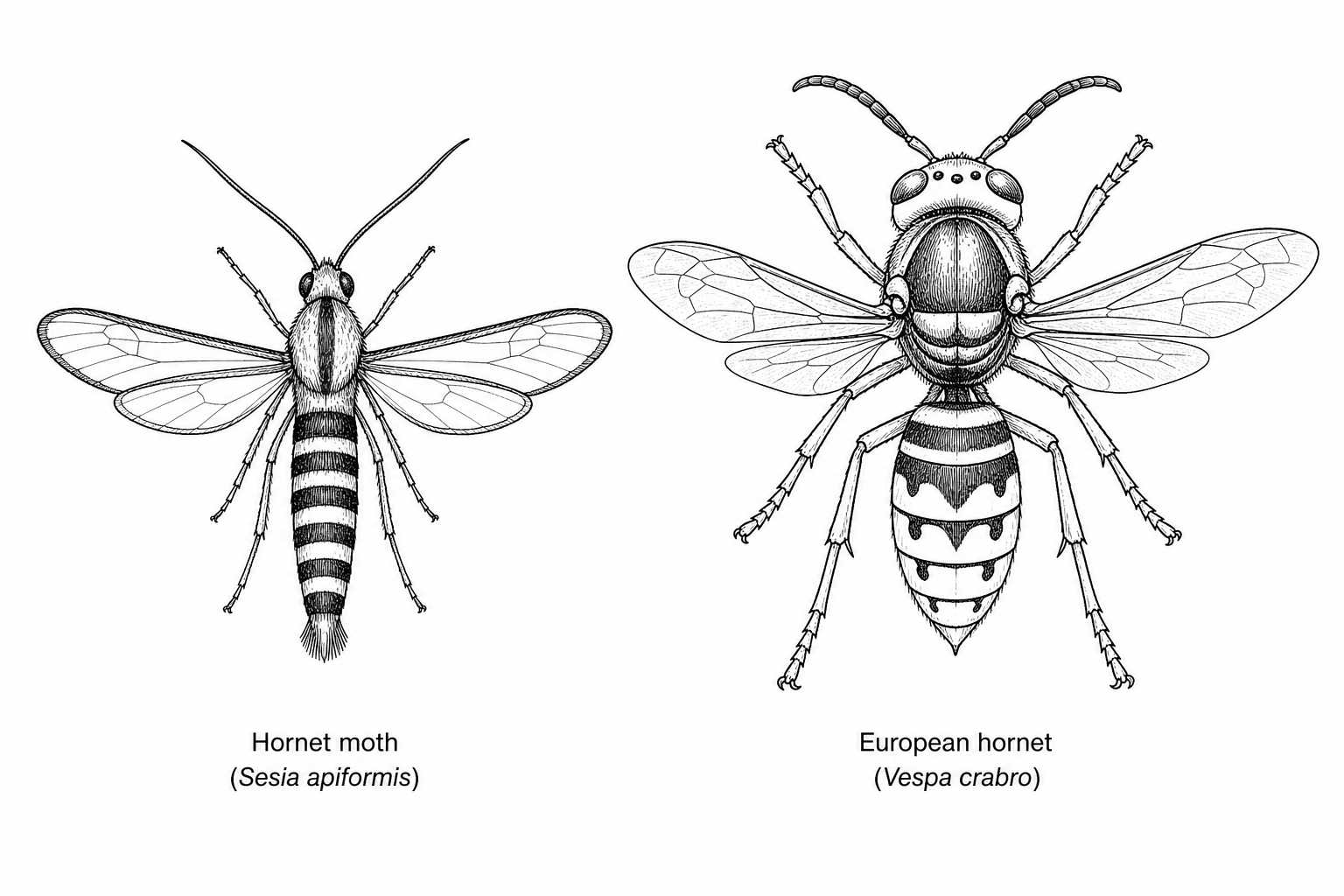
The diagram shows a hornet moth (Sesia apiformis) and a European hornet (Vespa crabro).
Cinnabar moth larvae feed on the leaves of common ragwort plants. This feeding reduces the plant's surface area for photosynthesis, which in turn limits the transport of sucrose to the roots. This stunts the plant's growth because the root cells lack the carbohydrate needed to release energy for the absorption of mineral ions.
Suggest why cinnabar moth larvae need to feed on carbohydrate.
Name and describe the process used by root cells to absorb mineral ions from the soil.
Describe how magnesium ions are used to help plants grow.
European hornets defend themselves from predators by using a painful sting, meaning predators avoid attacking them. Hornet moths are harmless and have no sting, but they look very similar to European hornets.
Use your knowledge of natural selection to explain why hornet moths have evolved to look like European hornets.