During the electroplating of a steel component with nickel, a nickel(II) sulfate solution is used as the electrolyte. A diagram of the experimental setup is shown below:
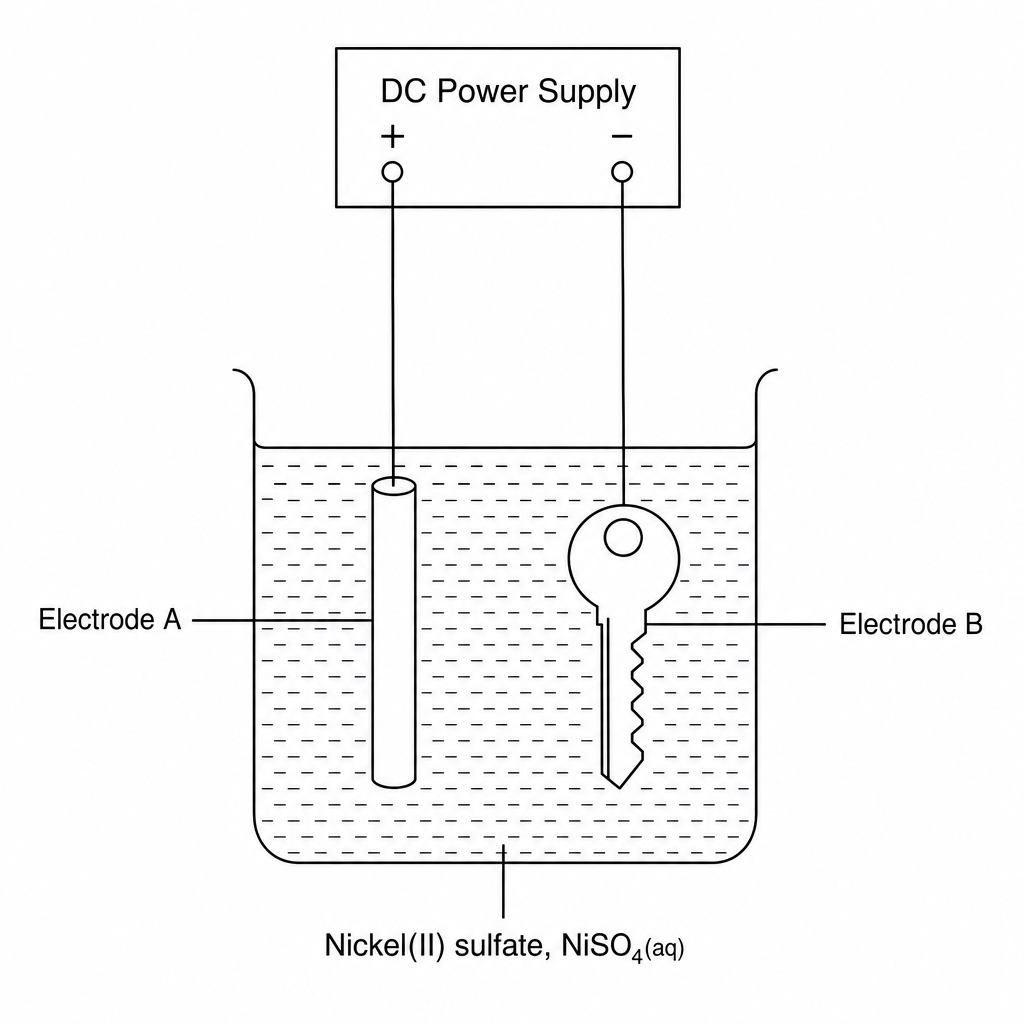
Which row in the table correctly identifies the charge on Electrode B and the half-equation for the chemical reaction occurring at its surface?
| Charge on Electrode B | Half-equation for reaction at Electrode B | |
|---|---|---|
| A | Positive | Ni2+(aq)+2e−→Ni(s)\text{Ni}^{2+}(\text{aq}) + 2e^- \rightarrow \text{Ni}(\text{s})Ni2+(aq)+2e−→Ni(s) |
| B | Positive | Ni(s)→Ni2+(aq)+2e−\text{Ni}(\text{s}) \rightarrow \text{Ni}^{2+}(\text{aq}) + 2e^-Ni(s)→Ni2+(aq)+2e− |
| C | Negative | Ni2+(aq)+2e−→Ni(s)\text{Ni}^{2+}(\text{aq}) + 2e^- \rightarrow \text{Ni}(\text{s})Ni2+(aq)+2e−→Ni(s) |
| D | Negative | Ni(s)→Ni2+(aq)+2e−\text{Ni}(\text{s}) \rightarrow \text{Ni}^{2+}(\text{aq}) + 2e^-Ni(s)→Ni2+(aq)+2e− |
Charge: Positive; Half-equation: Ni2+(aq)+2e−→Ni(s)\text{Ni}^{2+}(\text{aq}) + 2e^- \rightarrow \text{Ni}(\text{s})Ni2+(aq)+2e−→Ni(s)
Charge: Positive; Half-equation: Ni(s)→Ni2+(aq)+2e−\text{Ni}(\text{s}) \rightarrow \text{Ni}^{2+}(\text{aq}) + 2e^-Ni(s)→Ni2+(aq)+2e−
Charge: Negative; Half-equation: Ni2+(aq)+2e−→Ni(s)\text{Ni}^{2+}(\text{aq}) + 2e^- \rightarrow \text{Ni}(\text{s})Ni2+(aq)+2e−→Ni(s)
Charge: Negative; Half-equation: Ni(s)→Ni2+(aq)+2e−\text{Ni}(\text{s}) \rightarrow \text{Ni}^{2+}(\text{aq}) + 2e^-Ni(s)→Ni2+(aq)+2e−
Electrolytic processes Questions
Practise Edexcel GCSE Chemistry Electrolytic processes with exam-style questions for Foundation and Higher tier. 100 questions, matched to the Edexcel GCSE Chemistry (1CH0) specification and written in Paper 1 and Paper 2 style. Every question includes a full worked solution and mark scheme, so you can see where marks are awarded rather than just whether you got the answer right.