Question 4
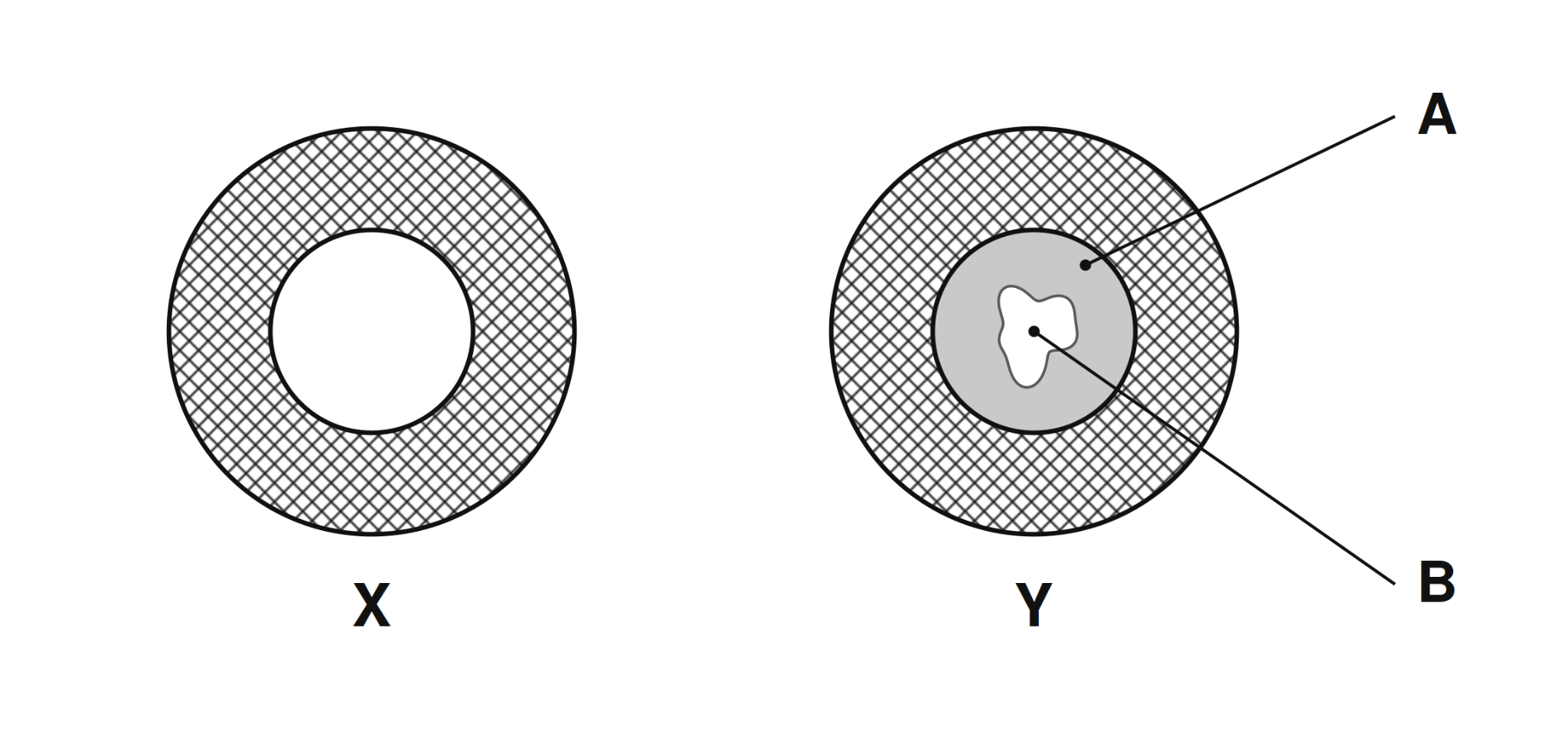
FThe figure shows a cross-section through a healthy coronary artery, X, and a cross-section through a coronary artery from a person with coronary heart disease, Y.
Figure: Cross-sections through a healthy coronary artery and through a coronary artery from a person with coronary heart disease
a.[1]
Name the substance labelled A.
b.[1]
Name the space labelled B.
c.[2]
Use the figure to explain why less blood flows through artery Y than through artery X.
d.[2]
Artery Y later becomes completely blocked. Explain why this damages the heart muscle.
2.2 Animal tissues, organs and organ systems Questions
179 exam-style questions on AQA GCSE Biology 2.2 Animal tissues, organs and organ systems, covering 2.2.1 The human digestive system, 2.2.2 The heart and blood vessels, 2.2.3 Blood, 2.2.4 Coronary heart disease: a non-communicable disease, 2.2.5 Health issues, 2.2.6 The effect of lifestyle on some non-communicable diseases, and 2.2.7 Cancer. Each one has a worked solution and a mark scheme showing where the marks go.