Question 106
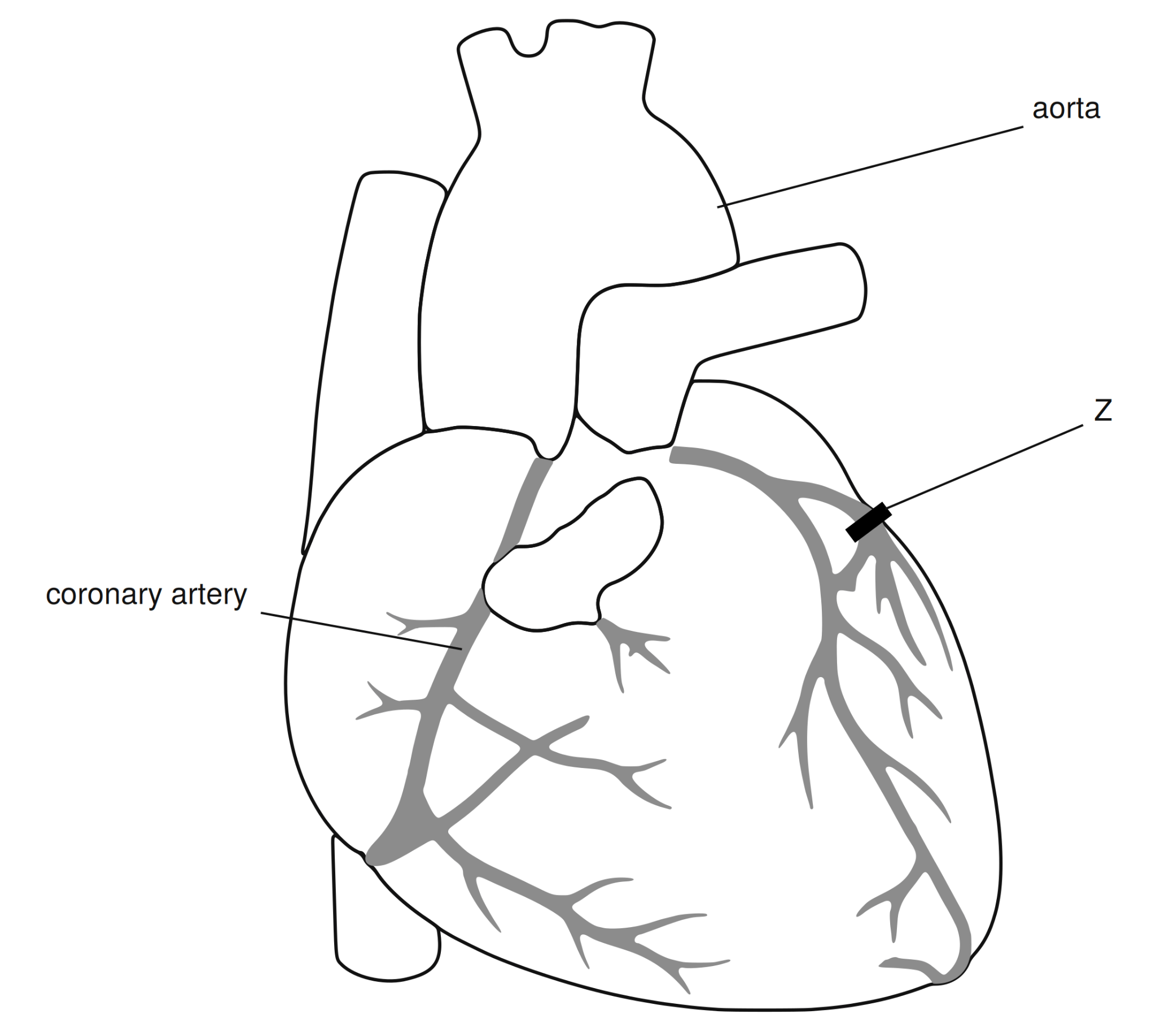
FThe figure shows the outside of a human heart. The coronary arteries run over the surface of the heart. A blockage in one of these arteries is labelled Z.
Figure: The coronary arteries on the outside of a human heart, with a blockage labelled Z
a.[2]
The coronary arteries branch off the aorta. Explain why this is important for the heart muscle.
b.[2]
Use the figure to explain which part of the heart muscle will be damaged by the blockage at Z.
c.[1]
The heart muscle above the blockage at Z is not damaged. Suggest why.
d.[2]
A stent is fitted at Z. Explain why the patient is also given statins after the stent has been fitted.
2.2 Animal tissues, organs and organ systems Questions
179 exam-style questions on AQA GCSE Biology 2.2 Animal tissues, organs and organ systems, covering 2.2.1 The human digestive system, 2.2.2 The heart and blood vessels, 2.2.3 Blood, 2.2.4 Coronary heart disease: a non-communicable disease, 2.2.5 Health issues, 2.2.6 The effect of lifestyle on some non-communicable diseases, and 2.2.7 Cancer. Each one has a worked solution and a mark scheme showing where the marks go.