

What to Eat Before a GCSE Geography Exam
What to eat before GCSE Geography exam day: simple meals, hydration and snack ideas for steady energy, comfort and concentration, without hype or fuss.
The night before an exam, breakfast can suddenly feel like another question you have not revised. Should you eat porridge? Eggs? A banana? Is coffee helpful? And what happens if nerves make food unappealing?
The practical answer to what to eat before GCSE Geography exam day is reassuringly ordinary: choose a familiar meal containing a starchy carbohydrate, add a source of protein, and drink water. Porridge with fruit and yoghurt, wholegrain toast with eggs, or cereal with milk and a banana are all sensible options. There is no special food that unlocks case studies or guarantees concentration.
What matters is arriving comfortably fed, normally hydrated and free from avoidable distractions such as hunger, thirst or an unfamiliar meal that does not agree with you.
Your quick pre-exam food checklist
Before sitting a GCSE Geography paper with Edexcel, AQA, OCR or Eduqas, aim to:
- eat a familiar breakfast or meal rather than experimenting;
- include a starchy food such as oats, bread, cereal, rice or potatoes;
- add protein from eggs, yoghurt, milk, beans, nuts or another food you tolerate;
- drink regularly before the exam without forcing excessive amounts;
- avoid relying on sweets, fizzy drinks or energy drinks as your main fuel;
- bring a permitted clear water bottle if your school allows one;
- plan a small snack for before the exam if there will be a long gap after your meal.
This is not a recipe for extra marks. It is a way to remove small physical problems before you need to interpret maps, recall examples and write extended answers.
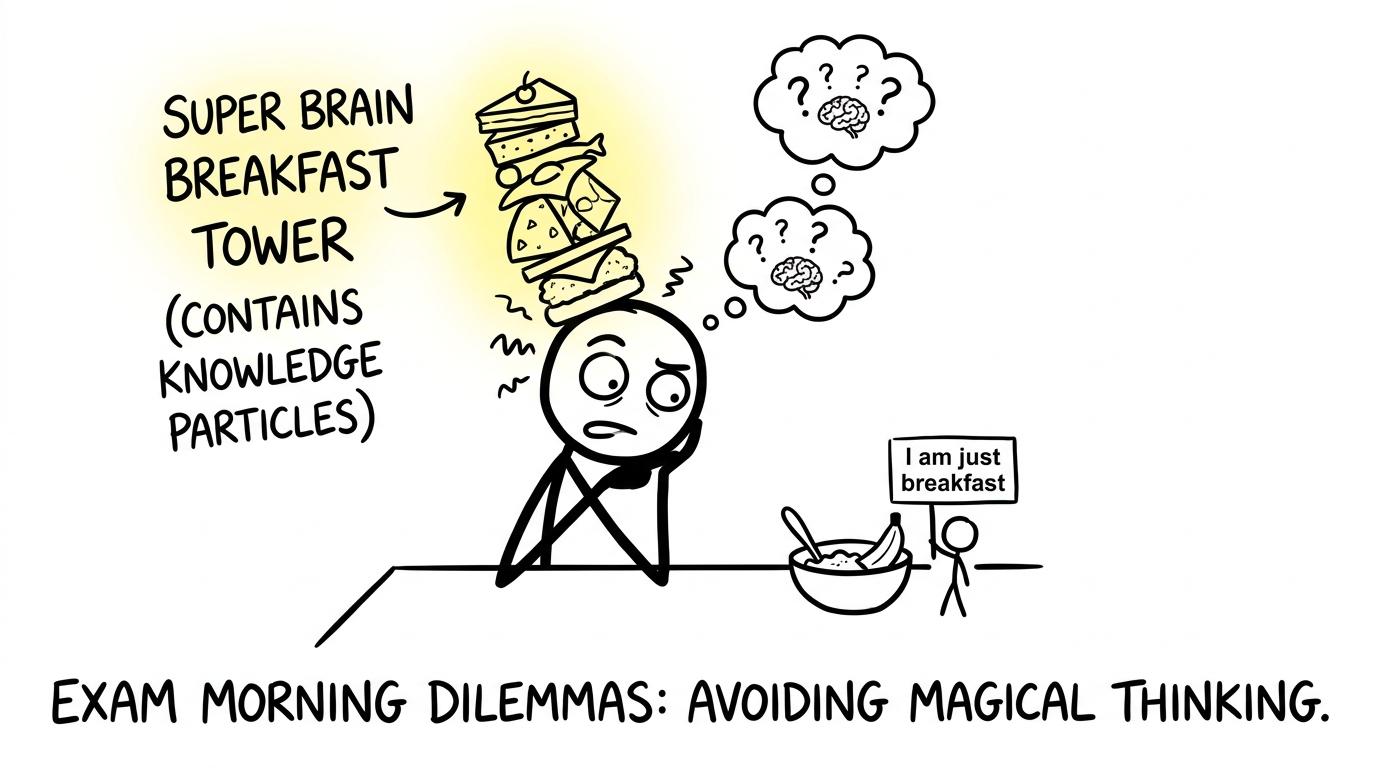 A student discovers that an ordinary breakfast does not need to advertise superpowers
What actually supports focus and steady energy?
Exam nutrition attracts confident claims because students want certainty. The research is more measured. Reviews involving children and adolescents generally suggest that eating breakfast is more helpful for short-term attention and memory than skipping it, although the effects vary and researchers cannot identify one perfect breakfast for cognition.
That distinction matters. Breakfast can help you avoid beginning a demanding morning hungry, but it cannot replace sleep, subject knowledge or exam practice.
Start with a starchy carbohydrate
The NHS Eatwell Guide recommends basing meals on starchy carbohydrates and choosing wholegrain or higher-fibre versions where possible. Before an exam, suitable choices might include:
- porridge or overnight oats;
- wholegrain or higher-fibre cereal;
- wholemeal toast, a bagel or a wrap;
- potatoes, rice or pasta before an afternoon paper.
These foods provide energy for the body. Higher-fibre choices may also help a meal feel more satisfying, although exam morning is not the moment to force down a food you dislike simply because it sounds healthier.
Add some protein
Pairing the starchy part of your meal with protein can make breakfast or lunch more substantial. Straightforward options include:
- yoghurt or milk;
- eggs;
- nut butter, provided it is safe for you and permitted at school;
- beans;
- cheese;
- tofu, fish or lean meat at lunch.
Think in pairs: toast and eggs, oats and yoghurt, or rice and beans. The goal is not nutritional perfection. It is a balanced, familiar meal that leaves you comfortable for the length of the paper.
Include fruit if you normally enjoy it
A banana, apple, berries or another familiar fruit is an easy addition. Fruit contributes to an overall balanced diet and is often convenient when nerves make a large breakfast difficult.
However, fruit is not a memory trick. You will recall an urban regeneration example because you retrieved it during revision, not because you selected a particular berry that morning.
Breakfast ideas before a morning Geography exam
Choose according to your appetite, dietary needs and normal routine. Sensible combinations include:
- porridge made with milk or a fortified alternative, topped with banana;
- wholegrain toast with scrambled or boiled eggs;
- lower-sugar cereal with milk and fruit;
- yoghurt with oats and berries;
- toast with nut butter and a banana;
- beans on toast;
- a small yoghurt, banana and piece of toast if your appetite is limited.
If you cannot manage a full meal early in the morning, eating something small is usually more realistic than demanding a perfect breakfast from yourself. You might divide it into two parts: a little at home and a familiar snack before entering school. Check when and where your school permits food.
Do not introduce a new supplement, unusually rich meal or fashionable food on the day. Familiarity is underrated. An exam already contains enough unknowns.
What to eat before an afternoon exam
An afternoon paper needs a plan too. Eat a normal breakfast, then have lunch with enough time to feel settled before the exam.
Useful lunches include:
- a wholemeal sandwich or wrap with a protein filling and salad;
- rice with chicken, tofu, beans or fish and vegetables;
- pasta with a familiar sauce and protein source;
- a baked potato with beans, tuna or cheese;
- soup with bread and yoghurt or fruit.
Avoid making lunch dramatically larger than usual. Feeling uncomfortably full can become its own distraction during a paper. At the other extreme, skipping lunch because you are nervous may leave hunger competing with your attention.
If you have two exams in one day, pack food before leaving home. Decision-making becomes harder when you are tired and surrounded by other anxious students. A prepared lunch and snack turn one uncertain moment into a routine.
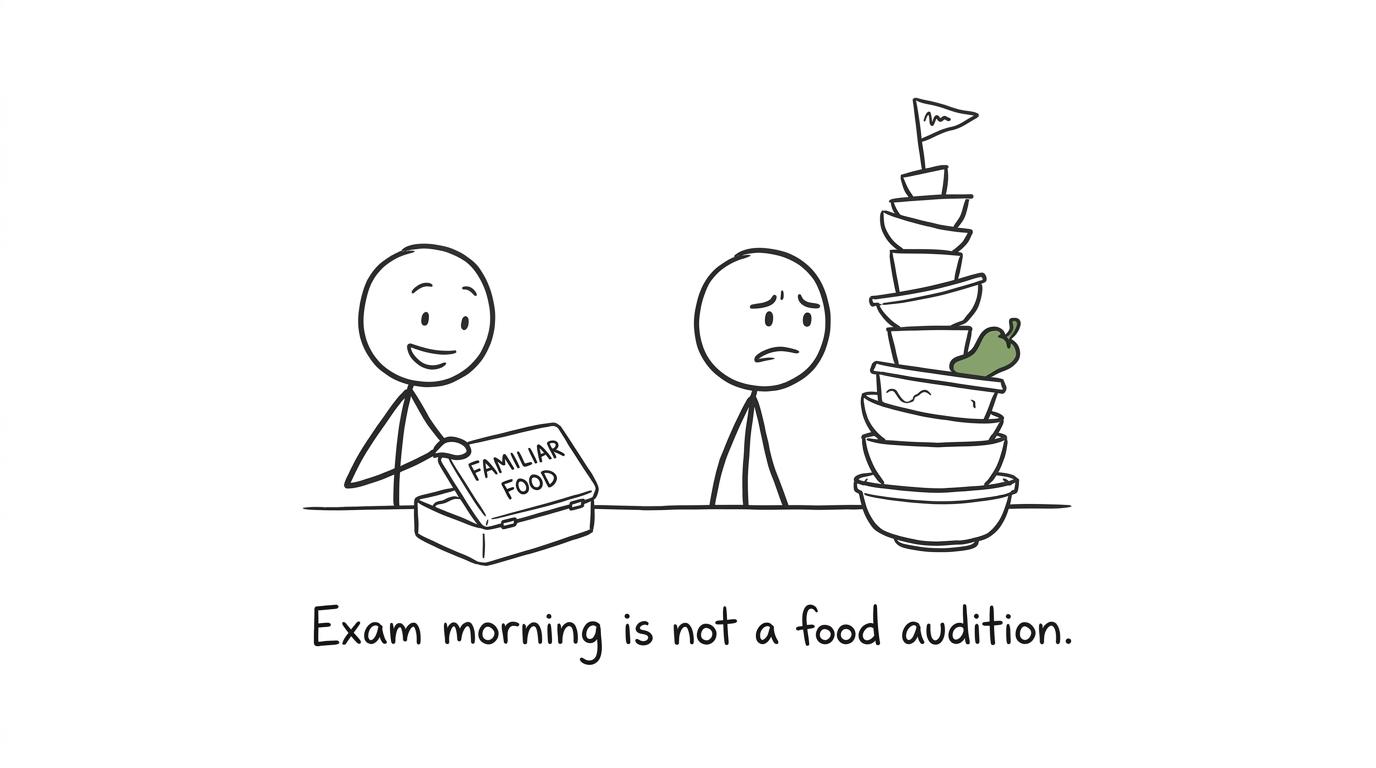 A familiar lunchbox wins a quiet contest against an experimental chilli tower
Good snacks before the exam
A snack can be useful when breakfast was early, the exam begins late or you could only eat a small meal. Options include:
- a banana, apple or easy-peel orange;
- yoghurt;
- toast;
- oatcakes or wholegrain crackers with cheese;
- a small sandwich;
- a cereal bar that you have eaten before;
- unsalted nuts, where allergies and school rules allow them.
Eat early enough that you are not rushing at the exam-room door. Food is normally restricted once formal exam conditions begin, so follow your school or college's instructions.
Students with diabetes, allergies, digestive conditions, eating difficulties or other medical requirements should follow their established clinical advice and speak to the school's exams officer about any necessary arrangements. General internet guidance should not override an individual care plan.
Hydration without overthinking it
Water supports normal physical and mental functioning, while dehydration can contribute to thirst, tiredness and headaches. NHS guidance suggests drinking regularly through the day and using pale yellow urine as a practical sign that you are likely drinking enough.
You do not need to drink an enormous bottle immediately before the exam. Overdoing it may simply make you uncomfortable or require a toilet break. Hydration is better treated as an ordinary habit across the previous day and exam morning.
JCQ rules allow centres discretion over food and drink in examination rooms. Where bottles are permitted, they generally need to be transparent with labels removed, but your school may have more specific instructions. Check in advance rather than assuming.
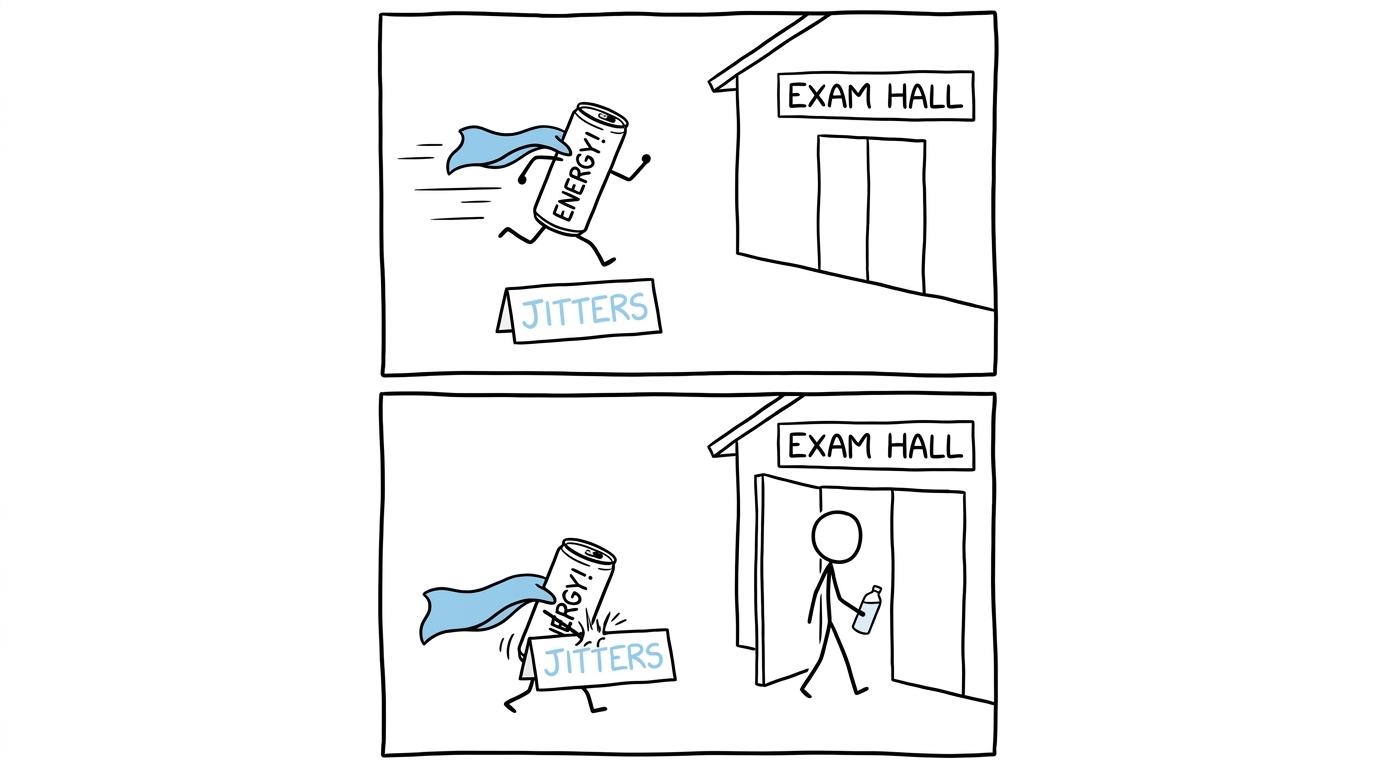 An energy drink discovers that its superhero cape is attached to a sign marked jitters
Should you have caffeine or an energy drink?
Energy drinks are a poor exam-day experiment. High-caffeine products carry warnings that they are not recommended for children, and UK guidance advises children and people sensitive to caffeine to consume it only in moderation. Caffeine may also interfere with sleep or make some people feel restless or anxious.
A large energy drink does not create knowledge. It may instead make a student who is already nervous feel more unsettled.
If you normally drink tea or coffee, suddenly changing every part of your routine may be unnecessary. Keep the amount modest and familiar, and do not use caffeine to compensate for staying awake late to revise. If you do not usually consume it, exam morning is not the time to begin.
The same principle applies beyond Geography. Before a calculator or non-calculator maths paper, calm attention is more useful than feeling artificially over-alert. The GCSE Maths night-before plan explains how to finish revision without turning the evening into an exhausting final sprint.
Food helps, but preparation carries the marks
Eating sensibly creates better conditions for thinking. It does not do the thinking for you.
For Geography, useful final preparation might mean retrieving named examples, checking command words and planning the structure of longer responses. For maths students, it means practising methods, working under time pressure and learning from mark schemes.
MathsGenie's GCSE Maths revision hub brings together free lessons, practice questions and papers for the major exam boards. If you are following Edexcel at foundation or higher tier, use the Edexcel GCSE Maths revision area to target individual topics.
Short practice can be more useful than anxious rereading. The Edexcel GCSE Maths mini tests provide focused checks without requiring the energy of a full paper. When you are ready for longer practice, the MathsGenie past-paper library helps you work with papers and official mark schemes.
Common mistakes before a GCSE exam
Searching for a miracle food
No breakfast can guarantee focus, recall or a particular grade. Use ordinary food to meet ordinary needs, then rely on your revision.
Skipping food because nerves reduce your appetite
If a full meal feels difficult, try a smaller familiar option rather than treating breakfast as all or nothing. Persistent nausea, anxiety or difficulty eating deserves support from a parent, carer, school or healthcare professional.
Eating something completely unfamiliar
A new smoothie, supplement or unusually spicy breakfast adds uncertainty without offering a proven exam advantage. Choose food that you know suits you.
Using caffeine instead of sleep
A late-night revision session followed by an energy drink is not an efficient exchange. Sleep supports attention and memory, while caffeine can disturb sleep and increase restlessness in some students.
Forgetting the practical details
Prepare breakfast ingredients, lunch, a snack and your permitted water bottle beforehand. Do the same with your equipment. Maths students can also use the GCSE one-week revision plan or build a longer routine with the GCSE maths revision timetable.
A calm plan for exam morning
The best pre-exam meal is rarely impressive. It is predictable. You wake with enough time, eat something familiar, drink normally and arrive without having turned breakfast into another test.
For Geography, that leaves your attention available for case studies, fieldwork, data and extended writing. For maths, it leaves you ready to read carefully, show your method and collect the marks you have practised earning.
Once breakfast is planned, return to the work that changes performance most. Use MathsGenie's free revision lessons to repair weak topics, practice questions and mini tests to develop accuracy, and past papers, predicted papers, mark schemes and video solutions to rehearse the real task. A sensible meal supports the student walking into the room. Consistent practice prepares the answers they will write.










