

What GCSE Reform Means for SEND Students
What GCSE reform means for SEND students now, including timelines, exam access, maths changes and the practical questions parents should ask schools today.
Updated: 3 November 2026
GCSE reform does not change the exams that current Year 10 and Year 11 students are preparing to sit. That is the definitive answer for a parent asking what GCSE reform means for SEND students today: your child should continue learning the current GCSE Maths specification while their school maintains any appropriate support and exam access arrangements.
The nuance is about what comes later. Following the Curriculum and Assessment Review, the government plans to introduce a revised national curriculum from September 2028 and begin teaching updated GCSEs from 2029 or 2030. Accessibility is meant to be considered as those qualifications are designed, rather than added as an afterthought.
For families, that is encouraging but not yet a promise of a particular paper format, reduced syllabus or specific adjustment. Many important details remain to be developed by the Department for Education, Ofqual and awarding organisations.
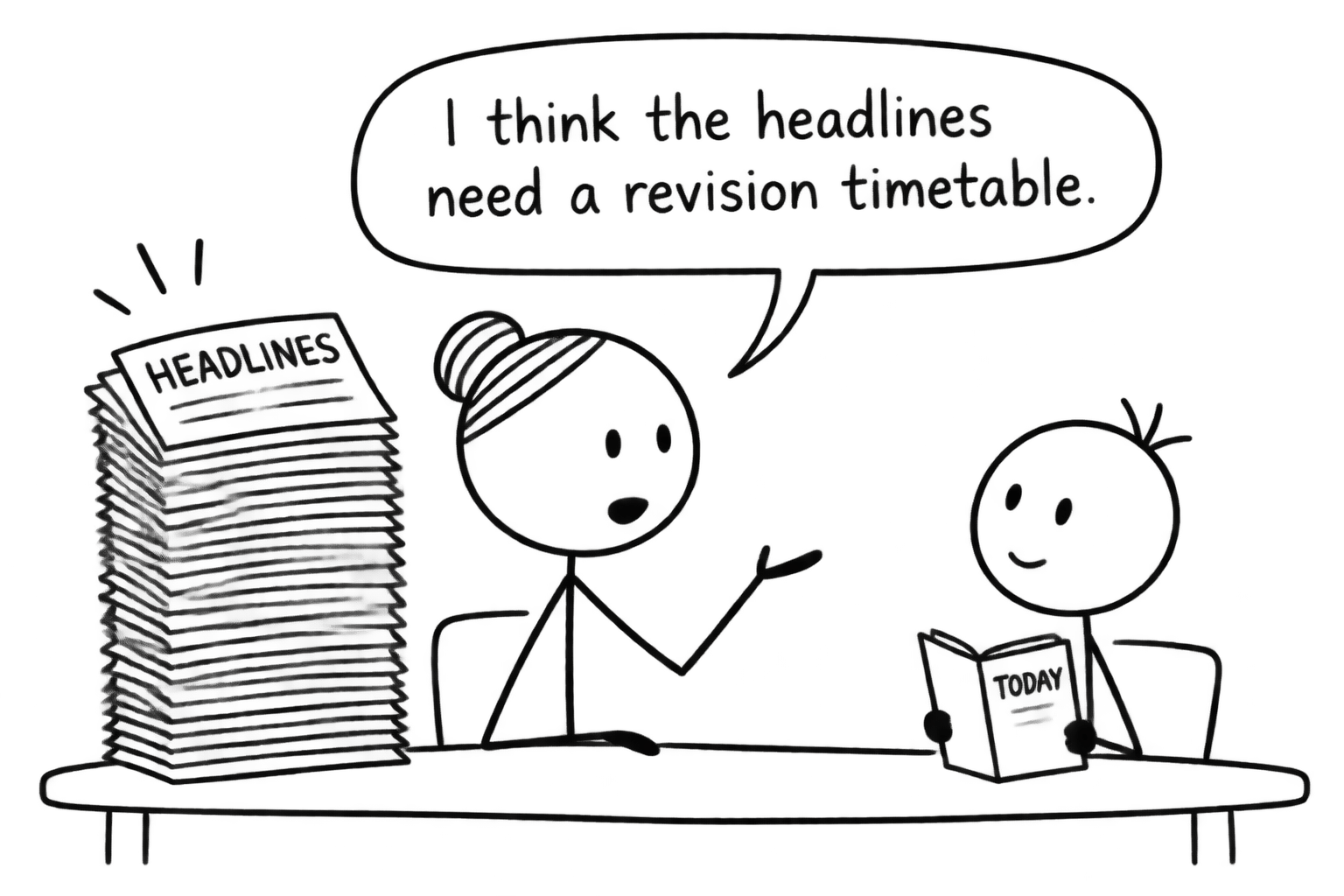 A parent discovers that education headlines may need their own revision timetable
The position at a glance
Here is what parents need to know in November 2026:
- Current GCSE Maths students remain on the existing specification.
- The government intends to publish the final revised national curriculum by spring 2027.
- First teaching of the revised national curriculum is planned for September 2028.
- Updated GCSEs are expected to be phased in, with some beginning first teaching in 2029 and others in 2030.
- The Curriculum and Assessment Review recommended building accessibility into new GCSE specifications from the start.
- Reasonable adjustments and access arrangements remain relevant under the current system.
- No confirmed reform removes the need to prepare for the current Foundation or Higher tier papers.
Parents can check the content being taught now through the GCSE Maths revision hub, which covers the current specifications for Edexcel, AQA, OCR, Eduqas, WJEC and CCEA.
What has actually been announced?
The Curriculum and Assessment Review final report was published in November 2025. The government accepted the broad case for updating the curriculum while retaining the main architecture of GCSEs, A Levels, subjects and key stages.
This distinction matters. Reform does not mean GCSEs are being abolished. Nor does it mean that all specifications will change simultaneously.
The government response set out a staged timetable. A revised national curriculum is intended for first teaching in 2028. Updated GCSEs should follow from 2029 onwards, with some subjects beginning in 2029 and the remainder of the first phase in 2030. Which timetable will apply to GCSE Maths must be confirmed through the detailed development process.
That means a child sitting GCSE Maths before a revised qualification is introduced should prepare for the present course. Parents can use the GCSE Maths topics by exam board and tier to separate confirmed current content from speculation about future GCSE maths changes.
Why SEND was part of the review
The Review identified assessment accessibility for students with SEND as a recurring concern in its call for evidence. It noted that barriers can arise from both subject content and assessment design, including the amount students are expected to remember.
Its recommendation was that the Department for Education, Ofqual and awarding organisations should work together to build accessibility into new GCSE, AS and A Level specifications. The government response agreed that accessibility implications should be considered throughout qualification development.
This is significant because there are two different questions:
- Is the assessment designed to be accessible to as many students as possible?
- What individual reasonable adjustment does a particular disabled student need?
Better design may reduce avoidable barriers for everyone. It does not remove the need for individual arrangements where a student would otherwise be substantially disadvantaged. It also does not change the mathematical knowledge or skill that the qualification is intended to assess.
What GCSE reform means for SEND students now
For a current GCSE student, the practical answer is continuity. Schools should teach the current specification, decide the appropriate tier and identify support based on the individual student rather than waiting for future reform.
A SEND label does not automatically produce one standard package of exam arrangements. Needs differ. Any arrangement must be appropriate to the student and must not change the skill being assessed. Schools and colleges manage applications and evidence through the relevant awarding-body and Joint Council for Qualifications processes.
Parents should ask the school four direct questions:
- Which exam board and tier is my child following?
- What support is their normal way of working in lessons and internal assessments?
- Which access arrangements are being considered or approved for formal exams?
- When will these arrangements be tested in timed mocks?
The third question is important, but the fourth often reveals more. An arrangement may be approved on paper yet still require practice. A student needs to know how to use their available time, when to move on and how to check an answer without becoming trapped in a cycle of rereading.
A practical preparation plan for GCSE Maths
Reform can make parents feel that the target is moving. For current students, it is not. The most useful response is to make the existing course more predictable.
Confirm the course
Ask the school for the exam board, tier and examination entry. Foundation and Higher papers differ in content and available grades, so revision resources should match the intended entry. The Edexcel GCSE Maths revision page, for example, organises current Edexcel material by topic and grade.
Break learning into small sequences
Students who experience difficulties with working memory, attention or processing may find a long mixed worksheet overwhelming. A clearer sequence is:
- revisit one method;
- answer a small set of focused questions;
- check the method carefully;
- return to the topic after a short gap;
- introduce mixed exam questions once the skill is secure.
The aim is not to make the maths less ambitious. It is to reduce unnecessary cognitive clutter so that the student can concentrate on the mathematical decision.
The best order for learning GCSE Maths topics can help parents identify prerequisite skills before a student moves into more connected problems.
Rehearse the real exam routine
Use mocks and timed practice to test the whole routine, not merely the answers. Consider seating, breaks where approved, use of equipment, reading demands and how the student responds when they cannot begin a question.
Start with short, manageable sessions before building towards longer papers. The 20-minute GCSE Maths revision routine offers a repeatable structure without turning every evening into a full mock examination.
Once this routine is clear, use Maths Genie Lessons for the current specification to give each short session a defined topic and progression towards exam-style questions.
What parents should not assume
Do not assume reform changes this summer's paper
Government announcements about future qualifications do not alter a current specification. Until an updated GCSE is formally developed and introduced, revision should follow the course named by the school.
Do not assume SEND means lower expectations
Accessible teaching removes barriers; it does not begin from the belief that a student cannot succeed. The right tier and target should reflect attainment, evidence and the student's needs, not a general assumption attached to a diagnosis.
Do not wait until the final term to discuss access
Schools need time to understand a student's usual way of working, gather relevant evidence and follow the required process. Parents should raise concerns with the SENDCo, subject teacher or examinations officer early.
Do not confuse access arrangements with easier questions
Reasonable adjustments are intended to let a disabled student demonstrate the knowledge and skills required by the qualification. They are not designed to make the mathematical standard easier.
Do not revise an imagined future syllabus
Headlines naturally focus on change. Your child earns marks from the specification in front of them. Check the exam board, tier and topic list before buying materials or creating a revision schedule.
What may improve under future GCSE reform
The direction of policy is clearer than the eventual detail. Accessibility should be considered during the design of updated specifications, including the relationship between curriculum content, assessment and classroom learning. The government also intends to make the overall volume of GCSE assessment more manageable while retaining rigour.
However, parents should be cautious about claims that SEND students will receive a particular new paper structure, shorter GCSE Maths exams or automatic arrangements. Those details require qualification development, consultation and regulatory decisions. At the date of this article, they should not be treated as settled facts.
The sensible approach is to watch three milestones: publication of the revised national curriculum, confirmation of which GCSE subjects enter each phase, and consultation on individual qualification content and assessment arrangements.
Keep the current target visible
A parent cannot control the pace of national reform. They can help make the present course calmer and more legible: one confirmed specification, one suitable tier, one agreed set of support arrangements and one topic at a time.
Knowing the plan is different from following it consistently, especially when SEND creates additional demands around attention, processing or confidence. Start with the specification your child will actually sit, then build steady familiarity before the fixed exam dates arrive. Open Maths Genie Lessons for the current specification and start the next confirmed topic.















