

Switch Exam Board GCSE French: Mid-Course Guide
Switch exam board GCSE French with less disruption. Learn what changes, what stays the same and how to adapt your revision plan before the exams.
A change of exam board can make a familiar course suddenly feel unfamiliar. The vocabulary is still French, but the paper names, speaking tasks and specification headings may no longer match your notes.
If your school plans to switch exam board GCSE French partway through the course, the short answer is yes, it is usually possible. However, the decision and examination entry are managed by your school, not by individual students. Your teachers and exams officer must ensure that you study the new specification, enter the correct tier and complete every required assessment with the same awarding organisation.
The language knowledge you have already built is not wasted. The task is to identify the differences between the specifications early enough to close the gaps calmly.
Your immediate checklist
If a change has been announced, find out:
- the old and new exam boards;
- the exact GCSE French specification code;
- whether you are taking foundation or higher tier;
- when the change takes effect;
- which vocabulary, grammar and themes you have already covered;
- how the new listening, speaking, reading and writing tasks are structured;
- which sample assessment materials your teacher will use;
- whether your mock examinations will follow the old or new format.
Do not rely on a classmate's guess or an old revision guide. Ask your French teacher for the current specification and ask the exams officer to confirm your final entry.
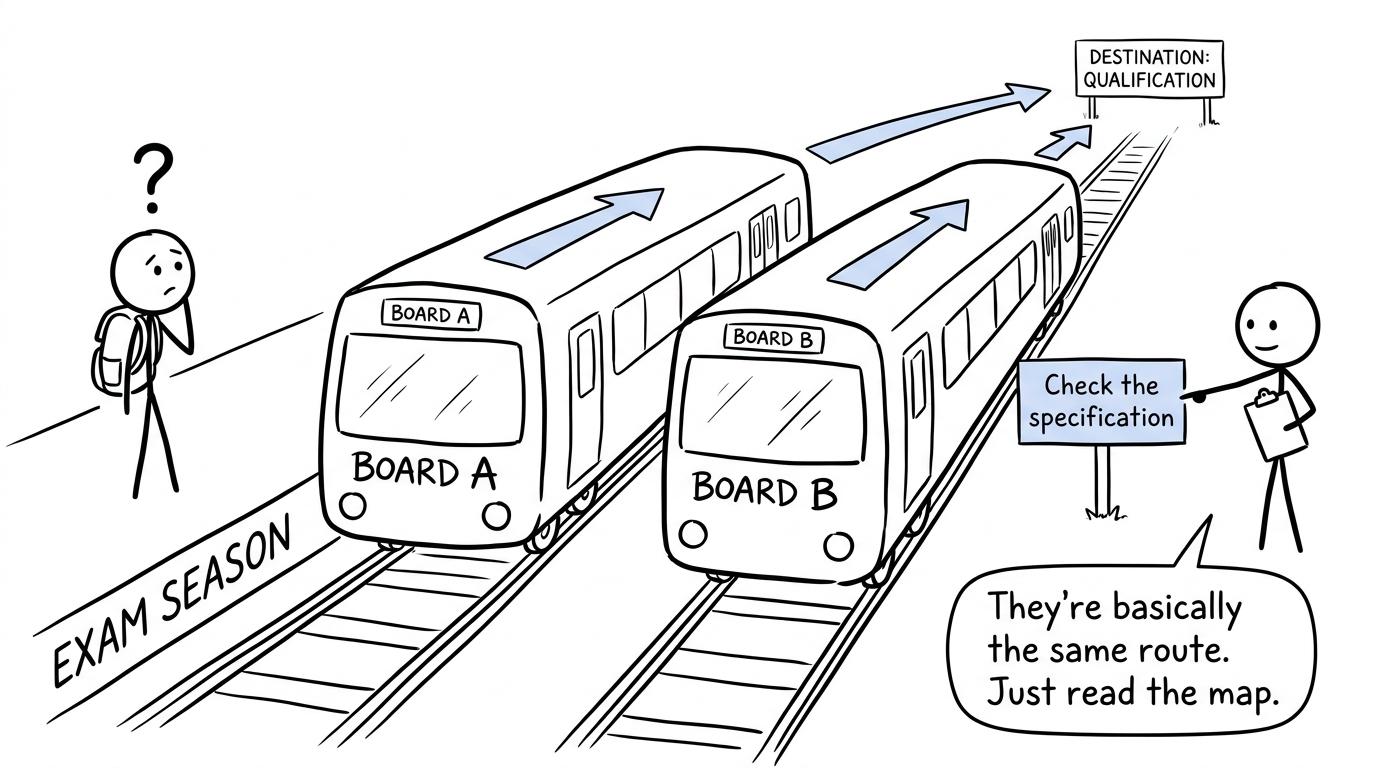 A student choosing between two exam-board trains while a teacher points towards the specification
Can a school switch GCSE French exam board mid-course?
Schools can choose which awarding organisation they use and can change that choice between or during teaching cycles. In England, current GCSE French specifications include qualifications from AQA, Pearson Edexcel and WJEC Eduqas. OCR is a major GCSE board in subjects such as maths, but students should not assume that every familiar board currently offers every subject.
A school considering a switch normally compares specifications, teaching resources, assessment formats and administrative requirements before making the final entry. The exams officer then registers or enters candidates using the correct qualification and tier codes.
There are two important limits.
First, GCSE French is a linear qualification. For the reformed specifications taught from September 2024 and first assessed in summer 2026, students complete the required assessments at the end of the course. You cannot normally combine a speaking result from one board with listening, reading and writing papers from another.
Second, JCQ regulations prevent a centre from entering a candidate for the same subject at the same level with multiple awarding bodies in the same examination series. A switch therefore means replacing one route with another, not keeping both available as backups.
Entry and amendment deadlines also matter. Late changes can create fees, material-ordering problems or administrative complications, so any uncertainty should go to the school's exams officer immediately.
What stays the same after the switch?
A board change feels larger than it is because students see the front cover before they see the shared curriculum underneath.
The Department for Education sets common GCSE French subject content, while Ofqual sets the assessment objectives. The current specifications therefore develop the same broad language abilities:
- understanding spoken French;
- speaking clearly and responding to others;
- understanding written French;
- writing accurately for a purpose;
- applying prescribed vocabulary and grammar;
- translating between French and English;
- recognising sound-symbol relationships and completing dictation tasks.
All current GCSE French specifications assess listening, speaking, reading and writing. Each component contributes 25%25\%25% of the qualification, although the exact task design, raw marks, timings and paper order can differ.
The grammar you have learnt also remains useful. Verbs do not change because a logo changes. Accurate tense formation, adjective agreement, negatives, opinions, reasons and question forms remain central to effective communication.
This is similar to changing maths boards. Edexcel, AQA, OCR and Eduqas draw on common national maths content, but organise and assess it differently. MathsGenie's guide to GCSE maths topics by exam board and tier explains that useful distinction: the underlying knowledge is transferable, while paper familiarity still matters.
What may change between GCSE French exam boards?
The details deserve careful attention. A student can know plenty of French yet lose confidence if an unfamiliar task appears in a mock.
Paper structure and timings
Boards may assign different paper numbers to speaking, listening, reading and writing. Examination lengths and raw marks can also vary. Do not memorise the old timetable or assume that “Paper 1” means the same skill after the switch.
Create a one-page summary containing the new component order, duration, marks and task types. Use the latest specification rather than an older paper from a previous qualification.
Speaking assessment format
Current speaking assessments commonly involve tasks such as reading aloud, role play, discussion of visual material and unprepared conversation. The order, prompts, preparation rules, timings and mark allocation can differ between boards.
This is often the area requiring the most deliberate adjustment because speaking performance depends partly on routine. Ask your teacher to rehearse the exact sequence used by the new board, including what you may write during preparation and how the transitions between tasks work.
Themes and vocabulary organisation
The national subject content creates substantial overlap, but boards can organise contexts under different theme names. Their prescribed vocabulary lists and the way they present grammar requirements may also differ.
Compare lists rather than restarting the course. Mark each item as:
- already secure;
- covered but uncertain;
- genuinely new;
- moved to a different theme;
- required only at your tier.
Question wording and mark schemes
One board may phrase instructions or divide marks differently from another. Translation length, writing prompts, dictation presentation and visual-stimulus questions may not look identical.
Sample assessment materials are especially valuable for the reformed qualification because the first assessments began in 2026. Your teacher should use current materials and official mark schemes, not simply rename an old-board worksheet.
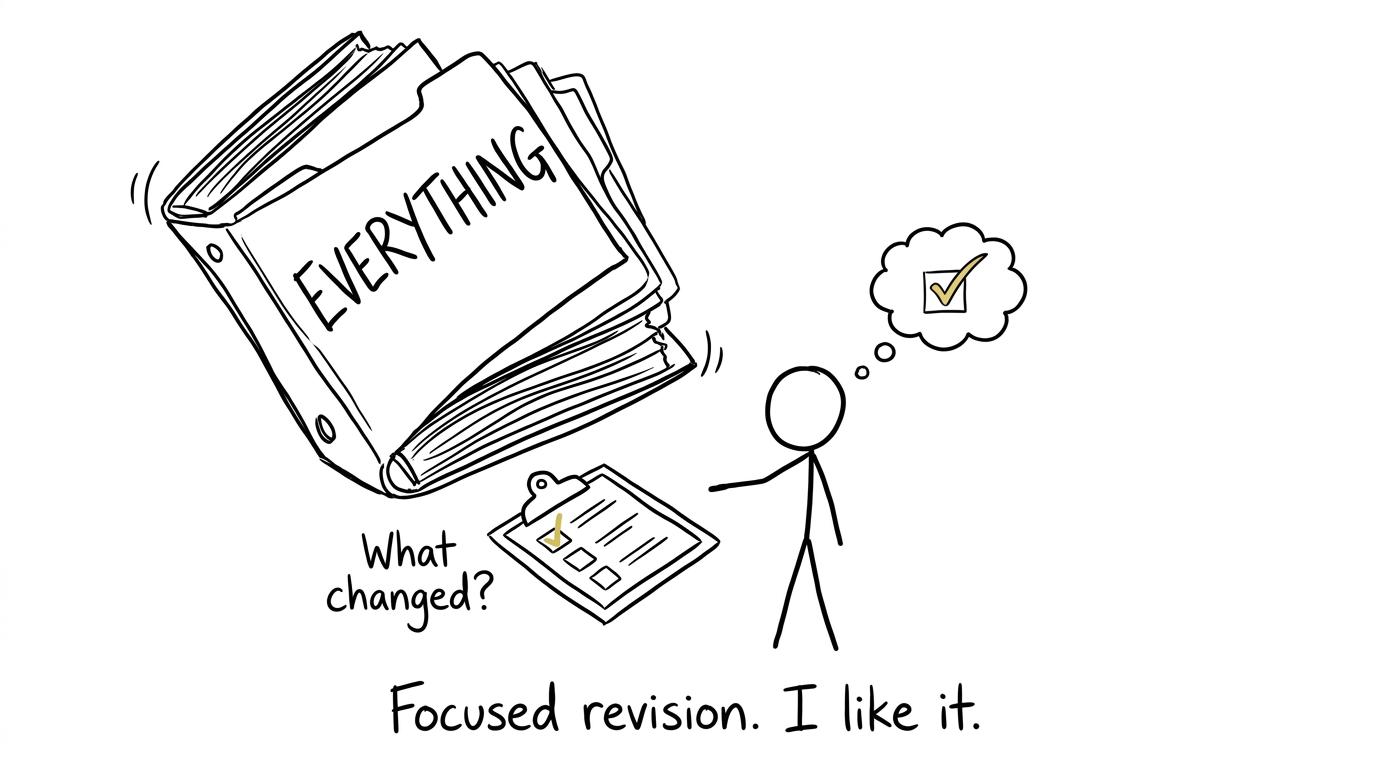 A student ignores an enormous everything folder and chooses a small checklist asking what changed
How to adjust your revision without starting again
The worst response is to discard every old note. The second worst is to continue unchanged. A better approach separates transferable knowledge from board-specific technique.
Build a specification gap map
Place the old and new specifications beside each other. Your teacher may already have a switching guide or comparison document from the awarding organisation.
Compare:
- prescribed vocabulary;
- grammar by tier;
- thematic contexts;
- speaking tasks;
- translation requirements;
- dictation expectations;
- writing lengths and prompts;
- paper timings.
Focus revision on genuine differences. A shorter list creates better decisions than a folder labelled “revise everything”.
Rehearse the new format early
Begin with untimed sample tasks so you can learn the instructions. Then introduce realistic preparation and examination timings. Finally, complete full components under controlled conditions.
This progression applies equally to maths. MathsGenie's article on when to start GCSE past papers shows why short diagnostic work should normally come before repeated full papers.
Keep French and maths revision separate but coordinated
A French board change can consume attention that was meant for other GCSEs. Protect your maths routine instead of allowing one disrupted subject to take over the week.
Start from the GCSE Maths revision hub, confirm your own maths board and preserve a regular paper-and-feedback cycle. Edexcel students can use the Edexcel GCSE Maths revision area, while OCR students can work from the OCR GCSE Maths revision hub.
A manageable weekly pattern might include French vocabulary retrieval, one new-board French task, targeted maths practice and one timed maths section. The aim is not to give every subject equal time each day. It is to stop an unexpected change from quietly removing another subject from your plan.
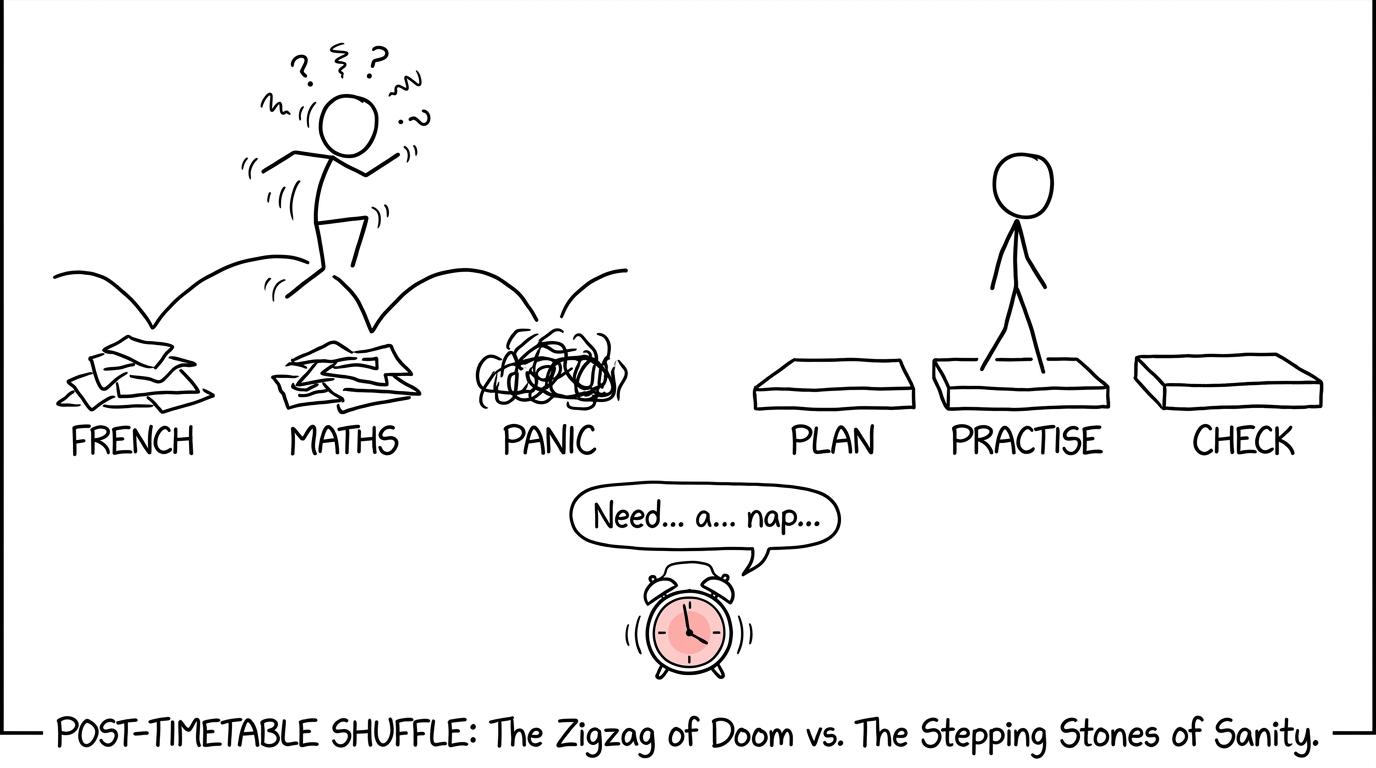 One student zigzags between French maths and panic while another follows plan practise and check stepping stones
Questions to ask your teacher and exams officer
Do not leave the meeting with only “we are changing boards”. Ask for practical answers:
- Which qualification and specification code will appear on my entry?
- Which tier will I take across all four components?
- Which old topics map directly onto the new specification?
- What content has not yet been taught?
- When will we practise the new speaking format?
- Which sample papers are valid for my examination series?
- Will upcoming mocks use the new board?
- Has the exams officer confirmed the entry and amendment deadlines?
Tier deserves particular attention. GCSE French uses foundation and higher tiers, and all components must be taken at the same tier. Foundation normally makes grades 111 to 555 available, while higher normally covers grades 444 to 999, with the regulated higher-tier safety-net arrangements applying near the lower boundary. Your school should base the decision on evidence rather than treating the board change itself as a reason to move tier.
Common mistakes after an exam-board change
Assuming all papers are interchangeable
Shared subject content does not make paper formats identical. Use the new board's current sample materials and specification.
Buying resources before confirming the code
An attractive revision guide may cover an old specification or a different awarding organisation. Confirm the code first.
Relearning everything from the beginning
Most language knowledge transfers. Diagnose missing vocabulary, grammar and task experience rather than restarting Year 10.
Ignoring the speaking assessment
Students often focus on written papers because they are easier to practise alone. Yet speaking contributes a substantial part of the qualification and has board-specific procedures.
Letting the change disrupt maths revision
Keep using resources matched to your maths board. AQA students can practise with AQA GCSE Maths past papers and mark schemes, while short GCSE Maths Target Tests can protect regular practice when time is limited. If you are unsure what genuinely changes between boards, read the Edexcel versus AQA GCSE Maths comparison.
Waiting for the next mock to discover the differences
A mock should test your preparation, not reveal the basic format for the first time. Request a specification comparison and sample tasks as soon as the switch is confirmed.
Turn the change into a controlled plan
Switching GCSE French exam board mid-course is possible, but it must be managed by the school and completed with close attention to specification coverage, tier entry, assessment format and administrative deadlines. You should not be entered with two boards for the same GCSE French series, and components from different boards cannot simply be assembled into one result.
The reassuring part is that your previous learning still has value. Keep the vocabulary and grammar you know, map the genuine gaps and practise the new task formats until they stop feeling new.
Then protect the rest of your GCSE preparation. Use MathsGenie as your free maths revision base: learn through revision lessons, answer practice questions, check mark schemes and video solutions, diagnose gaps with mini tests, and build examination confidence through past papers and predicted papers. A board change may alter the route, but a clear revision system keeps the destination in sight.










