Send GCSE Geography Result to Sixth Form: Guide
Send GCSE Geography result to sixth form or college correctly. Learn what evidence to provide, how results are checked and what to do if delayed.
The exam is over, the grade is finally on the page, and then a surprisingly practical question appears: who tells your new sixth form or college?
If you need to send GCSE Geography result to sixth form, the short answer is that you will usually provide the result yourself during online or in-person enrolment. Follow the provider's instructions and use your school-issued Candidate Statement of Provisional Results, ideally printed on school letterheaded paper or carrying the school's stamp or logo. Your Geography grade will normally appear alongside your other GCSE results rather than being sent separately.
Do not assume that the exam board, your current school or an application system has automatically confirmed the grade. Some providers can verify results through education records or by contacting your school, but each sixth form and college controls its own evidence and enrolment process.
Your results-sharing checklist
Before results day, make sure you know:
- how your school will issue your GCSE results;
- whether your sixth form or college wants an upload, email or original document;
- your enrolment date, deadline and applicant reference;
- whether identification is required;
- the exact Geography grade required for your course;
- whom to contact if the result is missing or delayed;
- whether someone else can collect documents for you if you are away.
For the June 2026 examination series, GCSE results are released to candidates on Thursday 20 August 2026. Schools and exam centres receive the data under restricted release on the previous day, but they cannot disclose it to students early. Your own school decides its collection time and method, so use its instructions rather than assuming every school follows the same timetable.
MathsGenie's GCSE results day timeline explains how the period from results morning to enrolment usually unfolds.
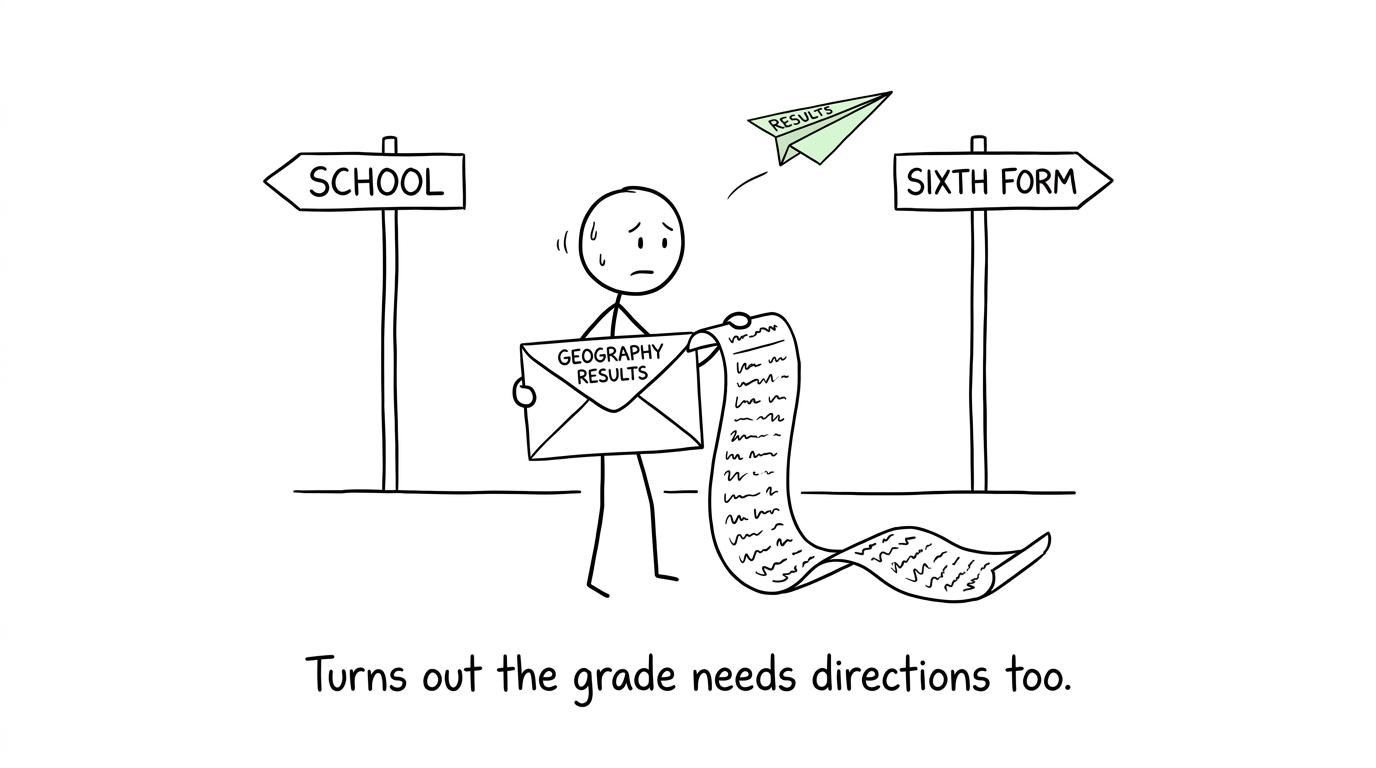 A GCSE result finding its way from school to sixth form
How your GCSE Geography result reaches your school
Your Geography paper may have been assessed by AQA, Pearson Edexcel, OCR, Eduqas or another recognised awarding organisation. Once marking, quality assurance and grade awarding are complete, the awarding organisation sends results securely to the school or exam centre that entered you.
Authorised staff receive an electronic results file. They use it to prepare the document you receive on results day. Awarding organisations do not normally post an individual paper results slip directly to each student.
Your document is commonly called a Candidate Statement of Provisional Results. It may contain results from several exam boards if your school uses different boards for different subjects. Geography should therefore sit on the same statement as subjects such as maths, English and science, even when those qualifications were awarded by different organisations.
The word provisional matters. Results can change following a correction or post-results service. Your certificate, issued later, is the final record of the qualification. For immediate sixth-form or college enrolment, however, providers commonly work from an endorsed provisional statement.
How to send GCSE Geography result to sixth form
The safest method is to follow the instructions in your offer email, applicant portal or enrolment letter. Providers do not all use the same process.
Uploading the result online
If the sixth form or college has an applicant portal, scan or photograph the complete results statement. Make sure that:
- your name is visible;
- the Geography subject, grade and awarding details are readable;
- no edge of the document has been cut off;
- the file uses an accepted format;
- you upload every page if the statement has more than one page.
Keep the original document. Save the upload confirmation or take a screenshot of the completed portal page.
Taking evidence to enrolment
For face-to-face enrolment, take the original results statement and a clear copy if requested. JCQ guidance recommends that provisional results supplied to sixth forms or further education colleges are printed on school letterheaded paper and/or stamped with the school's name and logo. The statement should also include your Unique Candidate Identifier because this supports future examination entry and enrolment.
A sixth form may inspect the document and return it, while a college may ask to retain or scan a copy. Bring any identification and application details named in your enrolment instructions.
Sending the result by email
Only email your results if the provider has told you to do so. Use its official admissions address, put your full name and applicant reference in the message, and attach a clear scan rather than an edited image.
GCSE results are personal information. Avoid posting the full statement publicly or sending it through an unofficial social media account. The document may contain identifiers that do not need to be shared widely.
Can the result be transferred automatically?
Sometimes a provider can access or verify education data, but you should not build your plans around an assumed automatic transfer.
In England, the DfE Education Record app is being introduced for Year 11 pupils who have been issued an education record through their school. Where available, the app can receive qualification updates and allow a student to respond when a sixth form, college or training provider requests access to information.
It is an additional route, not a replacement for your school's results process. If app information is delayed, incomplete or different, use the results statement supplied by your school and speak to the school immediately. Students who have not been issued an education record through their school cannot simply create the full record independently on results morning.
A Personal Learning Record may also contain regulated qualifications, but it should not be treated as the fastest solution to a same-day enrolment problem. Access requests can take time, and not every qualification or record will necessarily appear. Your school-issued statement is usually the most practical evidence on results day.
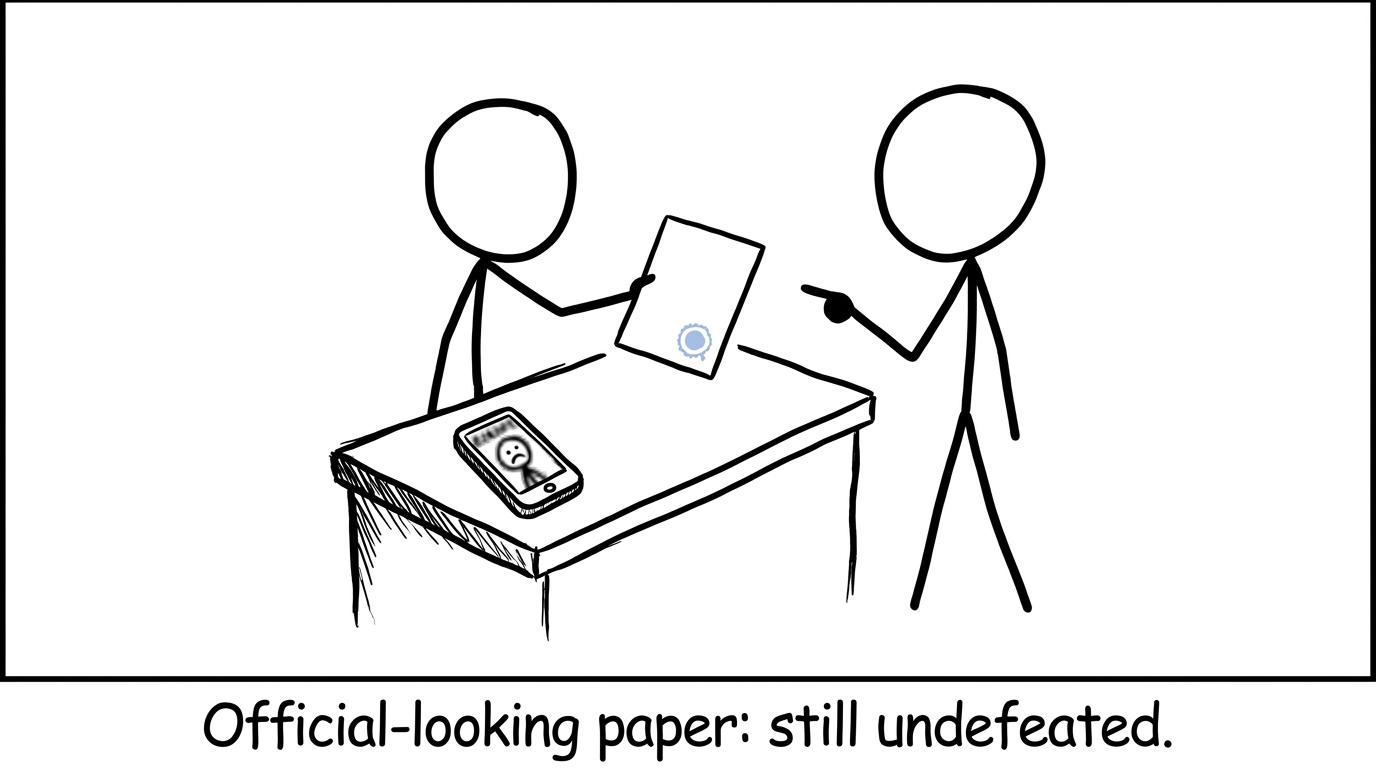 A clear school results slip wins at college enrolment
What to do if your Geography result is delayed or missing
A missing grade can feel like the whole application has stopped. Usually, the useful response is not to guess what happened but to create a clear line of communication between your exam centre and the provider.
Contact your school's exams officer
If Geography is absent from the statement or marked as pending, speak to your exams officer immediately. Do not contact the exam board first unless the school directs you to do so. The centre holds the entry information and can investigate whether there is a pending result, data issue or another reason that no grade has been issued.
Ask the exams officer:
- what status appears in the official results system;
- whether the result is genuinely pending or missing from the printout;
- when an update is expected;
- whether the school can give written confirmation to admissions;
- who will contact you when the issue is resolved.
Record the name of the person you spoke to and any promised update time.
Tell the sixth form or college promptly
Contact admissions before the enrolment deadline. Explain that your Geography result is awaiting confirmation, provide the grades that are available and ask what temporary evidence the provider will accept.
A sixth form or college might contact your school, hold the application while evidence is checked, or ask you to attend enrolment with the documents already available. That decision belongs to the provider, so do not promise yourself a particular outcome. Early, accurate communication gives staff more room to help.
If other grades also affect your offer, the college applications after GCSE results guide sets out how to compare your results with the conditions and contact admissions clearly.
What if the grade is lower than the entry requirement?
Sending the result and meeting the condition are separate matters. If Geography is required for a particular A Level or study programme and your grade is lower than requested, contact the provider rather than deciding that your place has automatically disappeared.
State:
- the course you applied for;
- the required grade;
- the grade shown on your statement;
- your applicant reference;
- any enrolment deadline approaching.
The provider may confirm the original programme, discuss an alternative subject or course, or decline the place. Entry policies and available spaces vary, so only its admissions team can give a reliable answer.
If the result looks seriously unexpected, ask your school about the available post-results services and their deadlines. A clerical re-check and a review of marking are different processes, and a review can cause a mark or grade to go down, stay the same or go up. Your school must explain the relevant option and obtain the necessary consent before making a request.
Common mistakes when sharing GCSE results
Assuming the Geography grade is sent separately
It normally appears within your complete GCSE results statement. Unless admissions specifically asks for one subject only, provide the complete evidence requested.
Sending only a cropped screenshot
A screenshot may hide your name, the qualification details or evidence that the statement came from your school. Send a complete, clear document and use a centre-endorsed copy when requested.
Waiting for an automatic confirmation
A conditional offer does not always convert into enrolment without action. Check your portal, attend the appointment and respond to messages. The GCSE results day 2026 guide can help you prepare for the morning.
Contacting the exam board before the school
Your school or exam centre is the first point of contact for missing results, post-results services and certificates. It can identify your entry and communicate through the correct awarding-organisation channels.
Losing the provisional statement or certificates
Keep the statement in a folder and save a secure digital copy. Collect your final certificates when your school makes them available and store them safely. Replacing evidence later can involve an application to the awarding organisation and a fee.
Forgetting that maths may affect enrolment too
Even when Geography is the result on your mind, many post-16 programmes also specify conditions involving GCSE English and maths. Read the whole offer rather than checking one subject.
If maths needs further work, begin with the free GCSE Maths revision hub. Students considering another attempt can also use the GCSE maths resit revision plan to turn the result into a focused next step.
Prepare for enrolment while you prepare for exams
Administrative preparation is small, but it reduces pressure at exactly the moment when decisions arrive quickly. Create one folder for your offer, enrolment instructions, identification, school contact details and results documents. Check it before results day.
Then return your attention to the work you can still influence.
For maths, use the GCSE revision timetable guide to organise topics around your actual weaknesses. Build understanding with revision lessons and practice questions, then test it with Edexcel GCSE Maths past papers or the correct board-specific resources. Nearer the exams, GCSE predicted papers can provide fresh timed practice alongside official papers.
A clear result needs a clear next action
Your GCSE Geography result does not usually travel alone from an exam board to your chosen provider. It reaches your school first, appears on your Candidate Statement of Provisional Results, and is then shared according to the sixth form or college's enrolment instructions. If it is delayed, contact the exams officer and admissions team promptly, keep written records and provide the strongest evidence currently available.
That is the practical side handled. For the grades still ahead, make MathsGenie your free revision base: learn through focused revision lessons, practise with exam questions and mini tests, and build confidence using past papers, predicted papers, mark schemes and video solutions. Open the GCSE Maths revision resources, choose your board and tier, and make the next revision session specific enough to count.