GCSE English Language Tutoring Cost: UK Guide
GCSE English Language tutoring cost explained: compare UK hourly rates, overall budgets, tutor credentials and when private tuition may be worth paying for.
The price on a tutor’s profile tells you what an hour costs. It does not tell you what that hour will change.
That distinction matters when you are comparing GCSE English Language tutoring cost across the UK. A realistic starting point in 2026 is roughly £20 to £50 per hour, with many established tutors charging around £30 to £40. Less experienced tutors may charge below this range, while qualified teachers, examiners and specialist tutors can charge £50 to £80 or more.
Yet the hourly rate is only the first question. The better question is whether the tutor can identify why marks are being lost, teach the relevant exam-board skills and make independent practice more effective.
GCSE English Language tutoring cost at a glance
Use these figures as broad market ranges rather than fixed national prices. Published marketplace data varies because platforms include different tutor types, locations and fee structures.
| Type of tuition | Typical hourly price | What you may find |
|---|---|---|
| Student or new tutor | £15 to £25 | Lower-cost support, often with less teaching experience |
| Established online tutor | £25 to £45 | One-to-one lessons, digital annotation and exam practice |
| Established face-to-face tutor | £30 to £50 | In-person support, sometimes including travel costs |
| Qualified English teacher | £40 to £60 | Classroom experience and detailed specification knowledge |
| Examiner or senior specialist | £50 to £80+ | Advanced mark-scheme insight and targeted exam preparation |
| Small-group tuition | £10 to £30 per student | Lower individual cost but less personal lesson time |
A sensible checklist before booking is:
- confirm whether the advertised rate includes platform fees or travel;
- check that the tutor teaches your exact qualification and exam board;
- ask how lessons will address specific weaknesses;
- agree how progress will be measured;
- calculate the total cost, not merely the hourly price;
- compare tutoring with school support and free revision resources.
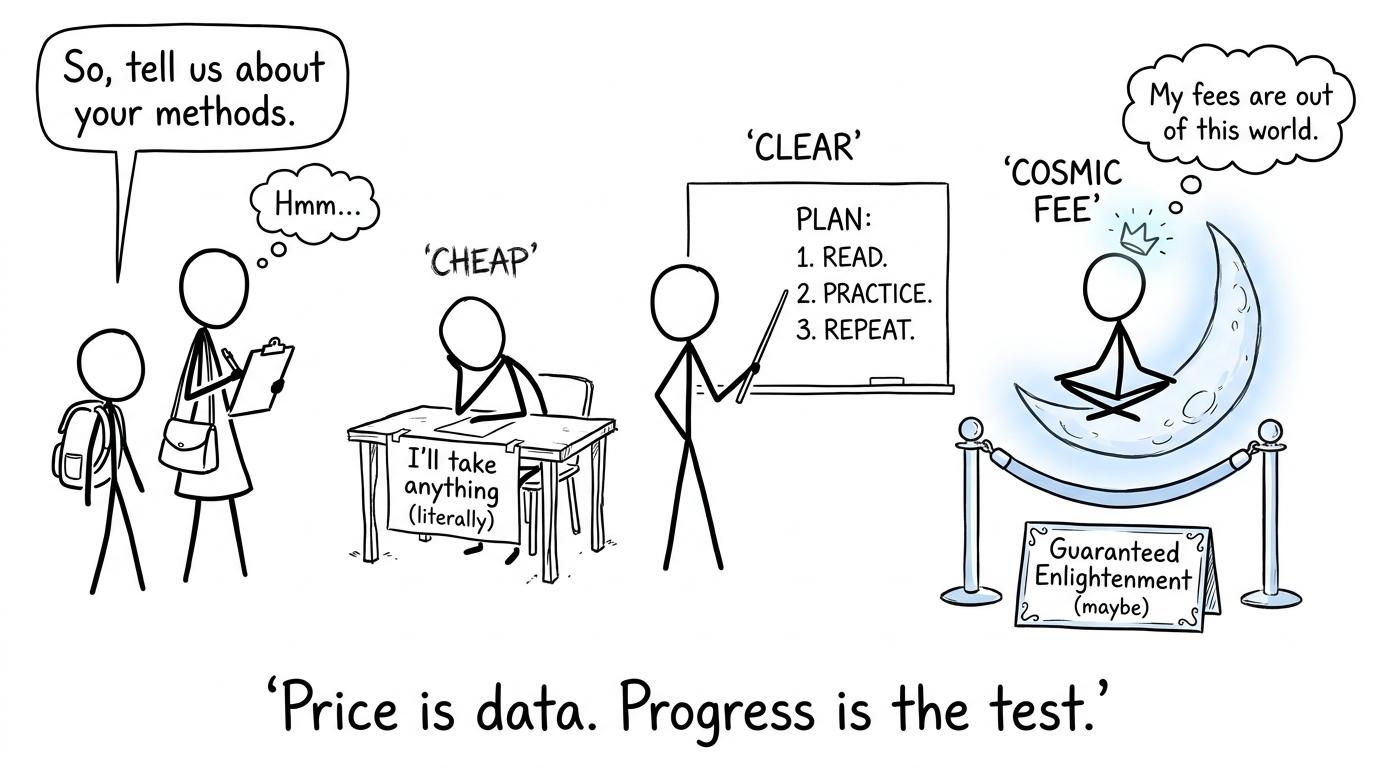 A student and parent compare tutoring prices while discovering that clarity matters more than a cosmic fee
Why English Language tutoring prices vary
There is no official UK tutoring tariff. Tutors set their own rates, while agencies and marketplaces may add commission or booking fees. Several factors therefore shape the final price.
Qualifications and experience
A university student who recently completed GCSE English may be helpful with confidence, organisation and basic practice. A qualified teacher may charge more because they bring classroom experience, safeguarding procedures and familiarity with how responses develop across grades.
An examiner or senior teacher may command a further premium. That premium is most defensible when the student has a precise need, such as improving evaluation, comparison, language analysis or extended writing under time pressure. The title alone is not enough, however. Ask what the tutor actually does during a lesson.
Online or face-to-face lessons
Online tuition is often expected to be cheaper because nobody travels, but current UK listings do not show a universal rule. Some datasets place online prices below face-to-face rates; others find similar or slightly higher online rates because students can access experienced tutors nationally.
Compare like with like. A strong online tutor using shared documents, live annotation and marked homework may offer better value than a cheaper local tutor without a clear system.
For face-to-face tuition, ask whether travel is included. A £35 lesson with a £5 travel charge has an effective cost of £40 before any materials or platform fees.
Location and demand
London and parts of the South East often have higher advertised prices, particularly for in-person tuition. Online lessons reduce the importance of geography, although they do not automatically produce the lowest rate.
Prices can also rise near the examination period as tutor availability narrows. Booking early may provide more choice, but paying for months of lessons before identifying a genuine need can waste money.
One-to-one or group support
One-to-one tuition offers the greatest personal attention and usually costs the most per student. Small-group tuition can be economical when students have similar needs, but it becomes less useful if one student needs writing feedback while another needs help interpreting unseen texts.
Work out the real tutoring budget
A weekly price can feel manageable while the cumulative cost remains invisible. Use:
Total cost=hourly rate×sessions per week×number of weeks\text{Total cost}=\text{hourly rate}\times\text{sessions per week}\times\text{number of weeks}Total cost=hourly rate×sessions per week×number of weeksThe table below shows the total for one lesson per week. It is a budget comparison, not a recommendation about how many sessions to buy.
| Hourly rate | Cost over 10 weeks | Cost over 20 weeks | Cost over 30 weeks |
|---|---|---|---|
| £20 | £200 | £400 | £600 |
| £30 | £300 | £600 | £900 |
| £40 | £400 | £800 | £1,200 |
| £50 | £500 | £1,000 | £1,500 |
Also check cancellation terms, minimum bookings, holiday expectations and whether marking between lessons is included. Ten focused sessions with useful feedback may deliver more value than thirty loosely planned conversations.
If your family is budgeting across English, maths and science, decide where paid support is genuinely necessary. MathsGenie provides free GCSE maths revision resources, which can reduce the need to pay for routine maths explanations and practice.
How to decide whether tutoring is worth it
Tutoring is most likely to be valuable when the problem is specific and the tutor has a credible plan for solving it.
Start with the actual mark loss
Before contacting tutors, collect a recent paper, teacher feedback and the relevant mark scheme. Identify whether the difficulty concerns:
- understanding unseen fiction or non-fiction;
- selecting concise textual evidence;
- analysing language and structure;
- comparing viewpoints;
- evaluating a text critically;
- planning and controlling extended writing;
- spelling, punctuation and grammar;
- timing or incomplete answers.
English Language specifications differ across AQA, Pearson Edexcel, OCR and Eduqas. Unlike GCSE maths, English Language is not divided into foundation and higher tiers. A tutor should therefore ask about the exam board, specification and paper structure rather than offering a generic lesson to every student.
Ask what happens between lessons
The lesson itself is only part of the value. Effective support should create better independent practice. Ask whether the tutor will:
- set purposeful tasks between sessions;
- mark writing and explain how it meets assessment objectives;
- use official past papers and mark schemes;
- track recurring weaknesses;
- revisit skills to check that improvement lasts;
- adjust the plan when evidence shows something is not working.
A tutor who promises a particular grade should be treated cautiously. Grade boundaries vary, examination performance cannot be guaranteed, and progress depends partly on practice outside the paid hour.
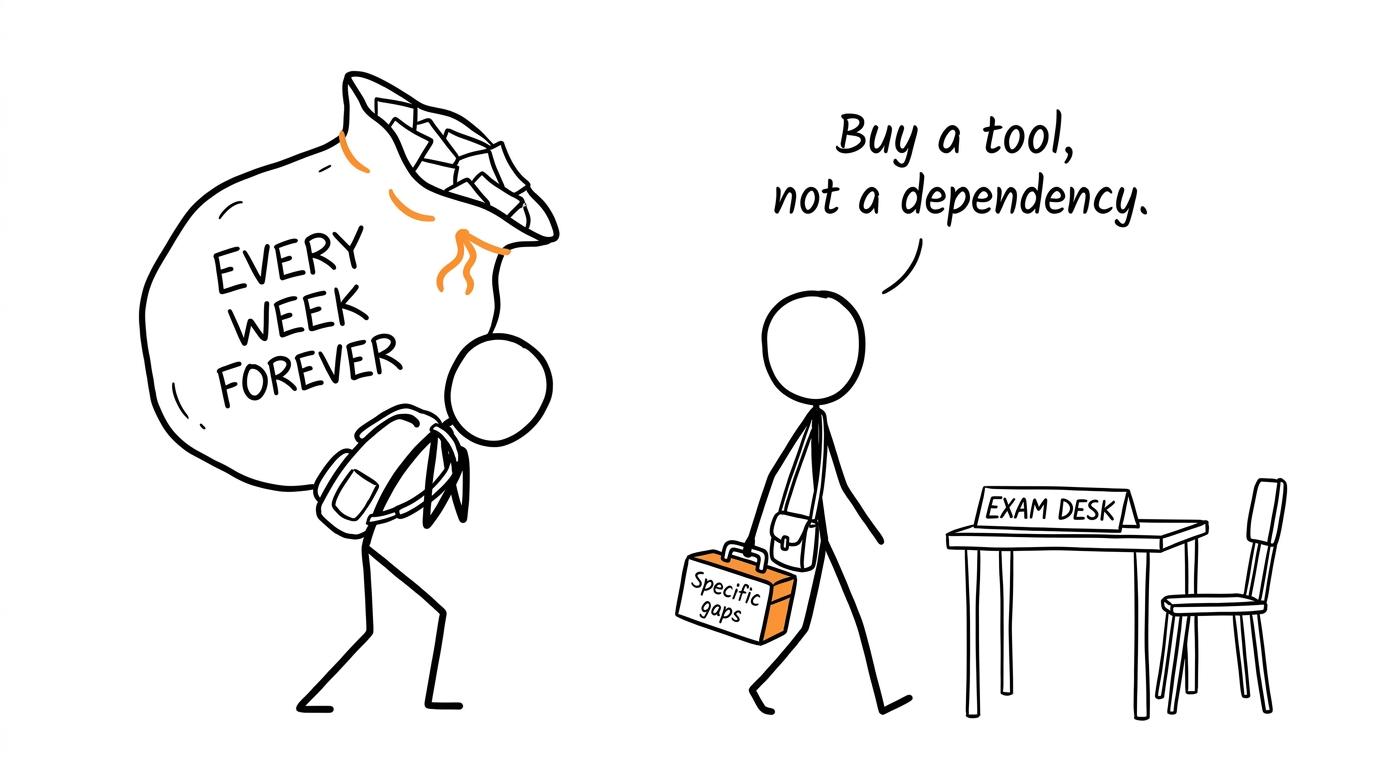 One student carries endless weekly tutoring while another takes a small toolbox for specific gaps
Review progress after a short block
Agree on an initial block and a review point. Progress could mean stronger timed responses, more accurate evidence selection, improved writing control or fewer unfinished questions. It should be visible in work, not based only on whether lessons feel pleasant.
If nothing changes, ask why. The answer may be that the student is not completing practice, the tutor’s approach is unsuitable, or the original diagnosis was wrong. Continuing automatically converts tutoring from a tool into a subscription.
Questions to ask a prospective tutor
A short conversation can reveal more than a long profile. Useful questions include:
- Which GCSE English Language specifications do you currently teach?
- How would you diagnose my main weaknesses?
- Will you mark full responses outside lesson time?
- Is marking included in the hourly fee?
- How do you use assessment objectives and mark schemes?
- What resources will I need to buy?
- How will we review progress after four or six sessions?
- What are your cancellation and rescheduling terms?
- If lessons are online, how will we share and annotate writing?
For students under 181818, a parent or carer should also examine safeguarding arrangements, identity checks and the platform’s privacy procedures. Do not assume that a high price proves these checks have been completed.
Lower-cost alternatives to weekly private tutoring
Private tuition is not the only route. Before committing to a long block, consider:
- asking the English teacher for one specific improvement priority;
- attending school revision sessions or intervention classes;
- using official exam-board papers and mark schemes;
- arranging occasional marking sessions rather than weekly tuition;
- joining a suitable small group;
- using a tutor for a short diagnostic block, followed by independent practice.
The same principle is useful in maths: diagnose first, then spend time on the precise gap. MathsGenie’s guide to finding GCSE topics by board and tier helps maths students build that map. The one-month GCSE maths revision plan shows how to turn it into a manageable routine.
When paper practice becomes appropriate, use Edexcel GCSE maths past papers or follow the broader advice on when to start GCSE past papers. Free resources cannot replace personalised English feedback in every case, but they can preserve your budget for the support that truly requires another person.
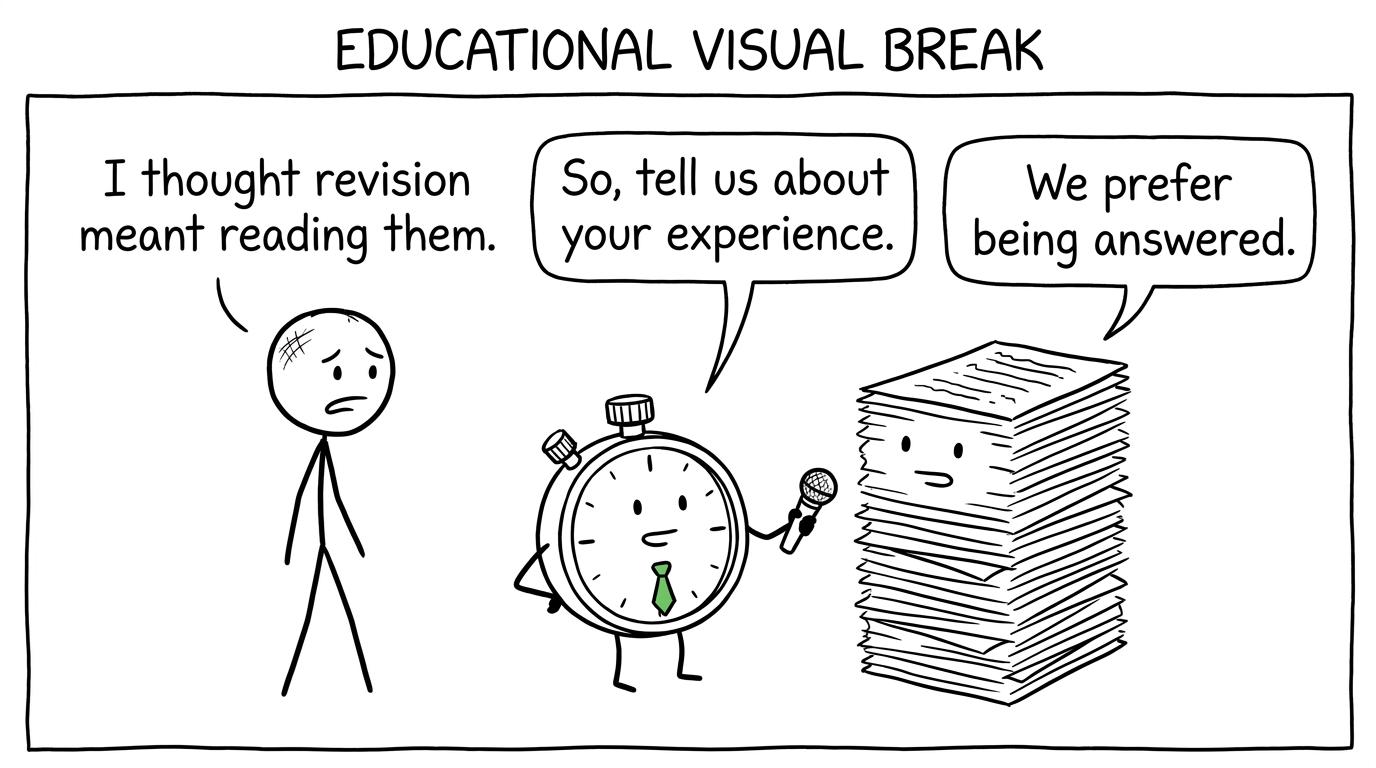 A stopwatch interviews practice papers while a student realises that papers prefer being answered
Common mistakes when choosing English tuition
Choosing entirely by price
The cheapest tutor is not automatically poor, and the most expensive is not automatically effective. Compare relevance, feedback quality, preparation and total cost.
Paying before identifying the problem
“Needs help with English” is too broad. A tutor cannot target a weakness that nobody has defined. Begin with marked work and teacher feedback.
Ignoring the exam board
AQA, Edexcel, OCR and Eduqas do not organise their papers identically. General literacy support may help, but exam preparation should match the student’s specification.
Mistaking explanation for improvement
Listening to advice can feel productive. Marks improve when students write, receive precise feedback and apply it to another response. Practice is the bridge.
Continuing without reviewing results
Do not let weekly lessons carry on through habit. Set a review date and examine actual work. If progress is limited, change the plan rather than merely adding more sessions.
Spend for the gap, practise for the exam
For most families, a realistic GCSE English Language tutoring cost is around £20 to £50 per hour, with £30 to £40 sitting near the centre of many current advertised rates. The right amount to spend depends less on prestige than on the student’s needs, the tutor’s relevance and the quality of the work between lessons.
Buy clarity, feedback and a route towards independence. Do not buy an expensive hour simply because exams feel close.
For your maths preparation, start with the free MathsGenie GCSE revision hub. Use revision lessons and practice questions to repair individual skills, then build timing with past papers, mark schemes, video solutions and mini tests. Nearer the examination, add GCSE predicted papers and learn how to use past papers properly.
Paid support should solve the problems that free independent revision cannot. MathsGenie helps make that distinction clearer and keeps high-quality GCSE maths revision free.