

GCSE Drama Careers: Where Can Drama Take You?
GCSE drama careers explained: discover jobs, creative apprenticeships and transferable skills, plus where your Drama grade may help applications stand out.
A GCSE Drama result can feel difficult to place beside subjects such as maths, English or science. You know what you learnt, but where does it lead? The honest answer is that GCSE drama careers extend well beyond acting. Drama can support routes into theatre production, broadcasting, events, education, marketing and other roles built around communication and collaboration.
The grade itself is rarely a professional licence. Instead, it becomes evidence: you can develop ideas, respond to feedback, work towards a deadline and communicate with an audience. It is particularly relevant when applying for performing arts courses, creative apprenticeships, theatre experience and entry-level roles where those qualities matter.
For a maths student, there is another important point. Drama and maths are not rival choices. Creative employers still need people who can measure a stage, manage a budget, interpret data and solve practical problems. Keeping your maths revision moving protects more of the routes that Drama helps you explore.
GCSE drama careers at a glance
Here is the short version:
- Performance: actor, presenter, entertainer or voice performer.
- Backstage production: stage management, lighting, sound, set, costume and technical theatre.
- Screen and audio: production assistance, content creation, broadcasting and post-production.
- Events and communication: event production, marketing, public relations and visitor engagement.
- Education and community work: teaching, drama facilitation and community arts.
- Apprenticeships: creative production, live events, media and technical pathways, depending on current vacancies.
A good Drama grade is most likely to be noticed when the next opportunity directly involves performance, production, teamwork or communication. For many other careers, it is useful supporting evidence rather than a formal entry requirement.
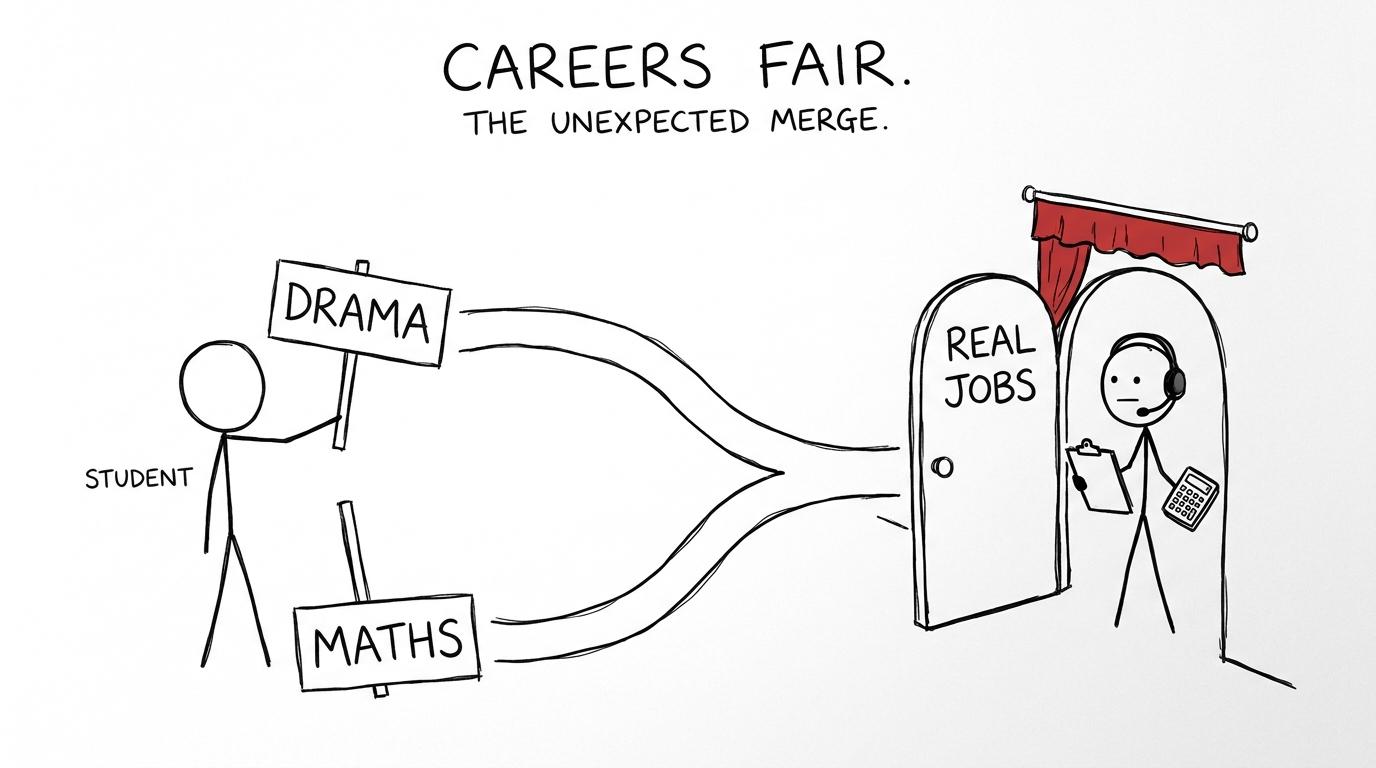 A student discovers that Drama and Maths can lead through the same backstage career door
What GCSE Drama actually proves
Official GCSE Drama requirements across exam boards such as AQA, Edexcel, OCR and Eduqas are built around more than remembering lines. Although specifications differ in structure, students are generally expected to create and develop ideas, apply performance or design skills, understand theatre, and analyse and evaluate work.
That creates a useful collection of transferable skills.
Communication under pressure
Performing requires you to make meaning clear while people are watching. Design students also communicate ideas through lighting, sound, costume or staging. This can help when an employer asks for confident speaking, an interview presentation or clear communication with customers and colleagues.
Collaboration and negotiation
A devised piece rarely improves because one person talks the loudest. Students must listen, test ideas, negotiate changes and remain dependable when a group is working towards a performance date. That resembles real project work more closely than many students realise.
Reflection and improvement
Drama specifications assess analysis and evaluation. You are expected to identify what happened, judge its effectiveness and explain how it could be refined. Employers often describe the same habit as responding to feedback, reviewing performance or continuous improvement.
Planning and creative problem-solving
A production has fixed constraints: time, space, equipment, people and an audience. Making something effective within those limits is practical problem-solving. That skill matters backstage, but it also appears in events, business, education and media.
Careers where GCSE Drama is directly relevant
Acting and performance
Drama is an obvious foundation for acting, musical theatre, presenting and voice work. However, GCSE Drama alone does not qualify someone as a professional actor. Auditions, practical experience, further training and evidence of commitment usually matter more as a career develops.
The GCSE can still help you progress to A Level Drama and Theatre, a performing arts course or specialist training. It also gives you material to discuss at an interview or audition: rehearsal discipline, interpretation, character work and live performance experience.
Stage management and theatre production
Stage managers coordinate rehearsals and performances, communicate between departments and help productions run smoothly. GCSE Drama is relevant because it introduces the processes and responsibilities behind live theatre.
It is not only a performance route. Depending on the specification and choices offered by your school, Drama may involve lighting, sound, set or costume design. Those areas can lead towards technical theatre, production management and venue work.
Organisation is crucial here. So is numeracy. Timings, dimensions, schedules and costs all require careful handling. If backstage production appeals to you, maintain those foundations through the free GCSE Maths revision hub, where resources are organised by board and topic.
Lighting, sound and live-event technology
Creative industries production technicians may prepare, install, operate and troubleshoot systems for theatre, screen and live events. Current occupational routes include venue technology, live-event technology and screen lighting.
Drama helps because you understand that technical choices serve an artistic intention. Maths supports the precise side of the work: scale, positioning, time, power, quantities and safe planning. Employers may value the combination more than either subject in isolation.
Film, television, radio and content production
Drama can support applications for production assistance, content creation, broadcasting and related media roles. Rehearsing and devising develop storytelling, audience awareness and the ability to adjust an idea after feedback.
Be careful not to present Drama as automatic entry into television or film. Employers and training providers may also want practical experience, a portfolio, digital skills or evidence that you understand production work. School productions, youth theatre and responsibly completed personal projects can make your interest more concrete.
Teaching and community arts
Drama teachers, workshop leaders and community arts practitioners need to explain ideas, engage groups and create safe, purposeful activities. GCSE Drama is an early indication of interest, but teaching normally requires substantial further qualifications and training.
The same skills can support youth work, museum learning, visitor experiences and theatre-in-education projects. In these settings, the aim is not simply to perform. It is to help an audience understand, participate or respond.
Careers where Drama provides an advantage
Drama can also strengthen applications for careers that do not list it as a required qualification.
| Career area | How Drama can help | What else may matter |
|---|---|---|
| Marketing and public relations | Audience awareness, pitching and storytelling | Writing, digital skills and data interpretation |
| Events | Teamwork, live delivery and adapting under pressure | Planning, budgets, safety and organisation |
| Law and advocacy | Structured speaking and interpreting viewpoints | Strong academic qualifications and further training |
| Sales and customer service | Listening, confidence and clear explanations | Product knowledge, reliability and numeracy |
| Journalism and presenting | Research, interviewing and communication | Writing, accuracy, media experience and a portfolio |
| Management | Feedback, negotiation and group responsibility | Experience, decision-making and financial awareness |
The distinction matters. Drama does not replace the qualifications needed for law, teaching or another regulated profession. It develops abilities that can make you more persuasive and effective while pursuing the required route.
Creative apprenticeships where Drama may get noticed
Apprenticeships change as standards and vacancies are introduced, revised or retired. Search the current official vacancy listings rather than relying on an old course list. Employer entry requirements also vary.
Relevant pathways may include:
- creative industries production technician;
- venue or live-event technician;
- media production and production coordination;
- broadcast and communications roles;
- content production or digital marketing;
- costume, props, technical theatre or cultural venue opportunities when available.
On an application, the subject name is less powerful than the evidence behind it. Instead of writing only that you achieved a good GCSE Drama grade, identify what the course required: contributing reliably to rehearsals, documenting decisions, refining work after feedback or meeting a performance deadline.
For apprentices who begin training aged 161616 to 181818 in England, English and maths requirements remain important if suitable qualifications have not already been achieved. Employers can also set their own entry criteria. Rules and systems differ elsewhere in the UK, so always read the current vacancy carefully.
That is one reason your maths grade deserves attention even if your ambition is entirely creative. A secure result can reduce barriers and shows that you can handle the numerical demands hidden inside production work. If time is tight, the 20-minute GCSE maths revision routine offers a manageable way to keep practising.
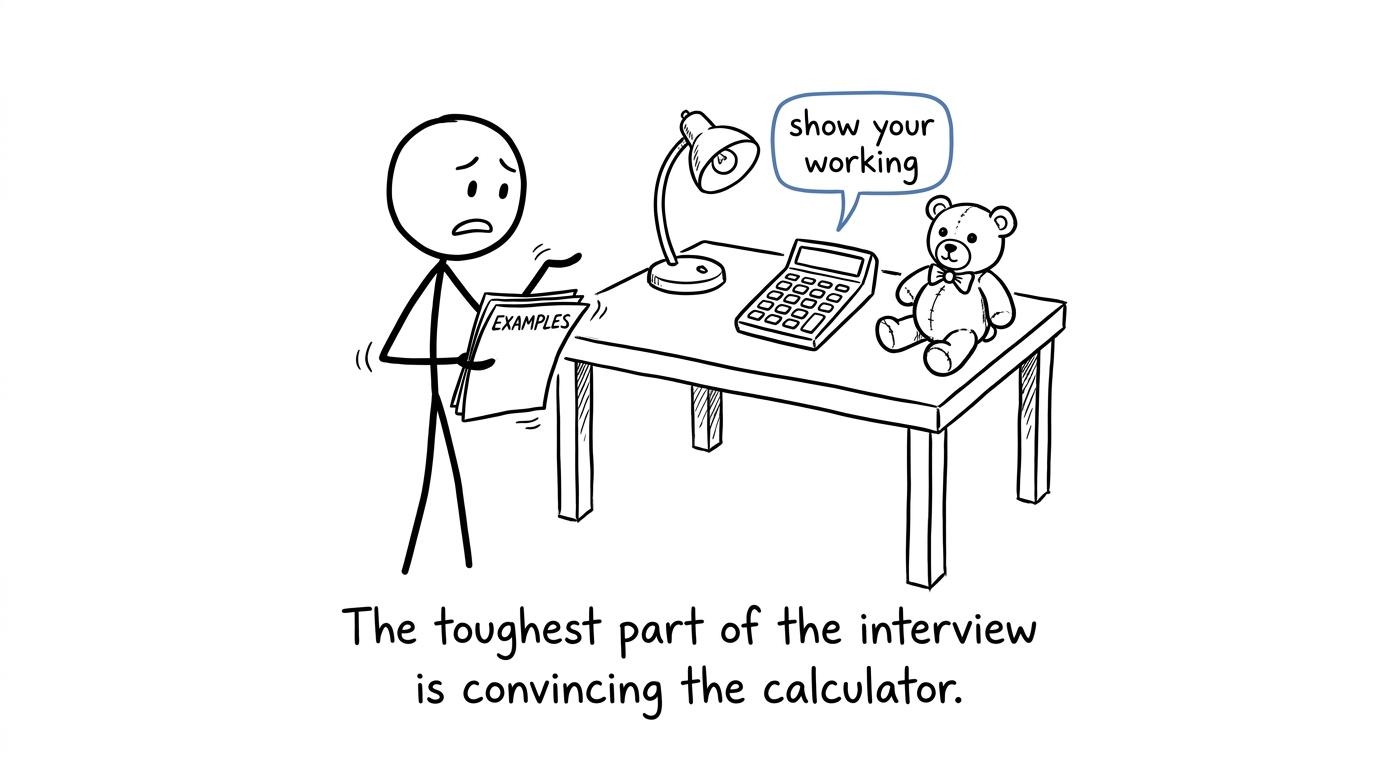 A student rehearses an apprenticeship interview with a calculator demanding evidence
How to make your Drama grade useful in applications
Translate the course into evidence
An employer may not know exactly how your Drama specification was assessed. Explain it in plain language. Useful evidence might include:
- collaborating to devise a performance;
- taking responsibility for a design or performance role;
- analysing live theatre in writing;
- responding constructively to direction;
- managing nerves and communicating to an audience;
- completing rehearsal and portfolio work by fixed deadlines.
Use genuine examples only. A modest, specific contribution is more convincing than an exaggerated claim about leadership.
Build experience around the qualification
Look for appropriate opportunities through school productions, local theatres, youth groups, community events or open days. You might perform, help front of house, assist with props or observe technical work. Availability and age restrictions vary, so check arrangements with a teacher, careers adviser or parent or carer.
Experience helps you discover whether you enjoy the daily work rather than only the finished performance. That is valuable information before choosing a college course or apprenticeship.
Keep core qualifications moving
Creative routes still involve written communication and numeracy. Colleges and employers may set their own GCSE requirements, particularly for English and maths.
Use the same rehearsal mindset in maths: practise, receive feedback, correct and repeat. The GCSE maths revision timetable guide can help you balance subjects, while the guide to efficient GCSE maths revision explains how to turn mistakes into focused practice.
When your topic knowledge is secure, move towards timed work. MathsGenie's Edexcel GCSE predicted papers provide fresh exam-style practice, and the advice on when to begin GCSE past papers can help you build towards full papers sensibly.
Common mistakes when planning a career with GCSE Drama
Assuming Drama only leads to acting
Theatre needs technicians, stage managers, designers, administrators and producers. Screen, events and visitor attractions also need people who understand audiences and live delivery.
Assuming the GCSE guarantees a creative job
A good grade is a foundation, not a contract. Later applications may depend on auditions, portfolios, experience, further qualifications or the requirements of a particular employer.
Listing skills without evidence
Saying “Drama made me confident” is vague. Explain what you did, what constraint you faced and how you improved the result. Keep every claim truthful.
Ignoring backstage and technical roles
Students who enjoy Drama but dislike performing may still fit the industry extremely well. Explore design, lighting, sound, stage management, venue operations and production technology.
Letting maths become an avoidable barrier
Creative careers contain more numeracy than their titles suggest. Budgets, measurements, schedules and technical systems matter. A stronger GCSE Maths result can also keep college and apprenticeship options open.
Your next step
GCSE Drama is useful because it teaches you to turn an idea into something other people can understand. That ability matters on stage, backstage and in careers far beyond a theatre. The grade gets noticed most when you connect it to relevant evidence and combine it with the qualifications your next route requires.
Choose one practical action now: investigate a current apprenticeship, ask about a college course, help with a production or write down three genuine examples from your Drama work that demonstrate useful skills.
Then protect the wider route. Visit MathsGenie’s free GCSE Maths resources and choose one weak topic. Use a revision lesson, answer the practice questions, check the mark scheme and revisit the mistake. Build towards mini tests, past papers and predicted papers. Careers rarely depend on one subject alone, and the strongest creative plans leave more than one door open.











