GCSE Computer Science Grade Boundaries History
GCSE Computer Science grade boundaries history from 2018 to 2025, comparing AQA, Edexcel and OCR trends with practical advice for revision.

A grade boundary can feel like a verdict written before you enter the exam hall. It is not. The GCSE Computer Science grade boundaries history shows that boundaries move because paper difficulty, specifications and student performance change. They are set after marking, so nobody can know the next boundary in advance.
The useful conclusion is simple: past boundaries can provide a sensible range for mocks, but your revision target should include a margin above that range. This guide tracks the main AQA, Pearson Edexcel and OCR changes from 201820182018 to 202520252025 and explains what those changes mean for students and teachers.
The grade boundary checklist
Before interpreting the table, remember:
- A boundary is the minimum raw mark required for a grade.
- Compare the same exam board and specification wherever possible.
- Check the maximum mark before comparing raw scores.
- Summer exams did not take place normally in 202020202020 or 202120212021.
- Boundaries describe previous papers; they do not predict the next one.
- A higher boundary does not automatically mean that standards became tougher.
You can check the complete figures through MathsGenie's GCSE grade boundaries database.
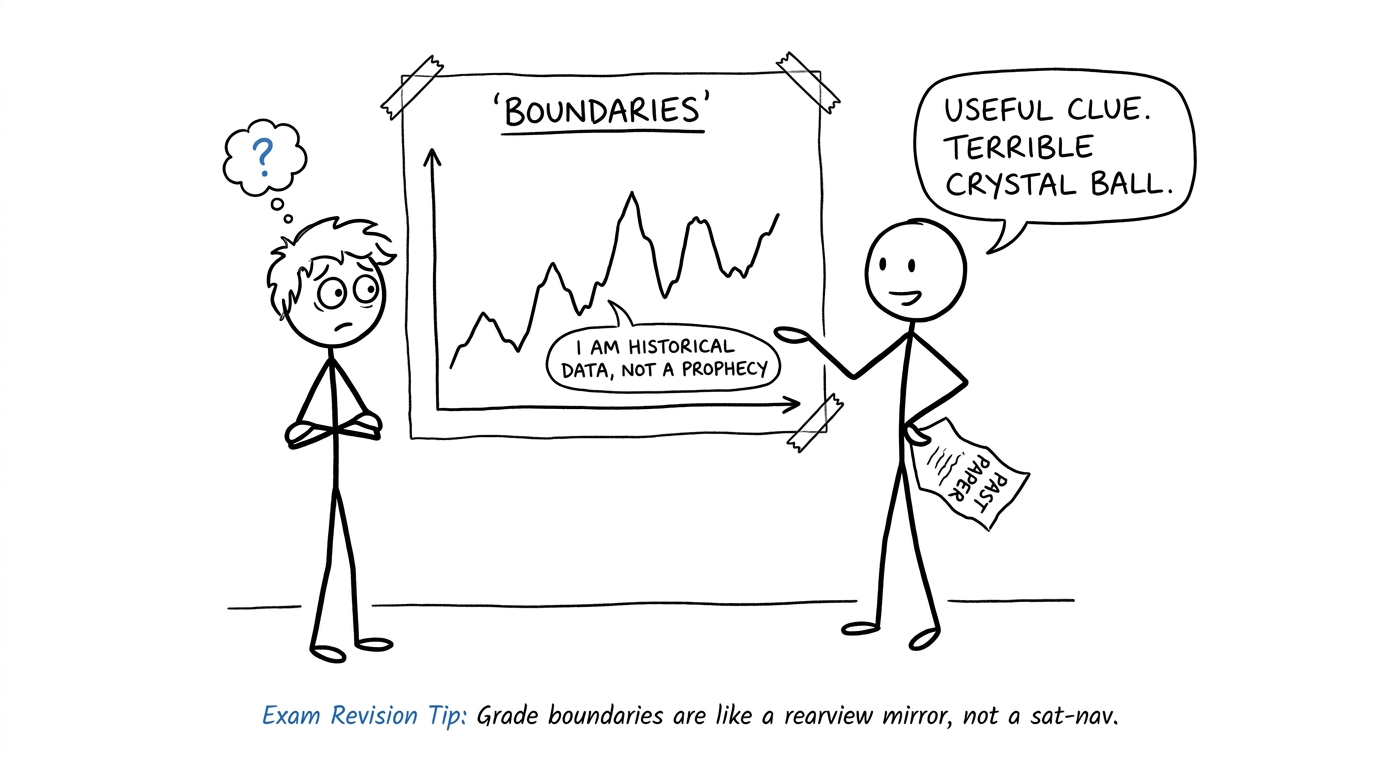 A student learns that a historical grade-boundary chart is not a crystal ball
Past GCSE Computer Science grade boundaries by year
The table gives the overall boundaries for grades 999, 777 and 444. Each entry is shown as boundary divided by maximum mark. These grades offer a clear view of performance at the top, strong-pass and standard-pass levels.
| Year | AQA: grades 999, 777, 444 | Edexcel: grades 999, 777, 444 | OCR: grades 999, 777, 444 |
|---|---|---|---|
| 201820182018 | 140/160140/160140/160, 120/160120/160120/160, 78/16078/16078/160 | 113/160113/160113/160, 86/16086/16086/160, 53/16053/16053/160 | 136/160136/160136/160, 111/160111/160111/160, 69/16069/16069/160 |
| 201920192019 | 137/160137/160137/160, 114/160114/160114/160, 72/16072/16072/160 | 109/160109/160109/160, 80/16080/16080/160, 45/16045/16045/160 | 137/160137/160137/160, 113/160113/160113/160, 71/16071/16071/160 |
| 202020202020 | No summer exams | No summer exams | No summer exams |
| 202120212021 | No summer exams | No summer exams | No summer exams |
| 202220222022 | 148/180148/180148/180, 113/180113/180113/180, 59/18059/18059/180 | 123/150123/150123/150, 92/15092/15092/150, 45/15045/15045/150 | 132/160132/160132/160, 106/160106/160106/160, 60/16060/16060/160 |
| 202320232023 | 150/180150/180150/180, 123/180123/180123/180, 71/18071/18071/180 | 127/150127/150127/150, 97/15097/15097/150, 48/15048/15048/150 | 133/160133/160133/160, 106/160106/160106/160, 63/16063/16063/160 |
| 202420242024 | 152/180152/180152/180, 128/180128/180128/180, 68/18068/18068/180 | 119/150119/150119/150, 91/15091/15091/150, 47/15047/15047/150 | 136/160136/160136/160, 117/160117/160117/160, 72/16072/16072/160 |
| 202520252025 | 155/180155/180155/180, 130/180130/180130/180, 74/18074/18074/180 | 124/150124/150124/150, 94/15094/15094/150, 49/15049/15049/150 | 141/160141/160141/160, 123/160123/160123/160, 78/16078/16078/160 |
The figures come from published board boundaries collated by MathsGenie. See the full tables for AQA Computer Science grade boundaries and Edexcel Computer Science grade boundaries.
What changed from year to year?
The pre-pandemic years
Between 201820182018 and 201920192019, boundaries fell slightly for AQA and Edexcel but rose slightly for OCR. That contrast matters. There was no single national movement applying equally to every Computer Science paper.
For example, AQA's grade 777 boundary moved from 120/160120/160120/160 to 114/160114/160114/160, while OCR's moved from 111/160111/160111/160 to 113/160113/160113/160. Boundaries responded to the evidence from each board's papers and candidates.
The interruption in 202020202020 and 202120212021
There were no normal summer GCSE examinations in these years. Grades were awarded through exceptional arrangements, so there are no directly comparable summer boundaries.
Some boards held additional autumn or November series. Those boundaries came from smaller, unusual cohorts and should not be treated as ordinary summer benchmarks. Ofqual has advised schools to disregard pandemic-era boundaries when estimating the standard expected under normal grading.
The transition year of 202220222022
Summer examinations returned in 202220222022, but grading was deliberately transitional. Ofqual aimed for overall outcomes at a midpoint between 201920192019 and 202120212021, recognising pandemic disruption.
This also coincided with specification changes for some boards. AQA's available total increased from 160160160 to 180180180, while Edexcel's changed from 160160160 to 150150150. Raw marks across those specifications therefore cannot be compared directly.
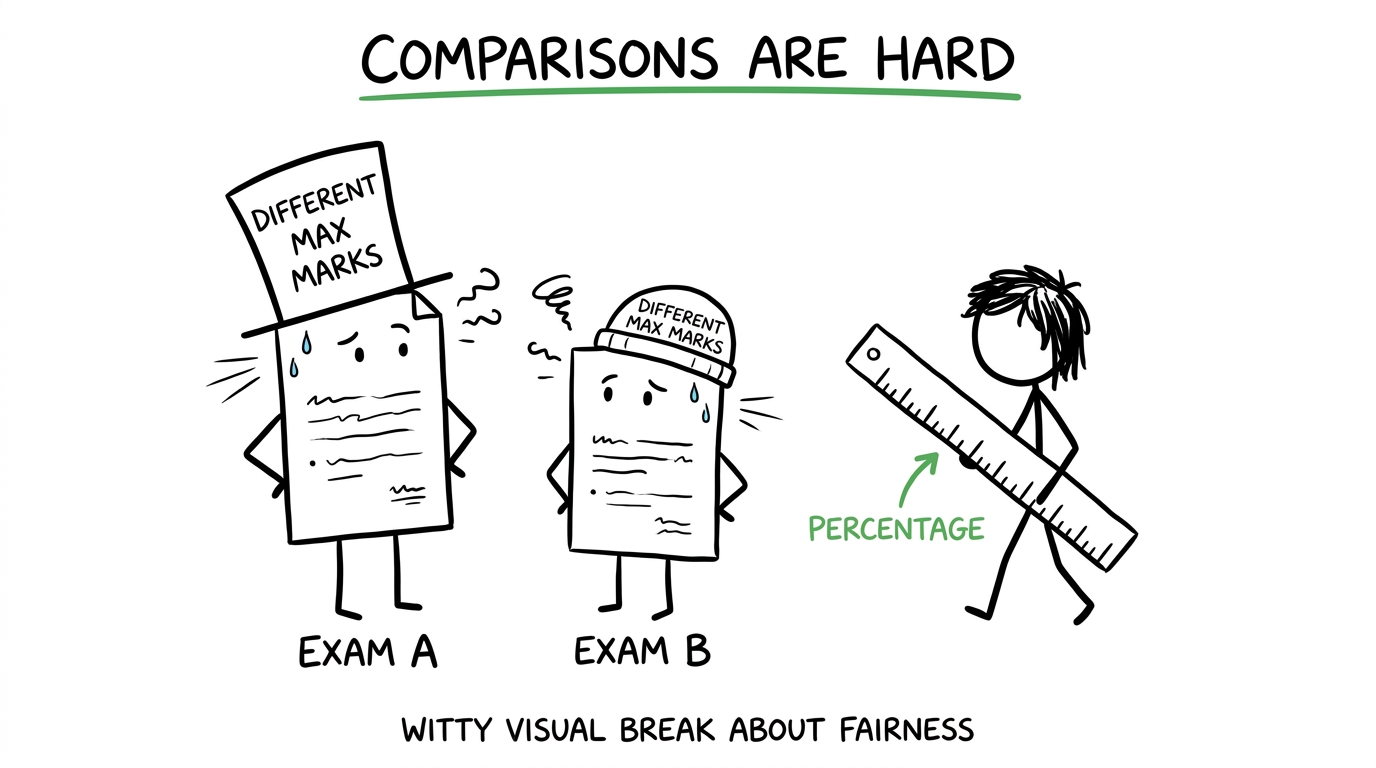 Exam papers discover that raw marks need a fair scale before comparison
The return to normal grading
In 202320232023, grading returned broadly to pre-pandemic standards, with protection against disruption built into the awarding process. From 202420242024, normal grading arrangements continued.
Recent GCSE Computer Science grade boundary trends have generally been upward. OCR's grade 777 boundary rose from 106/160106/160106/160 in 202320232023 to 117/160117/160117/160 in 202420242024, then 123/160123/160123/160 in 202520252025. AQA and Edexcel also recorded higher grade 777 boundaries in 202520252025 than in 202420242024.
That does not prove future boundaries will keep rising. It indicates that candidates needed more raw marks on those particular papers to demonstrate the required standard.
How to compare boundaries fairly
Percentages are more useful when maximum marks differ. Use:
boundary percentage=boundary markmaximum mark×100\text{boundary percentage}=\frac{\text{boundary mark}}{\text{maximum mark}}\times 100boundary percentage=maximum markboundary mark×100Even percentages require caution. A boundary from an old specification may relate to different content, assessment objectives or paper structures. For revision, prioritise papers from your current specification and use older material mainly for additional question practice.
Start with the AQA GCSE Computer Science revision hub, Edexcel GCSE Computer Science revision hub or OCR GCSE Computer Science revision hub.
What the trends mean for revision
A boundary is better used as a range than a target. If recent grade 777 boundaries sit near your mock result, aiming for the lowest one leaves no protection against a harder question, a missed command word or an unfinished algorithm.
Complete a paper under timed conditions, mark it strictly, then classify every lost mark by topic and reason. Follow with focused practice before attempting another paper. MathsGenie's AQA Computer Science question bank makes that movement from diagnosis to practice straightforward.
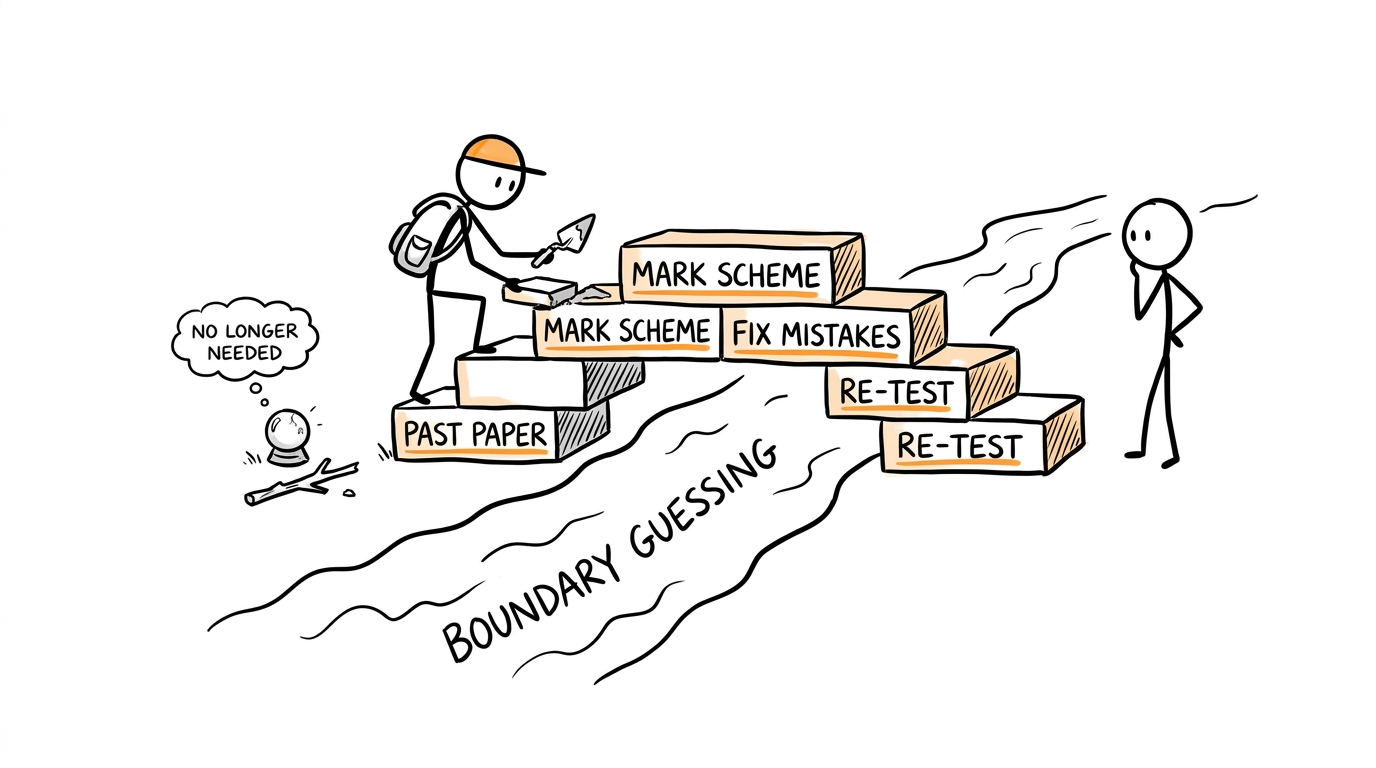 A student builds a revision bridge while abandoning grade-boundary guesswork
Common mistakes when analysing boundaries
- Assuming the next boundary will match the last one. It cannot be confirmed before marking and awarding are complete.
- Comparing raw marks with different totals. A mark out of 180180180 is not directly comparable with one out of 150150150.
- Mixing specifications. Questions and assessment structures change when a course is replaced.
- Using component boundaries as final grades. Component boundaries may be notional; the certificated grade comes from the overall qualification mark.
- Treating a boundary as a safe target. Aiming exactly at it creates no margin for normal exam variation.
Turn historical data into better preparation
The history does not reveal a secret mark for the next examination. It reveals something more practical: boundaries move, while secure knowledge remains useful under every boundary.
Choose your board's paper, work under timed conditions and use the mark scheme to find where marks are leaking. Begin with MathsGenie's free GCSE Computer Science past papers, then combine revision lessons, practice questions, mini tests and predicted papers to strengthen the weakest areas. The goal is not to guess the line. It is to build enough understanding to finish comfortably above it.