GCSE Biology Grade Boundaries History: 2018-2025
GCSE biology grade boundaries history explained with AQA data from 2018-2025, trend commentary, pandemic context and practical revision advice for students.
A grade boundary can feel like a finish line that moves while you are running towards it. One year, a grade 999 requires one mark; the next, it requires several more. Yet the GCSE biology grade boundaries history tells a calmer story: boundaries move to account for differences in paper difficulty, not to make grades randomly harder to achieve.
The figures below track AQA GCSE Biology from 2018 to 2025. They show genuine movement, particularly in the most recent papers, but they cannot predict the boundary for your exam. The most useful response is still the least dramatic one: learn the content, practise past papers and collect every mark you can.
GCSE biology grade boundary trends at a glance
Before studying the figures, keep this checklist in mind:
- A grade boundary is the minimum mark required for a grade.
- Boundaries are set after papers have been marked.
- A harder paper may produce lower boundaries; an easier paper may produce higher ones.
- Foundation and higher tier have different boundaries and grade ranges.
- Separate Biology and Combined Science are different qualifications.
- Boundaries from AQA, Edexcel, OCR and Eduqas should not be compared directly.
- No official 2026 boundary exists before results day.
AQA separate GCSE Biology has two papers worth 100100100 marks each, producing a total of 200200200 marks. Students can explore the specification topics through the AQA GCSE Biology revision hub.
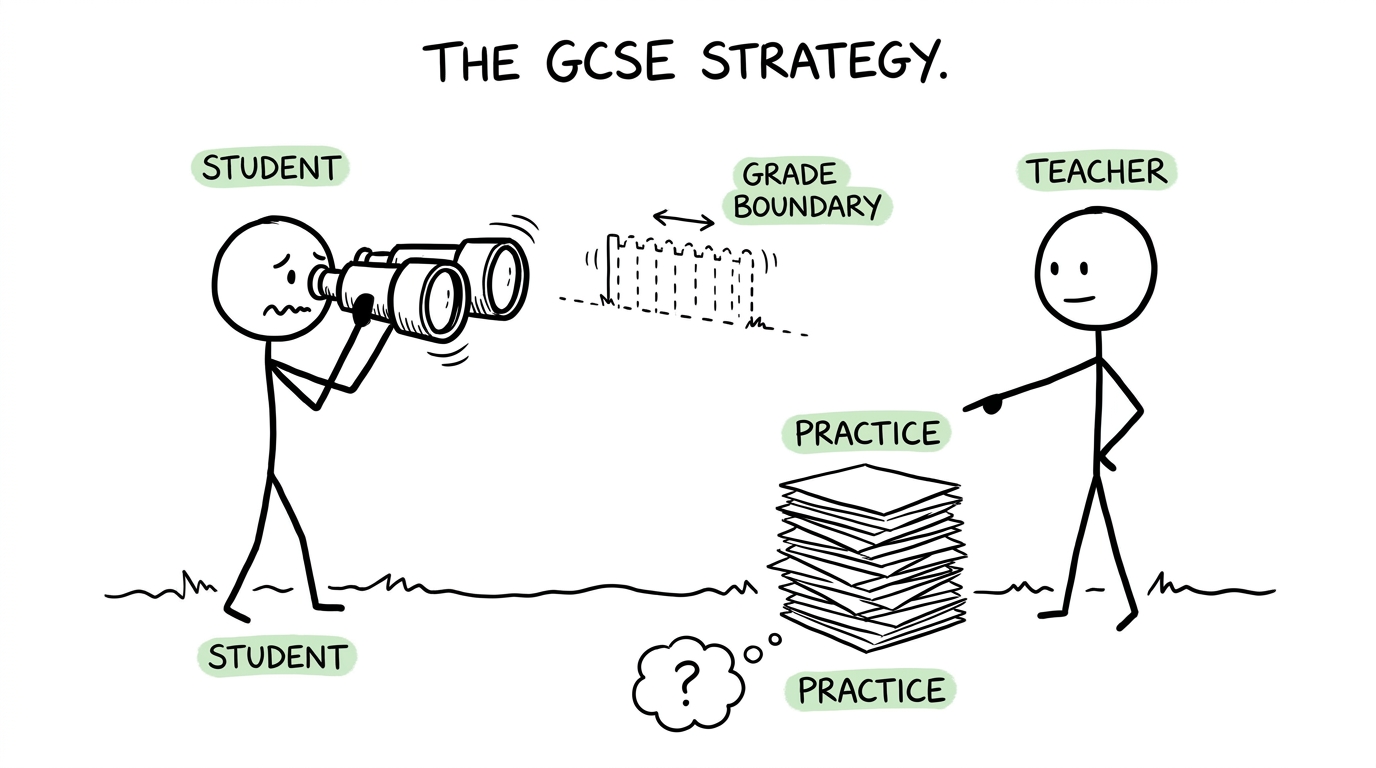 A student searches for a moving grade boundary while useful past papers wait nearby
Past GCSE biology grade boundaries by year
This table uses confirmed AQA GCSE Biology specification 846184618461 subject boundaries. The higher-tier columns show grades 999, 777 and 444; the foundation columns show grades 555 and 444. Each figure is the minimum total mark out of 200200200.
| Exam series | Higher grade 999 | Higher grade 777 | Higher grade 444 | Foundation grade 555 | Foundation grade 444 |
|---|---|---|---|---|---|
| June 2018 | 132132132 | 102102102 | 535353 | 121121121 | 107107107 |
| June 2019 | 134134134 | 107107107 | 555555 | 130130130 | 114114114 |
| 2020 | No summer exam | No summer exam | No summer exam | No summer exam | No summer exam |
| 2021 | No summer exam | No summer exam | No summer exam | No summer exam | No summer exam |
| June 2022 | 132132132 | 104104104 | 515151 | 126126126 | 109109109 |
| June 2023 | 132132132 | 104104104 | 525252 | 134134134 | 117117117 |
| June 2024 | 141141141 | 112112112 | 484848 | 132132132 | 113113113 |
| June 2025 | 141141141 | 113113113 | 565656 | 140140140 | 121121121 |
2018 and 2019: establishing the reformed qualification
The first two years were relatively close at the top of higher tier. The grade 999 boundary rose from 132132132 to 134134134, while grade 777 moved from 102102102 to 107107107.
Foundation boundaries also increased in 2019. That does not prove that Biology suddenly became harder to pass. A higher boundary generally indicates that students found the assessment more accessible, so more marks were needed to demonstrate the same grade standard.
2020 and 2021: a break in the series
Normal summer GCSE exams did not take place in England in 2020 or 2021. Grades were awarded through alternative arrangements, including teacher-assessed grades in 2021.
AQA did publish boundaries for exceptional autumn series, but those entries involved different cohorts and circumstances. Mixing them into a simple summer trend line would give a misleading impression. For revision, the AQA Biology past-paper collection is better used paper by paper, with the matching mark scheme and boundary.
2022 and 2023: transition and return
Summer exams returned in 2022, with grading designed as a transition between pandemic-era outcomes and pre-pandemic standards. In 2023, grading returned broadly to the pre-pandemic approach, with protection recognising disruption to that cohort.
Despite that policy change, several AQA higher-tier Biology boundaries were remarkably stable: grades 999 and 777 remained at 132132132 and 104104104 in both years. Foundation boundaries rose in 2023, including grade 555 moving from 126126126 to 134134134.
2024 and 2025: higher recent boundaries
The clearest recent shift appeared in 2024. The higher grade 999 boundary rose to 141141141, nine marks above 2023, while grade 777 increased to 112112112. Interestingly, the grade 444 boundary fell from 525252 to 484848. Different parts of a paper can affect students differently, so boundaries do not always move together.
In 2025, grade 999 stayed at 141141141, grade 777 edged up to 113113113, and grade 444 rose to 565656. Foundation grade 555 reached 140140140. These are meaningful changes, but they remain evidence about completed exams rather than a forecast for the next one.
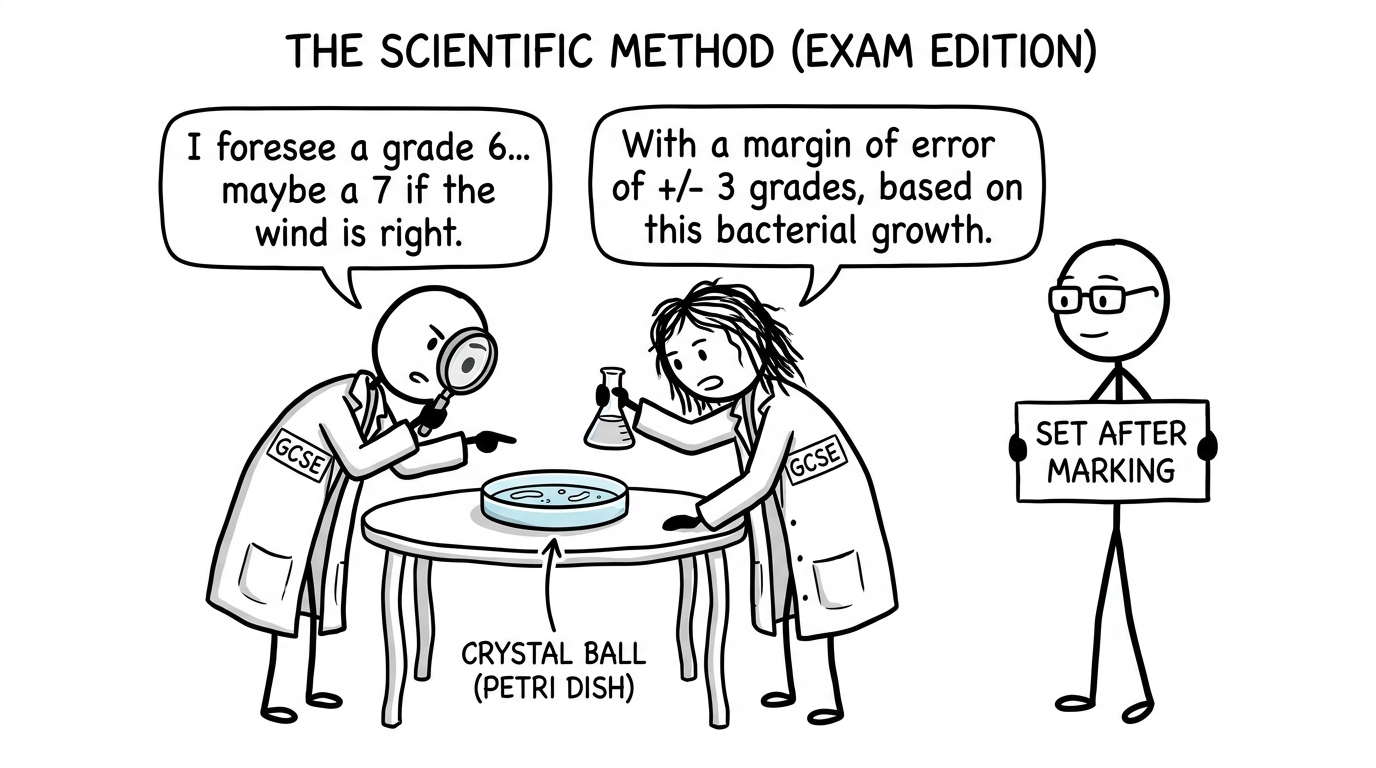 Students attempt to predict a boundary with a crystal ball while an examiner waits for marking
What the history actually tells you
The strongest conclusion is not that boundaries always rise. They do not. The useful conclusion is that a safe revision target should sit above any historic threshold you are watching.
Past boundaries can help teachers interpret mock results and help students understand the approximate standard required. But a single percentage is not a promise. If you want to convert a raw mark into a percentage for comparison, use:
percentage score=total marks earned200×100\text{percentage score}=\frac{\text{total marks earned}}{200}\times 100percentage score=200total marks earned×100More importantly, diagnose where marks disappeared. Use topic resources such as levels of organisation revision and heart and blood vessels revision, then return to exam questions while the correction is fresh.
Students taking another board should use the matching resources. For example, Edexcel GCSE Biology papers must be interpreted using Edexcel boundaries, not the AQA table above.
Common mistakes when analysing boundaries
Treating a past boundary as a prediction
Boundaries are confirmed after marking. Nobody can know the official boundary beforehand, so an estimated 2026 figure should never determine how much you revise.
Comparing different qualifications
Separate Biology is not Combined Science. Maximum marks, paper structures and grade systems differ, making direct comparisons unreliable.
Adding notional paper boundaries
Exam boards may publish notional component boundaries for individual papers, but these are illustrative. The qualification grade is based on the overall subject mark.
Ignoring the exam board and tier
AQA, Edexcel, OCR and Eduqas use different papers. Foundation and higher tier also have different grade ranges. Always match the year, board, specification and tier.
Revising the boundary instead of Biology
Knowing that a previous grade required a particular mark does not recover weak marks in data analysis, required practicals or extended responses. Boundary research should take minutes; focused practice should take most of your time.
Turn historical data into better revision
Complete one paper under timed conditions, mark it carefully, and classify every lost mark: missing knowledge, misunderstood command word, weak calculation or imprecise scientific language. Then use MathsGenie’s revision lessons, practice questions, mark schemes, mini tests and video solutions to repair those gaps.
The same disciplined approach supports your numerical skills through the GCSE Maths revision hub and GCSE predicted papers. Grade boundaries describe yesterday’s paper. Good revision prepares you for the one you will actually sit.
Start now with the free MathsGenie AQA GCSE Biology past papers, mark honestly and aim for a comfortable margin above the historical boundary rather than trying to land precisely on it.