GCSE Arabic Study Group: Make It Actually Work
GCSE Arabic study group tips to choose members, plan focused sessions, practise all four skills and stop your revision chat becoming another distraction.

A study group can fail before its first meeting. Someone creates a chat, everyone sends enthusiastic messages, and then nothing happens. If your GCSE Arabic study group is going to work, it needs more than good intentions: choose a small, reliable team, agree a fixed weekly time and make every session produce something measurable.
That might mean completing a timed reading task, recording speaking answers or testing vocabulary without notes. The principle is simple. A useful group does not merely discuss revision. It creates revision that each member could not have completed as effectively alone.
Your study group checklist
Before inviting anyone, make sure you can answer these questions:
- Who is joining? Aim for a small group of dependable students.
- When will you meet? Choose a recurring day, time and place.
- What will you practise? Rotate listening, speaking, reading and writing.
- Who will prepare the materials? Assign this before each meeting.
- How will you check progress? Keep scores, corrections and next actions.
- What happens if someone misses a session? Agree a simple catch-up rule.
- When will the group chat be used? Keep it for logistics, questions and resources.
These rules can feel slightly formal. That is useful. Structure protects the group from the small distractions that quietly consume an hour.
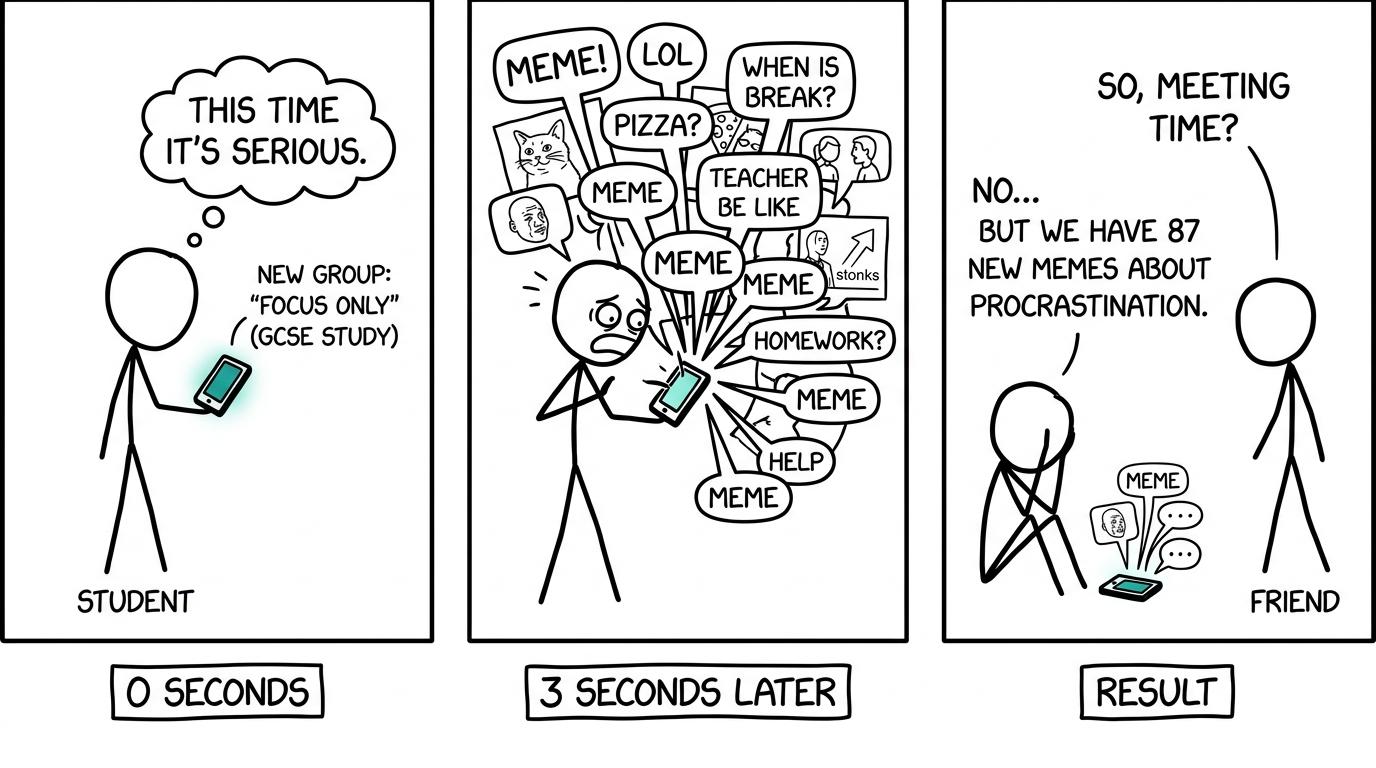 A serious revision group chat rapidly filling with memes
Build the group around the actual GCSE Arabic assessment
A productive group should resemble the qualification it is preparing you to take. Under the current Pearson Edexcel GCSE Arabic specification, students are assessed in listening, speaking, reading and writing. Each skill contributes 25%25\%25% of the qualification.
Students enter Foundation or Higher tier and use the same tier across all four papers. Dictionaries are not permitted in the assessments. Exact arrangements can change between exam series, so confirm your current specification, tier and speaking instructions with your teacher.
This assessment structure gives your group a clear design. If every meeting becomes a vocabulary quiz, you may improve recall while neglecting three other assessed skills. A better plan rotates the emphasis while still including short retrieval practice each week.
| Session focus | Useful group activity | Evidence to keep |
|---|---|---|
| Listening | Hear a short recording individually, then justify answers | Incorrect answers and missed words |
| Speaking | Practise role-play, picture prompts and conversation questions | Audio recording and feedback notes |
| Reading | Complete a timed passage before comparing evidence | Score and corrected responses |
| Writing | Plan and produce a response independently | Marked draft and correction list |
Your teacher should guide you on suitable Arabic materials and how to interpret the official assessment criteria. The group is there to create repeated, focused practice, not to replace expert feedback.
Choose members for reliability, not popularity
The best study partner is not necessarily your closest friend or the strongest Arabic speaker. You need people who arrive, prepare and allow others to think.
A group of around three to five students is usually manageable. It gives you enough variety for speaking practice without making scheduling impossible. More important than size, however, is the agreement each person makes.
Ask every prospective member to accept four conditions:
- attend the regular session unless they give notice;
- complete the agreed preparation;
- attempt tasks before asking for answers;
- give specific, respectful feedback.
Different strengths can help. A confident speaker may model natural interaction, while a careful writer may notice agreement, spelling or verb errors. But nobody should become the permanent teacher. If one person explains everything while everyone else watches, the group has become an audience.
Set a fixed meeting instead of running a weekly poll
A recurring appointment removes one of the biggest sources of friction: deciding when to meet. Choose the same day and time each week, then put it in everyone’s calendar.
Keep the first commitment realistic. A focused session lasting about 606060 minutes is better than an ambitious three-hour meeting that people begin avoiding. Meet in a quiet school room, library or supervised online space where safeguarding expectations are clear. Follow your school’s rules for recording audio and communicating online.
The chat should support the meeting, not become the meeting. Use it for:
- confirming attendance;
- sharing the agenda and permitted resources;
- posting one concise question;
- assigning preparation;
- recording the next action.
Mute unrelated conversation or move it elsewhere. Friendship can survive having two chats.
Give every GCSE Arabic study group a repeatable agenda
People focus more easily when they know what happens next. Use the same broad structure each week:
Start with retrieval
Test vocabulary, phrases or grammatical patterns from a previous session without notes. Everyone should answer independently before discussing responses. Retrieval exposes what can genuinely be recalled; rereading only shows what looks familiar.
Complete one exam-focused task
Choose one main skill and set a clear time limit. Students should first attempt the task alone. Collaboration becomes useful afterwards, when members compare evidence, explain choices and identify where an answer lost accuracy.
Practise speaking aloud
Arabic is not revised fully in silence. Include a short speaking round even during a reading or writing week. Rotate partners, vary the question and avoid memorising one perfect script that collapses when the wording changes.
Mark, correct and record
Use official materials and teacher guidance where available. Do not stop at a score. Each member should write down:
- the exact error;
- why it happened;
- the corrected language;
- when it will be tested again.
Choose the next action
Finish by assigning one small preparation task and confirming the next meeting. Nobody should leave wondering what they agreed to do.
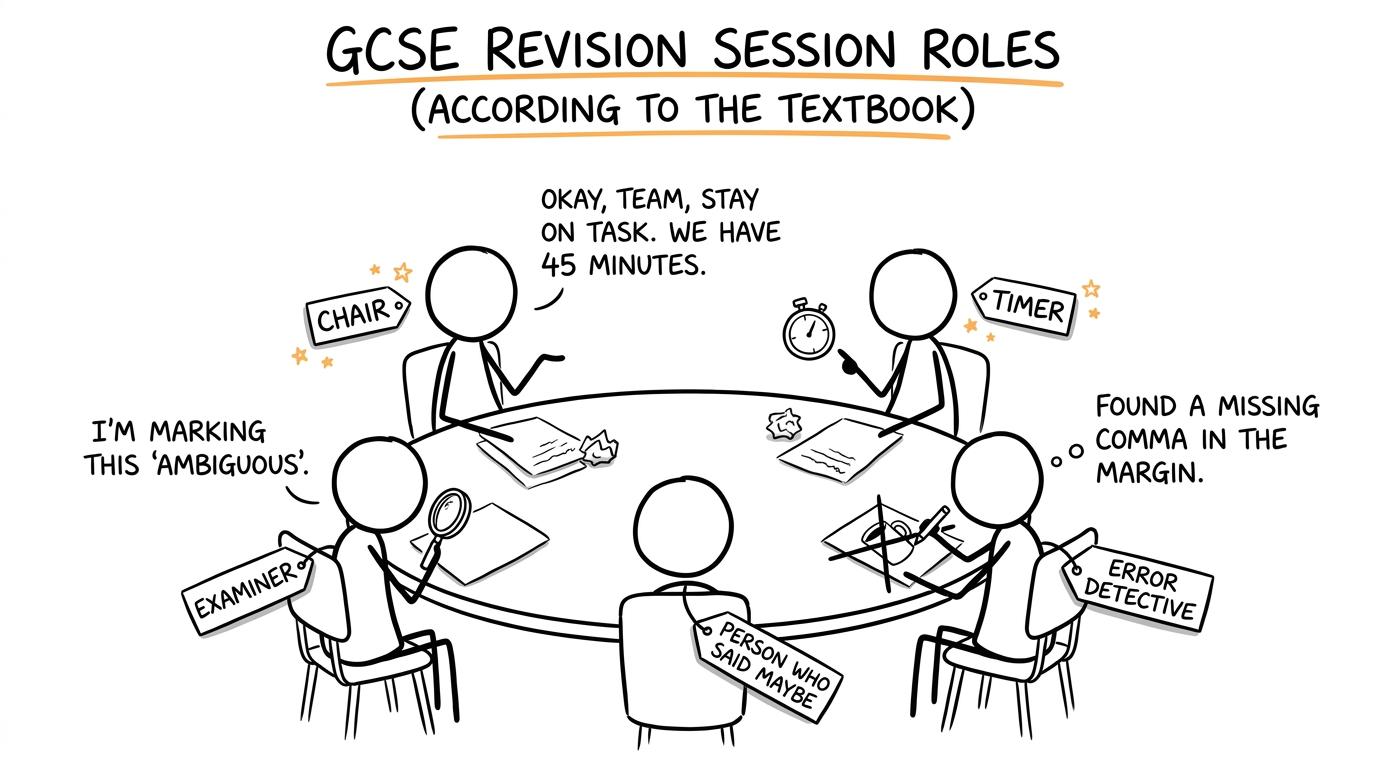 Students wearing very specific study-group job badges
Use roles to stop one person doing everything
Roles create accountability without making the session heavy. Rotate them so that everyone learns how to lead, question and evaluate.
- Chair: states the objective and keeps discussion relevant.
- Timer: protects independent thinking and prevents one task taking over.
- Resource lead: brings the agreed prompt, recording or question set.
- Examiner: asks speaking questions without coaching the answer.
- Error detective: records recurring mistakes for future retrieval.
The examiner should not interrupt every speaking response. Let the speaker finish, then give limited feedback linked to the task. Too much correction can destroy fluency; no correction allows the same mistake to settle in.
Make feedback precise and safe
“Good” is kind but not very useful. “You gave a clear opinion, but the reason needed a complete sentence” gives the speaker an action.
Use a simple feedback pattern:
- identify one feature that worked;
- identify one important improvement;
- ask the student to repeat or rewrite the corrected part.
Do not guess when the group is uncertain. Mark the question and ask your Arabic teacher. This matters particularly when students use different dialects at home. GCSE assessment requirements may not match every form used in everyday conversation, and disagreements should be resolved through the specification and qualified teaching rather than confidence alone.
Recordings can reveal hesitations and unclear pronunciation, but obtain everyone’s permission, follow school rules and delete files when they are no longer required.
Connect the system to your maths revision
Most GCSE students are balancing Arabic with maths and several other subjects. The answer is not to let every subject create another sprawling group chat. Reuse the same operating system.
For maths, begin with the GCSE Maths revision hub, where lessons, questions and paper practice are organised by board and topic. Use the GCSE self-assessment resources to identify genuine weaknesses rather than allowing the group’s loudest member to choose every session.
Short meetings can use GCSE Maths mini tests. Longer sessions can draw from the correct board-specific collection:
The same rule applies in both subjects: attempt first, compare second. For a disciplined review process, follow MathsGenie’s guide to using GCSE past papers properly. On busy school days, the 20-minute maths revision routine provides a smaller structure that can sit alongside Arabic practice.
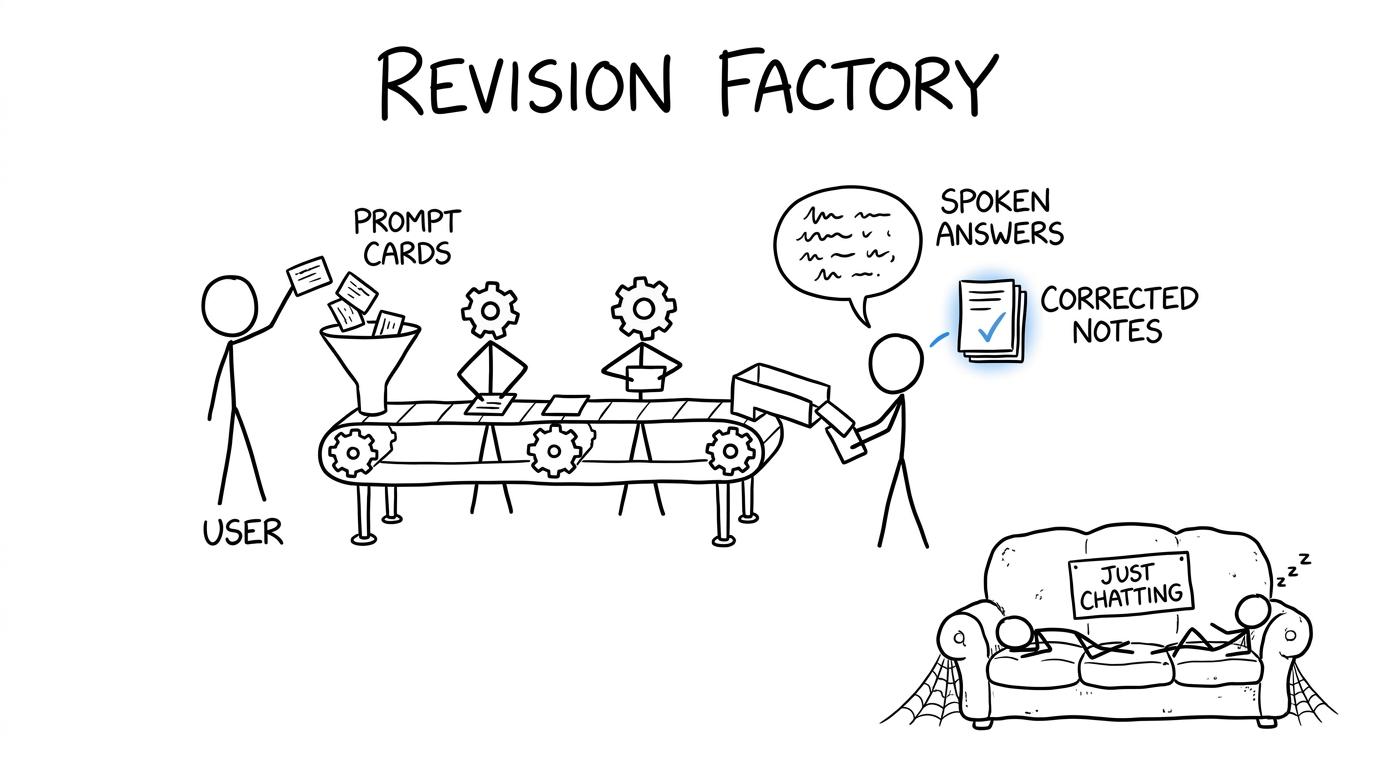 A tiny revision factory while the just-chatting sofa stays empty
Common mistakes that turn revision into social time
Arriving without an agenda
“Let’s revise Arabic” is too vague. Name the skill, task, time limit and intended outcome before the meeting.
Choosing only comfortable activities
Vocabulary games can feel productive because answers arrive quickly. They cannot replace sustained listening, spontaneous speaking, careful reading and independent writing.
Correcting from memory
A confident explanation can still be wrong. Use authorised materials, assessment guidance and your teacher when resolving uncertainty.
Letting one fluent student dominate
The person speaking most may be learning most. Give every member equal answering time and require individual attempts before discussion.
Sharing answers too early
Helping immediately removes the mental effort that makes retrieval valuable. Allow quiet thinking time before hints or discussion.
Tracking attendance instead of improvement
A full calendar is not evidence of progress. Keep task scores, repeated errors, corrected responses and retest dates.
Ignoring individual revision
A group is particularly valuable for interaction, accountability and feedback. It cannot replace private vocabulary recall, writing practice or timed papers.
Make the next meeting real
Do not start by designing a logo or inviting twelve people. Choose two to four reliable classmates, agree one recurring meeting and write an agenda for the first session. Decide who brings the material, which assessed skill you will target and what evidence everyone must leave with.
Then bring the same discipline to maths. Build your weekly plan around MathsGenie’s free revision lessons, practice questions, mini tests, past papers, predicted papers, mark schemes and video solutions. Use the revision planner mindset to schedule the next task before motivation has a chance to negotiate with you.
A good group is not the one that sends the most messages. It is the one that meets, attempts, corrects and returns next week with fewer unknowns.